Johan Budi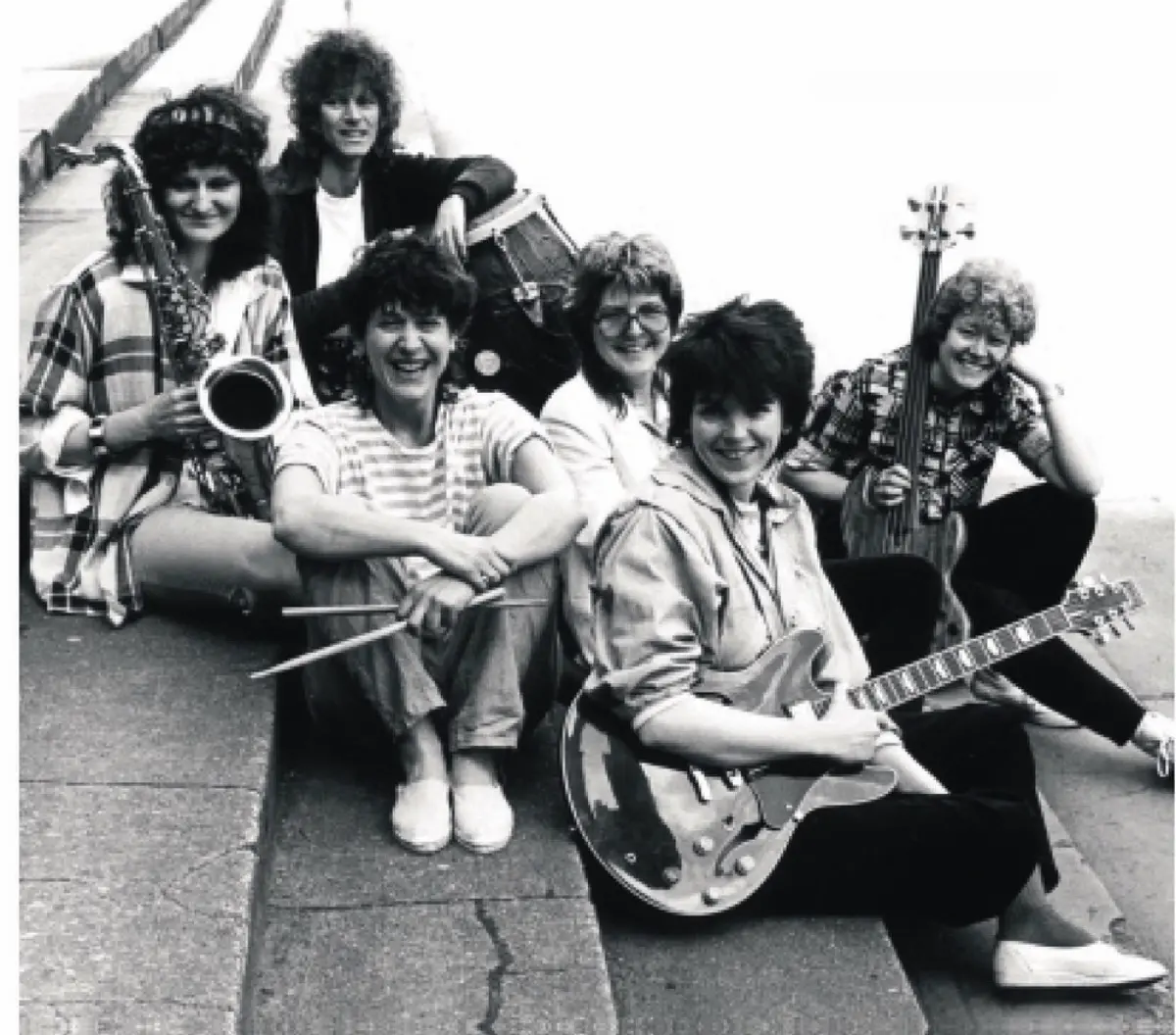
The release of Out At Night by The Guest Stars marks a significant milestone in the mid-1980s British jazz scene, solidifying the reputation of an all-female collective that successfully bridged the gap between complex improvisational jazz and accessible, rhythmically driven world music. Recorded in September 1985 at the Woodcray Manor Studio in Berkshire, the album serves as a sophisticated follow-up to the group’s eponymous debut, showcasing a matured ensemble sound that incorporates elements of funk, Latin, and African polyrhythms. As the second major studio effort from the sextet, Out At Night demonstrates a high level of technical proficiency and a cohesive group identity, even as it navigates the perennial challenge of capturing the raw energy of a live jazz performance within the controlled environment of a recording studio.
Technical Composition and Personnel
The Guest Stars’ lineup for this recording features a formidable array of talent, many of whom have since become pillars of the UK jazz community. The ensemble consists of Deirdre Cartwright on electric guitar, Josefina Cupido on drums and vocals, Laka Daisical on piano and vocals, Linda daMango on congas, percussion, and vocals, Alison Rayner on fretless bass and vocals, and Ruthie Smith on saxophone and vocals. This multi-instrumental approach, where nearly every member contributes to the vocal textures, allows for a rich, layered sound that distinguishes the band from the more traditional horn-led quintets of the era.
Musically, the album is divided into two distinct halves, with Side A featuring "Montezeuma’s Mother," "Miles Apart," "Amy’s Bounce," and "What Means Love," totaling 21 minutes and 30 seconds. Side B includes "The Wind Is Getting Angry," "Song Of The Bridge," "Uranus In Jeopardy," and "Birds Of A Feather," clocking in at 20 minutes and 32 seconds. The production at Woodcray Manor Studio provides a clean, punchy aesthetic that highlights the intricate interplay between the two percussionists and the melodic instruments.
Rhythmic Foundations and Instrumental Highlights
One of the most striking elements of Out At Night is the rhythmic foundation provided by Alison Rayner’s fretless bass. In the opening tracks, Rayner’s playing provides a "motoring" drive that anchors the band’s more experimental excursions. Her ability to negotiate the rhythmic irregularities of tracks like "Amy’s Bounce" is a testament to the group’s tight arrangements. The fretless bass, a staple of 1980s fusion, is used here not merely for its sliding tonal qualities but as a precision tool to navigate the shifting time signatures that characterize the band’s "dance mix" approach.
Deirdre Cartwright’s electric guitar work offers a complementary melodic layer, characterized by well-paced solos that avoid the excessive shredding common in 1980s jazz-fusion, opting instead for thematic development and rhythmic integration. However, the sheer density of the rhythm section—comprising a pianist, a drummer, and a dedicated percussionist—creates a challenging sonic environment for the lead instruments. Critics have noted that Ruthie Smith’s saxophone occasionally feels "overawed" by the collective volume of the rhythm section, though she breaks through with a notable, hard-edged solo on "Uranus In Jeopardy." This dynamic reflects the band’s democratic philosophy, where the "groove" often takes precedence over individual virtuosity.
The 1980s British Jazz Revival Context
To understand the impact of Out At Night, it is essential to view it through the lens of the British jazz revival of the 1980s. This period saw a move away from the avant-garde experiments of the 1970s toward a more "cool," style-conscious, yet musically rigorous revival of hard bop and fusion. While much of the media attention was focused on the "Young Lions" movement, The Guest Stars represented a crucial parallel development: the rise of independent, self-managed collectives that integrated feminist perspectives and global musical influences.
The Guest Stars were pioneers in an industry that was—and remains—heavily male-dominated. By forming their own label (Guest Stars Records) and managing their own tours, they bypassed the traditional gatekeepers of the London jazz establishment. Out At Night was released as GS11, a testament to their organized approach to independent production. Their music was part of a broader cultural shift that saw jazz musicians collaborating with African and Latin American artists, a precursor to what would eventually be marketed as "World Music."
Chronology of Development
The timeline of The Guest Stars’ ascent reveals a steady progression from a grassroots live act to an internationally touring ensemble:
- Early 1980s: The band forms in London, quickly gaining a reputation for high-energy live performances at venues like the Drill Hall and various jazz festivals.
- 1984: The release of their debut album, The Guest Stars, which established their signature blend of jazz and world rhythms.
- 1985 (September): The band enters Woodcray Manor Studio to record Out At Night. This period marks the peak of their initial creative output.
- 1986-1987: Extensive touring in support of the album, including successful stints in the United States and Europe, where they were often cited as a premier example of the new British jazz sound.
- Late 1980s: The members begin to diversify into other projects, including Deirdre Cartwright’s work on the BBC’s Rockschool series and Alison Rayner’s involvement in the Blow the Fuse organization.
Critical Analysis: Studio Precision vs. Live Risk
A recurring point of discussion among contemporary critics and jazz historians regarding Out At Night is the perceived safety of the studio recording compared to the band’s live reputation. In a live setting, The Guest Stars were known for "sticking out their collective necks," engaging in extended improvisations and taking harmonic risks that are somewhat attenuated on the album.
The studio versions of tracks like "Song Of The Bridge" and "Birds Of A Feather" are impeccably executed and melodically immediate, making them highly accessible to a broad audience. However, the "rhythmic tightness" that makes the album a great "dance mix" occasionally comes at the expense of the spontaneous, "edge-of-the-seat" quality found in their concert appearances. This is a common critique of 1980s jazz production, where the emphasis on clean engineering and "radio-ready" fidelity sometimes smoothed over the grit of live interaction. Nevertheless, the album is widely considered a successful translation of the band’s aesthetic, providing a permanent record of their sophisticated arrangements.
Broader Implications and Legacy
The influence of The Guest Stars and the Out At Night sessions extends far beyond the mid-80s. The band’s success proved that there was a viable market for independent jazz that did not rely on major label backing. They also served as a vital inspiration for female musicians in the UK. By demonstrating that an all-female group could command the main stages of international jazz festivals through sheer musicality rather than novelty, they paved the way for future generations of artists.
The individual careers of the band members post-1985 further illustrate the album’s significance. Deirdre Cartwright and Alison Rayner’s subsequent work with "Blow the Fuse" became a cornerstone of the London jazz scene, providing a platform for underrepresented voices for decades. The technical groundwork laid in tracks like "Uranus In Jeopardy" can be heard in the modern British jazz scene, which continues to value the fusion of African-Caribbean rhythms with traditional jazz structures.
Conclusion
Out At Night remains a definitive document of a specific moment in British musical history. It captures a band at the height of its powers, successfully synthesizing a diverse array of global influences into a coherent and joyous sound. While it may lack the raw unpredictability of their live sets, its rhythmic integrity and melodic strength more than compensate. For historians of the genre, the album is a key artifact of the 1980s jazz revival; for listeners, it remains a vibrant and "highly charged" example of fusion at its most inclusive and energetic. With two strong albums established by 1985, The Guest Stars set a high bar for independent jazz production, leaving a legacy of professional excellence and artistic courage that continues to resonate in the contemporary music landscape.