Johan Budi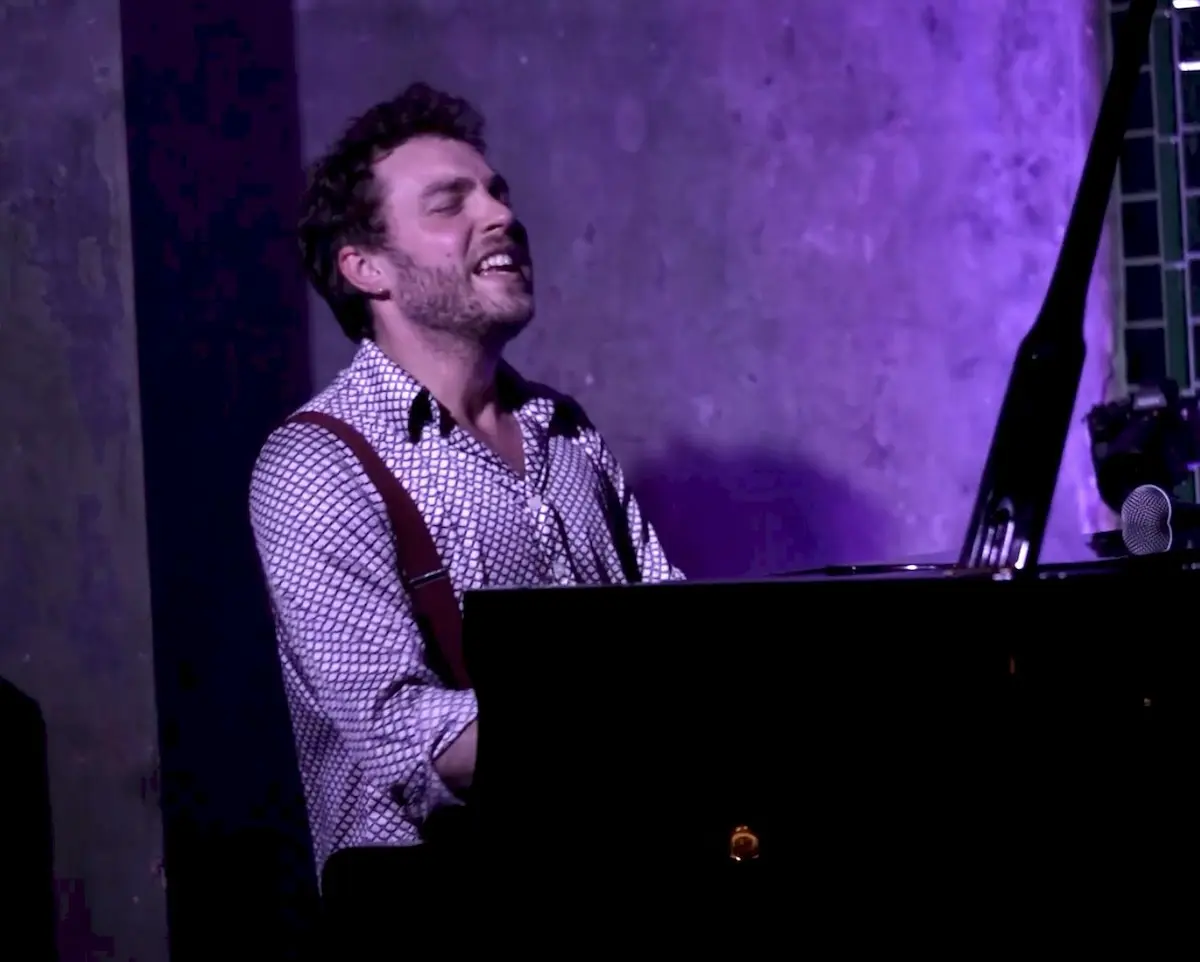
The global jazz landscape continues to evolve through a dual focus on preserving historical legacies and pushing the boundaries of contemporary composition. The upcoming release schedule for 2025 and 2026, alongside significant archival reissues, highlights a diverse array of styles ranging from the bebop foundations of the 1950s to the avant-garde and crossover experiments of the modern era. This comprehensive survey examines twelve significant new projects and reissues, providing a detailed look at the artists, the technical frameworks of their music, and the broader cultural implications of their work.
Vocal Storytelling and the Intimacy of the Jazz Ballad
Lithuanian jazz vocalist Dalia Valanciute is set to release her latest album, One or Two Things, on May 29, 2026. Published under the Zack’s Music label, the record represents a shift toward a more conversational and nuanced approach to the jazz vocal tradition. Valanciute’s work on this album is characterized by a "quiet electricity," a term used to describe the subtle interplay between the vocalist and her ensemble.
The repertoire for One or Two Things is built upon a foundation of jazz standards and ballads, but it also incorporates groove-led material that challenges the traditional phrasing of the Great American Songbook. Analysts of Valanciute’s style note her emphasis on emotional clarity over technical ostentation. By allowing songs to unfold through a personal sense of time, she creates a space where the band can engage in a genuine dialogue rather than mere accompaniment. This release follows a growing trend in European jazz that prioritizes atmospheric presence and storytelling, moving away from the more aggressive vocal styles of the past decade.
Technical Complexity and the Avant-Garde: Ivan Valentini
In contrast to the minimalist intimacy of Valanciute, saxophonist Ivan Valentini’s Camera Funky (released via Cose26114) explores the intersection of high-concept composition and raw energy. The album is defined by its use of "cross-pollination," blending funk-inflected grooves with the rigorous structures of classical modernism.
Valentini’s compositions utilize several advanced musical techniques, including:
- Polymetry and Odd Time Signatures: Creating complex rhythmic layers that challenge the listener’s perception of pulse.
- Twelve-Tone Writing: A method of musical composition devised by Arnold Schoenberg, which Valentini adapts into a jazz context to create angular, non-traditional melodic profiles.
- Architectural Rigor: Balancing obsessive riffs with intricate, pre-planned structures.
The album serves as a bridge between the physical "funk" of the rhythm section and the intellectual "camera" (chamber) music of the European avant-garde. It represents a significant contribution to the Italian jazz scene, which has long been a hub for experimental crossover projects.
The New York Progressive Trio: Chris van Voorst van Beest
Bassist Chris van Voorst van Beest’s new album, Bye Design, released on Adhyâropa Records, offers a window into the current state of the New York progressive jazz scene. The record features two rising stars: pianist Zach Lapidus and drummer Nathan Ellman-Bell. The trio format is a staple of jazz, but van Voorst van Beest utilizes it to explore the synthesis of jazz improvisation and classical harmonic languages.
The album is described as a showcase of "ultra-responsive interplay," a technical term for the high-speed musical adjustments made by trio members during improvisation. Van Voorst van Beest’s compositional voice is noted for its "exquisite" precision, reflecting a broader movement in New York where musicians are increasingly classically trained and bring a formalistic approach to the spontaneity of the genre.
Solo Piano and European Lyricism: Kristaps Vanadzinsh
Latvian pianist and composer Kristaps Vanadzinsh has released Piano Is My Temple! Vol.1, a solo piano statement that moves away from the displays of virtuosity often associated with the instrument. Instead, Vanadzinsh focuses on "cinematic minimalism" and European lyricism.
The album’s chronology of development suggests a deep root in silence and space. Recorded as a series of fragile melodies and spontaneous textures, the project emphasizes "honesty and human connection" over genre boundaries. In the context of the Baltic jazz scene, Vanadzinsh’s work aligns with the aesthetic of labels like ECM, where the "northern sound"—characterized by spaciousness and introspection—takes precedence.
Cinema and Jazz: The Woody Allen Legacy
The intersection of film and jazz is celebrated in the new LP Various Artists: Manhattan Swing Woody Allen, released by New Continent. Woody Allen’s career has been inextricably linked to the dissemination of jazz history. This 16-track compilation brings together outstanding recordings used in his most critically acclaimed films, such as Manhattan, Annie Hall, and Midnight in Paris.
Allen’s use of historical sources—ranging from Sidney Bechet to Benny Goodman—has been praised by historians for introducing jazz to new generations. The LP serves as both a soundtrack and a historical document, highlighting how swing and traditional jazz have been used to define the urban American experience on screen.
Historical Reissue: The 1953 Massey Hall Concert
Perhaps the most significant historical release in this collection is Various: Jazz At Massey Hall Toronto, 15-05-1953 – L’enregistrement historique. Released by Frémeaux & Associés, this album captures a singular moment in 20th-century music history. On May 15, 1953, five of the most influential figures in bebop—Charlie Parker (appearing as "Charlie Chan" for contractual reasons), Dizzy Gillespie, Bud Powell, Charles Mingus, and Max Roach—performed together for the only time.
This concert is often referred to as "the greatest jazz concert ever." The new release is accompanied by a 240-page book by Franck Médioni, providing extensive context on the tensions and triumphs of that evening. The recording captures the peak of bebop, balancing the "architectural rigor" of the compositions with the "blazing freedom" of the solos. The historical weight of this release cannot be overstated, as it represents the zenith of the modern jazz revolution.
The UK Scene and Narrative Debut: Nico Widdowson Trio
Representing the vibrant UK jazz scene, pianist Nico Widdowson’s debut album, On Fools And Clowns, explores the sociological and personal aspects of life as a young musician. Released on Trash City Records, the album was written during Widdowson’s transition from Leeds to the high-pressure environment of London.
Musically, the album is notable for its juxtaposition of:
- Stride Piano: A traditional jazz piano style from the 1920s and 30s.
- Free Improvisation: A modern, non-structured approach to performance.
- Storytelling: Using music to convey the absurdity and frustration of the artist’s journey.
Widdowson’s work is indicative of a new generation of British musicians who are comfortable blending historical styles with contemporary social commentary.
Resilience and Social Semiotics: James Gordon Williams
James Gordon Williams’ Falling To Rise Again is a contemporary jazz album that delves into deeper social and personal narratives. Co-produced by the legendary Terri Lyne Carrington, the album features a high-caliber ensemble including Morgan Guerin and Matthew Stevens.
Williams describes the music as a "conflation of blues, jazz funk ballads, and up-tempo grooves." Beyond the technical proficiency, the album uses "sonic semiotics"—the study of signs and symbols in sound—to explore themes of resilience and joy amid struggle. Tracks like "Turning the Tide" serve as musical metaphors for the artist’s life narrative, positioning jazz as a tool for social and emotional survival.
Biological Metaphor in Crossover Jazz: Wolfe and Trotter
Murmuration, a collaboration between vocalist Ada Bird Wolfe and pianist Jamieson Trotter, is a 12-composition cycle organized around the life cycle of birds. The title refers to the phenomenon of starlings flying in choreographed unison, which the artists use as a metaphor for "compositional symbiosis."
Released on Ada Birdie Music, the album is a jazz-classical crossover. Trotter’s "angular, exciting chord voicings" provide a modernist backdrop for Wolfe’s rich, narrative-driven lyrics. This project highlights a growing interest in using biological and natural phenomena as frameworks for musical improvisation.
The Bebop Command of Phil Woods
The reissue of Phil Woods’ Here’s To My Lady (originally 1989) on Chesky Records serves as a reminder of the late alto saxophonist’s mastery. Recorded when Woods was 57, the album features the Tommy Flanagan Trio.
Woods was known for his "lush, beautiful tone" and his complete command of the bebop vocabulary inherited from Charlie Parker. This reissue is particularly notable for its audiophile quality, a hallmark of the Chesky label, which uses minimalist miking techniques to capture the natural acoustics of the recording space.
The Legacy of Paul Motian: Mattia Zanlorenzi
Drummer and composer Mattia Zanlorenzi’s new album Wanderlust, scheduled for release on March 4, 2026, via Dodicilune, is a tribute to the visionary drummer Paul Motian. Joined by Claudio Lodati and Danilo Gallo, Zanlorenzi adopts Motian’s "free approach to form and sound."
The album explores non-linear structures where the drums are not merely a time-keeping device but a melodic participant. This "visionary" approach to the trio format emphasizes collective interplay over individual solos, reflecting a shift in modern jazz toward egalitarian ensemble dynamics.
The Art of the Bolero: Miguel Zenón and Luis Perdomo
Finally, saxophonist Miguel Zenón and pianist Luis Perdomo continue their exploration of the Latin American songbook with El Arte del Bolero, Vol. 3. This series has been a critical and commercial success, with Vol. 2 winning a Grammy Award in 2024.
The Bolero is a genre of slow-tempo Latin music that originated in Cuba. Zenón and Perdomo strip these songs down to their essence, using the saxophone and piano to find new improvisational possibilities within the traditional melodies. Released on Miel Music, the album reinforces the importance of the Latin jazz tradition in the contemporary global market.
Analysis of Broader Implications
The sheer variety of these releases indicates that the jazz industry is currently sustained by three distinct pillars: the preservation of historical "canon" (Massey Hall, Phil Woods), the exploration of regional identities (Latvia, UK, Lithuania), and the integration of academic or classical concepts (twelve-tone writing, sonic semiotics).
Furthermore, the inclusion of release dates as far out as 2026 suggests a stabilized pipeline for independent labels, despite the challenges of the digital streaming era. The continued relevance of physical media—exemplified by the Woody Allen LP and the Frémeaux & Associés book-and-CD set—demonstrates a persistent demand for high-quality, curated jazz artifacts. As these artists move forward, the balance between technical rigor and emotional honesty remains the defining characteristic of the genre’s evolution.