Johan Budi
The international jazz and improvised music landscape is experiencing a profound convergence of generational milestones, historical restorations, and cross-cultural collaborations. This comprehensive review examines the latest wave of notable record releases spanning from acoustic solo explorations and avant-garde chamber jazz to rare archival mastertapes from the golden eras of the 1960s and 1970s. As modern artists navigate grief, political history, and geographical displacement, the resulting recordings offer a panoramic view of an art form continually redefining its boundaries while fiercely honoring its foundational roots.
Main Facts of the Current Release Cycle
The contemporary release slate features a diverse array of international heavyweights and emerging innovators. Malian-born, Oslo-based percussionist Sidiki Camara leads this movement with his ambitious new album Ankaben (Oslo Session Recordings, OSR010), uniting an expansive ensemble of Norwegian jazz, folk, and contemporary classical players. Simultaneously, Los Angeles-based composer and multi-instrumentalist Tristan Cappel prepares for the June 18 release of his sophomore record, North Star (Independent), an eight-part meditation on self-actualization and grief featuring a powerhouse core rhythm section alongside special guests Miguel Atwood-Ferguson, Telemakus, and Andrew Renfroe.
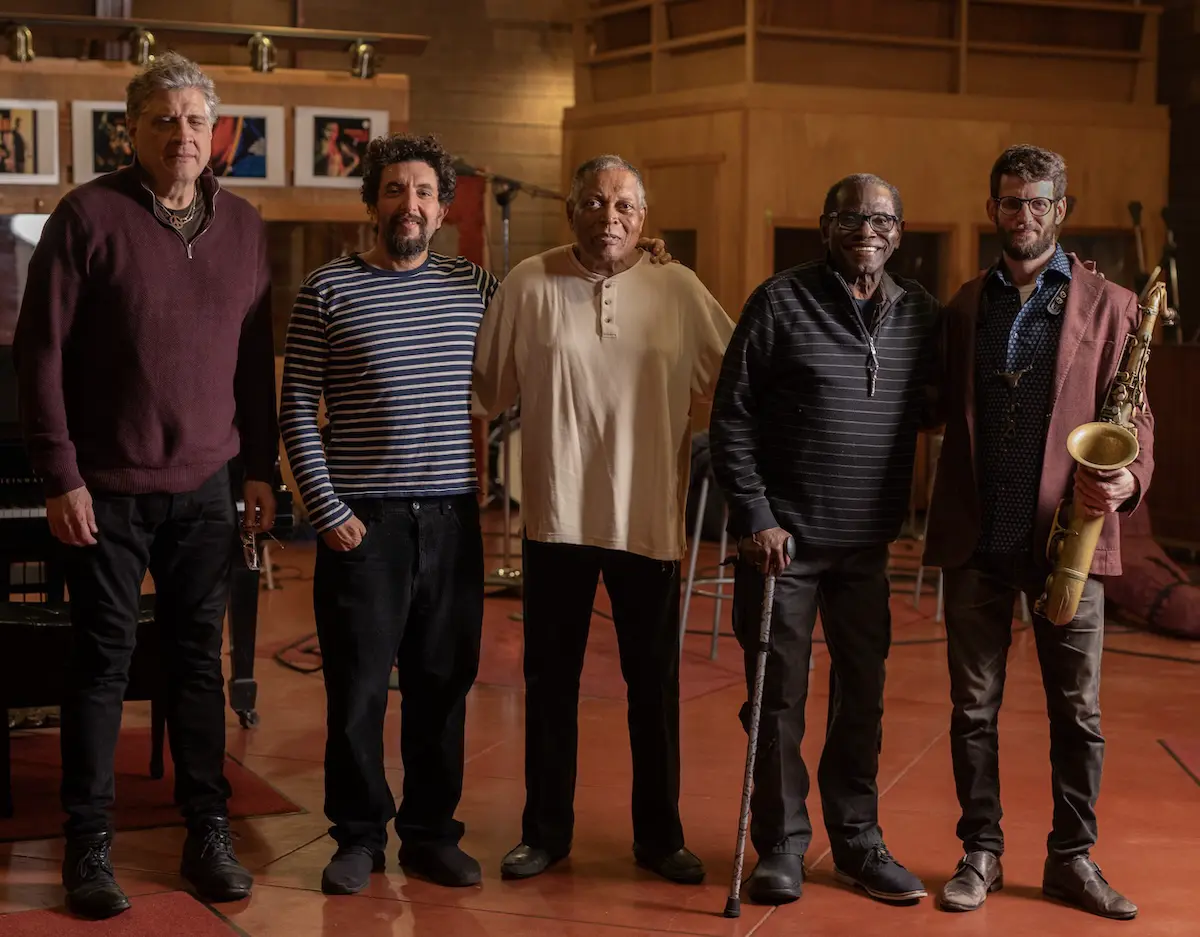
In the realm of master-level duets, bassist Ron Carter—approaching his 89th birthday—has teamed up with Israeli-born New York guitarist Yotam Silberstein for Duets (JOJO Records). Recorded at Rudy Van Gelder’s legendary Englewood Cliffs studio on the exact birthday of the late jazz guitar pioneer Jim Hall, the album pays direct homage to Carter’s celebrated historic recordings with Hall. Guitarist Deirdre Cartwright also makes a triumphant return with Organik (Blow The Fuse Records), her first album as a leader in 15 years, utilizing a stripped-down, effects-free trio format featuring Hammond organist Pete Whittaker and percussionist Gary Hammond.
Chronology and Historical Context
The historical continuum of jazz remains a vital anchor for this release cycle, highlighted by several projects deeply rooted in past socio-political and artistic epochs. Foremost among these is Civil Disobedience: Blue Note in the Progressive ’60s (Blue Frog Records), led by bassist David Ambrosio alongside a quintet featuring Donny McCaslin, Ingrid Jensen, Bruce Barth, and Victor Lewis. This release resurrects crucial, previously shelved Blue Note compositions from the late 1960s tied directly to the civil rights movement. The repertoire includes James Spaulding’s poignant "A Time to Go," written as a tribute to Dr. Martin Luther King Jr., thereby bridging the turbulent sociopolitical landscape of the 1960s with contemporary socio-musical commentary.
Archival excavation further enriches this period via Wewantsounds, which is releasing the first-ever international edition of The Third World-Underground (WWSCD125). Recorded live in 1972 at Copenhagen’s famed Jazzhus Montmartre, this legendary collaborative performance features pianist Abdullah Ibrahim (then known as Dollar Brand), cornetist/multi-instrumentalist Don Cherry, and saxophonist Carlos Ward. Originally issued exclusively in Japan in 1974 on the cult label Trio Records via its Nadja imprint, this release restores a missing link in free-jazz and global-improvisation history.
Further expanding the historical narrative, Pan Am Records presents a vinyl reissue of Eric Dolphy’s seminal 1960 leader date Out There (Pan Am Records 9152345 LP). Recorded the same year as his landmark debut Outward Bound, the album showcases Dolphy’s visionary integration of unconventional instrumentation, most notably featuring avant-garde collaborator Ron Carter performing on cello within a pianoless quartet format.
Supporting Data and Ensemble Dynamics
The breadth of instrumentation represented in the current catalog highlights a distinct industry-wide shift toward intimate ensemble configurations, solo performances, and cross-genre fusions.
Solo projects occupy a prominent space in this release window, showcasing the profound acoustic resonance of single-instrument formats. Double bassist Bruno Chevillon presents Etats De Lieux (Blaser Music SONGS005CD), capturing a two-day unaccompanied improvisation session recorded in September 2011 within the reverberant architectural space of the Lutheran Protestant Church of Bon Secours in Paris. Engineered by Philippe Teissier du Cros, the recording treats the church’s nave as an active acoustic protagonist. Similarly, San Diego pianist Jim Dickson offers his debut solo piano record, First Light, executed on a Baldwin Model M baby grand using a minimalist two-microphone setup and covering idioms from Harlem stride to Latin jazz.
In the solo vocal and poetry domain, Fella Cederbaum presents Aliens Are Watching (MahniVerse Productions), her third spoken-word album set to original music. Eschewing personal opinion in favor of detached, rigorous socio-spiritual commentary, Cederbaum utilizes the perspective of an external observer to critique modern human behavior.
Meanwhile, guitar-centric recordings emphasize intricate harmonic dialogues. The newly formed Cohen Almonte Duo—comprising guitarists Tomer Cohen and Rodrigo Almonte—makes its debut with Timelines (Adhyâropa Records), merging contemporary jazz improvisation with Andean, Brazilian, Mediterranean, and Middle Eastern folk traditions. In a parallel vein, guitarist James Chadwick leads the quartet Walrws on Walrws (33 Records 321), deconstructing 1960s classic pop repertoire through modern jazz re-harmonization, spontaneity, and collective interplay featuring pianist Mark Sambell, saxophonist Josh Heaton, double bassist Aidan Thorne, and drummer Liz Exell.
Cross-Generational Dialogues and Personal Narratives
Many of the most compelling projects in this release wave are driven by deeply personal narratives, memorial tributes, and cross-generational mentorships.
British pianist and composer John Donaldson draws on over five decades of musical experience for We Were Together, I Forget the Rest (Hexagonal Records). Written as a personal memorial for his late wife, Agatha Coffey, Donaldson enlisted an elite cross-generational cast including vocal legend Norma Winstone, guitarist Rob Luft, and drummer Jeff Ballard.
Polish double bassist Kuba Dworak explores ancestral displacement on his solo album Roots (Independent), transforming family histories shaped by war and economic hardship into a meditative exploration of home. Across the Atlantic, baritone saxophonists Saul Dautch and Bryan Cowan—both recognized by the Low Blow Society of NYC as "The Futures of the Baritone Saxophone"—unite for their debut duo recording Downward Current (NOOX [0120]), bridging distinct regional styles from Florida and Pennsylvania.
Improvised avant-folk trio Córas Trio—featuring Belfast-based musicians Kevin McCullagh, Paddy McKeown, and Conor McAuley—returns with Birth Is Upon Me, Death Is Upon Me (Coracle CR003), expanding upon their debut by utilizing studio post-production to shape spontaneous improvisations blending Irish traditional idioms with electronic musique concrète. Multi-instrumentalist Caleb Wheeler Curtis and pianist Jason Moran present an equally telepathic dialogue on Incantation (Imani Records), bridging historical jazz tradition with free improvisation.
Broader Impact and Industry Implications
The diversity and depth of these releases underscore a resilient global jazz ecosystem that refuses to neatly categorize itself along commercial lines. Independent labels continue to serve as vital preservationists and risk-takers, championing projects that might otherwise be overlooked by mainstream conglomerates.
The juxtaposition of archival restorations—such as the Don Cherry, Abdullah Ibrahim, and Carlos Ward recordings—alongside cutting-edge contemporary statements by artists like Andrew D’Angélio (BCDeluxe on Loveland Music) and Antonio Dayyani (Organisme on April Records) demonstrates a healthy artistic continuum. As musicians increasingly utilize their platforms to address historical trauma, political civil disobedience, and personal grief, the contemporary jazz genre solidifies its status not merely as entertainment, but as an essential, evolving archive of human experience.