Jia Lissa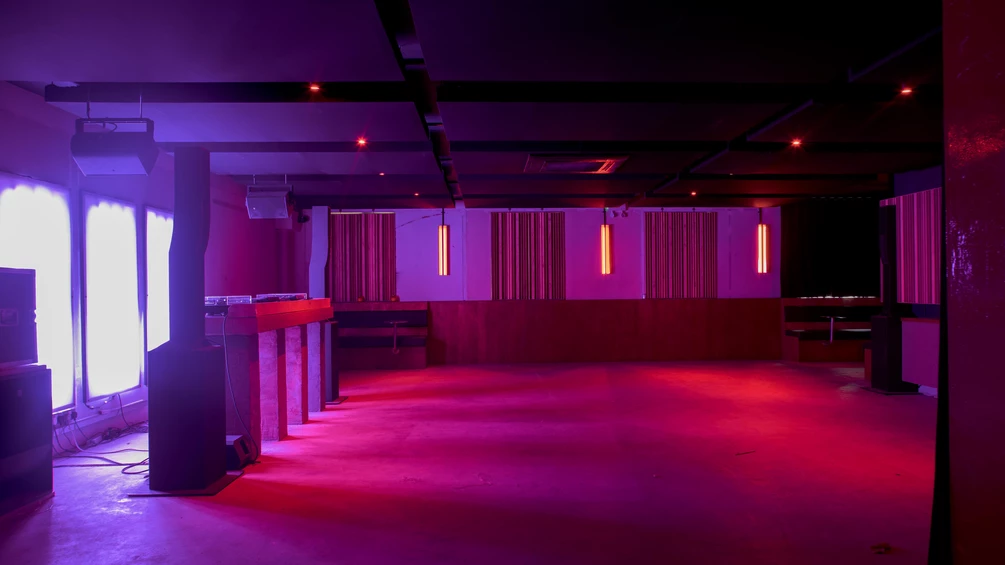
Independent Manchester music venue and bar renae has officially launched a groundbreaking financial and developmental initiative titled the Promoter Promise scheme, designed to directly address the systemic lack of representation and institutional barriers faced by marginalised promoters, musicians, and creative professionals within the Greater Manchester arts sector. Unveiled via the venue’s official Instagram channel, the initiative offers a comprehensive package of financial backing, one-to-one mentorship, and operational support aimed at uplifting underrepresented demographics who have spent less than two years operating in professional event promotion.
The launch of the Promoter Promise scheme arrives at a critical juncture for the United Kingdom’s live music and nightlife sectors, which have faced intense scrutiny over entrenched inequalities related to gender, race, and socioeconomic background. By targeting the foundational levels of event curation and production, renae’s leadership aims to instigate meaningful, grassroots-level change that resonates across the entire live entertainment ecosystem, fostering a more inclusive environment for performers, technical crew, and audiences alike.
Anatomy of the Promoter Promise Scheme
Under the newly established Promoter Promise scheme, renae will select three successful applicants from the Greater Manchester area to receive a comprehensive support package tailored to launch and sustain independent club nights and live music events. Each successful candidate will be awarded a £1,000 curatorial budget to secure talent, alongside a £350 personal bursary to support their own time and labor during the planning process. In addition, participants will receive a £300 marketing budget to ensure their events achieve maximum visibility within the competitive regional nightlife market.
Financial investment, however, represents only one component of the initiative. Recognising that sustainable career development requires institutional knowledge and hands-on logistical support, renae has structured the scheme to include dedicated mentorship. Beau-Azra Scott, renae’s Creative Producer and Events Programmer, will provide direct, one-to-one mentorship to the participating promoters, guiding them through the complexities of event management, budgeting, and artist relations. Furthermore, the venue will provide comprehensive on-the-ground assistance during event nights, alleviating the operational pressures frequently cited by first-time and independent promoters.
Crucially, the support extends beyond the initial funded events. Participants will be granted free future event space hire at renae, enabling them to build sustainable, recurring club nights or live showcases without the crushing overhead costs that frequently price independent operators out of the market. The primary venue for these events will be renae’s newly inaugurated upstairs club space, TOPP—an acronym for The Other People Place. Opened in March of this year, the room was specifically named in honor of Detroit electro pioneer and Drexciya member James Stinson’s most famous solo alias, aligning the venue’s physical identity with the rich, underground heritage of electronic music culture.
Applications for the inaugural cohort of the Promoter Promise scheme are currently open, with a strict submission deadline of 4:00 PM BST on Monday, September 28. Aspiring promoters, musicians, sound engineers, and stage managers residing in Greater Manchester who possess some foundational creative sector experience and fewer than two years of promotion history are invited to submit their proposals via the designated online application portal.
Behind the Initiative: Industry Context and Leadership Perspectives
The creation of the Promoter Promise scheme was not born in a vacuum, but rather developed in response to a growing body of research highlighting deep-seated structural inequities within the British music industry. For Beau-Azra Scott, the motivation behind the project stems from an acute awareness of how demographic homogeneity at the production level cascades downward, ultimately harming the entire cultural experience.
"A lack of representation impacts the event’s experience as a whole; if the people onstage don’t have anyone backstage they can relate or connect to, it’s going to impact their experience. It’s the same for audience members, staff, everyone alike," Scott explained in an interview following the announcement. Emphasizing the cultural roots of contemporary nightlife, Scott added, "Our industry is fuelled by art and music, often centering around genres that originated from global majority cultures. The industry should look a whole lot different and it’s a systemic issue that it doesn’t."
Scott noted that renae’s management team became hyper-aware of the difficulties in cultivating diverse promoter rosters through standard, passive recruitment methods. "I do think there is a disproportionate representation on who is running and producing events due to the systemic issues that have been discussed in the various reports that fuelled Promoter Promise. It’s not as easy to ensure diversity across your promoters, which is something that us here at renae became hyper aware of. This is why this project exists," they stated.
Addressing both the intended beneficiaries and the broader industry, Scott expressed a clear dual message: "For the people who this isn’t targeted at, I hope they know why it exists and I hope they support what comes out of the back of it. For the people who this is for, I hope they’re creatively galvanised by it."
Broader Industry Landscape: Gender Disparities and Discrimination
The launch of renae’s initiative coincides with the publication of several landmark reports and census data outlining pervasive discrimination, pay disparities, and institutional exclusion across the UK music and entertainment sectors. These studies collectively paint a picture of an industry grappling with internal barriers that disproportionately affect women, ethnic minorities, and other marginalised groups.
Earlier this year, the first comprehensive UK Music Census—conducted jointly by Help Musicians and the Musicians’ Union in 2024—revealed alarming statistics regarding workplace safety and equity. The data indicated that more than half of all women working within the UK music industry had personally experienced discrimination. Furthermore, while women formed a vast majority of performers in certain categories, they faced severe and persistent underrepresentation across technical, managerial, and promotional specialisms.
These findings were echoed and amplified by the UK Government’s Women and Equalities Committee (WEC) through its high-profile Misogyny In Music inquiry. The parliamentary report described misogyny and gender-based discrimination within the sector as "endemic," explicitly citing the persistence of an entrenched "boys’ club" culture that routinely sidelines female professionals and suppresses career progression.
This domestic crisis mirrors a wider global phenomenon extensively documented in academic and literary works. Samantha Parsley’s authoritative book Minor Keys, compiled over a rigorous six-year research period with direct contributions from 63 electronic music artists worldwide, explores the systemic hurdles and institutional biases faced by non-male practitioners in electronic music culture, demonstrating that geographical boundaries offer little protection against deeply ingrained industry prejudices.
Racial Inequity and the Economic Disconnect in British Music
Alongside gender imbalances, stark racial disparities continue to plague the UK creative economy. A major industry report published earlier this year, titled Black Music Means Business: Driving Economic Growth In The UK, laid bare the profound economic contradictions at the heart of the British music market.
The research revealed that a staggering 80% of all commercial music revenue generated within the United Kingdom is derived directly from musical genres of Black origin—including grime, rap, drill, R&B, and electronic subgenres rooted in Black diasporic traditions. Despite this overwhelming economic reliance on Black art forms, systemic barriers severely restrict representation at the executive and decision-making levels. The report found that just 22% of senior music industry professionals identified as Black or from the global majority, while a persistent 20% pay gap separated Black professionals from their white industry counterparts.
Approximately 80 Black music creators, executives, and operational workers contributed qualitative and quantitative data to the research, detailing consistent patterns of inequality, restricted access to venture capital, and institutional gatekeeping that actively hinders upward professional mobility.
Implications and the Role of Independent Venues
The confluence of these reports highlights an urgent need for structural intervention at every tier of the music industry. While governmental bodies and major corporate stakeholders grapple with policy recommendations and institutional reform, independent venues and grassroots spaces are increasingly taking direct action to reshape the cultural landscape from the ground up.
Venues like renae occupy a vital ecological niche within the UK night-time economy. Unlike corporate arenas or large multi-venue conglomerates, independent spaces possess the agility and community proximity required to test innovative models of support. By offering targeted financial grants, structural mentorship, and long-term infrastructural access through the Promoter Promise scheme, renae is attempting to bridge the gap between abstract diversity goals and tangible operational reality.
Industry analysts suggest that initiatives of this scale, while localized, serve as a vital proof-of-concept for how regional night-time economies can foster sustainable talent pipelines. By lowering the financial and institutional barriers that traditionally prevent marginalised individuals from entering the promotion sector, schemes like the Promoter Promise help diversify not only who stands behind the decks or performs on stage, but crucially, who holds the institutional power to shape cultural narratives.
As the deadline for the inaugural Promoter Promise applications approaches on September 28, the broader Greater Manchester creative community—and the wider UK music sector—will be watching closely to evaluate the impact of renae’s intervention. If successful, the initiative could provide a replicable blueprint for independent venues across the country seeking to dismantle systemic barriers and build a more equitable, representative future for live music and nightlife.