Reynand Wu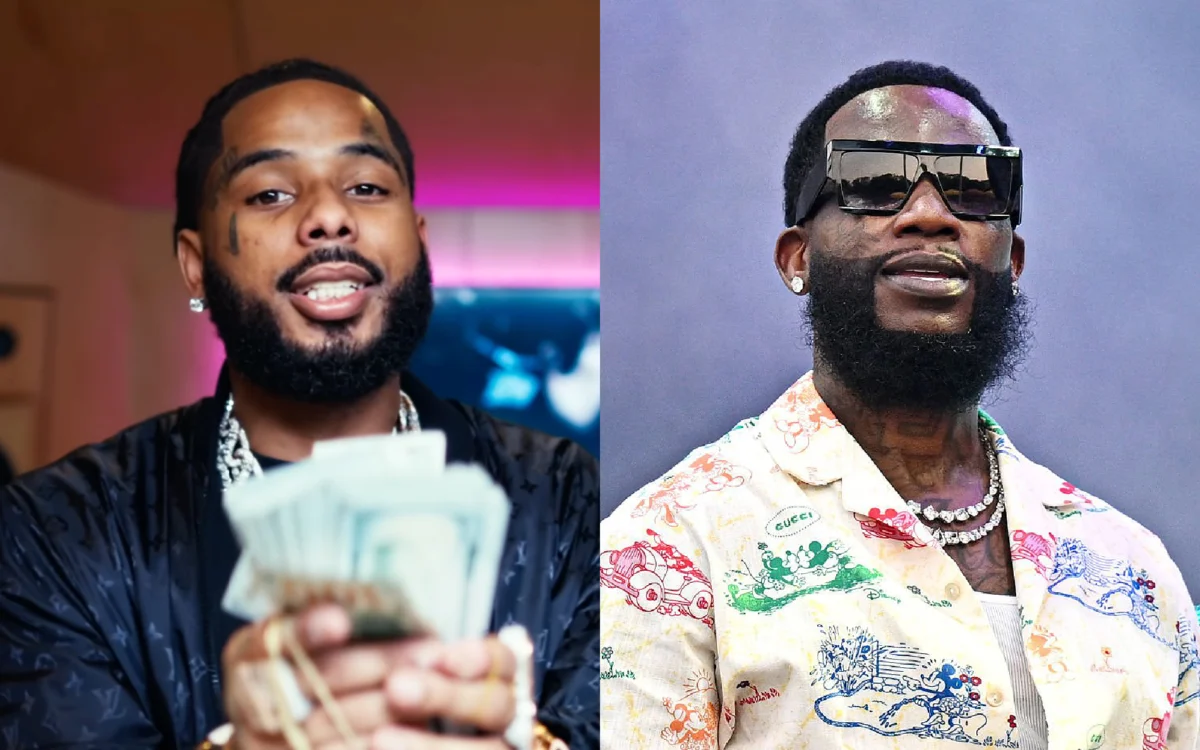
In a stunning development that has sent shockwaves through the music industry, federal authorities have taken rapper Pooh Shiesty, born Lontrell Williams Jr., into custody alongside his father, Lontrell Williams Sr., and collaborator Big30. The group stands accused of a sophisticated and violent criminal enterprise involving the alleged kidnapping and armed robbery of hip-hop mogul Gucci Mane and two associates at a Dallas recording studio earlier this year. The arrest, executed by federal agents this week, marks a precarious turning point for the Memphis-born artist, who was already operating under strict legal monitoring following a previous conviction.
According to a formal indictment released by the Department of Justice, the incident occurred on January 10. The federal charges include kidnapping, armed robbery, and conspiracy, alleging that the defendants orchestrated a calculated "armed takeover" of a recording facility under the guise of negotiating a contract release.
The Chronology of the Alleged Incident
The sequence of events, as detailed by federal prosecutors, began with a scheduled meeting intended to address the professional relationship between Pooh Shiesty and Gucci Mane’s 1017 Records. The meeting was set for a studio in Dallas, where Shiesty—represented by his father and accompanied by Big30—sought to finalize his departure from his label contract.
Upon the arrival of Gucci Mane and two other industry professionals, identified in court documents by the initials M.M. and B.P., the atmosphere shifted abruptly. Authorities allege that what was presented as a business negotiation was, in fact, a trap. The indictment states that Pooh Shiesty brandished an AK-style pistol, holding the victims at gunpoint. Under this duress, the artist allegedly forced Gucci Mane to sign documentation terminating his recording contract.
The criminality reportedly escalated beyond the document signing. The DOJ alleges that the defendants systematically stripped the victims of high-value personal property. Gucci Mane was purportedly relieved of his wedding ring, a luxury timepiece, earrings, and a significant amount of cash. Simultaneously, other members of the group acted in coordination, with Big30 allegedly positioned to prevent egress by physically barricading the studio exit. The victims were subjected to further violence; investigators noted that one of the associates, identified as M.M., was choked to the point of near-unconsciousness during the confrontation.
Evidence and Investigative Methodology
The rapid apprehension of the suspects was made possible through a multi-faceted investigative effort by federal law enforcement. Investigators relied on a combination of forensic data and digital breadcrumbs that allegedly link the defendants to the crime scene.
Key pieces of evidence cited by the Department of Justice include:
- Fingerprint Analysis: Forensic recovery from the scene of the alleged kidnapping.
- Digital Footprints: Records from rental car agencies that placed the suspects at the specific time and location of the incident.
- Social Media Activity: Perhaps most damaging to the defense, investigators highlighted posts uploaded to social media platforms by members of the group only hours after the incident, which appeared to display jewelry and items matching the descriptions of those stolen from the victims.
The speed with which the suspects were identified and apprehended suggests that federal agencies had been building a case that extended beyond the immediate victims, likely monitoring the suspects as part of a wider investigation into organized criminal activity within the hip-hop touring circuit.
Legal Context and Prior Criminal History
Pooh Shiesty’s legal standing at the time of the alleged robbery significantly elevates the severity of the charges. Having been released from federal prison in October 2025—following a four-year sentence for a firearms conspiracy conviction—Shiesty was technically under home confinement. The fact that the alleged Dallas kidnapping occurred while he was under court-ordered supervision suggests that the judicial system will likely view the new charges as a direct violation of his release conditions.
In the federal court system, a violation of supervised release, when compounded by new violent felony charges, typically results in the revocation of any leniency previously granted. The mandatory minimums for kidnapping involving a firearm, coupled with the interstate nature of the alleged crimes, place all eight defendants at risk of life imprisonment if convicted. A ninth suspect, whose identity has not yet been fully disclosed by federal authorities, remains at large, with a nationwide warrant out for their arrest.
Industry Implications and Repercussions
The music industry has largely remained silent as the legal process unfolds. Neither the representatives for Pooh Shiesty, Big30, nor Gucci Mane have issued formal statements regarding the incident. The silence is reflective of the gravity of the situation; in cases involving federal kidnapping and armed robbery charges, legal counsel typically advises against public commentary that could be construed as an admission of guilt or a characterization of the facts.
For 1017 Records, the incident presents a major reputational and operational challenge. As a label that has historically fostered raw, street-level talent, the alleged betrayal of a founder by one of its prominent signees creates a chilling precedent for future artist-label relationships. The incident underscores the risks inherent in the high-stakes world of modern rap, where the lines between professional business dealings and street-level disputes are frequently blurred.
Broader Implications for the Hip-Hop Genre
The case of Pooh Shiesty serves as a grim case study in the intersection of fame, criminality, and the federal justice system. The "Back in Blood" rapper, once celebrated for his rapid ascent and influence on the trap genre, now faces the potential end of his career and his liberty.
Legal experts observing the case point to the "coordinated" nature of the attack as a pivotal factor in the prosecution’s strategy. By framing the incident as a premeditated criminal enterprise rather than a spontaneous dispute, the government has set the stage for an aggressive prosecution. The DOJ’s choice to charge the group as a collective unit implies that they intend to prove a shared criminal intent, which would hold every participant liable for the actions of the group as a whole.
As the court proceedings move forward, the case is expected to draw significant national attention, not only due to the celebrity status of the parties involved but because it brings to light the persistent danger of violence that continues to plague the industry. The outcome of this trial will likely serve as a benchmark for how federal authorities handle high-profile cases where artists are accused of utilizing their fame to facilitate violent crime.
For the moment, the defendants remain in federal custody, awaiting arraignment and the formal discovery process, where the weight of the evidence will be tested in a court of law. The industry waits to see if this incident will lead to a broader crackdown on similar activities or if it will be treated as an isolated, albeit violent, anomaly. As of now, the focus remains on the upcoming court dates and the search for the final remaining suspect.