Nayara Elvina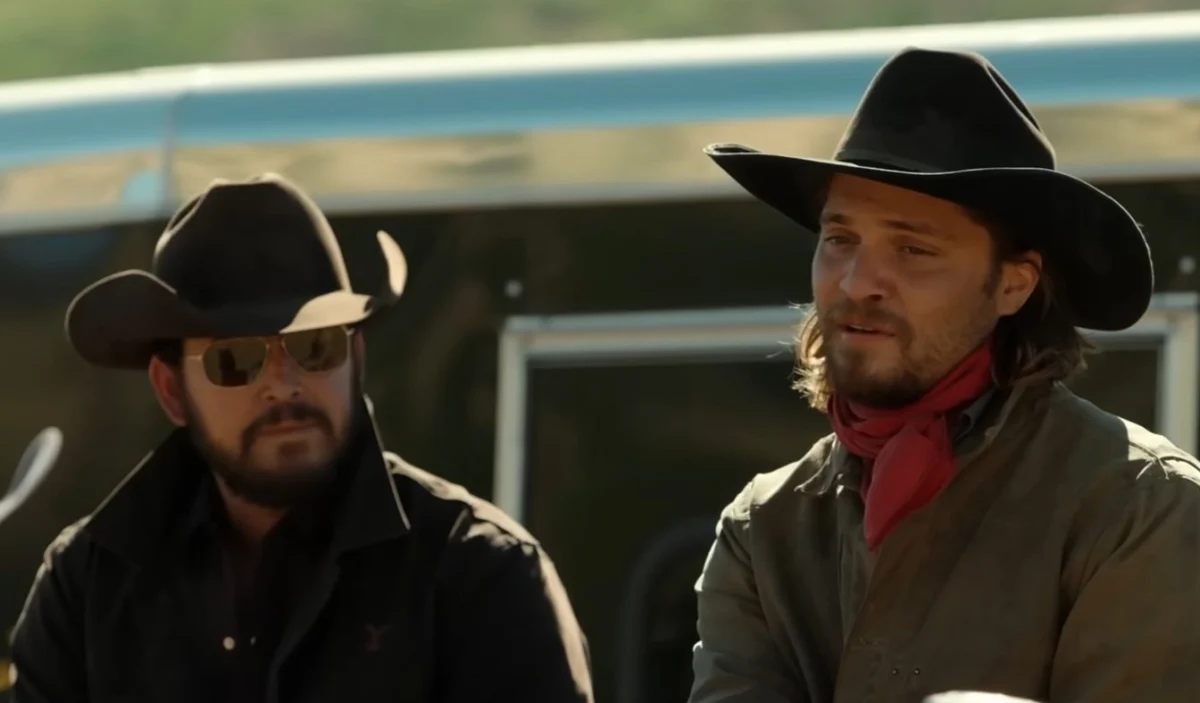
The enduring legacy of Taylor Sheridan’s television empire continues to dominate contemporary media landscapes, driven by the sustained success of its various offshoots and expansions. Following the monumental conclusion of the flagship series Yellowstone, the television universe has fractured into specialized narratives designed to explore distinct corners of the American frontier and the complex legal and familial structures governing them. Among the most prominent beneficiaries of this expansion are the spinoff series Dutton Ranch and Marshals, both of which completed their inaugural seasons to substantial critical and commercial reception. As these narratives prepare for their sophomore outings, discussions surrounding narrative integration have intensified, with principal cast members actively advocating for a formal crossover event.
Luke Grimes, who portrays Kayce Dutton across the franchise’s iterations, has recently elevated the discourse from casual speculation to professional necessity. Speaking in depth with industry analysts, Grimes articulated a narrative imperative for his character to reconnect with established family members from the broader Yellowstone ecosystem. With the premiere of Marshals Season 2 approaching in early October and Dutton Ranch securing further creative guidance from series creator Taylor Sheridan for its second season, the logistical framework for such a crossover is undergoing rigorous internal evaluation. This development highlights a broader trend within modern serialized television, where shared universes are increasingly leveraged to maintain audience engagement and expand narrative horizons.
Chronology of the Yellowstone Expansion and Spinoff Development
The genesis of the current multi-series landscape dates back to the concluding chapters of Yellowstone, which set viewership records for cable networks and established a dedicated global fan base. Upon the formal conclusion of the original series, Paramount and executive producers recognized the commercial viability of maintaining the established fictional universe through targeted continuations. Dutton Ranch was greenlit to explore the immediate aftermath of the Dutton family’s struggles to preserve their land, heritage, and dynamic amidst changing socioeconomic conditions in Montana. Concurrently, Marshals was developed to follow specific law enforcement perspectives operating within and adjacent to the territories historically influenced by the Dutton family’s sprawling footprint.
Both series debuted to monster ratings during their respective first seasons, confounding industry skeptics who questioned whether the universe could survive without its foundational anchor. The conclusion of Season 1 for both programs arrived simultaneously, prompting immediate greenlights for second seasons. Marshals demonstrated an exceptionally rapid production turnaround, scheduling its sophomore season premiere for early October. Meanwhile, Dutton Ranch adopted a more deliberate production schedule for its second season, notably welcoming the return of Taylor Sheridan directly to the writers’ room to ensure narrative continuity and thematic alignment with the original series.
The Narrative Case for Integration
The creative argument for a crossover between Dutton Ranch and Marshals centers primarily on character genealogy and unresolved emotional arcs. Following the death of Monica Dutton—Kayce’s wife—audiences anticipated an immediate narrative intervention or acknowledgment from remaining family members, specifically Beth Dutton, portrayed by Kelly Reilly. During the broadcast of Marshals Season 1, however, such crossovers were deliberately avoided. Industry insiders and cast members later explained that the production teams needed sufficient time to establish distinct identities for each spinoff before introducing cross-franchise elements that might overwhelm the fledgling narratives.
Now that both series have successfully established independent viewer bases and distinct thematic tones, the barrier to integration has lowered considerably. Luke Grimes recently addressed the inevitability of the crossover during media engagements, emphasizing the familial ties that render ongoing separation implausible. Grimes noted that Beth remains essentially Kayce’s only surviving immediate family member, alongside his son Tate. From a dramatic perspective, the complete absence of communication or interaction between these characters strains narrative credulity over extended temporal arcs.
Behind-the-Scenes Alignment and Cast Perspectives
The push for a crossover is not isolated to Grimes. Co-stars Kelly Reilly and Cole Hauser have similarly expressed enthusiasm for merging the storylines, transforming what was once a remote possibility into a concerted industry discussion. According to statements from the principal actors, informal discussions regarding a joint narrative arc have occurred frequently behind the scenes. Reilly has hypothesized that while Season 1 was logistically unsuited for complex crossovers due to the heavy lifting required to launch two separate series concurrently, Season 2 offers a stable platform for such endeavors.
The alignment among Grimes, Reilly, and Hauser represents a rare consensus where primary talent actively campaigns for structural changes in production schedules to accommodate character reunions. While network executives and showrunners maintain ultimate control over script development and scheduling, the unified voice of the franchise’s core ensemble creates significant momentum. The collaboration between actors who have spent years developing their respective personas adds weight to the argument that a crossover would serve artistic development rather than serving merely as a promotional gimmick.
Logistical Realities and Production Timelines
Despite the creative enthusiasm of the cast, executing a crossover between Dutton Ranch and Marshals involves complex logistical challenges. The primary obstacle remains the disparate production timelines of the two shows. While Marshals operates on an accelerated schedule—culminating in an October premiere for Season 2—Dutton Ranch remains in earlier stages of production due to the meticulous writing process overseen by Taylor Sheridan.
These divergent schedules mean that any immediate crossover would likely need to occur within the framework of Marshals Season 2, utilizing guest appearances or specialized narrative bridge episodes rather than a simultaneous dual-production event. Alternatively, networks could coordinate long-term arcs designed to align during subsequent seasons, though such planning requires years of advance notice from writers and casting directors. Regardless of the timeline, the physical availability of actors committed to leading their respective series remains a constant variable that requires careful negotiation among management teams and production accountants.
Broader Implications for the Western Genre on Television
The ongoing discourse surrounding the Dutton Ranch and Marshals crossover reflects broader industrial shifts in how television networks manage intellectual property. In an era dominated by cinematic universes popularized by superhero franchises, traditional dramatic genres—particularly contemporary Westerns—have adopted similar serialized strategies. By maintaining interconnected narratives, networks mitigate the risk of audience attrition, encouraging viewers of one show to cross over into another, thereby boosting subscription metrics and advertising revenue across the entire portfolio.
Furthermore, the involvement of Taylor Sheridan as a singular creative force ensures thematic consistency across these disparate productions. Sheridan’s approach relies heavily on exploring the harsh realities of rural American life, institutional corruption, and generational trauma. Integrating characters from Dutton Ranch into Marshals does not merely serve fan service; it reinforces the overarching sociological themes that have defined the franchise since its inception. As networks evaluate the long-term viability of serialized Westerns, the success or failure of this potential crossover will likely serve as a blueprint for future expansions within the genre.
Audience Reception and Future Outlook
Fan reaction to the prospect of a crossover has been overwhelmingly positive, driven by social media engagement and high viewership retention figures across both freshman seasons. For millions of viewers who invested years in the original Yellowstone saga, seeing familiar faces interact within the new narrative paradigms provides a sense of closure and continuity. Whether the integration manifests as a grand, multi-episode event or a subtle, localized interaction such as a phone conversation between Kayce and Beth, the audience expectation has been firmly established.
As Marshals rolls out its second season in October and Dutton Ranch continues production under Sheridan’s watchful eye, all indicators suggest that the creative team is listening to both the cast and the audience. While official confirmation of a crossover episode has not been formally announced by network executives, the convergence of actor testimony, narrative logic, and economic incentives makes such an event increasingly probable. Yellowstone enthusiasts will undoubtedly monitor both series closely in the coming months, scanning for the subtle narrative cues that signal the long-awaited reunion of the Dutton family diaspora.