Johan Budi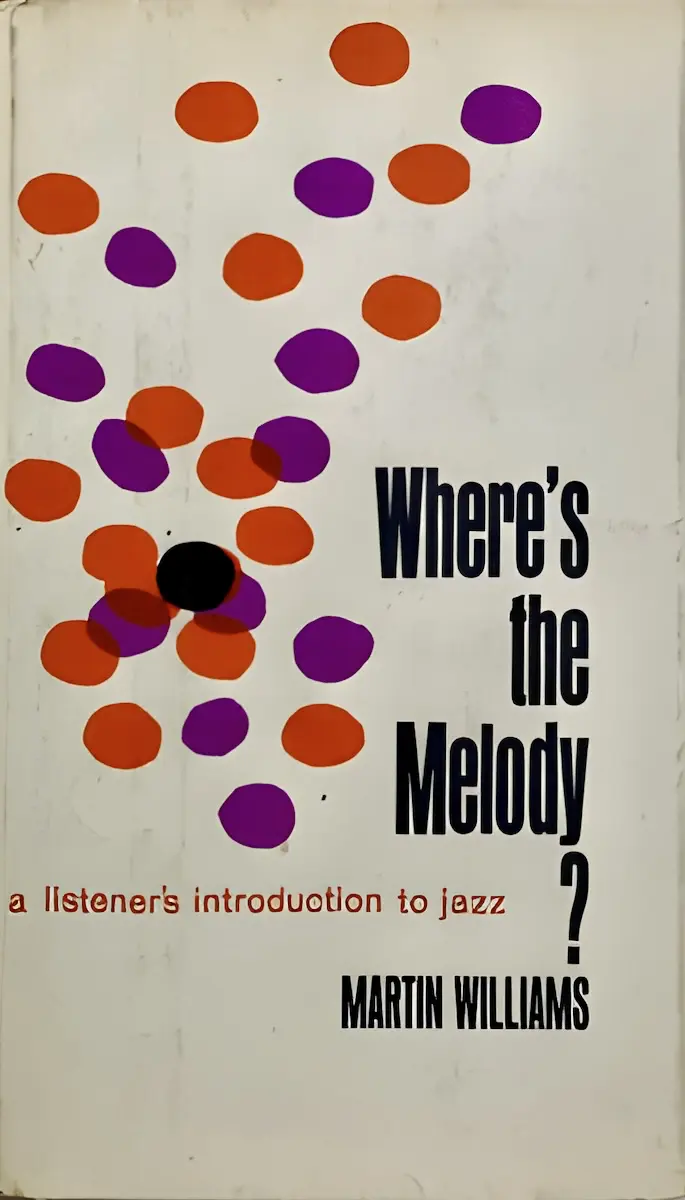
The publication of Martin Williams’ Where’s the Melody? A Contemporary Approach to Jazz by Pantheon Books in 1966 generated considerable discussion within international music journalism and academic circles. Priced at $4.95, the volume arrived during a pivotal transitional era for jazz historiography and criticism. As the genre navigated the turbulent waters of modal jazz, hard bop, and the emergence of avant-garde and free jazz spearheaded by figures like Ornette Coleman, the role of the jazz critic was undergoing a parallel transformation.
Initial contemporary assessments of the book, notably a critical review penned by Don Lindon for Jazz Journal in September 1966, highlighted a growing tension between the lofty pedagogical ambitions of jazz authors and the fragmented realities of assembling collected essays into a cohesive introductory text. Sixty years after Lindon first shared his reservations in the pages of Jazz Journal, a retrospective examination of Where’s the Melody? offers a fascinating lens through which to view the evolution of jazz criticism, the challenges of music education during the mid-20th century, and the enduring debate over how best to communicate the complexities of America’s classical music to the uninitiated public.
Structure and Content of the Volume
Martin Williams, a respected and influential critic whose career included significant contributions to The Jazz Review and the Smithsonian Institution, structured Where’s the Melody? around a noble premise. His stated objective was to bypass rigid chronological and stylistic classifications—the standard textbook approach of moving neatly from New Orleans ragtime to swing and bebop—and instead present the story of jazz through the direct examination of its music and its practitioners.
Despite this promising theoretical framework, contemporary reviewers quickly identified structural deficiencies. The book was partitioned into three distinct sections, yet the connective tissue between them often felt strained. The opening section, titled "On the music," attempted a comprehensive overview. It offered a brief outline of jazz definitions, a concise exploration of the blues supported by recorded examples, an analytical breakdown of eight recorded solos, an explicit chapter on jazz composition, a condensed historical summary of stylistic shifts, and a curated list of recommendations for a basic jazz library.
While certain elements, such as the selected blues recordings, demonstrated careful curation, other components drew sharp criticism. Lindon noted that the recommended library assumed readers approached the material with the dedication of serious students rather than casual enthusiasts, potentially alienating the very demographic the book aimed to educate.
The second section, "On the scene," shifted focus toward profiles of four working musicians: Thelonious Monk, Milt Jackson, Big Joe Williams, and Jimmy Giuffre. While these sketches provided intimate glimpses into the creative lives of jazz artists, critics argued they functioned more as literary amusements than substantial musicological analyses. Particular scrutiny was directed at the prose style employed in the Giuffre profile. Passages detailing atmospheric pauses and physical gestures—such as Jimmy Giuffre proposing to continue playing while bassist Jim Hall and pianist Paul Bley reacted—were described by critics as overly precious. Reviewers argued that such stylistic flourishes sacrificed analytical substance in favor of impressionistic scene-setting.
The final section of the volume comprised brief studies of Horace Silver and Billie Holiday, alongside a brief assessment of Gene Krupa that unexpectedly culminated in praise for trumpeter Roy Eldridge. Williams also included critiques of popular commercial artists such as George Shearing, Oscar Peterson, Ahmad Jamal, and Dave Brubeck—figures whom critics viewed as overly easy targets that did not require Williams’ extensive commentary. The book concluded with a brief exploration of Ornette Coleman under the heading "The new thing in jazz," acknowledging the avant-garde shockwaves altering the genre’s landscape.
Historical and Critical Context of 1966 Jazz Literature
To fully understand the reception of Where’s the Melody?, one must examine the state of jazz literature in the mid-1960s. Prior to this decade, jazz writing was largely dominated by fan magazines, romanticized biographies, and impressionistic liner notes. Authors such as Rudi Blesh, Barry Ulanov, and Leonard Feather had attempted to codify jazz history, but their works often relied heavily on biographical myth-making and strict chronological milestones.
By the mid-1960s, a new generation of critics—including Williams, Nat Hentoff, and Martin Kunzler—sought to elevate jazz criticism to the level of serious literary and musicological analysis. These writers treated jazz not merely as entertaining dance music or historical artifact, but as a sophisticated art form worthy of rigorous aesthetic scrutiny.
However, this transition brought methodological challenges. Many critics operated by compiling previously published essays, liner notes, and magazine articles into book-length manuscripts. This editorial practice frequently resulted in disjointed volumes that lacked the narrative momentum of a unified monograph. Williams, despite his formidable intellect and deep reverence for the music, could not entirely escape this pitfall. The fragmentary nature of Where’s the Melody? underscored the difficulty of transforming a disparate collection of periodical journalism into a coherent pedagogical tool for beginners.
Chronology of Reception and Critical Debate
The release of Where’s the Melody? in 1966 sparked a multi-tiered debate among jazz critics on both sides of the Atlantic. The chronology of its reception reveals a distinct dichotomy between academic appreciation and journalistic skepticism:
- Early 1960s: Martin Williams develops his pedagogical philosophy regarding jazz appreciation, emphasizing close listening to recorded solos over dry historical dates and stylistic labels.
- Spring 1966: Pantheon Books schedules the publication of Where’s the Melody?, marketing it as a fresh alternative to traditional jazz introductions.
- September 1966: Jazz Journal publishes Don Lindon’s critical review, raising foundational questions about the book’s structural cohesion and the appropriateness of its prose style for novices.
- Late 1966 to 1967: General music publications offer mixed reviews, praising Williams’ deep knowledge of the artists while echoing concerns that the volume functioned better as an anthology of essays than a structured introductory textbook.
- Post-1967: The book assumes a secondary role in jazz education, studied primarily by scholars analyzing the history of jazz criticism rather than utilized as a primary text for introductory courses.
Comparative Analysis: Intent Versus Execution
The fundamental tension identified by contemporary reviewers lay in the gap between Williams’ conceptual ambitions and his editorial execution. Williams understood that traditional stylistic categorizations often hindered appreciation by forcing living, breathing music into rigid historical boxes. His emphasis on musical mechanics—analyzing specific solos and compositional structures—was a progressive step forward for jazz education.
Yet, the execution suffered from what critics termed a lack of architectural unity. By attempting to serve both absolute beginners and seasoned listeners, the book struggled to find a consistent register. For the novice, the technical analysis of recorded solos and the demanding foundational listening list proved intimidating. For the experienced aficionado, the profiles of mainstream artists and the brief critiques of popular figures offered little new insight.
Furthermore, the stylistic inconsistency within the writing itself—shifting abruptly from rigorous musicological breakdown to impressionistic, atmospheric prose—created a jarring reading experience. While Williams was universally recognized as one of the most literate and thoughtful voices in jazz journalism, Where’s the Melody? demonstrated the inherent perils of compiling diverse periodical outputs under a single unifying title without substantial structural revision.
Broader Impact and Long-Term Implications for Jazz Education
Despite the contemporary criticisms leveled against Where’s the Melody?, the broader impact of Martin Williams’ critical philosophy left an indelible mark on jazz scholarship. Williams was a pioneer in advocating for the institutional recognition of jazz. His later work with the Smithsonian Institution, including the curation of the monumental Smithsonian Collection of Classic Jazz released in 1973, realized many of the pedagogical goals he pursued in his writing.
The debate sparked by reviews in Jazz Journal and similar publications ultimately contributed to a more rigorous standard for jazz pedagogy. As academic institutions began to formalize jazz studies programs in the late 1960s and 1970s, educators recognized that teaching jazz required a careful balance between historical contextualization, technical music analysis, and accessible narrative frameworks.
Textbooks that followed in the subsequent decades—such as those by Mark Gridley and Ted Gioia—benefited from the lessons learned during the mid-century transition. They successfully avoided the trap of presenting mere assortments of leftover articles, opting instead for systematically structured volumes designed specifically for the modern classroom.
Sixty years after Don Lindon first questioned whether Martin Williams’ volume was a cohesive introduction or a collection of literary leftovers, Where’s the Melody? remains a compelling historical document. It captures a crucial moment when jazz criticism was actively seeking a new vocabulary to match the sophistication of the music it served. While it may not have succeeded entirely as an introductory primer for absolute beginners, it endures as a testament to the intellectual vigor and passionate engagement of the critics who fought to secure jazz its rightful place in the pantheon of global art forms.