Jia Lissa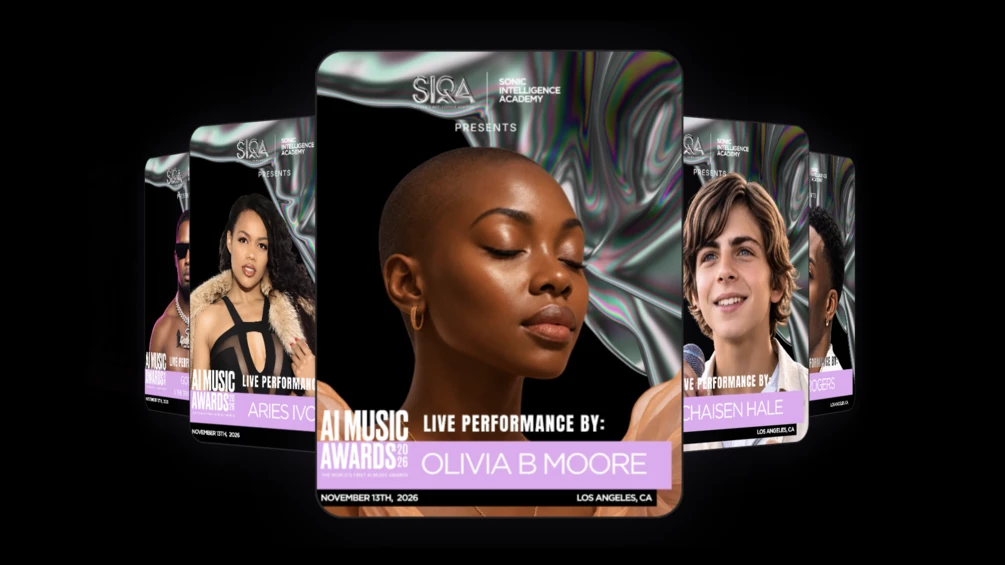
The intersection of artificial intelligence and popular music is set to reach a novel milestone this autumn as Los Angeles prepares to host the world’s first-ever AI Music Awards. Scheduled for November 13 at the historic Mayan theatre, the event promises an unusual spectacle: a roster of non-human, algorithmically generated musical acts performing “live” before an audience. This groundbreaking gala highlights the rapidly accelerating integration of generative machine learning into the mainstream commercial music industry, raising profound questions about authorship, performance, copyright law, and the economic future of human musicianship.
At the heart of the upcoming ceremony is a curated lineup of synthetic performers who have already begun carving out space in traditional music markets. Among the headliners is Xania Monet, an AI-driven persona whose track “How Was I Supposed To Know” made history by entering a Billboard radio airplay chart. Conceptualized and engineered by songwriter Telisha “Nikki” Jones, Monet’s commercial viability triggered a fierce bidding war among record labels before ultimately securing a reported $3 million signing deal with Hallwood Media.
Monet will be joined on stage by a cohort of other digital entities, including Sheena Taylor, Olivia B Moore, Godfellow, Aries Ivory, Chaisen Hale, and EJ Rogers. The event itself has been meticulously orchestrated by the Sonic Intelligence Academy (SIQA), an organization positioning itself as a premier global hub for ethical, innovative, and transparent artificial intelligence music development, backed by financial support from the venture capital firm 1517 Fund.
The Mechanics of Algorithmic Performance
Staging a live performance featuring acts that lack physical form presents unique logistical challenges. According to organizers at SIQA, the November 13 showcase will not rely on simple playback or standard holographic projections. Instead, the evening is structured around a series of hybrid human and AI presentations.
The human creators, producers, and engineers behind each synthetic artist will act as live stage directors, orchestrating the digital assets in real time. These performances will be bolstered by a physical backing band, immersive visual installations, and dynamic multimedia elements designed to bridge the gap between abstract computer code and a traditional concert environment. By integrating live musicians with algorithmic outputs, the producers aim to transcend the novelty factor and deliver a cohesive artistic experience.
The competitive scope of the awards is equally comprehensive, designed to mirror traditional industry accolades while acknowledging the unique production methods of machine-generated art. Categories span across foundational elements of the recording industry, including Best AI Song, Best AI Artist, Best AI Album, and Best AI Producer of the Year. Additional awards will recognize achievement in specific fields such as Best AI Group, Best AI Music Video, Best AI Collaboration, and Best AI-Assisted Song. Furthermore, genre-specific accolades will honor outstanding contributions in R&B, country, gospel, pop, rock, alternative, hip-hop, and jazz.
A Rapidly Evolving Ecosystem and Regulatory Infrastructure
The timing of the AI Music Awards coincides with a period of intense structural development within the digital audio sector. SIQA’s launch of the inaugural AI music charts, alongside its proprietary Verified Registry and accompanying software application, represents an early attempt to introduce transparency into an otherwise opaque market. Introduced earlier this year, the registry allows creators to document the precise extent to which artificial intelligence was utilized in the composition, mixing, and mastering of their tracks.
Data emerging from these new registries provides a revealing glimpse into the tools currently dominating the landscape. According to industry analysis published by Music Business Worldwide, out of 1,551 tracks submitted to SIQA’s tracking services during the first quarter of the year, more than 90% were produced using the generative audio platform Suno. Additionally, nearly 76% of those submissions were routed through digital music distributor DistroKid, underscoring how accessible high-volume generative tools have become to independent creators and hobbyists alike.
This democratization of music production has, however, created a massive surge in platform volume, forcing streaming services and industry organizations to grapple with the sheer scale of algorithmic output. The numbers across major digital service providers illustrate an exponential upward trajectory. In April, streaming platform Deezer reported that AI-generated music accounted for 44% of all new daily uploads to its catalog. By July, that figure had climbed past 50%, cementing a new reality where machine-made tracks make up the majority of incoming digital inventory.
Industry Pushback and the Drive Toward Responsible AI
While innovators and venture capitalists celebrate the commercial viability of algorithmic art, the traditional music industry has responded with a mixture of caution, regulation, and outright restriction. Stakeholders are increasingly concerned about copyright infringement, the unauthorized use of human artist likenesses and voices, and the potential devaluation of human labor in professional recording studios.
These tensions have resulted in a wave of policy shifts across the global music business. In August, digital music marketplace and DJ culture hub Beatport instituted a strict ban on fully generative, AI-created tracks, drawing a sharp line between human-led, AI-assisted production and entirely automated compositions.
Concurrently, tech companies and platforms are seeking to establish ethical frameworks to govern the integration of machine learning tools. Earlier this month, electronic music icons Armin van Buuren and Laidback Luke announced they were joining the advisory board of Moises, a company specializing in "responsible" AI music technology. Moises focuses on developing tools that empower artists rather than replace them, such as audio separation and stem-splitting software designed to aid human creators in the mixing and mastering process.
Broader Implications for Culture, Copyright, and Commerce
The convergence of events—ranging from multi-million-dollar label signings for non-human acts to major streaming platforms being inundated with automated tracks—signals a fundamental paradigm shift in how recorded sound is generated, consumed, and monetized.
Critics and labor advocates argue that the normalization of AI artists threatens to displace session musicians, background vocalists, songwriters, and producers who rely on traditional royalties for their livelihoods. Furthermore, legal scholars continue to debate the copyright status of works created with minimal human intervention, as current intellectual property laws generally require human authorship for copyright protection.
Conversely, proponents of algorithmic music view these developments as a natural evolution of music technology, comparable to the historical introduction of the synthesizer, the sampler, and digital audio workstations. They argue that platforms like the AI Music Awards provide a necessary forum to celebrate technical innovation, showcase new workflows, and establish community standards for ethical usage.
As the industry converges on The Mayan in Los Angeles this November, the spotlight will not only be on Xania Monet and her digital peers, but on the broader question of what the future holds for human creativity in an age of intelligent machines. Whether the inaugural AI Music Awards will be remembered as a passing novelty or the dawn of a permanent artistic genre remains to be seen, but the signals from the marketplace indicate that algorithmic music has firmly transitioned from the laboratory to the main stage.