Lana Akmaluna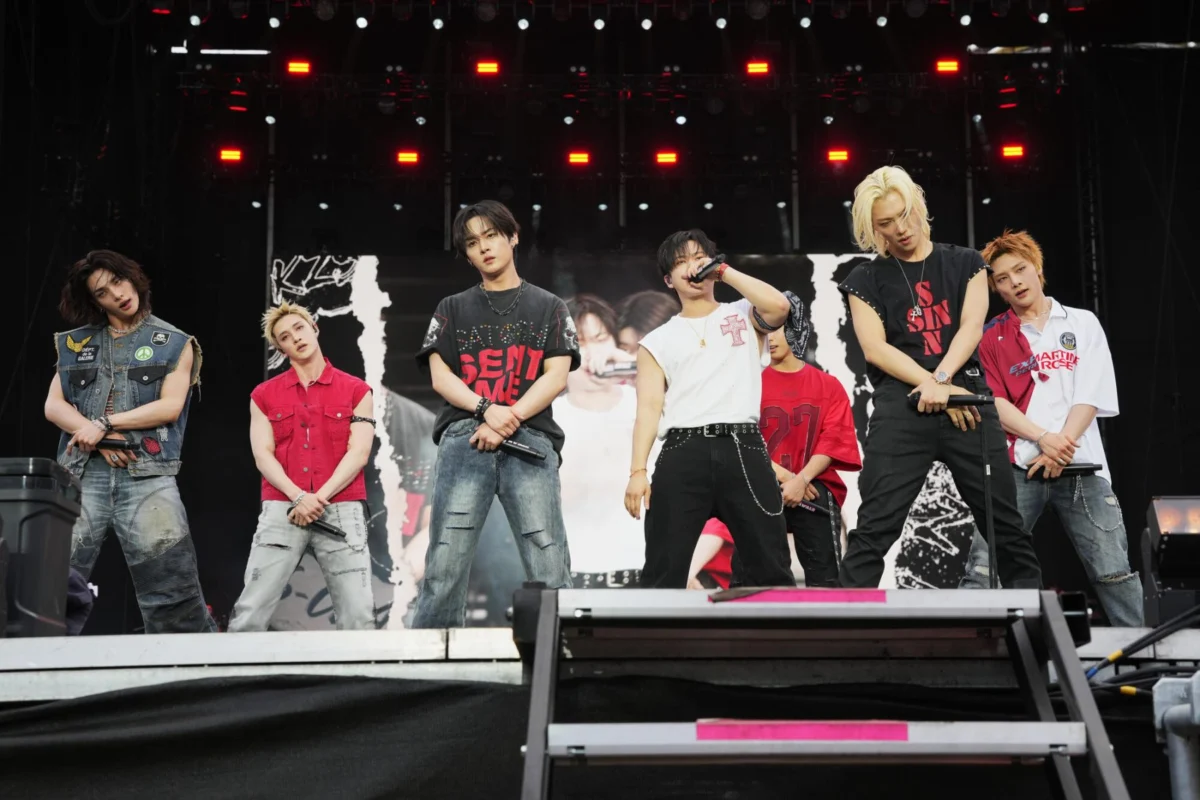
The intersection of global diplomacy and modern pop culture produced an unexpected logistical mix-up in Mexico City this week, culminating in a public clarification by Mexican President Claudia Sheinbaum. On Thursday, September 24, 2026, President Sheinbaum addressed a misunderstanding that had drawn hundreds of ardent K-pop fans to the historic National Palace. Earlier that morning, during her routine presidential press conference, the head of state had inadvertently announced that the internationally acclaimed South Korean music group Stray Kids would accompany South Korean President Lee Jae Myung on his official state visit to Mexico.
The announcement immediately mobilized the group’s dedicated fanbase, collectively known as STAY, who rushed to the central plaza in anticipation of catching a glimpse of Bang Chan, Lee Know, Changbin, Hyunjin, Han, Felix, and I.N. However, as the morning progressed, it became evident that the musical ensemble was not part of the diplomatic entourage. President Sheinbaum later took to her official social media channels to clarify the situation, confirming that while the South Korean president was warmly received at the national headquarters, the members of Stray Kids were already preparing independently for their upcoming back-to-back stadium performances in the capital.
Diplomatic Itinerary Meets Global Music Phenomenon
The sequence of events began during the high-profile state visit of South Korean President Lee Jae Myung to Mexico, aimed at strengthening bilateral trade, cultural exchange, and diplomatic ties between Seoul and Mexico City. State visits of this magnitude typically involve complex delegations encompassing government officials, trade representatives, and occasionally cultural ambassadors.
President Sheinbaum, known for her direct communication style and active presence on digital platforms, sought to highlight the growing cultural bridge between Mexico and South Korea during her morning briefing. In doing so, she mentioned the arrival of the South Korean leader and added that the delegation included the prominent K-pop group Stray Kids. Describing the group for a broader demographic, she remarked that they were reminiscent of the global phenomenon BTS, albeit younger in demographic profile and membership age.
This casual comparison quickly gained traction across news outlets and social media platforms. Fans of Stray Kids—whose members range in age from 25 to 28, compared to BTS members who range from 29 to 33—mobilized rapidly. Within hours, a dense crowd of enthusiastic supporters gathered outside the National Palace surrounding the Zócalo, hoping to witness a public appearance similar to the historic scene that unfolded months prior.
The Precedent of BTS at the National Palace
The heightened expectations of the fans were largely fueled by recent precedent. Just months earlier, in May 2026, members of BTS made headlines globally when they visited the National Palace during a diplomatic and cultural exchange. During that visit, BTS members appeared on the historic balcony alongside Mexican officials, waving to an estimated 50,000 members of the ARMY who had flooded the Zócalo.
That landmark event established a powerful template for how contemporary pop diplomacy could intersect with traditional statecraft in Mexico. Consequently, when President Sheinbaum mentioned Stray Kids during her morning address, local fans naturally assumed a similar public greeting would take place.
However, unlike the previous presidential visit, the itinerary for President Lee Jae Myung did not include the septet. While Presidents Sheinbaum and Lee did step out onto the presidential balcony to greet the gathered crowds and acknowledge the public support, the members of Stray Kids were notably absent from the delegation.
President Sheinbaum’s Clarification and Apology
Recognizing the confusion her remarks had generated, President Sheinbaum utilized her official TikTok account later that Thursday evening to set the record straight and address the disappointed fans waiting outside the government headquarters.
In the video statement, recorded as she bade farewell to the visiting South Korean leader, Sheinbaum clarified the misunderstanding with characteristic transparency. She explained that the initial assumption stemmed from the coincidence of the presidential visit aligning with the group’s arrival in the country for their scheduled concert tour.
"We are seeing off the president of the Republic of Korea, Lee Jae Myung," Sheinbaum stated in the video message. "We thought perhaps he was coming with the group Stray Kids. They are performing tomorrow at one of Mexico City’s most important venues. And we have already invited them to come to our country on another occasion."
The clarification effectively calmed the crowds gathered at the Zócalo, while simultaneously redirecting public attention toward the group’s actual itinerary in the country.
Concert Schedule and Logistical Realities
The members of Stray Kids arrived in Mexico City independently of the diplomatic delegation to fulfill a rigorous commercial performance schedule. The group is slated to perform two massive consecutive shows on Friday, September 25, and Saturday, September 26, 2026, at the Estadio GNP Seguros, one of the premier open-air concert venues in the Mexican capital.
The stadium shows represent a major milestone for the group’s ongoing global touring circuit, reflecting the massive commercial footprint and drawing power of K-pop in Latin America. Event organizers and local authorities implemented heightened security measures around the venue and surrounding transit hubs to accommodate tens of thousands of ticket holders arriving from across the region.
Unlike official state delegations, which operate under strict diplomatic protocols, touring musical acts adhere to commercial production schedules, rehearsals, and technical setups that require significant preparation time on-site, making simultaneous participation in state functions logistically improbable.
Broader Implications for Cultural Diplomacy
The incident underscores the profound socio-cultural impact of the Hallyu (Korean Wave) movement in Latin America. Over the past decade, Mexican audiences have emerged as one of the most vibrant and organized consumer bases for Korean popular culture, music, and media.
Political analysts note that the integration of cultural references by heads of state reflects a broader strategy of public diplomacy. By acknowledging popular cultural exports, political leaders aim to resonate with younger demographics and emphasize modern, multifaceted bilateral relations that extend beyond traditional trade agreements and political treaties.
However, the mix-up also highlights the unique challenges and rapid dissemination speed of modern political communication. In an era where casual remarks made during live-streamed press conferences can instantly mobilize thousands of citizens via social media, the margin for administrative miscommunication has narrowed significantly.
Looking forward, President Sheinbaum’s open invitation to Stray Kids leaves the door open for a future, properly coordinated engagement between the administration and the musical group. For now, however, the focus remains firmly on the music, as thousands of fans prepare to fill Estadio GNP Seguros for a weekend of landmark performances that cement Mexico City’s status as a premier global destination for international music acts.