Mia Khoirunisa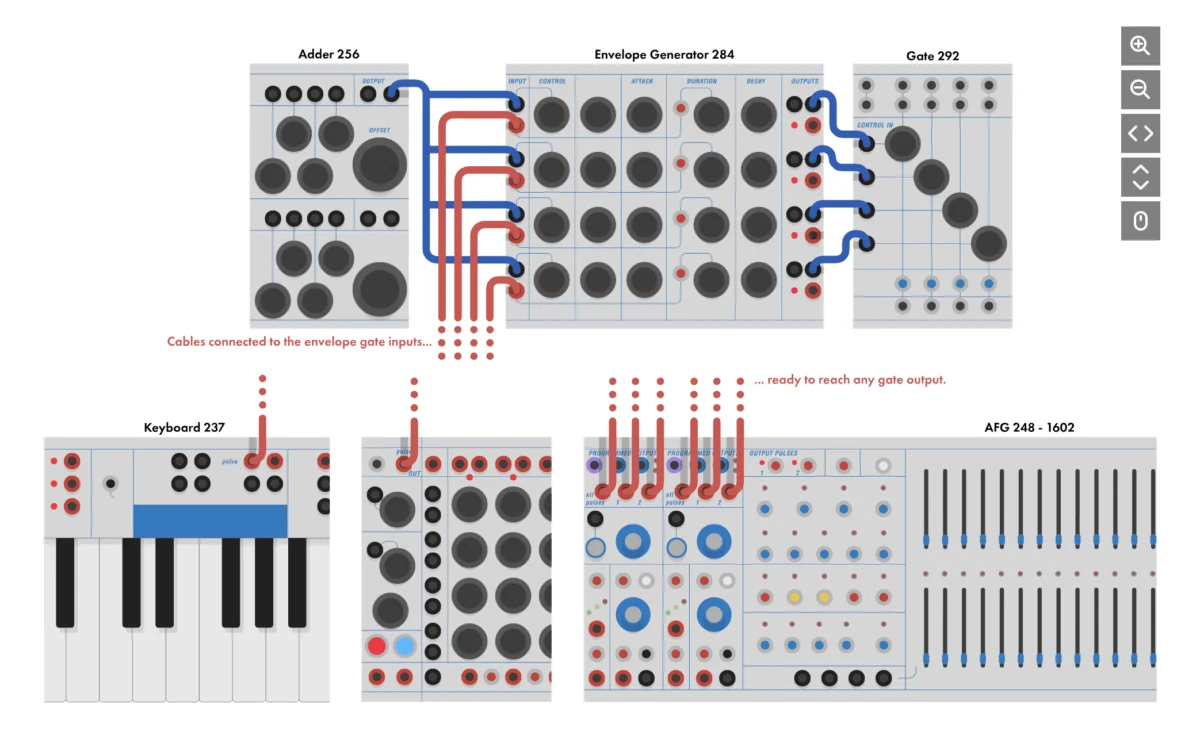
Electronic music pioneer Suzanne Ciani’s seminal 1976 report to the United States National Endowment for the Arts (NEA)—famously framed as a modular synthesizer cookbook—has been digitized and made available to the public for free. Originally submitted as a typed manuscript detailing her avant-garde compositional processes, the newly released interactive edition allows contemporary sound designers, students, and enthusiasts to explore Ciani’s foundational methods using freely available software, complete with embedded audio examples and modern platform translations.
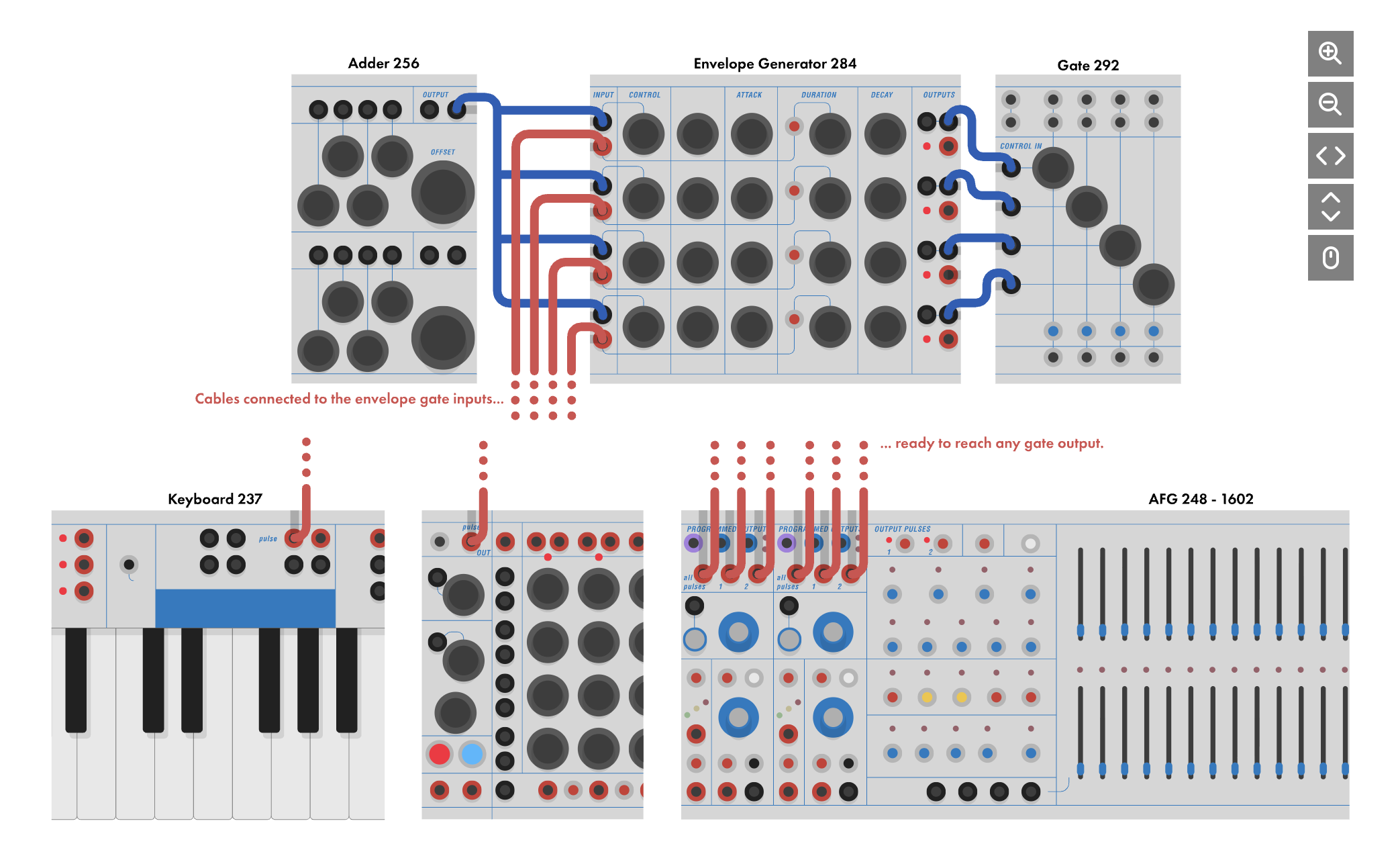
The digital publication is hosted on ECHO, an initiative by the Music, Thought and Technology (MTT) research group at Belgium’s Orpheus Institute. Spearheaded by contributors Pierre Collard and Juan Parra Cancino, the project breathes new life into a historic document that bridges the gap between mid-century academic electronic music and accessible, organic sound design. By pairing Ciani’s original typewritten pages and hand-drawn diagrams with software-based reconstructions—such as VCV Rack patches—the release offers an educational bridge across generations of synthesis technology.
Main Facts of the Release
The newly launched digital archive transforms Ciani’s 1976 NEA-funded documentation into a dynamic educational resource. Users can access the complete text, schematics, and sound examples online without charge. Furthermore, the initiative proves that ownership of rare, vintage hardware—specifically Don Buchla’s legendary West Coast synthesis systems—is no longer a prerequisite for studying Ciani’s techniques. Through VCV Rack video integrations, modern producers can reconstruct her exact voltage routings, pitch rows, and spatial audio concepts using software on standard Windows or macOS computers.
For purists and collectors, the original, hand-annotated typewritten document remains available for purchase in physical facsimile form through Ciani’s official website for a nominal fee. The inclusion of these handwritten notes preserves the personal, artistic idiosyncrasies of a document created during a transformative era of electronic music history.
Chronology and Historical Context
To understand the weight of Ciani’s 1976 report, one must examine the landscape of electronic music production in the 1960s and 1970s. During this period, electronic composition was largely confined to heavily funded academic and institutional laboratories, dominated by rigid academic structures and male-dominated hierarchies.
- 1970s: Suzanne Ciani establishes herself as a master of the Buchla 200 modular synthesizer system, developing a distinct vocabulary that favored organic fluidity over traditional keyboard-driven composition.
- 1976: Ciani completes her fellowship report for the National Endowment for the Arts, translating her technical methodologies into culinary metaphors to make complex voltage control digestible.
- 1980s–2000s: Ciani transitions into commercial success, scoring iconic television advertisements, pinball machines (such as Bally’s Xenon), and releasing Grammy-nominated New Age electronic albums, while her early modular work remains an underground touchstone.
- Modern Era: The revival of interest in modular synthesis, fueled by both hardware resurgence and open-source software like VCV Rack, sets the stage for archival projects like the ECHO digital edition.
The Culinary Metaphor of Synthesis
At the heart of Ciani’s 1976 document is a philosophy of sound that rejects sterile, mathematical composition in favor of daily experimentation. Ciani famously summarized her approach to the Buchla system through the lens of cooking:
"In cooking, we take many fundamental ingredients and combine them in different ways and amounts and produce endless creations. A little randomness here, a pinch of FM there, a mixing together of voltages and gestures. Voila! A musical souffle! In quadraphonic! Cooking needs to be done every day and it never turns out the same. That’s the fun."
This metaphor has since become a foundational teaching tool in synthesizer workshops worldwide. Rather than viewing patch cables and control voltages as cold engineering constraints, Ciani framed them as organic elements subject to intuition, variation, and immediate sensory feedback. Her notes outline sophisticated approaches to sequencing pitch rows, configuring gates and modulation, shaping "bowed" envelopes, and exploring spatial audio dimensions—techniques that remain deeply relevant to contemporary electronic musicians.
Reflections on Isolation and Institutional Rebellion
Accompanying the digitized cookbook is a newly published interview with Ciani, shedding light on the socio-musical climate of her early career. Reflecting on her decision to bypass traditional academic composition pathways in favor of hands-on synthesis, Ciani addressed the profound isolation of being a trailblazer: "Yes, it was very lonely to speak a language that no one else was speaking."
In the 1970s, the Buchla system—championed by Donald Buchla in Berkeley, California—represented a radical departure from the East Coast paradigm established by Robert Moog. While Moog instruments relied on conventional piano-style keyboards and structured scales, Buchla systems emphasized touch-sensitive plates, complex voltage generators like the 248 Multiple Arbitrary Function Generator (MARF), and spatial sound manipulation. As a woman operating outside traditional institutional patronage networks, Ciani’s mastery of West Coast synthesis required immense resilience, ultimately paving the way for generations of female producers and sound artists.
Technical Implications and Open-Source Translation
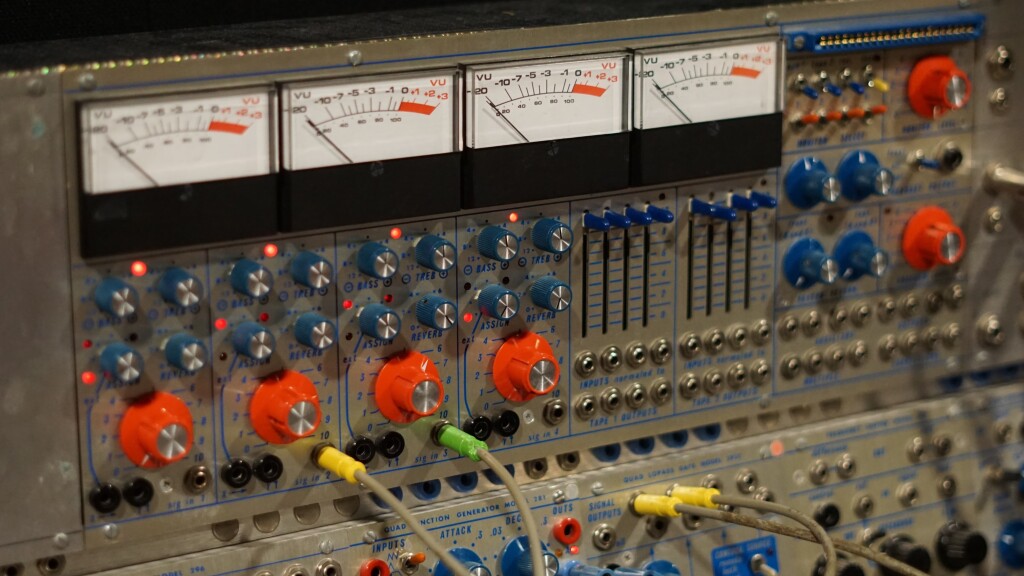
The collaboration between the Orpheus Institute and the digital archiving team addresses a long-standing barrier in electronic music education: accessibility. Vintage Buchla hardware systems are notoriously rare, fragile, and prohibitively expensive, often costing tens of thousands of dollars on the secondary market.
By translating Ciani’s patch diagrams into VCV Rack—a popular, open-source virtual modular platform—the ECHO project democratizes access to her pedagogical framework. Students and producers can analyze how Ciani constructed complex textures using frequency modulation, random voltage sources, and sequential control voltages without requiring physical access to rare modular units. The inclusion of video demonstrations bridges the gap between static notation and dynamic execution, allowing users to hear the granular details of her spatial and melodic phrasing.
Broader Impact on Music Education and Archival Preservation
The release of Suzanne’s Buchla Cookbook highlights a broader shift in how musicology and archival institutions preserve electronic music history. Historically, electronic music has suffered from a preservation gap; because the medium is inherently tied to rapidly evolving technology, early works and methodologies often risk fading into obscurity as hardware becomes obsolete.
Projects like the one undertaken by the MTT research group at the Orpheus Institute demonstrate that preserving electronic music requires more than archiving audio recordings—it requires capturing the process of creation. By making foundational pedagogical documents interactive and open-source, researchers ensure that the methodologies of pioneers remain active, living tools for future generations of artists.
Furthermore, the initiative reinforces the educational value of cross-disciplinary metaphors. Ciani’s use of culinary concepts to explain voltage-controlled synthesis continues to influence modern curriculum design, proving that technical proficiency is most effectively achieved when paired with intuitive, creative engagement.
As electronic music production becomes increasingly democratized through software and hardware revivals, Suzanne Ciani’s 1976 cookbook stands as a testament to the enduring power of curiosity-driven sound design. Through this new digital edition, a new generation of musicians can pull up a chair to her musical kitchen, experiment with the fundamental ingredients of voltage and gesture, and participate in a tradition of joyful sonic rebellion.