 Aveline Kirana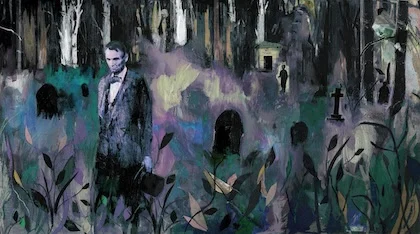
The Metropolitan Opera’s upcoming premiere of Missy Mazzoli’s Lincoln in the Bardo has generated significant buzz, not only for its ambitious artistic scope but for the potential attendance of global pop superstar Dua Lipa. During a recent appearance at the Denyce Graves Foundation Harvest Moon Gala, Peter Gelb, the General Manager of the Metropolitan Opera, sparked industry speculation by suggesting that the Grammy-winning artist—who commands an audience of 88 million followers on Instagram alone—has expressed genuine interest in the new production. Whether this attendance would manifest as a simple front-row appearance or a more involved project, such as a behind-the-scenes camera crew documenting the operatic process, remains a subject of intense conjecture within the arts community.
While Gelb’s comments were delivered with a degree of informality that suggests they might have been made in jest, or perhaps confused with Lipa’s earlier attendance at the Teatro alla Scala’s season-opening production of La Traviata in Milan, the connection between the pop star and this specific operatic work is grounded in established facts. In early 2024, Lipa hosted George Saunders, the author of the Booker Prize-winning novel upon which the opera is based, on her acclaimed podcast, Service95. During that episode, the singer spoke at length about her admiration for Saunders’ bibliography, describing herself as a "huge fan" and advocating for his work to her massive, primarily younger, demographic.
The Source Material: A Modern Literary Masterpiece
The opera Lincoln in the Bardo is an adaptation of George Saunders’ 2017 novel, which marked the author’s first full-length work of fiction. The narrative is a profound exploration of grief, mortality, and the metaphysical concept of the "bardo"—a transitional, purgatorial state between life and the afterlife.
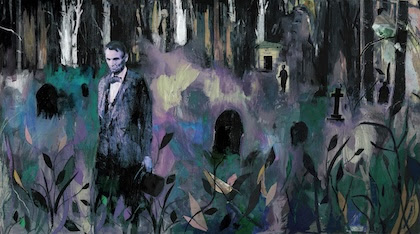
The story is centered on the historical figure of Willie Lincoln, the 11-year-old son of President Abraham Lincoln, who died of typhoid fever in 1862. In the fictionalized narrative, the young boy’s spirit becomes trapped in the bardo, unable to move on because his father’s profound, debilitating grief acts as an anchor. The opera dramatizes the supernatural struggle of these spirits, who reside in a cemetery, observing the world of the living while clinging to their own forgotten histories and identities.
The adaptation for the stage is spearheaded by American composer Missy Mazzoli, one of the most prominent voices in contemporary classical music, with a libretto written by Royce Vavrek. Mazzoli, known for her ability to blend atmospheric soundscapes with visceral emotional stakes, is the second woman ever commissioned to write an opera for the Metropolitan Opera, a milestone that underscores the gravity of this production.
Artistic Leadership and Cast
The Metropolitan Opera has assembled a formidable team to bring this supernatural story to life. Music Director Yannick Nézet-Séguin will conduct the performance, a role that serves as a testament to the production’s importance in the current Met repertoire. The casting choices reflect a mix of powerhouse vocalists capable of handling the demands of modern operatic scoring:
- Peter Mattei: The Swedish baritone, celebrated for his refined technique and dramatic range, is expected to bring gravitas to the production.
- Christine Goerke: A soprano renowned for her Wagnerian and Strauss roles, bringing the necessary intensity to a production rooted in the somber reality of the 19th century.
- Stephanie Blythe: A mezzo-soprano whose presence on the operatic stage is consistently met with critical acclaim for both vocal power and character depth.
- Anthony Roth Costanzo: A countertenor whose career has bridged the gap between traditional baroque works and modern, avant-garde operatic presentations.
The Intersection of Pop Culture and High Art
The potential presence of a figure like Dua Lipa at the Metropolitan Opera is more than a mere curiosity; it highlights a broader industry trend of "crossover" engagement. For institutions like the Met, which have faced consistent challenges in diversifying their audience base and appealing to younger demographics, the endorsement of a global cultural icon is statistically significant.
Lipa’s Service95 platform acts as a high-visibility cultural curator. By platforming literary figures like George Saunders, she introduces complex, high-brow subject matter to a segment of the population that might otherwise bypass classical literature or contemporary opera. If she were to attend the premiere, the presence of a film crew—as hinted by Gelb—would suggest a strategic collaboration, likely designed to translate the "behind the curtain" experience of opera into digital content suitable for a massive social media audience.
Historical Context of the Metropolitan Opera’s Modernization
The Metropolitan Opera has historically been viewed as a bastion of tradition, yet under Peter Gelb’s tenure, there has been a concerted push toward modern, topical, and sometimes experimental productions. The commissioning of Lincoln in the Bardo is part of a larger strategy to maintain the relevance of the art form by incorporating contemporary themes—specifically those surrounding the public processing of grief and historical trauma.
Timeline of recent shifts in the Metropolitan Opera’s programming:
- 2018–2019: The Met begins to aggressively expand its contemporary commission slate, moving away from a reliance on the "standard" 19th-century repertoire.
- 2021: The company faces the dual challenge of the post-pandemic landscape and shifting cultural expectations, leading to more diverse casting and a wider range of composers.
- 2023–2024: The focus shifts toward literary adaptations, with Lincoln in the Bardo representing a pinnacle of this movement.
Implications for the Industry
Should the rumors regarding Dua Lipa’s attendance prove true, the implications for the opera industry would be multifaceted. First, it would provide an unparalleled marketing opportunity. The "Lipa Effect"—whereby items, books, or events featured by the singer see immediate spikes in popularity—could translate into increased ticket sales and digital engagement for the Metropolitan Opera.
Second, it validates the work of modern composers. Missy Mazzoli, who has spent years building a reputation within the new music scene, would receive an exposure level rarely afforded to contemporary opera composers. This could potentially influence funding patterns and commission strategies at other major houses, such as the Royal Opera House or the Opéra National de Paris, encouraging them to seek similar "pop-adjacent" partnerships.
Finally, the focus on Lincoln in the Bardo suggests a maturation of the operatic medium. By adapting a story that deals with the liminal spaces of the human experience—the "bardo"—the production moves beyond the melodramatic tropes that often characterize the genre. It offers a psychological depth that aligns with the tastes of modern audiences who are increasingly drawn to "prestige" media that challenges the viewer.
Conclusion: A Waiting Game
As the premiere date approaches, the Metropolitan Opera remains tight-lipped regarding any official arrangements for celebrity guests. The nature of the opera world is such that even the most high-profile visits are often kept quiet until the moment of the curtain rise to ensure the security and focus of the performers.
However, the intersection of Peter Gelb’s comments and Dua Lipa’s documented interest in the works of George Saunders provides a compelling narrative. Whether the pop star arrives with a full camera crew in tow or chooses to attend as a private patron of the arts, the mere association of her name with Lincoln in the Bardo serves to elevate the production. It signals to the world that the Metropolitan Opera is not a static museum of the past, but a living, breathing institution capable of drawing the attention of the world’s most influential cultural voices. As rehearsals continue and the opening night nears, the audience will be watching not only the stage but the front rows, waiting to see if one of music’s biggest stars will be in attendance to witness the intersection of 19th-century history, contemporary literature, and the timeless power of the operatic voice.