 Johan Budi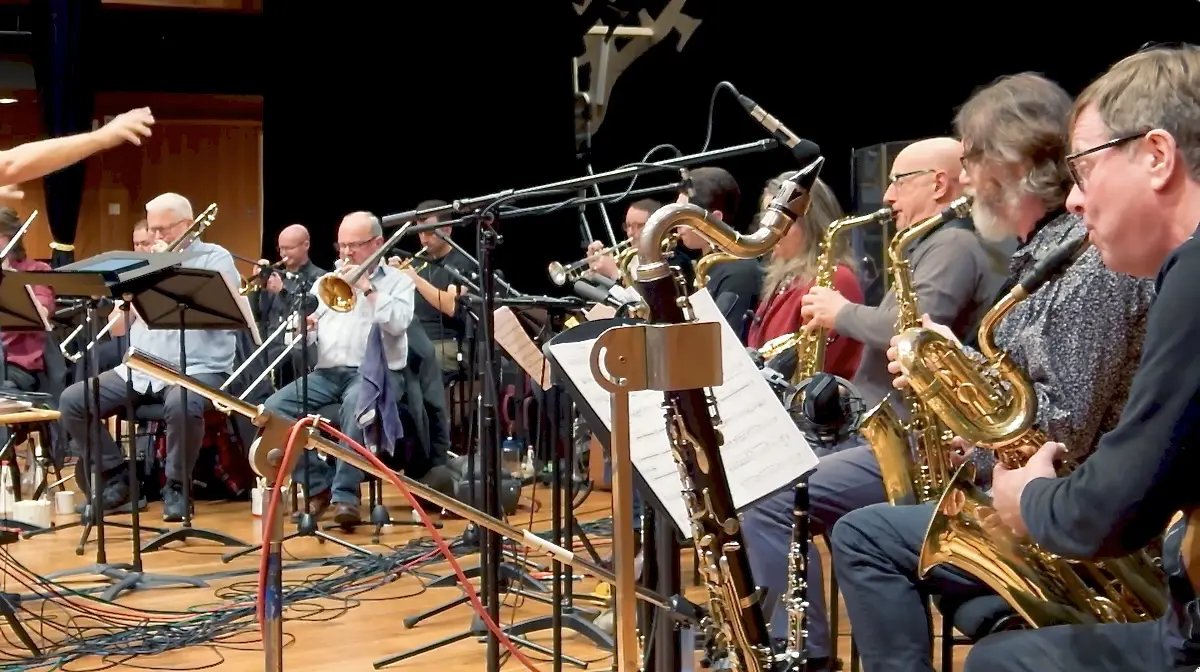
The contemporary and historical landscapes of jazz continue to intersect through a series of notable new releases, reissues, and critical evaluations that highlight the genre’s ongoing evolution. From the modern orchestrations of British altoist Martin Speake to the cross-cultural explorations of Charles Lloyd and a comprehensive retrospective of the late, pioneering multi-instrumentalist Eric Dolphy, recent recordings offer a profound look into the past, present, and future of improvised music. These projects not only showcase exceptional musicianship but also reflect the broader socio-cultural currents, institutional developments, and geographical dialogues that shape the international jazz community.
Martin Speake and Charlie Rees: Hidden Vision and the Mechanics of Modern Big Band Arrangement
The release of the album Hidden Vision on Pumpkin Records (Pumpkin 016) marks a significant collaborative triumph between veteran British alto saxophonist Martin Speake and his former student, arranger and saxophonist Charlie Rees. Recorded on October 30, 2025, in London, the project features a specially assembled big band designed specifically to bring Rees’s expanded charts of Speake’s original compositions to life. Alongside seven original Speake compositions—including Bill Wrathall, Always A First Time, Keith Jarrett, Tom, Keep In Touch, Twister, and the title track—the 58-minute and five-second album also includes an inspired orchestration of Jimmy McHugh’s standard Where Are You?
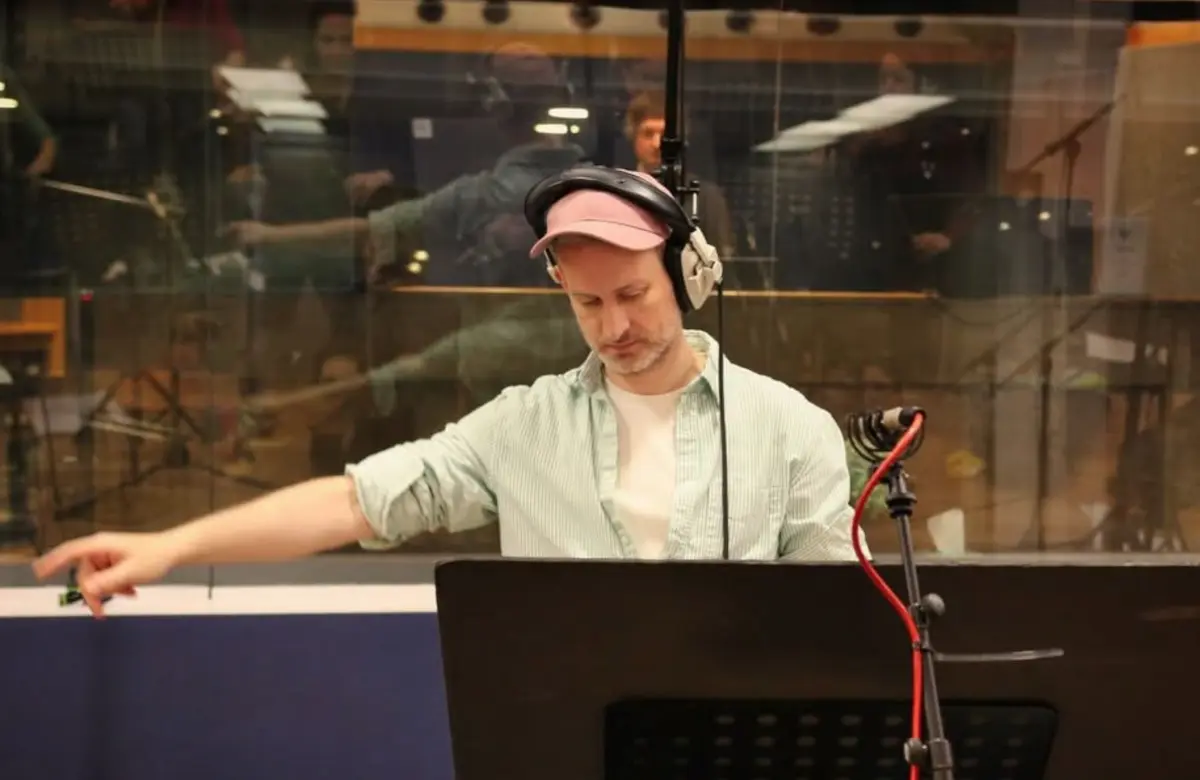
Rees, who is still in his twenties, first began engaging with Speake’s complex compositional framework through scores written for the London Jazz Orchestra. These arrangements were previously performed live at prominent London venues such as The Vortex in Stoke Newington and Morley College. For Hidden Vision, Rees utilized his comprehensive knowledge of historical arrangers while injecting modern nuances to subvert the traditional limitations of a standard 17-piece big band. The ensemble itself features a formidable roster of contemporary British jazz talent, including Martin Hathaway and Alyson Cawley on saxophones and flutes, Duncan Lamont on baritone saxophone and bass clarinet, a trumpet section comprising Louis Dowdeswell, Andy Greenwood, Tom Dennis, and Steven Nichols, and a trombone section featuring Mark Nightingale, Jeremy Price, Martin Gladdish, and Simon Minshall on bass trombone. The rhythm section is anchored by guitarist Mike Outram, Czech pianist Emil Viklický, bassist Matt Ridley, and drummer Tom Hooper, with the entire ensemble expertly guided by conductor Scott Stroman of the Guildhall School of Music and Drama.
Beyond the purely musical achievements of the recording, the project arrives against a backdrop of professional turbulence for Speake. In recent years, the seasoned educator found himself marginalized within the British jazz ecosystem following public debates concerning systemic issues within the scene. After expressing the perspective that the local industry was fundamentally free of widespread racism, Speake faced severe professional backlash from peers and institutional cohorts, effectively limiting his performance opportunities in spaces where he had previously worked with distinction. Observers and critics have noted that Hidden Vision functions on multiple levels: it is simultaneously an exhibition of Rees’s youthful compositional assurance and a display of resilience by Speake, whose commitment to his art remains undiminished by external controversy.
Charles Lloyd: Sangam and Friends and the Geography of Musical Confluence
Exploring the boundaries where jazz meets non-Western traditions, Blue Note Records has released Charles Lloyd: Sangam and Friends (Blue Note 00199957662239), a 45-minute and 25-second collection combining archival trio recordings with newly contextualized cross-cultural collaborations. Recorded in India in 2009 alongside undated archival material from Lloyd’s Sangam trio—featuring legendary tabla player and percussionist Zakir Hussain and drummer Eric Harland—the album presents seven tracks that chart a distinct geographical and sonic confluence.
The tracklist includes Clear The Dust, The Blessing, Jai Ganga, Tagore, Bharati’s Dance, Eternal Dreamer, and Sam On The Ganges, a thoughtful redux of Lloyd’s earlier composition Sombrero Sam. The album structure is divided between three strictly American-recorded trio performances, three tracks featuring the trio augmented by prominent Indian musicians, and one track consisting solely of Lloyd on tenor saxophone accompanied by the Indian ensemble without his rhythm section. The guest artists participating in the Mumbai and Indian recording sessions include vocalist Vijay Prakash, sarangi player Sabir Khan, flutist Rakesh Chaurasia, sitarist and electric sitarist Niladri Kumar, and keyboardist Ranjit Barot.
Lloyd has long conceptualized his cross-cultural projects through a geographical lens. Referencing the term "Sangam"—which in India describes the sacred confluence of three rivers—Lloyd envisioned his musical merger not merely as an East-meets-West exercise, but as a meeting point analogous to the Ganges, the Rio Grande, and the Mississippi. Musically, the album demonstrates how jazz can expand its structural parameters without losing its foundational identity. On the trio-only tracks, Lloyd exhibits a conventionally modal approach, moving fluidly between tenor saxophone and flute on Jai Ganga, exclusively utilizing flute on Tagore, and performing on alto saxophone for Bharati’s Dance and Eternal Dreamer. Harland and Hussain provide an intricate, exotic rhythmic foundation that elevates Lloyd’s soaring modal improvisations, particularly during the complex arabesques of the latter tracks. Conversely, when integrated with the Indian ensemble on pieces like The Blessing and Sam On The Ganges, Lloyd alternately surrenders to indigenous extemporaneous counterpoint and injects a distinct, earthy funk into the proceedings, illustrating a rare balance of cultural equity in improvised music.
Eric Dolphy: The Quintessence and a Retrospective of a Tragic Genius
Providing a historical anchor to these contemporary and cross-cultural releases, Frémeaux & Associés has issued a comprehensive two-CD retrospective titled Eric Dolphy: The Quintessence (FA 3074). Spanning a recording history from 1949 to 1961, the collection captures the remarkably compressed career of one of post-Charlie Parker jazz’s most innovative and singular voices. Dolphy’s life was tragically cut short on June 29, 1964, when he died in Berlin from complications related to undiagnosed diabetes at the age of 36—mirroring the similarly premature death of Charlie Parker, who passed away in 1955 at 34.
The retrospective is meticulously sequenced across two compact discs totaling over two hours and twenty-two minutes of music. Compact Disc 1 (70 minutes and 14 seconds) opens with a 1949 recording of Gassin’ The Wig by Roy Porter and His 17 Beboppers, recorded in Los Angeles, and proceeds through early West Coast sessions, including work with the Chico Hamilton Quintet, before transitioning into pivotal early 1960s dates. The chronological arc highlights Dolphy’s stylistic evolution from the breezier, cooler aesthetic of West Coast bop—which contrasted sharply with the more aggressive, intricate styling of the East Coast scene—to his decisive move to New York at the turn of the decade.
Compact Disc 2 (73 minutes and 27 seconds) covers the explosive period of 1960 to 1961, a time during which Dolphy established himself at the absolute vanguard of modern jazz. Featured recordings include collaborations with the Oliver Nelson Sextet, the Ken McIntyre/Dolphy Quintet, the George Russell Sextet, and his own pioneering ensembles, such as the historic Out There album sessions featuring cellist Ron Carter, where Dolphy fluidly traversed alto saxophone, flute, and bass clarinet. Also included are sides recorded with Mal Waldron and tenor saxophonist Booker Ervin, as well as performances captured during Dolphy’s fateful European tour in late 1961.
The historical importance of this compilation is amplified by the tragic loss of key collaborative partnerships during Dolphy’s lifetime. His plans to build upon a deeply fruitful musical relationship with young trumpet innovator Booker Little were abruptly shattered when Little died in October 1961 at the age of 23. Consequently, Frémeaux’s collection serves not only as an essential repository of mid-century modernism but also as a poignant reminder of a transitional era in jazz history, preserving the recorded legacy of a visionary artist whose complete potential was never fully realized.