 Lana Akmaluna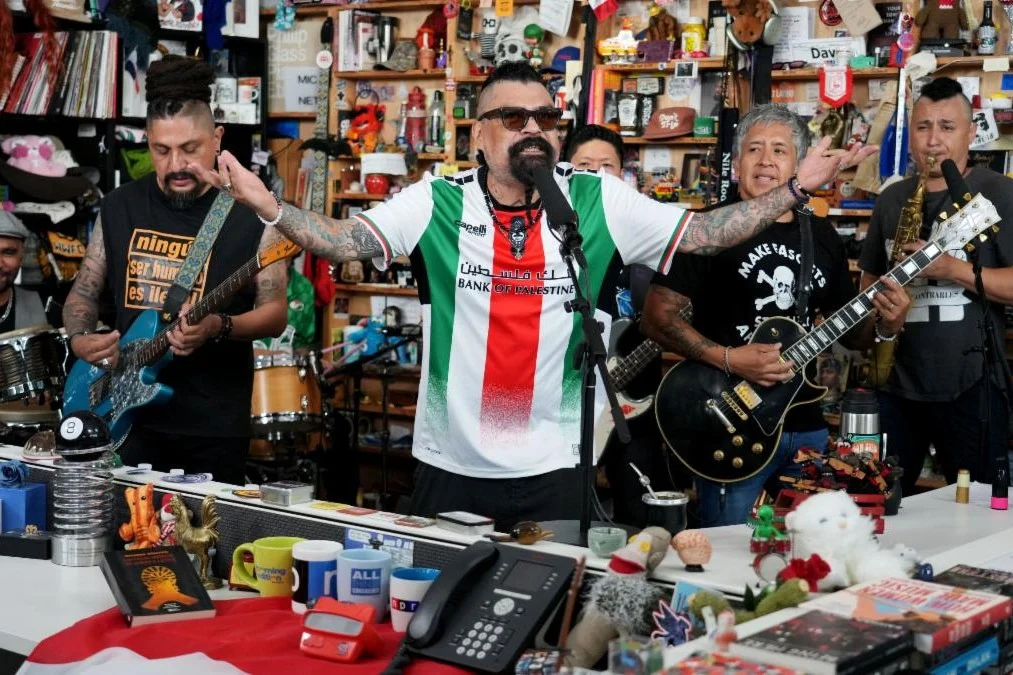
The convergence of Latin alternative music and sociopolitical advocacy reached a prominent international stage as legendary Mexican ska-rock band Panteón Rococó delivered a high-profile performance for NPR’s acclaimed Tiny Desk concert series. Released during Hispanic Heritage Month, the session served not only as a celebration of the genre’s enduring cultural footprint but also as an unyielding platform for the band to broadcast pressing human rights crises spanning Latin America and global geopolitical fault lines.
Led by charismatic frontman and social activist Dr. Shenka, the ensemble utilized the intimate office setting to amplify marginalized voices and draw urgent attention to systemic injustices. Within just 24 hours of its digital premiere, the performance galvanized audiences globally, surging past one million views on YouTube and sparking widespread discourse across cultural and political spheres.
Main Facts and the Tiny Desk Performance
Recorded in Washington, D.C., the performance featured a tightly curated setlist blending decades of Panteón Rococó’s catalog, including fan-favorite tracks such as "Arréglame el alma," "Cha-Cha Love," "La dosis perfecta," and their signature anthem of socio-economic critique, "La carencia." However, the musical delivery was inextricably linked to overt visual and lyrical statements regarding human rights.
The band members utilized their attire and stage presence to deliver targeted political commentary. Vocalist Dr. Shenka took the microphone wearing a sports jersey bearing the colors of the Palestinian flag, signaling solidarity with the population amid ongoing humanitarian crises in the Middle East. Guitarist Leonel Rosales wore a prominent t-shirt inscribed with the phrase "no human being is illegal" in Spanish, offering a direct critique of restrictive Western and U.S. immigration policies.
Bassist Dario Espinosa opted for iconography featuring a dog urinating on an ice cube—widely interpreted by media observers and fans alike as a direct rebuke of U.S. Immigration and Customs Enforcement (ICE). Meanwhile, guitarist Rodrigo “Gorri” Bonilla wore apparel featuring the logo of the German association football club St. Pauli alongside the slogan "Make Fascists Afraid Again," cementing the band’s alignment with international anti-fascist movements.
The most poignant musical moment of the session arrived with the performance of "1993." Introduced by Dr. Shenka as a tribute from "Mexico City, the great monster," the song was explicitly dedicated to the ongoing tragedy of missing persons in Mexico. According to official figures cited by international human rights monitors and the Associated Press, the number of disappeared individuals in Mexico has surpassed 133,000. By anchoring a major cultural showcase to this grim statistical reality, Panteón Rococó reinforced its long-standing identity as a collective of artist-activists.
Chronology and Historical Background
The band’s appearance on NPR’s Tiny Desk arrives at a critical juncture in their three-decade trajectory, marked by significant milestones, health challenges, and impending transitions. Formed in 1995 in Mexico City, Panteón Rococó emerged from the vibrant subterranean ska and rock-latino explosion of the mid-1990s, heavily influenced by the UK Two-Tone ska movement, traditional Latin rhythms, and the political urgency of bands like Mano Negra and Los Fabulosos Cadillacs. Over the past thirty years, they have evolved from underground squat-circuit performers into cultural ambassadors of modern Mexican rock.
The year 2025 and early 2026 have tested the endurance and resilience of the group. In June 2025, frontman Dr. Shenka suffered a mild heart attack, a medical emergency that forced the band to temporarily halt touring operations and grant the vocalist several weeks of mandatory recuperation. The successful recovery of Dr. Shenka allowed the group to return to the stage with renewed vigor.
Earlier in 2026, Panteón Rococó celebrated their 30th anniversary with a historic, massive free concert in Ciudad Neza, one of the most densely populated and historically underserved municipalities in the world. Drawing an estimated crowd of more than 120,000 attendees, the event served as a testament to their enduring working-class appeal and community ties. Furthermore, the group was recently inducted into critical historical tallies, being recognized by Billboard as one of the 50 Best Latin Rock Bands of All Time.
Following their NPR Tiny Desk debut, the band is slated to perform a high-profile concert at the GNP Seguros Stadium on December 26. Industry analysts and fans have noted that this performance precedes an announced indefinite hiatus, adding profound emotional weight to their current promotional appearances and live sets.
Supporting Data and Cultural Resonance
Panteón Rococó’s integration into the Tiny Desk ecosystem highlights a broader strategic shift within mainstream U.S. media platforms toward authentic, politically engaged Latin American artists. NPR Music’s Hispanic Heritage Month programming has historically featured diverse acts, but few have utilized the acoustic, stripped-down format to project such explicit geopolitical messaging.
The choice of platform is statistically significant. NPR’s Tiny Desk concert series routinely garners millions of cross-platform streams, offering independent and alternative legacy acts unprecedented exposure to North American tastemakers and international listeners. For Panteón Rococó, whose lyrical themes have historically centered on marginalized labor forces, anti-imperialism, and systemic corruption, the reach of the Tiny Desk broadcast provides an effective megaphone to translate domestic Mexican grievances into global conversations.
Data regarding the humanitarian crises highlighted by the band underscores the gravity of their performance. The missing persons crisis in Mexico—locally referred to as the crisis of desaparecidos—involves complex networks of cartel violence, state complicity, and bureaucratic negligence. By placing a song explicitly about this crisis onto a mainstream American broadcast platform, Panteón Rococó leveraged their cultural capital to force international accountability and awareness regarding a crisis that frequently remains localized in foreign news cycles.
Similarly, the anti-immigrant and anti-ICE messaging voiced through their stage attire reflects persistent tensions along the United States-Mexico border and within domestic U.S. immigration debates. As labor movements and human rights organizations grapple with shifting enforcement paradigms, the vocal opposition of high-profile Latin American musicians serves as a cultural counterweight to increasingly restrictive policy frameworks.
Implications and Broader Industry Impact
The intersection of art and political activism displayed by Panteón Rococó at the Tiny Desk underscores a enduring tradition within Latin rock that contrasts sharply with the often depoliticized nature of contemporary commercial pop music. While global Latin music charts are increasingly dominated by urban reggaeton and slickly produced regional Mexican crossovers, the enduring relevance of Panteón Rococó proves that sociopolitical ska-rock retains a vital, dedicated constituency.
The impending hiatus of the band following their December stadium performance raises questions about the future leadership of the Latin alternative movement. For three decades, groups like Panteón Rococó, Maldita Vecindad, and Café Tacvba have served as the moral and cultural conscience of Mexican rock, chronicling economic inequality, migration, and state violence through high-energy dance rhythms. Whether younger generations of Latin alternative artists will adopt the same level of overt political confrontation remains to be seen.
Ultimately, Panteón Rococó’s Tiny Desk session functions as a masterclass in artistic integrity. By refusing to sanitize their performance for institutional comfort, the band transformed a standard media promotional stop into a defiant demonstration of solidarity with the missing, the displaced, and the oppressed. As they approach their temporary or indefinite departure from active touring, their NPR debut cements their legacy not merely as musical innovators, but as persistent chroniclers of the Latin American struggle for dignity and justice.