Nayara Elvina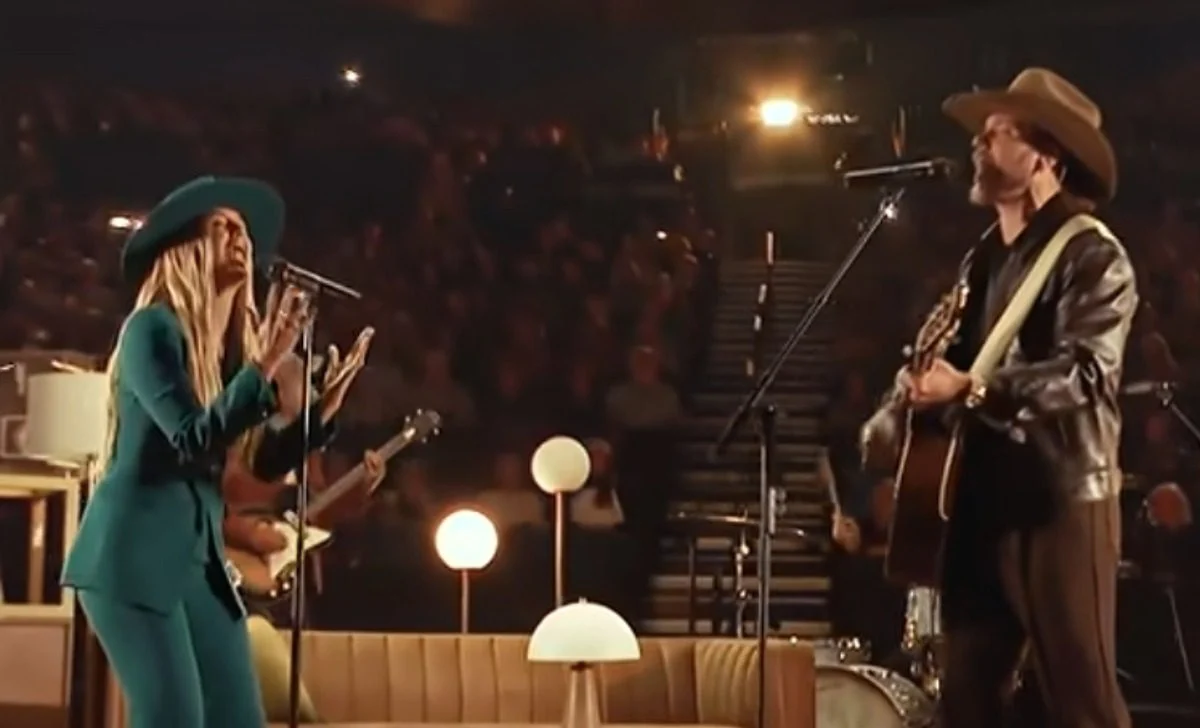
The intersection of contemporary Christian music and mainstream country storytelling reached a notable milestone when Christian artist Brandon Lake and country music star Lainey Wilson collaborated on the single “The Jesus I Know Now.” Co-written by Lake, Wilson, Emily Weisband, and Luke Laird, the track explores themes of spiritual disillusionment, personal redemption, and the contrast between rigid religious expectations and personal faith. The release of the song, followed by a live performance and a win at the 57th Annual GMA Dove Awards for Country/Roots Recorded Song of the Year, highlights a growing commercial and cultural appetite for faith-based themes within the mainstream music industry.
Origins of the Collaboration and Lyrical Themes
The creative genesis of “The Jesus I Know Now” stemmed from conversations among the songwriters regarding misconceptions of faith encountered throughout their lives. Lake and Wilson sought to address common narratives propagated by cultural or dogmatic misinterpretations of religious doctrine—specifically, the depiction of a punitive deity focused on perfectionism and behavioral conformity.
In the song’s opening verse, Lake addresses the preconceived notions often internalized by non-believers or those alienated by organized religion:
“I was told He was angry
And He hated the music up too loud
I was told He would save me
If I showed up to church and I shut my mouth
If I smoked, if I drank, if I cussed, I’d think
I was on a long black train to Hell
Yeah, I thought I knew Him
‘Til I met Him for myself”
The narrative shifts to Wilson’s verse, which addresses the psychological and spiritual isolation that can accompany rapid career advancement and public success. Wilson reflects on reaching a professional pinnacle while experiencing a profound internal void:
“Yeah, I got what I wanted
Heard my song on the radio
Left me longing to know You
Top of the world with an empty heart
And nowhere left to go
But back into the arms”
The chorus reinforces the core message of the composition, presenting an inclusive and compassionate representation of faith:
“Of the Jesus I know now
Ain’t just a voice up there in the clouds
Yeah, the Jesus I know now
Ain’t lookin’ for trophies to make him proud
I found a friend who hangs with the misfits
Listens, forgives and forgives again
Can’t believe I was missin’ out
On the Jesus I know now”
For Wilson, the admission offers a vulnerable look at the disconnect between external accolades and internal fulfillment. To the public, her career trajectory represented the realization of every commercial ambition; internally, however, the singer found herself navigating a period of personal reckoning that redirected her focus toward her foundational beliefs.
Chronology of Brandon Lake’s Country-Crossover Success
Brandon Lake has established himself as a prominent figure in contemporary Christian music, largely driven by his solo hit “Gratitude.” In recent years, however, Lake has increasingly crossed genre boundaries to collaborate with prominent mainstream country artists, reflecting a broader industry trend toward genre fluidity.
The partnership with Lainey Wilson is part of a calculated sequence of cross-genre releases for Lake:
- “Hard Fought Hallelujah”: A collaboration between Lake and country artist Jelly Roll. The track achieved substantial mainstream success, securing a position on the Billboard Hot 100 chart.
- “When A Cowboy Prays”: A duet featuring Lake and country singer Cody Johnson, which garnered significant anticipation and positive reception upon its release.
- “The Jesus I Know Now”: Released in April in collaboration with Lainey Wilson, culminating in a live performance and award win at the 57th Annual GMA Dove Awards.
This series of collaborations underscores a strategic alignment between contemporary Christian artists seeking broader mainstream visibility and country musicians eager to explore personal, faith-oriented storytelling.
The Broader Context of Country-Christian Crossover Trends
The success of “The Jesus I Know Now” and Lake’s previous collaborations occurs against a backdrop of increasing popularity for faith-based music within secular charts. Industry data indicates a measurable upward trend in the crossover between country and Christian music genres.
A notable milestone in this trend occurred in May, when two distinct Christian-market tracks simultaneously entered the Billboard Hot 100 chart—an occurrence that industry analysts noted had not happened in over a decade. The two tracks driving this milestone were Forrest Frank’s viral single “Your Way’s Better” and Brandon Lake and Jelly Roll’s collaborative effort, “Hard Fought Hallelujah.”
Music industry analysts attribute this shift to several demographic and cultural factors. Mainstream audiences increasingly value lyrical authenticity, vulnerability, and direct emotional expression—traits that align closely with the thematic material traditionally found in gospel and contemporary Christian music. Furthermore, the stylistic boundaries separating country music, Americana, roots music, and contemporary Christian music have become increasingly porous, facilitated by streaming platforms that organize music by mood and theme rather than rigid genre classifications.
Industry Recognition at the 57th Annual GMA Dove Awards
The collaborative efforts of Lake and Wilson received formal recognition from the Gospel Music Association during the 57th Annual GMA Dove Awards. “The Jesus I Know Now” was named Country/Roots Recorded Song of the Year.
The awards ceremony also featured a live performance of the song by Lake and Wilson, marking only the second time the two artists performed the track together in a live setting. The performance was well-received by both attendees and viewers, further elevating the profile of the single across both Christian and mainstream media platforms.
Implications and Future Outlook
The success of “The Jesus I Know Now” demonstrates the viability of high-profile collaborations between mainstream country artists and contemporary Christian musicians. By leveraging her substantial platform to explore themes of spiritual reclamation, Wilson has demonstrated how established artists can introduce personal convictions into commercial spaces without alienating their core fanbases.
Industry observers have noted that projects of this nature tend to expand the addressable audience for both genres, introducing country music listeners to contemporary Christian artists while offering Christian music consumers familiar vocal stylings from the mainstream country format. As streaming data continues to reflect strong consumer demand for genre-blending content, collaborations between artists like Brandon Lake, Lainey Wilson, Jelly Roll, and Cody Johnson suggest that the intersection of country and Christian music will remain a significant commercial and cultural force within the modern music industry.