Nayara Elvina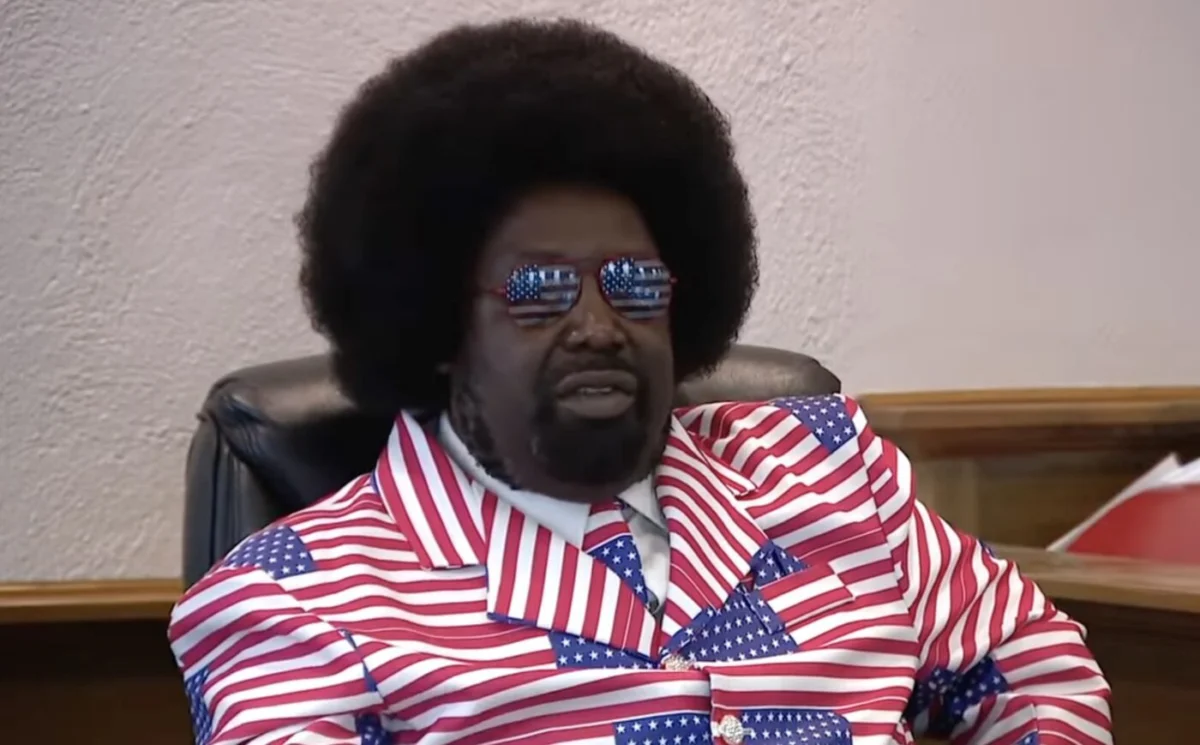
A jury in Adams County, Ohio, has returned a verdict in favor of Joseph Edgar Foreman, the platinum-selling rapper and musician known as Afroman, concluding a years-long legal battle initiated by seven members of the Adams County Sheriff’s Department. The civil trial, which garnered significant national attention due to its intersection of First Amendment rights, law enforcement accountability, and celebrity influence, ended with the complete dismissal of all claims brought against the artist. Despite the total victory in the jury’s eyes, a subsequent order by the presiding judge regarding court costs has sparked further debate regarding the equitable treatment of prevailing parties in the judicial system.
The litigation originated from a 2022 search warrant execution at Foreman’s residence in Winchester, Ohio. Following the raid, Foreman utilized home security footage of the incident to create music videos and social media content, which the deputies alleged constituted defamation and an invasion of their privacy. The jury’s decision to side with the defendant marks a significant milestone for the protection of artistic expression and the right of citizens to criticize public officials through the use of factual recordings.
Origins of the Conflict: The 2022 Search Warrant Execution
The legal dispute began on August 21, 2022, when deputies from the Adams County Sheriff’s Department executed a daytime raid on Foreman’s property. The search warrant was predicated on an anonymous tip alleging that the residence was being used for narcotics trafficking and was the site of a potential kidnapping. During the operation, deputies utilized tactical gear and forced entry, resulting in significant damage to the home’s infrastructure, including the front door and security system.
Foreman was not present during the initial breach, but his home security system captured the entirety of the event. According to statements released by Foreman and his legal counsel, the search failed to yield any evidence of the severe crimes alleged in the warrant. While a small amount of cannabis was located on the premises—which Foreman maintained was for personal use—no charges related to kidnapping or large-scale drug distribution were ever filed.
Following the raid, Foreman alleged that the deputies’ conduct was excessive and resulted in over $20,000 in property damage. Furthermore, he accused the department of financial impropriety, claiming that $5,291 in cash was seized during the raid, but only $4,891 was returned after he was cleared of wrongdoing. The Adams County Sheriff’s Department later attributed the $400 discrepancy to a counting error made by deputies during the initial inventory, a claim that was investigated by the Ohio Bureau of Criminal Investigation (BCI) and ultimately dismissed as a non-criminal administrative mistake.
Artistic Retaliation and the "Lemon Pound Cake" Phenomenon
In the months following the raid, Foreman leveraged his platform as a musician to protest the actions of the sheriff’s department. He released several songs and accompanying music videos that incorporated the actual security footage of the deputies searching his home. These tracks, including "Will You Help Me Repair My Door" and "Lemon Pound Cake," became viral hits.
The song "Lemon Pound Cake" was particularly noteworthy, as it featured footage of a deputy noticing a cake on Foreman’s kitchen counter. The lyrics directly mocked the failure of the raid to find illegal activity: "The Adams County Sheriff kicked down my door / Then I heard the glass break / They found no kidnapping victims / Just some lemon pound cake."
Beyond the music, Foreman sold merchandise featuring the likenesses of the deputies captured on his security cameras. This creative response served both as a form of protest and a method to recoup the financial losses he sustained during the raid. However, this commercialization of the deputies’ images provided the legal basis for the ensuing lawsuit.
Legal Arguments: Right of Publicity vs. First Amendment
In early 2023, seven members of the Adams County Sheriff’s Department—four deputies, two sergeants, and a detective—filed a civil complaint against Foreman. The plaintiffs alleged that the rapper had used their likenesses for commercial gain without their consent, violating Ohio’s "Right of Publicity" statute (Ohio Revised Code § 2741.02). They further claimed that the music videos and social media posts caused them "humiliation, ridicule, mental distress, embarrassment, and loss of reputation."
The deputies sought an injunction to prevent Foreman from further using their images and requested damages exceeding $25,000 per plaintiff, totaling hundreds of thousands of dollars.
Foreman’s defense team, led by attorney Anna Castellini, argued that the use of the footage was protected under the First Amendment. They contended that the deputies were public officials performing their duties in an official capacity and, therefore, had a diminished expectation of privacy. Furthermore, the defense argued that the music videos constituted "matters of public concern" and "political speech," which are afforded the highest level of constitutional protection.
Prior to the trial, the court granted Foreman a partial victory by dismissing the claims that he had invaded the deputies’ privacy simply by posting the video of the raid. The court ruled that because the officers were acting in their official roles during the execution of a search warrant, their actions were a matter of public record. However, the claims regarding defamation and the unauthorized commercial use of their likenesses were allowed to proceed to a jury trial.
Chronology of Key Events
The timeline of the dispute highlights the escalation from a local law enforcement action to a national legal precedent:
- August 21, 2022: Adams County Sheriff’s deputies raid Afroman’s home based on a warrant for kidnapping and drug trafficking. No evidence of these crimes is found.
- Late 2022: Afroman releases "Lemon Pound Cake" and "Will You Help Me Repair My Door," utilizing security footage of the raid.
- December 2022: The Ohio BCI concludes its investigation into the missing $400, citing it as a miscount by deputies.
- March 2023: Seven members of the sheriff’s department file a lawsuit against Foreman for defamation and unauthorized use of likeness.
- Early 2024: Pre-trial rulings dismiss the privacy invasion claims, but uphold the defamation and commercial use claims for trial.
- March 2026: The case goes to trial in Adams County, Ohio.
- March 20, 2026: The jury returns a unanimous verdict in favor of Afroman on all counts.
- March 21, 2026: Judge Jonathan P. Hein issues a final order splitting court costs between the plaintiffs and the defendant.
The Trial and the Jury’s Verdict
The trial in Adams County became a social media sensation, with clips of the proceedings garnering millions of views. The defense focused on the factual accuracy of the music videos, asserting that Foreman was merely reporting on what had occurred in his own home. Witnesses for the plaintiffs testified to the emotional toll the viral videos had taken on their personal lives and professional standings.
After several days of testimony, the jury deliberated and returned a verdict that completely exonerated Foreman. The jury found that the deputies failed to prove that Foreman’s creative works met the legal threshold for defamation or that the use of their likenesses in the context of criticizing a police raid violated state law.
The verdict was hailed by civil liberties advocates as a victory for the "Right to Record" and a affirmation that public officials cannot use civil litigation to silence critics who use factual evidence of their conduct.
Analysis of the Judge’s Order on Court Costs
Despite the jury’s decisive ruling, the case concluded with a controversial administrative decision. Judge Jonathan P. Hein, in his final written order, decreed that the court costs—totaling approximately $587—be split equally between the plaintiffs and Foreman.
Typically, in American civil litigation, the "prevailing party" (the winner) is entitled to have their court costs covered by the losing party. Judge Hein’s order stated: "Based upon the relative merits of the case and the justiciability of the claims, costs are divided one half to the Plaintiffs and one-half to Defendant Foreman."
Legal analysts have noted that this move is relatively rare when a defendant wins a total victory on all counts. The decision suggests that while the jury did not find Foreman liable, the court may have viewed the deputies’ claims as having enough "merit" to justify a shared financial burden for the administration of the trial. While the financial impact on Foreman is negligible—amounting to roughly $293.50—the symbolic nature of the order has been interpreted by some as a "parting shot" by the court against the defendant’s aggressive public defense.
Broader Implications and Official Responses
The outcome of Foreman v. Adams County Sheriff’s Deputies carries significant implications for the future of police-citizen interactions and the use of digital evidence.
- First Amendment Protections: The case reinforces the right of citizens to use recordings of police activity for expressive and critical purposes. It suggests that the "Right of Publicity" cannot be easily used by government agents to suppress the publication of their actions while on duty.
- Law Enforcement Accountability: The failure of the deputies’ lawsuit may discourage similar "retaliation" suits by law enforcement officers who find themselves the subject of public scrutiny or viral criticism.
- The "Streisand Effect": By suing Afroman, the deputies brought far more attention to the original raid and the allegations of property damage and missing money than the music videos might have achieved on their own. This serves as a case study in the risks of public officials engaging in high-profile litigation against celebrities.
While the Adams County Sheriff’s Department has not issued a formal statement following the verdict, legal representatives for the deputies indicated during the trial that their clients felt the legal system was their only recourse to protect their families from online harassment.
Conversely, Afroman has remained vocal, suggesting that the legal victory is a win for "the people" against "government overreach." Through his social media channels, he indicated that his focus remains on holding the department accountable for the original damages to his home.
Conclusion
The legal saga of Afroman and the Adams County Sheriff’s Department concludes with a clear message regarding the boundaries of public official privacy and the power of creative dissent. While Joseph Foreman must pay a nominal fee for the "privilege" of being sued and winning, the precedent set by the jury’s verdict provides a robust defense for those who use technology and art to demand accountability from those in power. As Foreman continues his career, the "Lemon Pound Cake" incident remains a definitive example of how modern digital documentation can alter the power dynamics between the state and the individual.