Johan Budi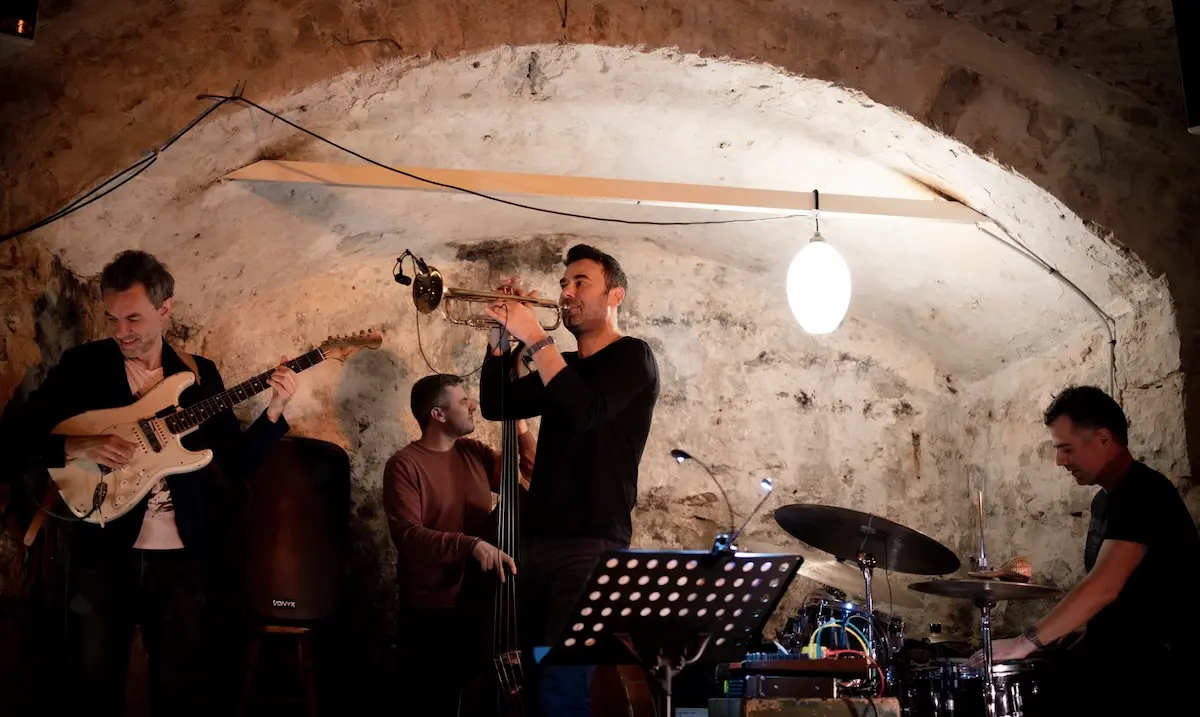
The global jazz landscape continues to be shaped by a dual focus on contemporary innovation and the meticulous preservation of historical milestones. Recent releases and reissues from the Blazin’ Quartet, Art Farmer, Sun Ra, and Brian Landrus provide a comprehensive overview of how the genre has transitioned from the structured swing of the 1950s to the mythologically driven and reflective compositions of the mid-2020s. These works collectively illustrate the enduring relevance of jazz as a medium for storytelling, whether through the lens of ancient Greek cosmogony, the refined modernism of the hard-bop era, or the introspective explorations of personal and political climates.
Contemporary Interpretations of Myth: The Blazin’ Quartet and Cosmogonie
In late 2025, the Blazin’ Quartet, under the leadership of Bosnian drummer Srdjan Ivanovic, released Cosmogonie, a conceptual work that translates ancient Greek creation myths into a modern jazz framework. Recorded in Athens between September and October 2025, the album serves as a musical portrayal of origin and existence. The structure of the album is intentionally divided into three distinct movements: The Genesis, The Metamorphosis, and The Clash. This progression mirrors the mythological evolution of the universe, beginning with "Chaos," an improvised passage designed to evoke the formless state of the world’s beginning.
The ensemble—comprising trumpeter Andreas Polyzogopoulous, guitarist Federico Casagrande, bassist Mihail Ivanov, and Ivanovic on drums—utilizes a blend of high-energy rock elements and traditional jazz improvisation. Analytical reviews of the work highlight the "spaciness" of tracks like "Ourea" and "Pontos," which contrast with the Balkan folk influences found in "Ether & Hemera" and "Cronos & Rea." Casagrande’s guitar work is particularly versatile, shifting from blues-inflected lines on "Nyx & Erebe" to distorted textures on "Oceanos."
From a technical standpoint, Ivanovic’s leadership is defined by his ability to construct percussive patterns that serve as a foundation for the more abstract melodic explorations of Polyzogopoulous. The inclusion of a kalimba on "Hecatonchires" further diversifies the sonic palette, grounding the avant-garde elements in a primal, percussive reality. The album represents a significant contribution to the "Rue des Balkans" catalog (RDB008), reinforcing the label’s commitment to music that bridges Eastern European folk traditions with contemporary jazz improvisation.
Historical Foundations: Art Farmer and the 1958 Modern Art Sessions
While the Blazin’ Quartet explores the future of the genre, the reissue of Art Farmer’s Modern Art offers a critical look at the foundations laid during the late 1950s. Originally recorded for United Artists in September 1958, this session captures a pivotal moment in jazz history, predating the formation of the celebrated Jazztet. The lineup is notable for the inclusion of pianist Bill Evans, who at the time was also a member of Miles Davis’s legendary sextet.
The album is characterized by a "lighter" approach compared to the aggressive hard bop of contemporaries like Art Blakey’s Jazz Messengers or Horace Silver’s quintet. Farmer’s style is frequently described as polished and unobtrusive, a sentiment echoed by critic Val Wilmer, who noted a "loneliness" and "bitter poignancy" in his tone. The collaboration with tenor saxophonist Benny Golson is central to the album’s success. Golson’s composition "Fair Weather" became a staple of the era, eventually finding its way into the soundtrack of the film Round Midnight decades later.
The 1958 sessions also highlight the technical proficiency of the rhythm section, with Addison Farmer on bass and Dave Bailey on drums providing a stable yet flexible backdrop for Evans’s expansive solos. The inclusion of bonus tracks from earlier in 1958, featuring alto saxophonist Hal McKusick and arrangements by George Russell and Jimmy Giuffre, provides additional context, though some scholars argue these additions lack the cohesive fluidity of the core Farmer-Golson collaboration.
The Avant-Garde Genesis: Sun Ra and the Chicago Years
Tracing the lineage of jazz innovation requires an examination of Sun Ra’s debut album, Jazz By Sun Ra, recorded in Chicago in July 1956. This release, later known as Sun Song, marks the beginning of one of the most remarkable evolutions in music history. In 1956, Sun Ra’s music was still firmly rooted in the swing traditions of Fletcher Henderson and the orchestral complexities of Duke Ellington, yet it already contained the seeds of the "Afrofuturism" that would define his later career.
The album features a large ensemble, including long-term collaborators like tenor saxophonist John Gilmore and baritone saxophonist Pat Patrick. Tracks such as "Brainville" and "Transition" demonstrate a mastery of riff-based arrangements, while "Sun Song" introduces the "other-worldly" organ tones and dense percussive layers that would become Ra’s hallmark. The 1956 sessions also reveal the influence of "exotica," a mid-century trend that Sun Ra repurposed into a cosmic philosophy.
Unlike his later, more chaotic collective improvisations, Jazz By Sun Ra is relatively conventional, fitting the description of "hard bop for an exotic ensemble." However, the prophetic nature of the work is undeniable. The steady personnel involved in these early recordings allowed Ra to develop a unique musical language that his Arkestra would speak for the next several decades. The reissue on the Jazz Wax label (JWR4645) preserves the original explanatory notes, which Sun Ra issued to ensure his philosophical intentions were understood by the listener.
Reflection and Predictability: Brian Landrus in the Modern Era
In contrast to the high-energy mythological explorations of the Blazin’ Quartet, Brian Landrus’s 2025 release, Just When You Think You Know, offers a more subdued and reflective experience. Landrus, known for his mastery of low-reed instruments including the baritone saxophone and bass flute, recorded this album in New York in August 2025. The title suggests a response to the unpredictable social and political climate of the United States, yet the music itself is characterized by a laid-back, almost "trance-like" quality.
The album features a quintet including Zaccai Curtis on keyboards, Dave Stryker on guitar, Lonnie Plaxico on bass, and Rudy Royston on drums. While Landrus’s previous work—specifically his tribute to Ellington and Strayhorn—was met with critical acclaim for its vibrancy, this new project focuses on personal elegies and atmospheric textures. "El Perro Sigma," a tribute to Landrus’s dog, showcases the leader’s agile bass flute work, while "One Year" provides a platform for Curtis’s acoustic piano lines.
However, some critics have noted a lack of the "sound of surprise" typically associated with jazz. Tracks like "Paroxysm" and "Trance" are described as placid, potentially lacking the "edge" required to fully engage with the turbulent themes hinted at in the album’s title. Despite this, the technical skill of the performers remains unquestioned, and the album serves as an example of the "chamber jazz" aesthetic that continues to find a following in the mid-2020s.
Chronology of Jazz Development (1956–2025)
The progression of these four albums provides a timeline of the genre’s shifting priorities over the last seven decades:
- July 1956: Sun Ra records Jazz By Sun Ra in Chicago, bridging the gap between big-band swing and the nascent avant-garde.
- September 1958: Art Farmer and Benny Golson record Modern Art in New York, refining the hard-bop sound with a cool, intellectual sensibility.
- August 2025: Brian Landrus records Just When You Think You Know in New York, moving toward a reflective, atmospheric style of jazz.
- September–October 2025: The Blazin’ Quartet records Cosmogonie in Athens, integrating Balkan folk, rock, and ancient mythology into a high-energy contemporary fusion.
Technical Analysis and Broader Implications
The shift from the analog recordings of 1956 and 1958 to the high-fidelity digital productions of 2025 highlights the technological evolution of the recording industry. In the 1950s, the focus was on capturing the "live" energy of the ensemble in a studio setting, often with minimal overdubbing. By 2025, as seen in the Blazin’ Quartet and Brian Landrus sessions, the studio itself has become an instrument, allowing for complex layering of percussion and electronic textures.
Furthermore, the industry’s reliance on reissues (Farmer, Sun Ra) alongside new releases (Blazin’ Quartet, Landrus) suggests a market that values historical context as much as modern innovation. Labels like Waxtime and Jazz Wax play a crucial role in keeping the "Golden Age" of jazz accessible to new generations, while labels like Rue des Balkans and BlueLand provide the necessary platform for contemporary artists to experiment with cross-cultural and conceptual themes.
The reactions from the jazz community indicate a continued desire for music that challenges boundaries. While Landrus’s latest work may be seen as overly cautious by some, the "wild excesses" of the Blazin’ Quartet suggest that the spirit of experimentation—first championed by figures like Sun Ra—remains a driving force in the industry. As jazz moves further into the 21st century, the balance between honoring the past and exploring the "chaos" of the future remains the genre’s defining characteristic.