 Aveline Kirana
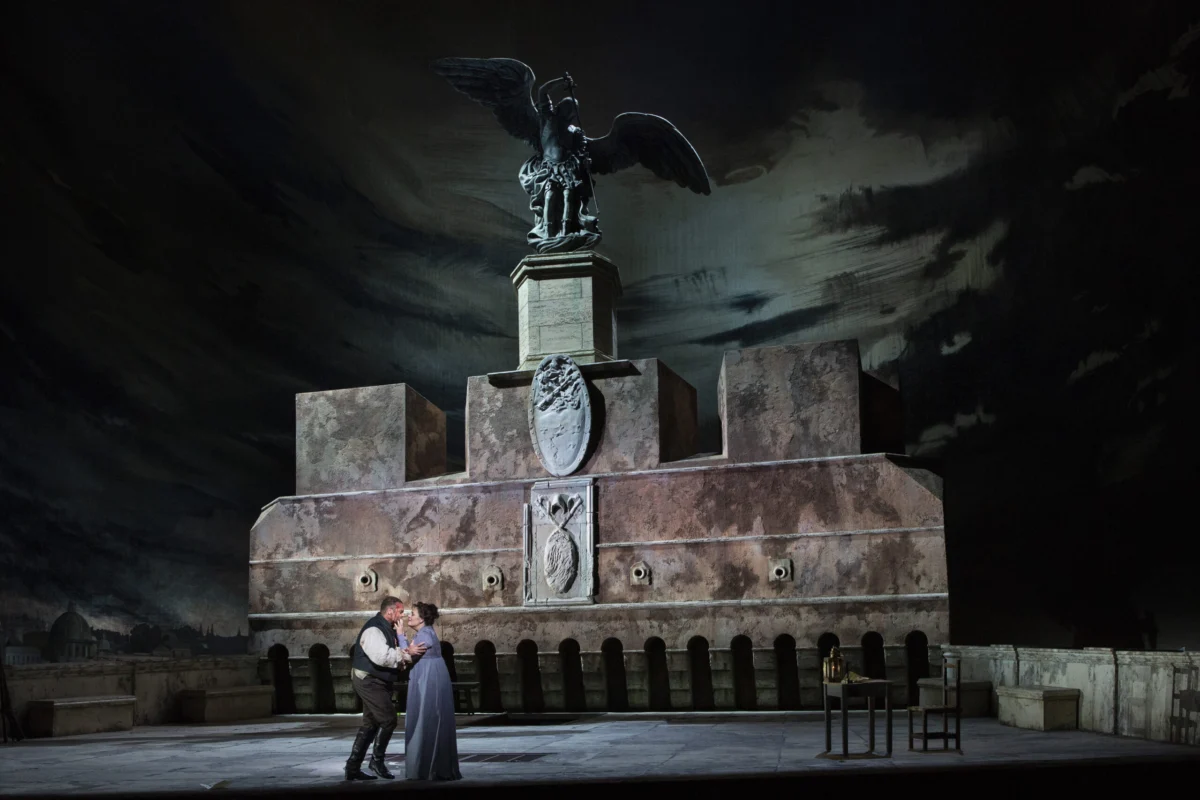
Soprano Toni Marie Palmertree, lauded for her "tender and expressive voice" by the SF Examiner, is set to make her highly anticipated principal role debut at the Metropolitan Opera on March 28th as Cio-Cio-San in Giacomo Puccini’s iconic opera, "Madama Butterfly." Palmertree, whose performances of Tosca, Donna Elvira, and Nedda have been described as "riveting" across America, embarks on this significant career milestone with a journey far removed from the traditional operatic trajectory. In an exclusive interview with OperaWire, Palmertree shared the intricate tapestry of her life and career, revealing how her personal narrative intricately mirrors the poignant story of Cio-Cio-San, a theme she finds deeply resonant.
"There’s just so many parallels with ‘Madame Butterfly’ – her story of waiting just seems to echo itself in my own life and career path," Palmertree explained, drawing a profound connection between her own experiences and the tragic heroine she is poised to embody on one of the world’s most prestigious stages. Her path to operatic stardom is a testament to resilience, unwavering determination, and a profound belief in the power of music, even after significant detours and profound personal challenges.
A Detour Through Diverse Careers
Palmertree’s journey into the operatic spotlight was not a direct one. Following her graduation from the Peabody Conservatory, her twenties were largely dedicated to her family. She married and soon after welcomed a son, a period during which her burgeoning singing career took a backseat. "I stopped singing," she recalled. "If I did anything, it was like I would sing in church, but I really wasn’t out there trying to pursue a career."
During this hiatus from professional singing, Palmertree explored a variety of professional avenues. She worked as a registrar for an online school and, perhaps most unexpectedly, held a position at a manufacturing plant in Gilbertsville, Pennsylvania. It was here, managing a team responsible for building turbine engines for power generation, that she experienced a profound shift in her perspective. "I was managing a team who was building turbine engines for seamen’s power generation," she described. "I took that job to file papers after my son was born and the head of engineering was like, ‘you’re smart’ and taught me how to read drawings, doing quality control, procurement and stuff like that." While this role offered financial stability and intellectual engagement, it ultimately ignited a deeper yearning for her true passion.
The Unmistakable Call of Music
The demanding nature of her corporate role, despite its high earning potential, began to weigh heavily on her spirit. "No offense to my wonderful boss, but that was the job that really made me want to do something different," Palmertree confessed. "I thought, ‘I cannot get out of bed in the morning. I cannot picture myself doing this for the rest of my life.’ I could have been making six-figures doing that job since it’s high-level. But I told a colleague, ‘If I make that money, I’ll never leave and I cannot stay here.’" This realization marked a pivotal moment, a clear indication that her true calling lay elsewhere.
Her initial attempt to re-engage with music came through a less demanding role as a children’s chorus director. However, this experience, rather than satisfying her musical ambitions, amplified her longing to perform. "I just cried every single time those kids sang," she admitted. "And I realized that I was crying because I wasn’t the one singing." This emotional response served as a powerful catalyst, pushing her to seriously consider a return to her operatic aspirations.
Reclaiming the Dream: A Journey of Persistence
Seven years after completing her conservatory studies, at the age of 29, Toni Marie Palmertree decided to re-enter the world of opera. Her re-entry point was the prestigious Metropolitan Opera Laffont Competition, where she achieved a significant victory by winning her district. This early success provided the impetus and validation needed to reignite her pursuit of a singing career.
However, the path back was far from smooth. Palmertree encountered numerous rejections and faced the considerable challenge of re-establishing herself in an industry that often prioritizes early career momentum. "Trying to re-enter at that point was pretty difficult because I hadn’t sung anywhere and no one knew me," she explained. "When I was applying to young artist programs, no one would hear me because I didn’t have anything on my resume."
A crucial turning point arrived when a voice teacher recommended the Cooperative program through Westminster Choir College. This program provided an invaluable platform for networking with conductors and coaches, many of whom became instrumental mentors. These individuals "went out of their way to advocate for her," recognizing her raw talent and potential. Her subsequent audition for the Merola Opera Program, after a second attempt, proved successful. It was during this audition that renowned soprano Sheri Greenawald offered a prescient prophecy: "’You will be the next great Butterfly.’"
Overcoming Adversity: Cancer, Motherhood, and Housing Insecurity
Following her Merola experience, Palmertree secured a coveted Adler Fellowship with the San Francisco Opera, where she was assigned to cover the role of Cio-Cio-San. At 34, she was considerably older than many of her peers in the young artist program, a detail that underscored the unique timeline of her career. Her San Francisco mainstage debut as Butterfly was a triumphant moment, catapulting her career forward when the original artist fell ill.
However, this burgeoning success was soon overshadowed by a devastating diagnosis: stage IV uterine cancer. The journey to diagnosis itself was fraught with frustration, as she faced dismissiveness from medical professionals. "They were just blowing me off saying things like, ‘Oh, well you’re a woman. Oh, well you’re overweight. Oh, well your career is stressful.’" Undeterred, Palmertree fought for her health with the same tenacity she had displayed in her career, eventually finding a surgeon who diagnosed her condition.
Her battle with cancer was compounded by the complexities of single motherhood and a severe housing crisis. Having moved across the country with her son for the Adler Fellowship, she found herself navigating the demanding program while raising a child as a single parent. "We moved across the country when he was seven so I could do the Adler Fellowship," she stated. "I was so grateful but it was extremely tough to do a program like that as a single mom. I’m managing rehearsals while also raising my son, getting him to school, finding the right babysitters, homework, the trauma of moving and separating from his dad, and then we couldn’t even find a place to live for six months."
To secure housing and manage childcare costs, Palmertree had worked multiple jobs prior to Merola and her move for the Adler Fellowship, meticulously building a fund. "I basically created this fund for myself because I knew I’d need it to pay for babysitting as a young artist and on that salary." The six months spent searching for a stable home were marked by immense hardship, including sleeping on friends’ couches and facing discrimination in the rental market. Landlords often favored tenants who could pay rent six months in advance, a financial impossibility for Palmertree on her artist salary. "I couldn’t tell them I had a kid because I wouldn’t even be considered," she revealed. "Plus, since so many people were looking for apartments, all they had to do was look for a person willing to pay six months in advance at an open house. I thought, ‘how am I going to do this and on this salary?’" Her last resort was to seek placement on a housing lottery at City Hall, hoping her status as a mother facing homelessness would expedite her case.
The Power of Community and Unconventional Treatment
During this period of intense personal struggle, Palmertree found solace and support within her community. Colleagues and mentors rallied around her, providing practical and emotional assistance. "The guys would play basketball with my son and take him to baseball games," she recalled. "Pene Patti (tenor) took Cole to NBA games. Donors would ask me if I needed a ride somewhere or how they could help me." This collective support system, her "village," proved instrumental in her survival as she underwent treatment for stage IV cancer, including a radical hysterectomy.
Palmertree’s advocacy extended to her medical treatment. Fearing the potential impact of chemotherapy on her voice, she pursued alternative options. She collaborated with her doctor, who consulted a global network of specialists for advice on treating her rare form of cancer. "My doctor pulled from a worldwide forum of doctors to see if anyone had a similar kind of cancer to mine (which apparently was quite rare) to see if there was any way to avoid chemo or radiation," she stated. Her persistent advocacy led to a trial of Tamoxifen. While the medication presented significant side effects that sometimes impacted her ability to perform, it proved remarkably effective. "But when I came back, she was totally astounded because the cancer not only improved – it was gone."
The San Francisco Opera demonstrated remarkable understanding and support during her recovery. "San Francisco Opera never canceled her shows, saying, ‘If it’s a problem then, we’ll deal with it then. But it’s not a problem now, so instead of focusing on what could go wrong, let’s focus on what if it goes very well.’" This forward-thinking approach, coupled with Palmertree’s own resilience, fostered a mindset of turning adversity into opportunity. Music became her solace and her hope during recovery. "I had music to learn from my chair while I was healing," she described. "It made me have hope for the future because I knew I had roles coming up."
Her doctor’s personal connection to the opera, as a season subscriber, further underscored the profound impact of her journey. "My doctor told me, ‘I just kept looking at you thinking, I can’t do this to her. I cannot give her radiation and possibly harm her voice without trying something else,’" Palmertree shared. "And I just thought, wow, if fate isn’t at work here, like, what a blessing." Palmertree has been cancer-free since 2017, a testament to her strength and the power of dedicated medical care and unwavering support.
Navigating the Pandemic and the Road to the Met
Following her Adler Fellowship, Palmertree secured an agent and began accumulating experience covering roles in opera houses across the United States and Europe. This period of dedicated preparation and behind-the-scenes work was abruptly halted by the COVID-19 pandemic. "That was so hard," she reflected. "If it was not for the intervention of people, I wouldn’t be where I am. So many people stepped in and would tell me, ‘please don’t quit.’"
The pandemic necessitated a renewed period of hustle. Palmertree applied for grants, navigated unemployment, and taught voice lessons, actively creating opportunities for herself to make ends meet. As theaters gradually reopened, she returned to covering major roles in renowned opera houses, emphasizing the importance of singers advocating for themselves to avoid becoming solely defined by covering positions. "I’m very grateful for it," she stated. "Of course, great lessons and work come out of covering and it pays the bills which is important, but I also needed to stay consistent, prepared and patient for someone to open a door for me."
A Journey Culminating in a Dream Debut
Ultimately, the culmination of Palmertree’s enduring spirit, resilience, and unwavering dedication has led her to the stage of the Metropolitan Opera. At 44 years old, her debut as Cio-Cio-San in "Madama Butterfly" on March 28th represents a profound achievement, a testament to a career forged through unconventional paths and immense personal strength.
Palmertree encourages aspiring singers to embrace their unique journeys. "There’s always another pinnacle that you have to reach beyond the one you just climbed," she advised. "But I want young singers to get excited about that and enjoy the journey. In many ways, my naivete helped because I didn’t know the hardships ahead and that allowed me to keep going, to not get scared of what was ahead, because otherwise that is something we can let get in the way of a great path."
She views the very experiences that might be perceived as obstacles—admitting illness, embracing motherhood, or navigating diverse career paths—as integral strengths that have shaped her success. Her near-homelessness led to the formation of a lasting support network. Her battle with cancer heightened her awareness of her body, making her a stronger and healthier singer. The years of waiting and perseverance ultimately led her to the Met.
"I love this career because people come and hear a performance for a reason. We love music for a reason," Palmertree expressed. "We talk about having an authentic voice and every note that I sing comes from a place of triumph over everything I’ve endured. I hope that’s what keeps audiences coming back to listen." She emphasizes the crucial role of a supportive community – friends, colleagues, and mentors – in artistic endeavors. "My career is a reflection of those who helped me and believed in me," she concluded, urging singers to embrace detours and unconventional paths as opportunities for growth. "Your path will take you on a very curvy ride and it’s all going to lead to the outcome you want."
Palmertree firmly believes that artistry is not confined to conventional routes. "That belief of ‘unless you’re on the biggest stages you’re not an artist,’ is so untrue," she stated. "Everyone in a theater has a job as an artist that means something. We all need to be doing different things to make art come alive."
Looking ahead, Palmertree acknowledges that her Met debut is not an endpoint but another step in an ongoing journey. "I’m very aware that even after this performance at the Met, things are not going to be easy all of a sudden. There’s still going to be trials and tribulations, doors I will need to kick down." However, she is prepared to face these challenges with the wisdom gained from her life experiences, viewing obstacles as invitations to greater growth, humility, and deeper preparation for the future. Her remarkable journey serves as a powerful reminder that tenacity, unwavering belief, and the support of a dedicated community can pave the way to even the most ambitious of dreams.