Kholidah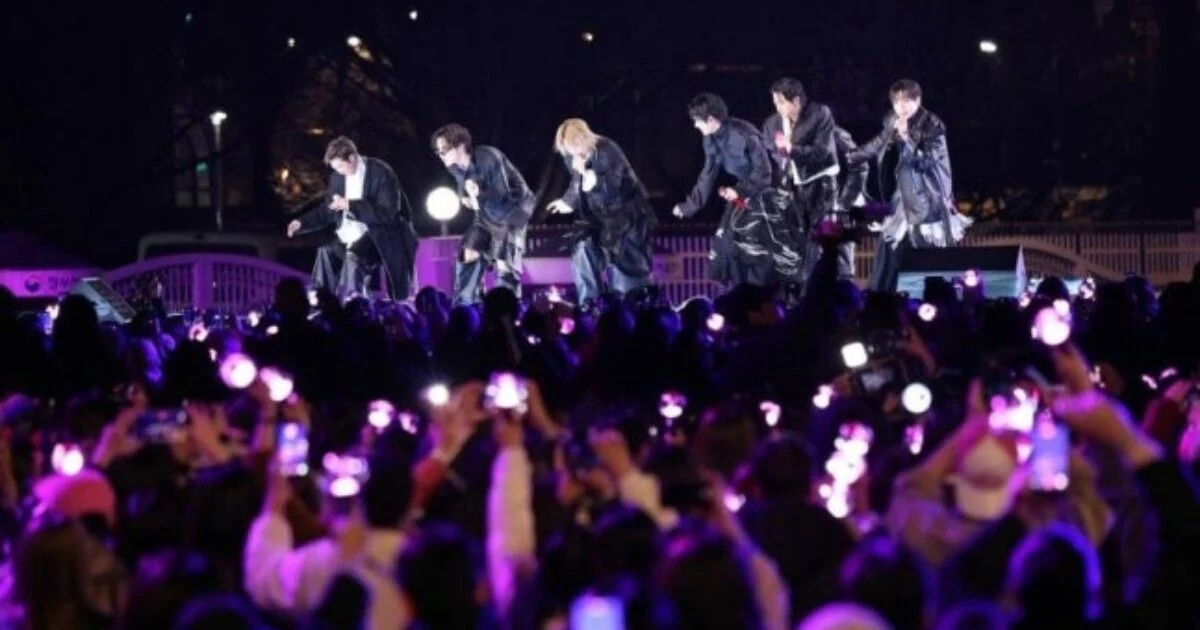
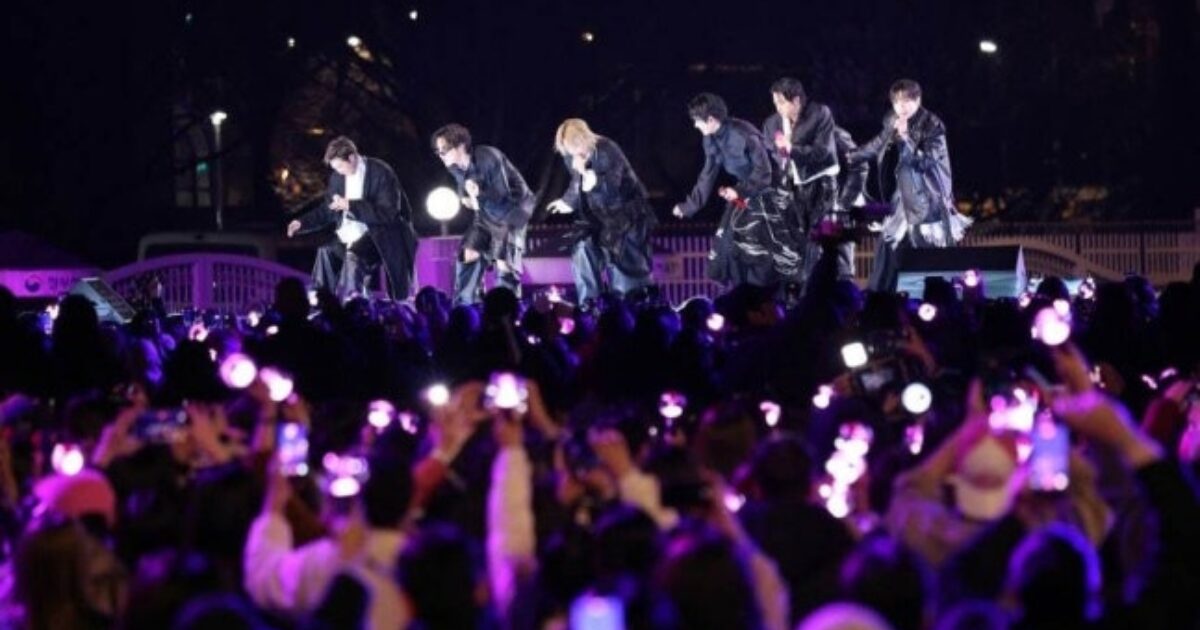
The landscape of K-Pop fandom is undergoing a significant demographic transformation, as evidenced by the recent attendance data from BTS’s high-profile comeback concert held at Gwanghwamun Square in Seoul. According to comprehensive data analysis released by the data technology firm IGAWorks, the event, which took place on March 21, 2026, saw its largest share of attendees come from the 40-year-old age bracket. This finding challenges the long-standing perception that K-Pop is a medium primarily consumed by teenagers and young adults, signaling instead a maturation of the audience that mirrors the longevity of the group itself.
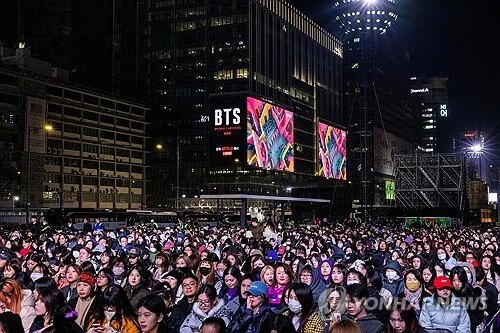
Between the hours of 5:00 PM and 10:00 PM on the day of the event, a total of 163,964 individuals were recorded within a one-kilometer radius of Gwanghwamun. The scale of the gathering was not merely local; statistics indicate that 41,570 of these attendees traveled from outside the Seoul metropolitan area, underscoring the concert’s status as a nationwide cultural phenomenon. The influx of visitors necessitated significant police presence and traffic control measures, transforming the heart of the capital into a concentrated hub of cultural activity.
Detailed Demographic Breakdown and Statistical Analysis
The data provided by IGAWorks offers a granular look at the composition of the crowd, revealing a surprising dominance of middle-aged fans. Women in their 40s emerged as the most prominent demographic, accounting for 21.79% of the total recorded visitors. They were followed by men in their 40s, who represented 13.30% of the attendance. When combined, the 40-something demographic comprised over a third of the total crowd, a figure that has sent ripples through the entertainment industry.
The trend of "mature" participation continued across other age brackets. Women in their 50s accounted for 12.15% of the crowd, while women in their 30s followed closely at 12.05%. Collectively, individuals aged 30 to 59 formed the core demographic of the event. In a notable departure from traditional K-Pop concert trends, the proportion of attendees in their teens and 20s was significantly lower than that of their older counterparts. While female fans continued to outnumber male fans across all age groups, the participation of men in their 30s, 40s, and 50s was described as "statistically significant," suggesting that BTS’s appeal has successfully bridged the gender gap within older generations.
Analysts at IGAWorks clarified that while the data captures everyone within the 1km radius, the specific timing, coupled with the rigorous police cordons and the sheer density of the crowd, strongly suggests that the vast majority of these individuals were present specifically for the BTS event. To ensure the accuracy of the report, the company utilized mobile location data and excluded individuals whose primary activity or workplace is registered in the Jongno District, thereby filtering out most casual passersby and local employees.
The Evolution of a Legacy Fandom
The demographic shift observed at Gwanghwamun is not an overnight occurrence but rather the result of a thirteen-year trajectory. BTS debuted in 2013, a time when their initial "ARMY" fanbase was largely composed of high school and college students. As the group progressed through their career—achieving global superstardom, navigating the complexities of the mandatory military service hiatus, and eventually reuniting for this 2026 comeback—their original fanbase aged alongside them. A fan who was 27 during the "Wings" era in 2016 is now 37; a fan who discovered the group in their early 30s during the "Dynamite" craze of 2020 is now entering their 40s.
Furthermore, BTS’s messaging has often focused on themes of self-reflection, mental health, and the transition from youth to adulthood. Industry experts suggest that these themes resonate deeply with individuals in their 30s and 40s who are navigating career pressures and family life. The "growth narrative" of the group has allowed them to retain their original fans while picking up "late-adopter" fans among older demographics who may have been introduced to the group through their mainstream global hits or televised performances.
Economic Implications for the Cultural Industry
The dominance of the 30-to-50 demographic carries profound economic implications for the K-Pop industry and the broader South Korean economy. Unlike the teenage demographic, which often relies on parental allowances, fans in their 40s typically possess significantly higher disposable income and greater spending power.
"The BTS fandom is no longer limited to a specific age group and is expanding across all generations," noted an industry official commenting on the IGAWorks insight. "This shift is likely to influence not only the concert market but also the structure of content consumption in the future. We are seeing a move toward higher-priced VIP experiences, premium merchandise, and luxury brand collaborations that target an affluent, mature audience."
The "Silver Economy" or "Active Senior" market in South Korea has been expanding, but this data suggests that the "Active Middle-Age" group is currently the primary engine driving the domestic concert industry. This demographic is more likely to invest in travel, high-tier seating, and official collectibles, providing a more stable and lucrative revenue stream for entertainment agencies like HYBE.
Public and Netizen Reactions
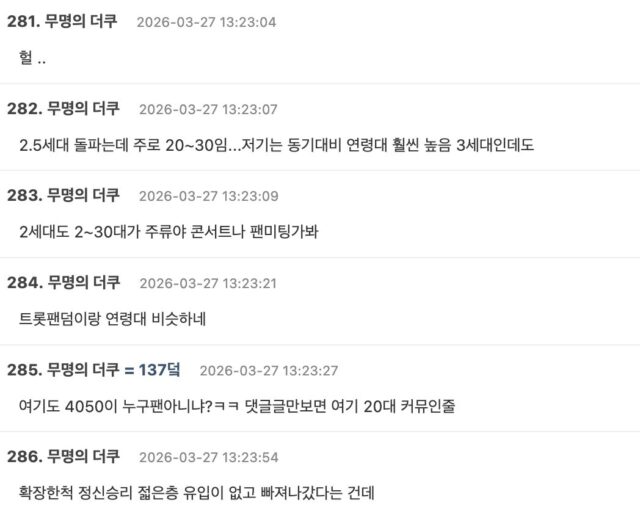
The release of these statistics sparked intense discussion across South Korean online communities, such as theqoo. Many netizens expressed surprise at the sheer volume of older fans, with some noting that the BTS fandom now appears to have a higher average age than even many third-generation idol groups.
"I expected a lot of people, but seeing that the 40s are the biggest group is eye-opening," one user commented. "It shows that BTS has moved beyond the ‘idol’ category and become a national artist that the whole country listens to."
However, the data also drew some critical reflections. A portion of the online discourse centered on the perceived "aging" of the fandom, with some fans calling on HYBE to implement strategies to recruit younger listeners. These critics argued that for a group to maintain long-term cultural relevance, it must continually refresh its base with Gen Z and Gen Alpha fans. Conversely, others defended the current demographic, stating that a loyal, mature fanbase is a sign of a "prestige artist" rather than a fleeting pop trend.
Chronology of the Gwanghwamun Event
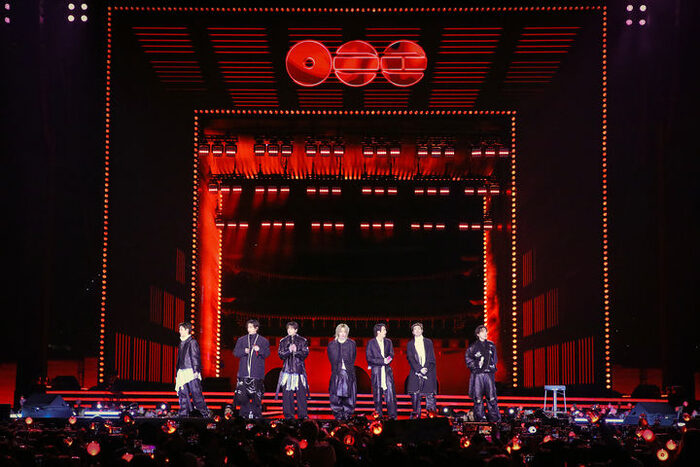
The March 21 concert served as a pivotal moment in BTS’s 2026 comeback timeline. The event was meticulously planned as a "gift to the city," following the members’ completion of their military obligations and the release of their latest collective work.
- January 2026: Initial rumors of a large-scale outdoor performance in Seoul began to circulate following the release of the group’s comeback teaser.
- Early March 2026: The Seoul Metropolitan Government and HYBE officially announced the Gwanghwamun Square event, citing it as a major component of the "Seoul Culture Week."
- March 20, 2026: Fans began gathering near the venue 24 hours in advance, with hotels in the Jongno and Jung districts reporting 100% occupancy.
- March 21, 2026, 5:00 PM: IGAWorks began tracking the significant surge in mobile data and location pings within the 1km radius.
- March 21, 2026, 7:00 PM: The concert commenced, featuring a setlist that blended early career hits with new releases, specifically curated to appeal to both long-time followers and newer fans.
- March 27, 2026: IGAWorks released the formal demographic analysis, sparking the current national conversation on the "aging" of K-Pop fandoms.
Future Outlook and Strategic Shifts
The findings from the Gwanghwamun concert are expected to serve as a case study for future K-Pop marketing strategies. As the "Hallyu" (Korean Wave) matures, agencies may need to pivot away from marketing models that focus exclusively on youth culture. The "BTS Model" suggests that longevity is achieved by growing with the audience rather than constantly chasing the youngest possible demographic.
Market analysts suggest that the success of the Gwanghwamun event will encourage more "open-air" and "public-square" style performances that cater to a general public audience, rather than restricted-entry stadium shows that can feel exclusionary to older fans or casual listeners. Furthermore, the high participation of men in their 40s suggests a potential untapped market for male-centric merchandise and fan experiences that have historically been overlooked in the idol industry.
In conclusion, the BTS Gwanghwamun comeback concert has provided empirical evidence of a "generational bridge" within the K-Pop world. By capturing the hearts of those in their 40s and 50s, BTS has solidified its position not just as a boy band, but as a multi-generational cultural institution. As the industry moves forward, the "Gwanghwamun Data" will likely remain a benchmark for understanding how global pop icons can maintain dominance by evolving alongside their audience.