Mia Khoirunisa
The insistent, percussive strikes against Wukir Suryadi’s meticulously hand-built kentongan instrument are not merely musical notes; they are a visceral distress call, resonating from Indonesia to the far corners of the globe. Suryadi, an artist renowned for his profound ingenuity and ability to transform found objects into deeply moving, resonant musical instruments, offers "Titir" as a potent answer to the question of what music should be created in this critical moment – a warning, amplified.
Suryadi, a force of nature both as a solo performer and as a member of the acclaimed duo Senyawa, has once again delivered a work that demands attention. "Titir," an album born from the urgent need to communicate in times of crisis, utilizes the traditional Indonesian kentongan not just as an instrument, but as a symbol laden with historical and contemporary significance. The sound is described as gripping, a testament to Suryadi’s mastery over his unique sonic creations and his powerful performance style.

The Genesis of "Titir": A Traditional Tool Reimagined
The core concept of "Titir" is articulated with stark clarity in the album’s accompanying text. "Titir" translates to "Warning," and it is intrinsically linked to the kentongan, a traditional bamboo or wooden slit drum. Historically, the kentongan served as a vital community communication tool, its rhythmic beats conveying messages across distances. It was the sound of togetherness and mutual cooperation, a signal to gather for announcements, to warn of impending dangers like fires, or to alert of natural disasters. In essence, the kentongan was the sonic heartbeat of a community, fostering unity and collective awareness.
However, "Titir" transcends this localized function. Suryadi recontextualizes the kentongan’s percussive language, transforming it into a universal alarm system. The album’s compositions are dominated by the "titir" event – the repeated or continuous striking of the kentongan. This sonic signature represents a direct response to the multifaceted disasters and global chaos that define our current era. The humble kentongan, once a signal for village-level concerns, now becomes a potent symbol of planetary crisis.
A Multi-Layered Warning in a Complex World
The album’s narrative extends beyond immediate environmental or natural calamities. The notes accompanying "Titir" elucidate a profound socio-political dimension to Suryadi’s sonic warning. "Titir can be read as a multi-layered warning," the text states. It acknowledges past disasters but also critically examines the role of political interests. In the contemporary global landscape, environmental issues are frequently weaponized, serving as justifications for geopolitical pressures, economic sanctions, and even military interventions, all under the guise of universal morality.

Suryadi’s work serves as an early alert against the potential consequences of unchecked industrialization, rapid modernization, and the accelerating digital information age, particularly when intertwined with environmental degradation. The incessant rhythm of the kentongan in "Titir" acts as a stark reminder that complacency in the face of these converging crises could pave the way for external forces to dictate the fate of future generations. This perspective adds a crucial layer of analysis to the album’s thematic depth, positioning it as a commentary on the intricate web of global challenges.
The Artist and His Instruments: A Symphony of Ingenuity
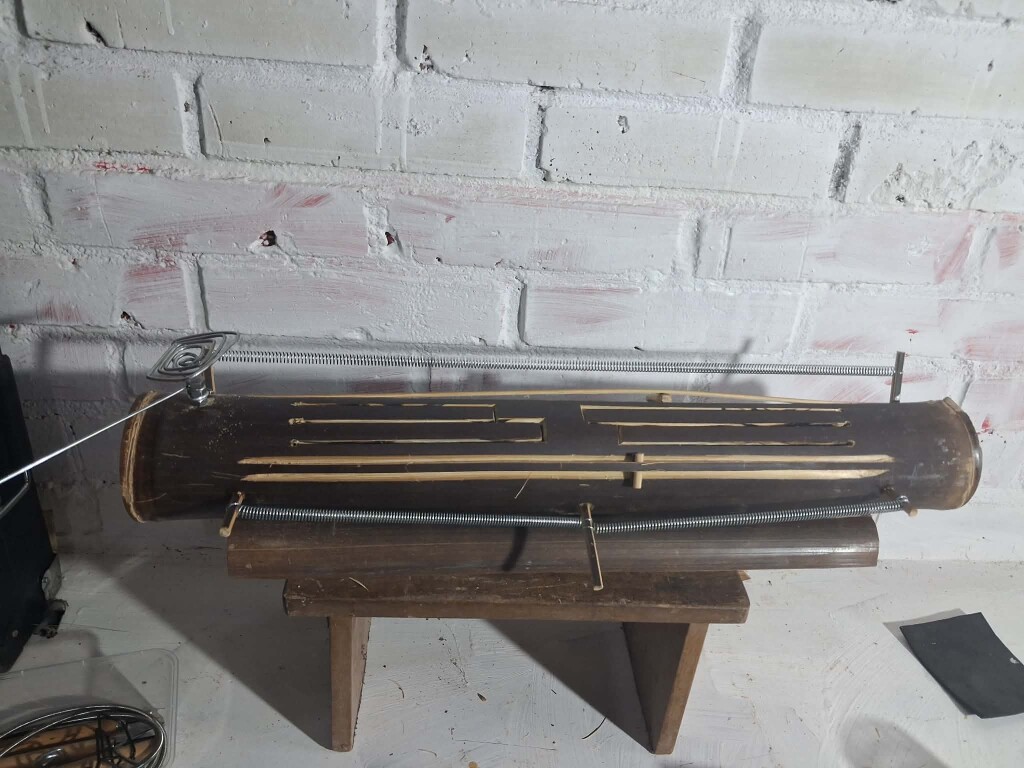
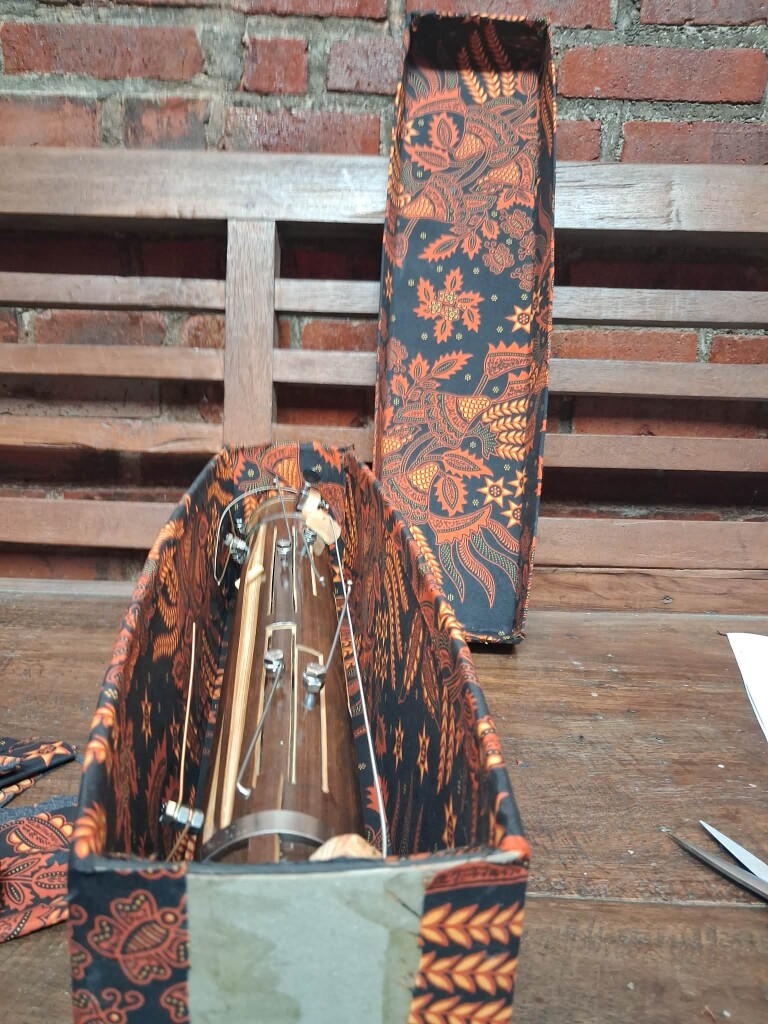
Wukir Suryadi is not merely a musician; he is an innovator and a craftsman. His ability to construct profoundly moving and resonant instruments from discarded materials is a hallmark of his artistic practice. These are not just objects of sound but tangible manifestations of his engagement with the world around him. The images accompanying the release showcase Suryadi with his unique creations, highlighting the raw, expressive nature of his artistic output. His current instrument, depicted in the accompanying photographs, is a testament to this dedication to the "acoustic machine" territory, where traditional forms are reimagined and hybridized.
The album itself comprises five live recordings, with Suryadi indicating that a substantial body of work, 25 tracks in total, has already been recorded. This suggests a dedicated exploration of the "titir" concept, promising further sonic investigations into the themes of warning and resilience. The call for listeners to stay tuned signifies an ongoing artistic dialogue and an invitation to engage with his evolving soundscape.

Contextualizing the Kentongan: History and Significance
To fully appreciate the weight of Suryadi’s artistic statement, understanding the cultural and historical context of the kentongan is essential. While the original article points to academic resources, a brief overview can illuminate its multifaceted role. The kentongan’s origins are deeply rooted in Javanese culture, where it has been employed for centuries. Its construction typically involves carving a hollow tube of bamboo or wood, with a slit cut into one side to produce a resonant sound when struck.
The Javanese perspective, as explored in the provided links, emphasizes the kentongan’s role in fostering community cohesion. It was a democratic tool, accessible to all and capable of reaching every corner of a village. Its use in disaster preparedness, such as signaling for help during earthquakes or volcanic eruptions, underscores its practical importance. Moreover, its integration into social rituals and announcements solidified its place as a symbol of collective identity and shared responsibility. The shift from this localized, communal function to a global symbol of crisis by Suryadi represents a powerful artistic and political commentary.
Broader Implications and Calls for Support
The release of "Titir" arrives at a time when the world is grappling with an unprecedented confluence of challenges: a global pandemic, escalating geopolitical tensions, and the accelerating impacts of climate change. In this context, Suryadi’s sonic warning resonates with a palpable urgency. The implication is clear: the disruptions and dangers we face are no longer confined to specific regions but are interconnected global phenomena.
The article makes a direct appeal for listeners to support Suryadi’s work by purchasing the album. This call is framed not just as a plea for artistic patronage but as a necessary act of solidarity within the global music community, especially given the logistical and bureaucratic hurdles artists often face, such as visa challenges. Supporting artists like Suryadi is presented as a means of sustaining the vital voices that articulate our collective anxieties and aspirations.
Exploring the Instrument and its Heritage
For those intrigued by the sonic landscape of "Titir" and the unique instruments employed, further exploration is encouraged. The provided links to academic and journalistic articles offer deeper insights into the social construction of the kentongan, its historical evolution, and its potential as an educational tool. These resources, particularly those focusing on the Javanese perspective, provide a rich backdrop against which Suryadi’s contemporary reinterpretation can be fully appreciated. They reveal how a seemingly simple instrument can carry profound cultural weight and serve as a powerful medium for social commentary.
The visual documentation accompanying the release, featuring Suryadi and his intricate, often unconventional, instruments, further enhances the understanding of his creative process. These are not mass-produced items but unique, handcrafted objects imbued with the artist’s vision and dedication. The photographs invite viewers to consider the materiality of sound and the innovative spirit that drives Suryadi’s practice.
A Reflection on Global Interconnectivity
The concluding remark about Suryadi’s previous release, which featured an image of power lines, further underscores the interconnectedness of global issues. While the image might have originated from Java, its resonance extends to other regions facing similar infrastructural and societal challenges, such as Beirut. This observation highlights how Suryadi’s art, though rooted in a specific cultural context, speaks to universal experiences of vulnerability and resilience in the face of globalized crises.
In essence, "Titir" is more than an album; it is a sonic manifesto, a call to awareness, and a testament to the enduring power of music to reflect, critique, and inspire. Wukir Suryadi, through his innovative use of the kentongan and his compelling performance, urges us to listen, to acknowledge the warnings, and to consider our collective role in shaping a more sustainable and equitable future.