Johan Budi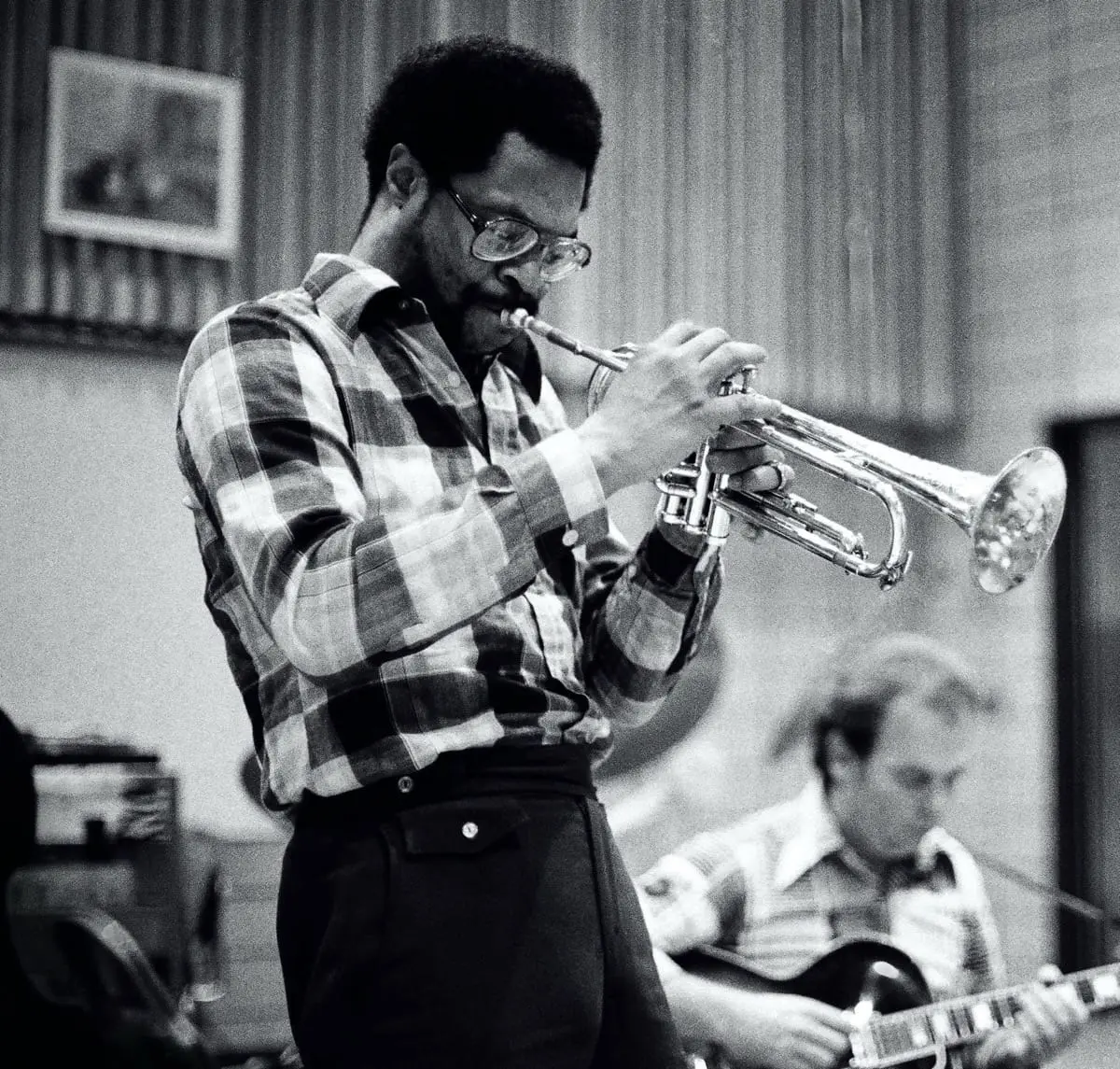
The landscape of contemporary jazz continues to be shaped by a dual trajectory: the meticulous preservation of historical archives and the persistent innovation of modern ensembles. Three recent releases—Woody Shaw’s Love Dance, The Descendants of Mike and Phoebe’s A Spirit Speaks, and the QOW Trio’s The Rule of Three—collectively illustrate the evolution of the genre from the mid-1970s to the present day. These recordings, spanning five decades, highlight the shifting priorities of jazz musicians, moving from the height of post-bop and modal experimentation to the exploration of ancestral identity, and finally to the refined interplay of the modern piano-less trio.
The Technical and Historical Significance of Woody Shaw’s Love Dance
Woody Shaw is frequently cited by musicologists and historians as the final major innovator in the lineage of the jazz trumpet, a direct successor to the foundations laid by Dizzy Gillespie, Fats Navarro, Clifford Brown, Lee Morgan, and Freddie Hubbard. Recorded in November 1975 at Blue Rock Studio in New York City, Love Dance represents a critical juncture in Shaw’s career and the broader development of acoustic jazz. During an era when many of his contemporaries were gravitating toward high-volume electric fusion, Shaw remained committed to a sophisticated, modernistic approach to the acoustic trumpet, incorporating wide interval leaps—specifically fourths and fifths—that redefined the instrument’s harmonic possibilities.
The reissue of Love Dance via Time Traveller Recordings, under the stewardship of producer Zev Feldman, restores a vital piece of the Muse Records catalog. Muse, founded by Joe Fields in 1972, became a sanctuary for "straight-ahead" and progressive jazz during the 1970s. The session features a formidable lineup, including tenor saxophonist Billy Harper, whose work in the 1970s with the Thad Jones/Mel Lewis Orchestra and Max Roach established him as a premier voice of the era. Harper’s contribution to the title track "Love Dance" is a masterclass in the "spiritual" tenor style, characterized by a robust tone and a sense of urgent, narrative phrasing.
Supporting Shaw and Harper is a rhythm section consisting of pianist Joe Bonner, bassist Cecil McBee, and drummer Victor Lewis. McBee, in particular, was a central figure in the 1970s New York "loft jazz" scene, and his presence here provides a grounded yet harmonically fluid foundation. The inclusion of percussionists Guilherme Franco and Tony Waters adds a subtle layer of rhythmic complexity that reflects the era’s interest in global textures without fully transitioning into the fusion idiom.
Chronology of the Love Dance Sessions
- November 1975: Recording sessions take place at Blue Rock Studio, NYC.
- 1976: Initial release on Muse Records.
- 2024-2025: High-fidelity reissue produced by Zev Feldman for Time Traveller Recordings, utilizing original master tapes to provide enhanced clarity to Shaw’s "burnished" tone.
Ancestry and Social Consciousness in A Spirit Speaks
While Woody Shaw was refining the technical boundaries of post-bop, other collectives were utilizing jazz as a medium for exploring cultural heritage and social identity. A Spirit Speaks, the 1973 recording by The Descendants of Mike and Phoebe, serves as a primary example of the "Folk-Jazz" movement. This group, centered around the Lee family, remains a significant though often overlooked chapter in the history of African American music.
The family’s musical pedigree is extensive. Bill Lee, the bassist and primary composer for the group, is perhaps best known to the general public as the father of filmmaker Spike Lee and the composer of several of his early film scores. The ensemble featured Bill Lee alongside his siblings: flugelhornist Clif Lee, pianist Consuela Lee Moorhead, and vocalist A. Grace Lee Mims. Recorded at Minot Studios in White Plains, New York, in December 1973, the album was produced during a period of heightened cultural awareness in the United States, where jazz was frequently intertwined with the Black Arts Movement.
The album’s thematic focus is explicitly ancestral, as evidenced by the group’s name, which references the family’s enslaved ancestors, Mike and Phoebe. However, critics have noted a stylistic tension within the work. The vocal contributions of A. Grace Lee Mims, which lean toward a formal, operatic, or "studied" delivery, contrast sharply with the improvisational spontaneity typically associated with jazz. This intersection of European classical vocal techniques, gospel traditions (as seen in the rendition of Thomas A. Dorsey’s "Take My Hand, Precious Lord"), and jazz instrumentation created a unique, if sometimes fragmented, listening experience.
Analysis of the Lee Family’s Cultural Impact
The reissue of A Spirit Speaks by Mack Avenue Records provides an opportunity to reassess Bill Lee’s "Folk-Jazz" philosophy. Lee sought to create a music that was accessible yet deeply rooted in the history of the Black experience in America. While the album may lack the singular "fire" of contemporary avant-garde releases of 1973, its historical value lies in its documentation of a specific family’s attempt to codify their history through song. The inclusion of legendary drummer Billy Higgins on percussion further elevates the session, providing a professional polish to the Lee family’s ambitious arrangements.
The Modern Synthesis: QOW Trio and The Rule of Three
The third pillar of this musical survey is the QOW Trio’s The Rule of Three, a contemporary release that demonstrates the enduring relevance of the piano-less trio format. Comprised of Riley Stone-Lonergan (tenor saxophone), Eddie Myer (double bass), and Spike Wells (drums), the trio operates within a tradition established by Sonny Rollins’ landmark 1957 recordings at the Village Vanguard.
The piano-less format is notoriously demanding, as it removes the harmonic "cushion" provided by a chordal instrument, placing the burden of harmonic structure entirely on the bassist and the melodic ingenuity of the saxophonist. In The Rule of Three, the group navigates this space with a blend of reverence for the past and a commitment to modern spontaneity.
Spike Wells, a veteran of the British jazz scene who rose to prominence playing with Tubby Hayes and Bobby Wellins, provides a vital link to the history of the music. His drumming is characterized by a "rhythmic color" and an alertness that allows the trio to shift seamlessly between the iconoclastic territory of Albert Ayler’s "Ghosts" and the sophisticated balladry of Billy Strayhorn’s "Lush Life."
Comparative Structural Data
| Feature | Woody Shaw: Love Dance | Descendants of Mike and Phoebe | QOW Trio: The Rule of Three |
|---|---|---|---|
| Year Recorded | 1975 | 1973 | c. 2024-2025 |
| Primary Genre | Post-Bop / Modal Jazz | Folk-Jazz / Spiritual | Contemporary Piano-less Trio |
| Key Instrument | Trumpet (Woody Shaw) | Double Bass (Bill Lee) | Tenor Sax (Stone-Lonergan) |
| Label | Time Traveller / Muse | Mack Avenue / Strata-East | Whirlwind Recordings |
| Focus | Technical Innovation | Ancestry & Consciousness | Interplay & Spontaneity |
Broader Implications and Industry Trends
The simultaneous interest in these three distinct recordings reflects a broader trend in the global music market: the "curation" of jazz history. The work of producers like Zev Feldman has created a robust market for archival "discoveries" and high-quality reissues. By bringing albums like Love Dance and A Spirit Speaks back into the public consciousness, labels are providing a necessary context for modern groups like the QOW Trio.
For the modern listener, these albums offer a trajectory of the "jazz spirit." Shaw’s work represents the peak of instrumental virtuosity and the expansion of the hard-bop language. The Lee family’s recording represents the use of music as a sociological and genealogical tool. Finally, the QOW Trio represents the refinement of these influences into a contemporary practice that prioritizes "the moment"—the ephemeral spark of live improvisation.
Industry analysts suggest that the resurgence of these 1970s catalogs is driven by a desire for "authentic" acoustic sounds in an increasingly digital landscape. The 1970s, once dismissed by some as a decade of "jazz in decline" due to the rise of rock and disco, is now being reappraised as a period of intense creativity and genre-blurring.
Conclusion
The releases of Love Dance, A Spirit Speaks, and The Rule of Three serve as essential benchmarks for the state of jazz. They remind the audience that the genre is not a static museum piece but a living dialogue between generations. Whether through the burnished trumpet lines of Woody Shaw, the ancestral hymns of the Lee family, or the agile interplay of the QOW Trio, the music continues to serve its primary function: the sophisticated expression of the human experience through sound. As these recordings find their way to new audiences, they reinforce the notion that "the rule of three"—past, present, and the synthesis of the two—remains the guiding principle of the jazz tradition.