Aveline Kirana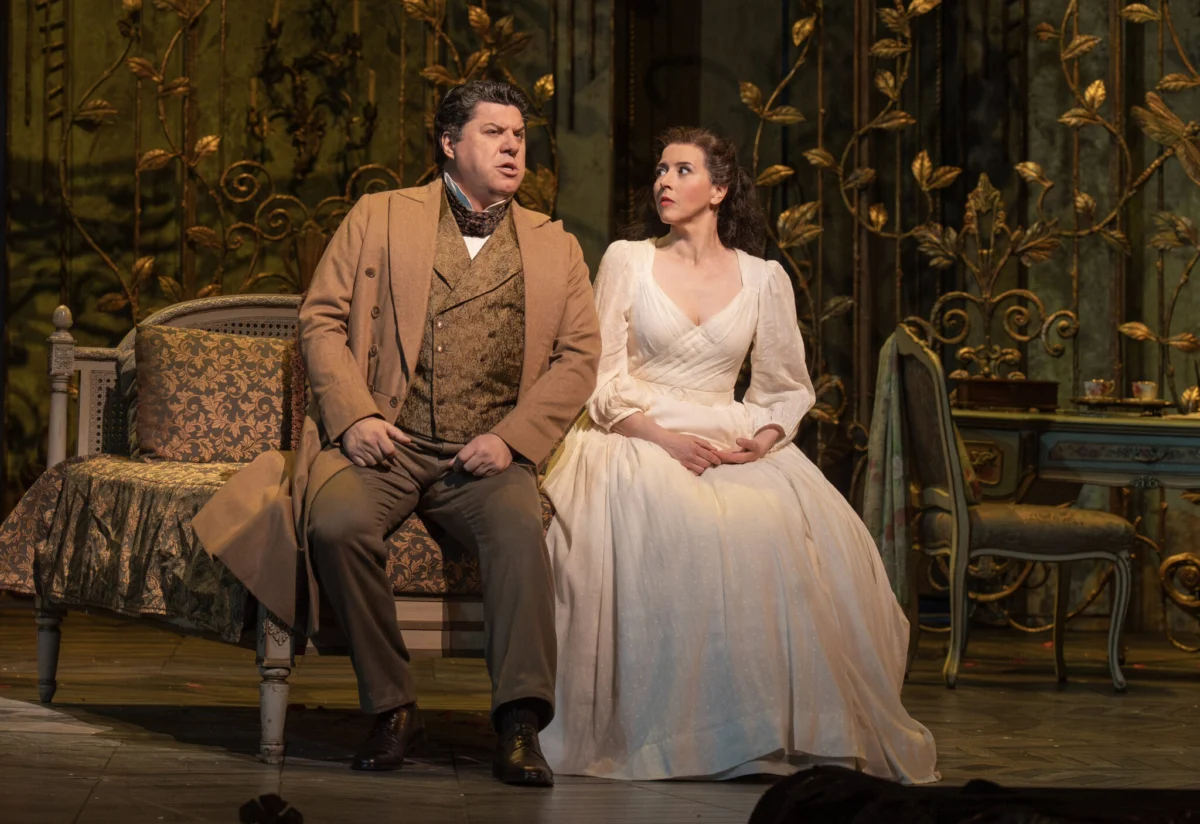
On March 31, the Metropolitan Opera presented the fourth performance of its current revival of Verdi’s "La Traviata," a production that, while showcasing a truly exceptional lead performance, also highlighted significant concerns regarding its staging and orchestral direction. The evening was undeniably defined by the stellar portrayal of Violetta Valéry by soprano Lisette Oropesa, whose return to the Met stage after a celebrated run as Elvira in "I Puritani" earlier in January, served as a powerful reminder of her artistry. While her Elvira demonstrated precision and elegance within the bel canto repertoire, her Violetta unveiled the full, radiant power of her lyric voice, delivering what many consider one of the most compelling interpretations of the role in contemporary opera.
A Vocal Tour de Force by Lisette Oropesa
From the outset of the first act, Oropesa masterfully employed her bright, shimmering vocal tones, most notably in the convivial "Libiamo" and the introspective "Un dì, felice, eterea." Her entrance in the duet "Ah, se ciò è ver, fuggitemi" was marked by virtuosic staccato passages and playful phrasing, showcasing her vibrant upper register with effortless brilliance. This segued into the deeply felt "È strano! è strano! in core" and "Ah! fors’è lui che l’anima," where Oropesa’s delicate pianissimo and seamless legato lines evoked the burgeoning emotions of love, painting a portrait of a woman wrestling with newfound feelings. The subsequent cabaletta, "Sempre libera," became a dramatic battleground where Violetta grappled with the intoxicating allure of freedom and the profound impact of first love. Vocally, the cabaletta was imbued with gutsy crescendos and agile coloratura runs. While a slight imprecision and occasional strain were noted on a high note following "Gioire," and her final E-flat lacked its characteristic ring, these minor blemishes did little to detract from the overall vocal command. Oropesa’s performances are typically characterized by a technical refinement and precision that few other singers currently active can match, making these brief moments all the more conspicuous.
The second act saw a palpable shift in Oropesa’s vocal quality, which deepened and warmed considerably. In the extended duet with Germont, her Violetta underwent a profound emotional transformation, moving from a charming courtesan to a woman consumed by defiance, fear, remorse, and profound sadness. Her rendition of "Non sapete quale affetto" was steeped in desperation, culminating in a full-throated fortissimo on the lines "Che morir preferirei." This moment of intense dramatic power elicited a spontaneous outburst of applause from the audience. As Luca Salsi delivered his subsequent passages, Oropesa’s face conveyed a chilling horror, leading into her poignant "Così alla misera – ch’è un dì caduta," which featured a melancholic timbre and a resonant middle voice that spoke volumes of her character’s plight. The aria "Ah! dite alle giovine" was equally extraordinary, with Oropesa spinning a gorgeous, ethereal piano sound and meticulously shaping each phrase with profound care. She lingered on each line, particularly as she ascended into her higher register, imbuing the music with an almost unbearable tenderness. The phrase "Morrò la mia memoria" became a haunting premonition of Violetta’s tragic destiny, with Oropesa’s physical frailty growing more pronounced and her voice resonating with pure power, punctuated by audible breaths that underscored Violetta’s overwhelming hopelessness. In "Siate felice Addio," Oropesa infused the lines with a heart-wrenching, weeping sound, culminating her performance in the first half of the act with a passionate "Amami, Alfredo" that was profoundly affecting in its emotional honesty.
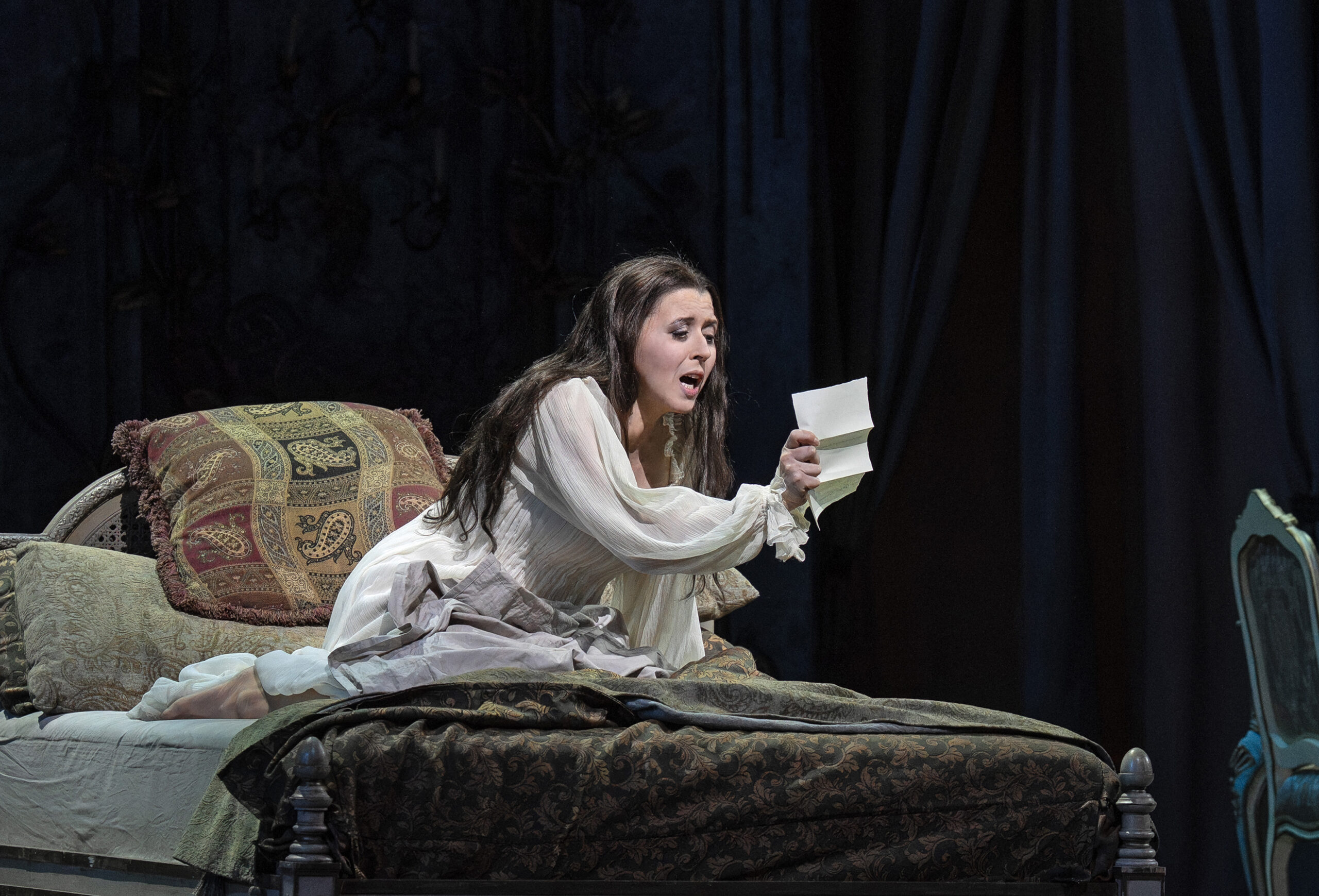
Entering the third act, Oropesa’s focus was squarely on conveying the raw, unvarnished emotion of Violetta’s final days and the character’s increasing physical and emotional weakness. During her reading of the letter, "Teneste la promessa," Oropesa drew upon her chest voice, slowly building emotional force until she reached "È tardi!" which she accented with a near-shouted intensity born of desperation. This led into her poignant "Addio del passato." The initial part of this aria was delivered with gorgeous, floating lines that gradually crescendoed into passages of desperate yearning in "Ah, della traviata sorridi al desio" and "Or tutto finì!" During the second repetition, Oropesa lay on the ground, singing the opening lines "Le gioie, i dolori tra poco avran fine" with hushed pianos that slowly swelled, though never reaching the same forte as in the first iteration. Her final pronouncements of "Or tutto finì!" were sustained with a thin, floating line, effectively emphasizing Violetta’s diminished state. In the duet "Parigi o cara," Oropesa’s voice rang with a gleaming middle register and lush legato lines, each seamlessly connecting to express the fleeting joy of Violetta in that brief moment of respite. However, in the subsequent lines, "Ah! non più, a un tempio," Oropesa masterfully conveyed the encroaching darkness of her impending death through deep chest tones and frazzled trills, leading to an impressive and emotionally charged "Ah! gran Dio, morir si giovane." The opening of this passage began with a hushed pianissimo, gradually crescendoing to a fortissimo before receding once more, ultimately allowing the full power of her voice to emerge in a testament to Violetta’s desperate will to live. This emotional arc was laid out with visceral intensity. In Oropesa’s final ensemble, "Prendi quest’è l’immagine," she delivered each moment with the utmost delicacy and sweetness, even as she lay on her deathbed. In the concluding lines, "È strano! Gli spasmi del dolore," Oropesa emphasized each word, imbuing them with a lightness and the vibrant voice of the first act, slowly rising with a renewed energy. The final "Oh gioia!" was delivered with a surge of power. Throughout the performance, Oropesa profoundly conveyed the devastation of Verdi’s heroine, reaffirming her status as one of the premier sopranos of our time.
Verdi’s Baritone: Luca Salsi’s Masterful Germont
Luca Salsi returned to the Metropolitan Opera as Giorgio Germont, reprising his acclaimed interpretation with depth and compelling complexity. His partnership with Oropesa transformed the first part of Act II into a scene charged with palpable tension. Salsi made his entrance with a booming, imposing presence, his chilling baritone underscoring the sternness of his character. However, as he launched into "Pura siccome un angelo," his voice softened to a smooth, tender piano with legato lines, a stark contrast to the biting, staccato delivery of "E grave il sacrifizio" as he sat beside Oropesa, his gaze and posture looming over her every reaction. When Oropesa began her "Ah! dite alle giovane," Salsi’s demeanor shifted perceptibly, revealing an internal conflict that initially prompted him to leave the stage. He ultimately returned for "Sì, piangi, o misera – supremo, il veggo," where his warmth and tenderness resurfaced, his voice rich with supportive tones that beautifully complemented Oropesa’s singing. A profound sincerity emerged towards the end of the duet as Salsi reached out to comfort Violetta.
In his subsequent aria, "Di Provenza il mar, il suol," Salsi delivered a moving rendition, showcasing a wide dynamic range, particularly in his mezzo-piano passages with smooth legato that effectively conveyed Verdi’s flowing melodic lines. This interpretation was further enhanced by his tender caresses of Piotr Buszewski’s Alfredo. Salsi concluded the first part of Act II with a soothing and virtuosic "No, non udrai rimproveri," characterized by clean runs and a seamless legato. The second part of the act provided Salsi another opportunity to unleash his booming sound in "Di disprezzo degno se stesso rende," effectively conveying his disappointment in his son. In Act III, Salsi experienced a full circle moment, singing "Troppo rimorso all’alma mi divora" with immense remorse for his past actions.
A Rising Star in Piotr Buszewski’s Alfredo
Piotr Buszewski, as Alfredo Germont, had a somewhat uneven start to the evening, with his voice occasionally falling short and his acting appearing somewhat stiff. His opening duet with Oropesa showed glimpses of promise, particularly in his mezza-voce singing, but a disconnect emerged as he transitioned to his full voice, creating a noticeable gap between registers. This was further apparent in "De’ miei bollenti spiriti," where Buszewski began with a mezzo-piano and a smooth legato, but his higher range lacked cohesive phrasing, and his high notes did not ring cleanly. He demonstrated a notable recovery in his cabaletta, "O mio rimorso!," singing with considerable resonance in his upper register, culminating the section with an impeccable high C.
Act II, Scene II, proved to be a high point for the tenor, especially in "Ogni suo aver tal femmina," where Buszewski sang with palpable desperation and anger. His voice gradually crescendoed to a climax on the lines "Che qui pagata io l’ho." The tenor’s stage presence became increasingly erratic, effectively portraying his desperation and feeling of betrayal.
In Act III, Buszewski displayed a gorgeous pianissimo in "Parigi o cara," though at times he seemed disconnected from his full vocal capacity. Nonetheless, he managed to blend effectively with Oropesa’s ringing sound, creating a moment of pure passion. In the second section of the duet, "Ah! gran Dio, morir si giovane," the tenor sang his lines "Oh mio sospiro, oh palpito" with great intensity. In the final ensemble, Buszewski’s "No, non morrai, non dirmelo" was delivered with significant affect, effectively emphasizing the lament woven into Alfredo’s music.
Supporting roles included Dwayne Croft, who made a cameo as Baron Douphol. A renowned Germont himself, Croft imbued the Baron with nobility, his voice resonant and elegant. Edyta Kulczak was an animated Flora, while Tessa McQueen showcased a promising lyric soprano as Annina. Richard Bernstein provided strong support as Grenville in the final ensemble.
Production Concerns Overshadow a Stellar Evening
Despite the vocal triumphs, the overall evening was marred by significant production issues that detracted from the experience. A few months prior, the Metropolitan Opera announced its decision to revert to an older production of "Carmen" due to the lack of success of Carrie Cracknell’s new staging. Michael Mayer’s current production of "La Traviata," unfortunately, warrants a similar reassessment. The ovular-shaped set, with its flat, uninspired design and lack of depth, felt particularly uninspired. Its gold ornamentation evoked a sense of tasteless opulence reminiscent of the Trump Tower. Susan Hilferty’s costumes were described as gaudy and out of place, while Lorin Lattaro’s choreography appeared noisy and hindered by the restrictive space created by the set’s bed and a general sense that the set makes the Met stage appear significantly smaller. The direction for the chorus was particularly unfortunate, with the ensemble relegated to standing around in bunched formations throughout the evening, lacking any discernible motivation or dramatic purpose. The lack of effective chorus direction is often an early indicator of a director’s inexperience with the operatic form, and given the Met’s status as a premier opera company, such productions should ideally be helmed by artists with proven expertise. Furthermore, the inclusion of Alfredo’s sister, a character not present in Verdi’s original opera, felt like an unnecessary directorial embellishment that disrupted the narrative flow.
Adding to these concerns was the conducting of Antonello Manacorda, which was erratic throughout the evening. The preludes to Act I and Act III were notably slow and lacked orchestral color, with the violins sounding thin. The characteristic "oomph pa pa" rhythms were exaggerated, particularly in the Brindisi. The conductor’s timing was also problematic during numerous choral sections, especially in the second part of Act II, where he frequently appeared out of sync with the vocal ensemble, creating an imbalance. The orchestra’s fortissimo passages were often characterized by a bombardment of sound, suggesting an attempt to generate excessive dramatic effect that ultimately felt overdone.
Conclusion: A Vocal Triumph Amidst Production Weaknesses
In summation, this performance of "La Traviata" at the Metropolitan Opera was unequivocally an evening dominated by the exceptional artistry of Lisette Oropesa and Luca Salsi. Oropesa delivered a Violetta of rare depth and vocal brilliance, solidifying her position as one of today’s most accomplished sopranos. Salsi provided a powerful and nuanced Germont, anchoring the dramatic core of the opera. While their performances were a significant triumph, the evening also underscored the urgent need for a reevaluation of the current production’s staging and direction, which unfortunately detracted from the overall operatic experience. The Metropolitan Opera’s 2025-26 season continues with this revival, and while the vocal performances offer undeniable rewards, the accompanying production elements present a clear area for improvement.