 Muhammad Ibadurrohman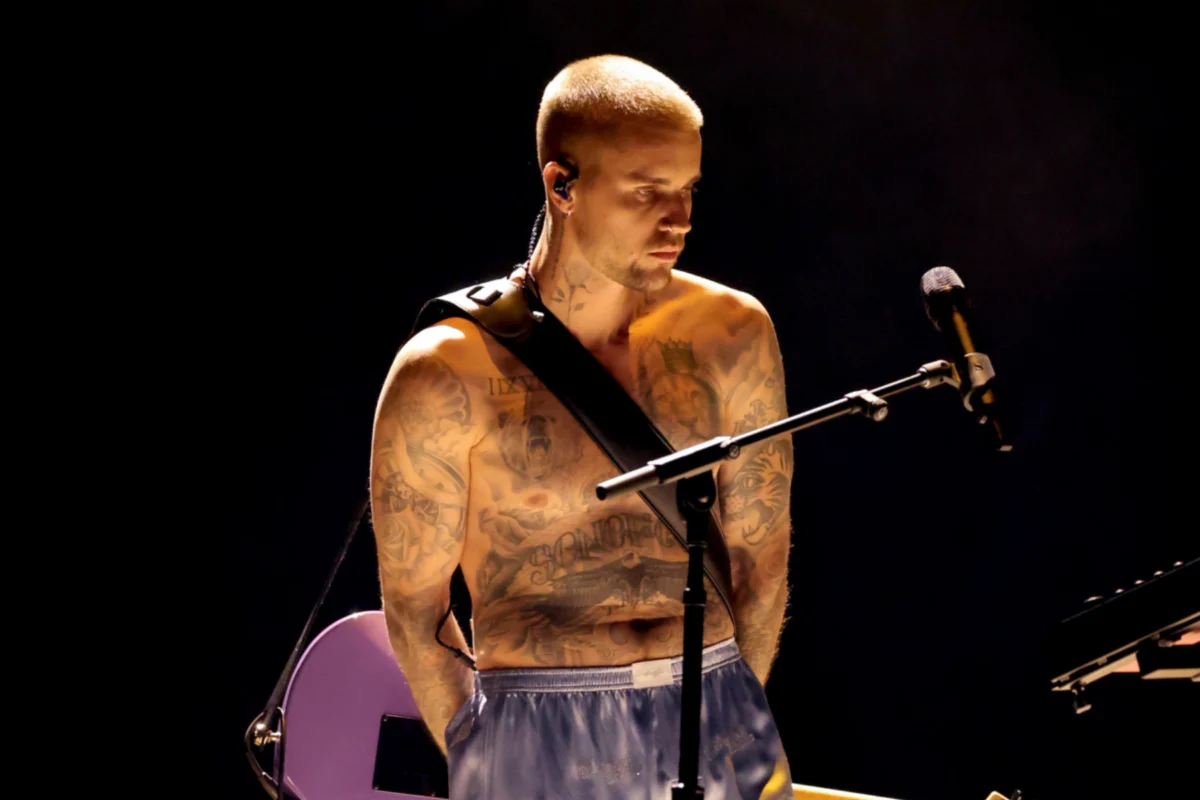
Ahead of his highly anticipated headlining performances at the Coachella Valley Music and Arts Festival on April 11 and 18, global pop sensation Justin Bieber orchestrated an exclusive, invite-only surprise set at The Roxy in West Hollywood on Sunday night, March 29. The intimate performance served as a significant moment for fans, offering the live debuts of tracks from his forthcoming 2025 albums, Swag and Swag II, and marking a substantial return to a full-length stage show after a prolonged hiatus. This carefully orchestrated event also ignited discussions within the music industry regarding the intricate mechanics and strategic workarounds of festival radius clauses, particularly given Bieber’s prominent role at Coachella.
The clandestine nature of the Roxy show was emphasized through a discreet email invitation sent to a select group of fans. The message, which included a "unique presale purchase link," explicitly stated, "This is a private, invite-only experience — please keep this strictly confidential. Any public sharing may result in the invite being revoked." This level of secrecy underscored the special status of the event, generating significant buzz while maintaining an air of exclusivity designed to amplify anticipation for his main festival appearances. For many attendees, this was not just an opportunity to hear new material, but to witness Bieber perform a comprehensive set, a rarity in recent years.
Bieber’s path back to the stage has been punctuated by challenges. Following a significant four-year touring hiatus, his proper return to live performance occurred at the Grammy Awards on February 1. However, his recent touring history has been notably affected by delays and cancellations. A major world tour announced shortly before the global COVID-19 pandemic was ultimately scuttled. Just months after finally hitting the road in February 2022, Bieber was forced to cancel the remaining dates due to a diagnosis of Type 2 Ramsay Hunt syndrome, a neurological condition causing facial paralysis that severely impacted his ability to perform. Since then, his public stage appearances have been limited, including a performance of "Private Landing" with Don Toliver at Rolling Loud Las Vegas in March 2023, and a surprise guest appearance during Tems’ set at Coachella 2024, where he joined her to perform his remix of her collaboration with Wizkid, "Essence." The Roxy show, therefore, represented a crucial step in his re-engagement with live performance, allowing him to reconnect with an audience in a controlled, intimate setting.
Understanding the Radius Clause: A Cornerstone of Festival Exclusivity
The timing and location of Bieber’s Roxy performance, so close to his Coachella dates and within Southern California, immediately brought the stringent concept of a "radius clause" into focus. These contractual stipulations are a foundational element of the live music industry, designed to protect the significant investments made by festival organizers. A radius clause typically prevents artists booked for a major festival from performing within a specified geographical area and time frame leading up to, and sometimes immediately following, the festival date. The primary objective is to prevent market cannibalization, ensuring that potential festival-goers are not diverted to separate, potentially cheaper, headlining shows by the same artist.
Industry professionals frequently weigh in on the importance of these clauses. Jay Moss, senior vice president and agent at The Team (formerly Wasserman), explains, "In layman’s terms, a radius clause is a protection both in miles and in location, within which an artist can or can’t perform. Festivals do it to protect the integrity of their event, and make sure they’re getting talent that no one else is getting." This exclusivity is crucial for festivals like Coachella, which rely heavily on securing unique performances and marquee headliners to attract hundreds of thousands of attendees across multiple weekends. The festival experience, often involving travel and significant financial outlay for tickets, accommodation, and expenses, hinges on the perception of a one-of-a-kind lineup.
Coachella’s Strict Parameters and Industry Variations
Coachella, renowned globally as one of the most prominent music festivals, is particularly known for its rigorous radius clause. Reports indicate that its clause typically prohibits artists from performing shows in or around Southern California from December 15 through May 1. While the exact time frame can see minor annual adjustments, the geographical restriction often spans 250 miles or more from the festival site in Indio, California. This can be a particularly restrictive measure in a densely populated and musically vibrant region like Southern California, which includes major markets such as Los Angeles, San Diego, and Orange County.
Jake Bernstein, vice president of music at The Team, highlights the variability of these clauses across the industry. "I don’t think there’s a standard; every [festival] has different ones. Some are 300 miles for 180 days before and 60 days after. Some are 250 miles. It just varies. Everyone’s got their own. I think the smart promoters look into who’s coming to their festival, and they look at their data on ticket buyers and make their radiuses by that." This tailored approach allows festivals to optimize their protection based on their specific market dynamics and target demographics. The overarching goal remains consistent: to ensure that the festival is the premier, if not sole, opportunity for fans to see a particular artist within a defined period and region.

The Strategic Rationale Behind Radius Clauses
From a promoter’s perspective, the logic behind radius clauses is straightforward. If a major act announces a separate headline show within the designated radius, especially close to the festival date, it can directly lead to slower ticket sales for the festival itself. Promoters heavily depend on the draw of their headlining and key acts to drive overall pass purchases. By enforcing exclusivity, festivals can maintain higher demand and pricing for their tickets, which are often sold months in advance. The clause thus serves as a competitive shield, safeguarding the festival’s economic viability and unique selling proposition.
Bernstein elaborates on this, stating, "It keeps the artist out of the market for a certain time and makes their festival a little more special. That way the artist won’t be in whatever mileage of region or states in a certain amount of time. So, the only chance to see that artist is at that festival, as far as the fans know." This creates a sense of urgency and exclusivity for festival attendees, enhancing the perceived value of their experience.
While radius clauses primarily benefit promoters, they can also indirectly serve artists. By consolidating their appearances at a major festival, artists gain exposure to vast new audiences who might not typically attend their solo shows. This broad visibility can translate into new fans who then purchase tickets for future headlining tours. Moreover, artists often aim to avoid oversaturating a market. Playing too many shows in the same area within a short span can dilute demand and reduce the impact of individual performances.
Bernstein notes, "You really need to plan whatever tour you’re going on to be far after the festival, on the opposite end of the year. You can’t do a huge show in California in June after playing Coachella in April. It’s just not going to work. Besides, the fans are drained, too. They just spent the money to see you at the festival. What’s the point of playing three months later? You’re not going to play that market shortly after a festival, at least for a big show. You want the fans to be hungry to see you again." Additionally, performing at festivals can be financially advantageous for artists, as they often don’t need to bring in as much production equipment or crew as they would for a full-scale solo tour, thereby saving on significant operational costs.
Navigating the Clause: The Roxy Workaround
Justin Bieber’s surprise show at The Roxy exemplifies how artists and promoters can strategically navigate, rather than outright violate, radius clauses. The key to this particular workaround lies in the ownership and operational structure of The Roxy itself. The venue is operated by Goldenvoice, the very same promoter responsible for organizing Coachella each year. This corporate alignment provides a crucial "corporate cover" for the show, transforming what might otherwise be a contractual breach into an internally sanctioned event.
Industry experts confirm that such arrangements are common. Ahead of a music festival, artists can still perform within the specified radius under certain conditions, primarily if the event is not billed as a standalone ticketed show in direct competition with the festival. Secret performances, private invite-only events, and appearances as special guests are all established methods of circumventing the standard clause. Managers and agents frequently engage in proactive discussions with festival promoters during the deal-making process, explaining the rationale and necessity for certain performances within the radius. Unless a contract explicitly forbids any form of performance – including guest spots or secret sets – there is often room for negotiation and strategic planning.
Bernstein advises, "You have to work with [the festival] and ask them in advance, usually before you confirm the festival, letting them know you have certain shows on certain dates. Sometimes they say that’s fine. Sometimes they say no, and you have to change your plans. Or sometimes, they’ll say, ‘Can you give us a little bit of a better deal on the artist? Can you do a free after-party?’" These negotiations can also involve trade-offs, such as a reduction in artist fees or additional promotional activities like meet-and-greets. The crucial element is communication and collaboration, ensuring that all parties are aligned and the integrity of the festival remains intact.
The Strategic Value of Underplays and Pop-Up Gigs

For an artist of Justin Bieber’s caliber, a performance at a relatively small, 500-capacity venue like The Roxy serves multiple strategic purposes, especially ahead of a major festival appearance. Such "underplay" gigs can function as crucial warm-up opportunities, allowing the artist to fine-tune their set, test new material, and reconnect with the energy of a live audience in a lower-pressure environment. This is particularly valuable for someone like Bieber, who has faced recent health challenges and a period away from extensive touring.
Daniel Rubin, vice president of artist management at Element1 and manager for artists like The Band CAMINO, Sawyer Hill, and half•alive, highlights the broader marketing and narrative benefits. "Any time you’re seeing an artist perform a gig such as a pop-up show or underplay that would seemingly break a typical radius clause, it’s thought out and very intentional. Marketing for a show or festival is very much narrative- and content-driven. An artist popping up and doing an underplay gig, whether we’re using the Bieber example at The Roxy or artists doing something special for fans in the market, it allows a little bit more context for the bigger show or festival."
Such events generate significant hype and content, creating a buzz that directly feeds into the larger festival narrative. When a festival like Coachella is already sold out, as it typically is, the promoter’s concern about ticket sales diminishes. In such scenarios, building additional excitement and media attention for the headliner becomes a primary objective.
Moss confirms this, noting, "If it’s the same promoter, it’s obviously their choice to make if they’re going to allow an artist to do another event within the radius. In [a case like Bieber’s], I’m sure it was a really big look. Coachella is sold-out, so they weren’t worried about that part of it, and it was something cool to build a lot of excitement to have the headliner of one of, if not the biggest festivals in the world, play an unbelievably small and intimate event. It probably got a lot of eyes on it, and it probably got people even more excited to see him in a couple of weeks at Coachella because of the fervor around trying to get a ticket to see him in a 500-cap space."
This strategy isn’t limited to major headliners. Bernstein points out that Goldenvoice, as a promoter, often uses its network of venues for such purposes. "Sometimes, these festival promoters have their own clubs. Goldenvoice does. So, you can arrange those underplays with them. For example, [Coachella 2026 performer] Subtronics is doing the Fox Theater in Pomona [on April 14]. That is a Goldenvoice show." These events serve as extensions of the festival experience, providing additional revenue streams for the promoter and unique opportunities for fans.
Broader Implications for the Live Music Ecosystem
The phenomenon of radius clause workarounds and strategic underplays reflects the dynamic and increasingly sophisticated nature of the live music industry. It highlights a continuous negotiation between the need for exclusivity that benefits festivals and the desire for artists to engage with their fans, promote new music, and hone their craft.
For artists on the rise, navigating radius clauses can be more challenging. While established acts like Bieber might have the leverage to negotiate favorable terms, emerging artists might find radius clauses more restrictive, potentially forcing them to omit major markets from their tour routing. However, even for these artists, creative solutions can be found. Rubin shares an example from his experience with The Band CAMINO: "A recent example in our world, with The Band CAMINO, is last year they had their album and a robust national tour. We came up with this idea of doing underplays in the markets they’re coming back to shortly thereafter for the main tour. While there were still some more tickets left to sell, the idea was to come to the promoter with an inspired idea that this would create a little bit of a hype machine and be additive to the big tour, which was understood and embraced by our promoter partners." This demonstrates that strategic underplays, even when tickets are still available for larger shows, can be embraced by promoters as a tool for generating excitement and boosting overall engagement.
The frequency of these workarounds is often case-by-case, depending on the artist’s stature, the specific contractual language, and the relationship between the artist’s team and the festival promoter. It underscores that while radius clauses are a vital component of festival agreements, they are not rigid, unbreakable barriers but rather frameworks within which strategic planning and negotiation can occur.
Ultimately, Justin Bieber’s surprise Roxy show serves as a masterclass in modern music marketing and artist management. It allowed him to re-engage with fans, debut new material, warm up for a major festival, and generate significant pre-Coachella buzz, all while navigating the complex landscape of festival exclusivity through a collaborative effort with his festival promoter. This event not only signals a significant moment in Bieber’s career trajectory but also provides valuable insight into the intricate, often unseen, mechanisms that govern the live music industry, demonstrating how creativity and collaboration continue to shape the artist-fan experience.