Johan Budi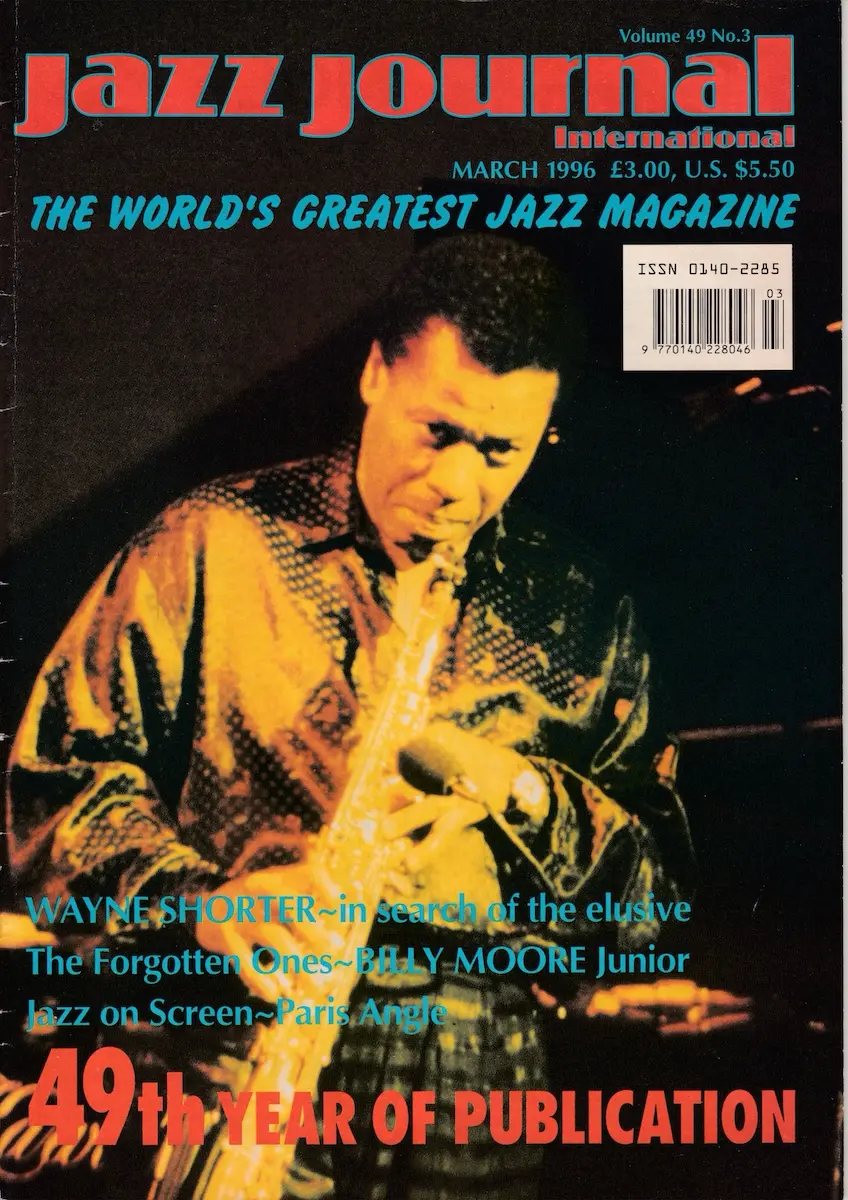
The signing of saxophonist and composer Wayne Shorter to Verve Records marks a pivotal transition in the career of a musician who has spent more than four decades redefining the parameters of American music. As Shorter prepares for the release of his latest project, High Life, he remains one of the few living architects of the 1960s jazz revolution who continues to prioritize evolution over nostalgia. This new chapter follows a prolific but occasionally polarizing period in the 1980s with Columbia Records, signaling a return to large-scale compositional ambition. While Shorter’s singular style—characterized by elliptical melodies and sophisticated harmonic structures—is often viewed as a mysterious force in contemporary music, its origins are deeply rooted in a blend of mid-century Newark culture, formal academic struggle, and an obsessive interest in the "elusive" nature of beauty.
The Newark Foundation and Early Musical Imprinting
Born on August 25, 1933, in Newark, New Jersey, Wayne Shorter’s entry into the world of music was less a calculated career move and more an organic absorption of his environment. Newark in the 1930s and 40s was a vibrant hub for Black culture and industry, providing a backdrop that allowed for an eclectic range of influences. Shorter’s household was not overtly professional in its musicality, yet it was permeated by a sophisticated domestic soundtrack. His mother, who sang while performing daily chores, exhibited an intuitive grasp of complex jazz standards. Shorter recalls her ability to navigate the difficult "bridge" of Duke Ellington’s "Sophisticated Lady" without the aid of leading tones—a feat of "organic" musicality that would later inform his own approach to non-linear composition.
His father’s tastes were equally influential, albeit in a different direction. Preferring country and western music alongside cinematic soundtracks like "South Pacific" and "Spellbound," the elder Shorter introduced his son to the concept of music as a transportive medium. This exposure to film scores and "mood music" fostered Wayne’s lifelong fascination with the visual and narrative possibilities of sound. By the time Shorter entered Newark Arts High School—the same institution that produced vocalist Sarah Vaughan—he was majoring in visual arts, only taking up the clarinet at age 15. This late start did not hinder his progress; rather, his background in art allowed him to "see" music as a series of textures and colors rather than just a sequence of notes.
Academic Divergence at New York University
After graduating from high school in 1951, Shorter enrolled at New York University (NYU) to study music education. The curriculum was designed to produce teachers, focusing on rigid adherence to classical harmony and pedagogical lesson plans. However, Shorter’s internal ear was already operating on a multi-stylistic frequency. He often found himself at odds with instructors who demanded stylistic consistency. During one assignment, a teacher noted that a 16-measure piece Shorter had written drifted through three distinct styles—romantic, impressionistic, and contemporary modern.
Despite the institutional pressure to specialize, Shorter’s time in New York City during the early 1950s provided a parallel education. He and his peers, including figures like Larry Farrell, spent their subway commutes analyzing the symphonic structures of Gustav Mahler, Dmitri Shostakovich, and Igor Stravinsky. Shorter’s methodology for learning harmony was largely observational; rather than transcribing scores, he would listen to classical broadcasts late at night, confirming the movement of "II chords in third inversion" by ear before drifting to sleep. This ability to synthesize classical orchestration with the burgeoning language of bebop would become the hallmark of his 1960s output.
The Dual Engines of Innovation: Blakey and Davis
The professional trajectory of Wayne Shorter is frequently divided into two transformative residencies: his tenure with Art Blakey’s Jazz Messengers (1959–1964) and his membership in Miles Davis’s "Second Great Quintet" (1964–1970). With Blakey, Shorter served as the musical director, crafting hard-bop anthems like "Children of the Night" and "One by One." However, Shorter viewed the Messengers as a "show band," where compositions were limited by the need for a specific type of rhythmic drive and "shuffle accent." While this era established his reputation as a formidable tenor saxophonist, he felt the more "ethereal" aspects of his writing were often filtered through Blakey’s high-energy requirements.
The shift to the Miles Davis Quintet provided the "carte blanche" Shorter required to fully realize his compositional voice. Working alongside Herbie Hancock, Ron Carter, and Tony Williams, Shorter became the primary composer for the group, contributing era-defining tracks such as "E.S.P.," "Nefertiti," and "Fall." During this period, Shorter moved away from standard song forms, favoring melodies that felt as though they were suspended in air. He describes the creation of "Nefertiti" and "Fall" as almost mystical experiences, where the melodies emerged rapidly during late-night sessions, dictated by an "elusive" quality that he prioritized over instant gratification. This period solidified Shorter’s status as a "composer’s composer," a figure who could bridge the gap between the grit of jazz improvisation and the formal elegance of chamber music.
The Blue Note Years and Harmonic Individuality
Parallel to his work with Davis, Shorter recorded a series of landmark albums for Blue Note Records, including "Speak No Evil," "Juju," and "The All Seeing Eye." These sessions allowed him to experiment with larger ensembles and more abstract thematic material. In these recordings, Shorter’s harmonic language became increasingly distinct. While critics often noted the distance between his melodies and their underlying harmonies, Shorter argued that the two were "organically close," even when separated by wide intervals.
He frequently cited Thelonious Monk as his only peer in "odd" composition, noting that Monk understood that every moment in a piece of music had to feel "crucial." Shorter’s Blue Note output remains a cornerstone of the post-bop era, representing a moment in jazz history where the quest for "dignity and integrity" in the music took precedence over commercial considerations. This body of work serves as the primary reference point for the "Young Lions" movement of the 1980s and 90s, though Shorter himself has expressed a reluctance to dwell on his past achievements.
High Life and the Contemporary Synthesis
The new Verve contract and the resulting album, "High Life," represent Shorter’s latest attempt to "preserve the spirit of jazz" through constant change. Produced by Marcus Miller and featuring a modern lineup including keyboardist Rachel Z and drummer Will Calhoun, the project integrates synthesizers and electronic textures with a 30-piece chamber orchestra comprised of members from the Los Angeles Philharmonic.
For Shorter, the distinction between "acoustic" and "electronic" is largely irrelevant. He maintains that all music is "acoustic" in the sense that it involves the movement of air and sound. "High Life" is not merely a jazz record with strings; it is a through-composed work that seeks to revisit and expand upon ideas first explored in his 1980s Columbia albums, such as "Phantom Navigator" and "Joy Ryder." The inclusion of Will Calhoun, known for his work with the rock band Living Colour, underscores Shorter’s desire for a "pulsating, unassuming" rhythmic foundation that leaves space for orchestral expansion.
Broader Impact and the Philosophy of Discovery
As the jazz world continues to debate the merits of neo-traditionalism versus avant-garde experimentation, Wayne Shorter remains a steadfast advocate for the "process of discovery." He famously rejects the idea of regressing to the styles of the early 1960s, comparing such a move to traveling from London to Manchester by stagecoach. To Shorter, jazz is defined by the "breakthrough"—the moment when a musician reaches for something elusive and manages to capture it.
The implications of Shorter’s continued evolution are significant for the future of the genre. By refusing to be confined by the "standard song form" or the expectations of the "jazz establishment," he provides a blueprint for younger musicians to seek their own "singular style." His work suggests that the true legacy of jazz lies not in the replication of specific sounds, but in the courage to mix styles—romantic, impressionistic, and contemporary—to tell a story that is entirely new. As "High Life" enters the global cultural landscape, it serves as a reminder that for Wayne Shorter, the horizon is always moving, and the most fascinating music is always that which remains just out of reach.