Aveline Kirana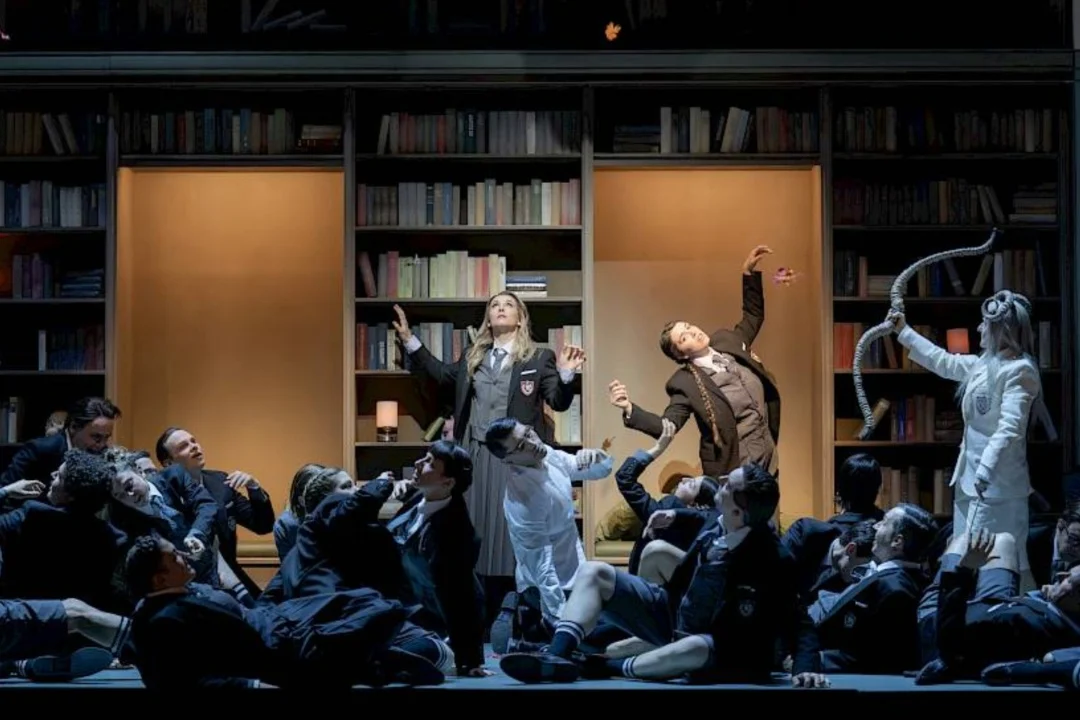
The Zurich Barock Festival, a distinguished event dedicated to exploring and celebrating the rich tapestry of Baroque music, has once again illuminated the stage of the Zurich Opera House with a rare and captivating production: Jean-Marie Leclair’s opera "Scylla et Glaucus." This ambitious undertaking marks a significant moment for the 18th-century composer, predominantly celebrated for his virtuoso violin compositions, presenting his sole surviving opera to a contemporary audience. Premiering in 1746, "Scylla et Glaucus" enjoyed a period of moderate acclaim but was largely relegated to the annals of operatic history, its revival only truly gaining traction with its first modern performance in London in 1979. Despite its undeniable artistic merit, the work has remained a relative obscurity, making its current staging at the Zurich Opera House a crucial event for both scholars and opera enthusiasts.
Leclair, a towering figure of the French Baroque, penned "Scylla et Glaucus" in the grand tradition of the tragédie en musique, a dramatic opera form meticulously codified by Jean-Baptiste Lully. This genre, already experiencing a gradual decline in popularity by the mid-18th century, presented a formidable challenge for composers seeking to innovate within established conventions. Leclair, however, masterfully navigates this delicate balance. The score reveals a composer deeply influenced by his formative studies in Italy, a testament to the era’s burgeoning cosmopolitanism in the arts. While firmly rooted in the sophisticated aesthetic of French Baroque opera, characterized by its elaborate dance sequences and declamatory recitatives, the vocal writing in "Scylla et Glaucus" is notably infused with Italianate warmth and expressiveness. This fusion creates a compelling musical language that is both original and deeply resonant, offering a unique perspective on the operatic landscape of its time. The opera’s original run, though successful, did not secure its lasting presence in the repertory, a common fate for many works from periods of significant artistic transition. The recent resurgence of interest in Leclair’s operatic output, spurred by scholarly research and dedicated performance initiatives like this one at Zurich, aims to rectify this oversight and reclaim a significant, albeit underappreciated, masterpiece.
Myth, Desire, and Transformation: A Timeless Narrative
The libretto of "Scylla et Glaucus," attributed to Pierre-Joseph de La Victoire de l’Albaret, draws its potent narrative from the enduring wellspring of Greco-Roman mythology, specifically Ovid’s seminal work, "Metamorphoses." The opera unfolds a tragic tale of unrequited love, sorcery, and ultimately, devastating transformation, set against the dramatic backdrop of ancient Sicily. The sea god Glaucus, a figure of immense power and primal connection to the ocean, finds himself ensnared by an all-consuming passion for the ethereal nymph Scylla. However, Scylla, deeply apprehensive of the unpredictable nature of love and perhaps fearing heartbreak, firmly rejects Glaucus’s advances.
Driven by his fervent desire, Glaucus seeks the intervention of the powerful sorceress Circe, a figure renowned for her potent magic and her capricious nature. It is here that the narrative takes a darkly compelling turn. Circe, far from being a detached facilitator, succumbs to her own desires and falls prey to an intense infatuation with Glaucus. She attempts to seduce him, employing her formidable enchantments and alluring charms. Yet, Glaucus remains steadfast in his devotion to Scylla, resisting even Circe’s potent magic. He returns to Scylla, who, having perhaps witnessed the depth of his commitment or softened by his persistence, begins to reciprocate his affections.
The opera depicts a fleeting interlude of burgeoning happiness for the young lovers. However, this fragile peace is shattered by the vengeful wrath of Circe. Consumed by jealousy and a burning sense of betrayal, she enacts a horrific act of retribution. In a climactic display of her dark powers, Circe poisons Scylla, unleashing a horrifying metamorphosis. Scylla is transformed into a monstrous, jagged rock formation, a perpetual terror lurking in the treacherous Strait of Messina. This cursed entity is destined to wreak havoc upon unsuspecting mariners, its jagged form a grim monument to Circe’s destructive rage and a poignant symbol of lost love and unfulfilled potential. The myth itself, with its themes of forbidden desire, the corrupting influence of power, and the tragic consequences of jealousy, provides fertile ground for operatic exploration.
From Mythology to High School Drama: A Bold Reimagining
Director Claus Guth, known for his innovative and often provocative interpretations of operatic works, boldly transplants the ancient narrative of "Scylla et Glaucus" into the modern, yet still highly charged, environment of a 20th-century high school. The production is deliberately situated in what appears to be the 1960s, a period often characterized by burgeoning youth culture and evolving social dynamics, offering a compelling parallel to the intense emotional currents of the original myth. The opera’s setting is reimagined as the "Lycée Jean-Marie Leclair," a fictional educational institution that serves as the crucible for the unfolding drama.
Within this academic microcosm, Scylla and Glaucus are rendered as teenage students, navigating the tumultuous waters of adolescence, first love, and burgeoning sexuality. Circe, the sorceress of antiquity, is recontextualized as a formidable physical education teacher, her authority and allure now tinged with a darker, more insidious potential. The chorus, representing the collective voice and reactions of the student body, comprises fellow pupils, their youthful energy and peer dynamics contributing to the vibrant fabric of the production.
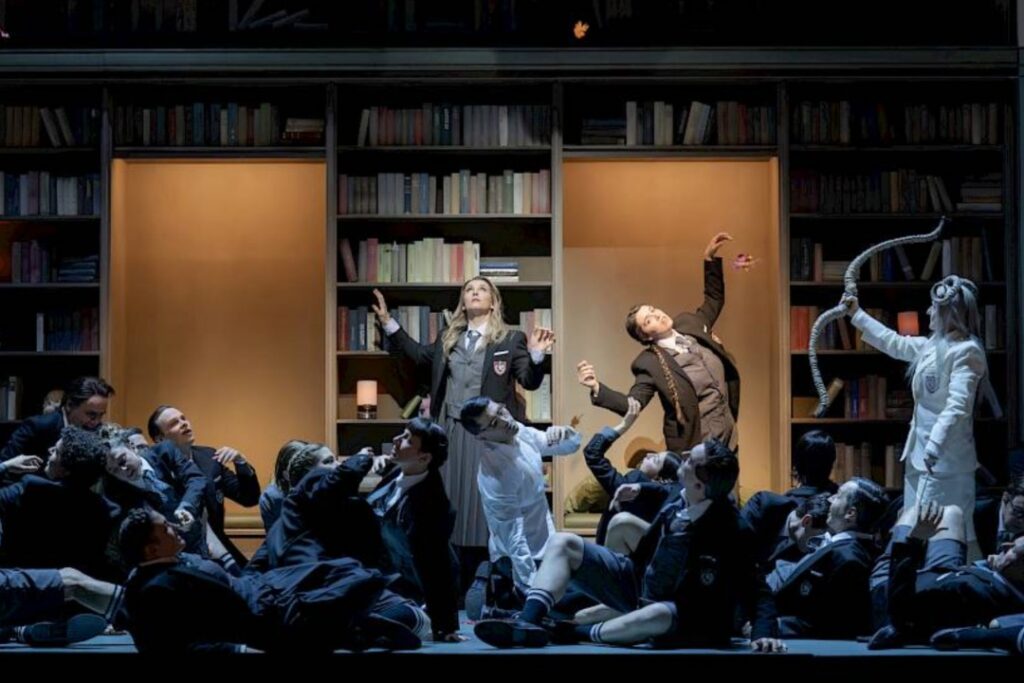
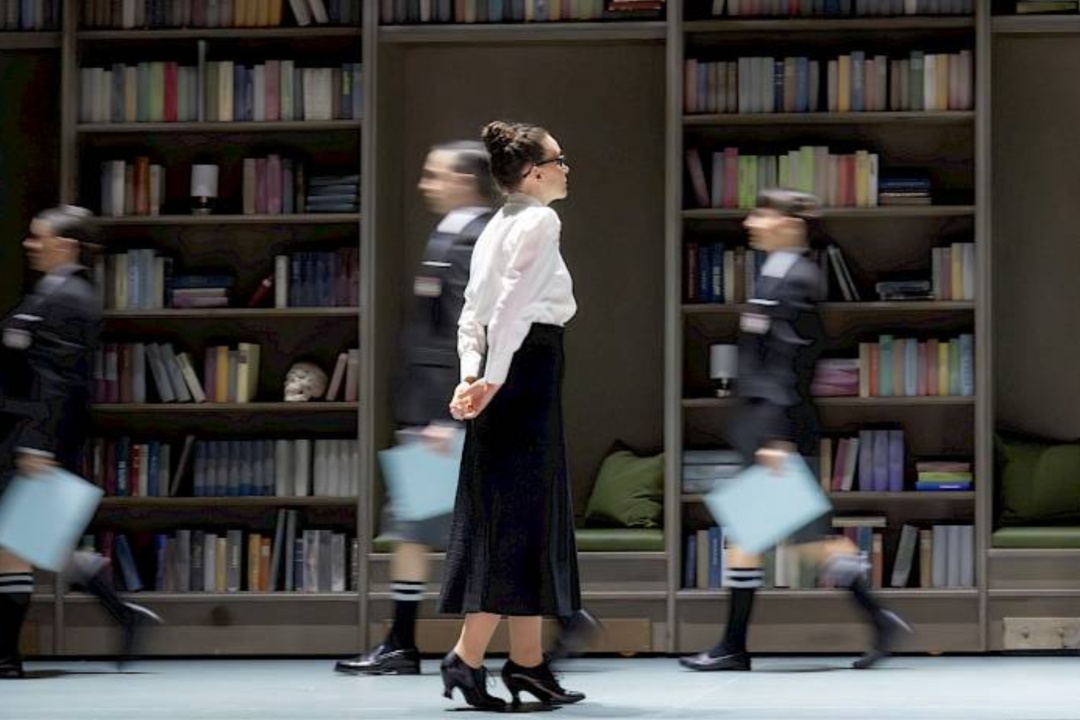
The meticulously designed interiors of this closed institution, brought to life by the scenography of Étienne Pluss, evoke the stark, yet familiar, spaces of a contemporary school. These include a hushed library, a regimented classroom, a bustling gymnasium, and the utilitarian confines of a locker room. These settings provide a tangible backdrop for the characters’ interactions and emotional development. Ursula Kudrna’s costume design further enhances this modern reinterpretation. The students are outfitted in classic school uniforms—blouses, ties, jackets, shorts, skirts, and knee socks—underscoring their youthful innocence and the structured environment of the lycée. In stark contrast, Circe’s attire—a long black skirt, a high-necked blouse, her hair meticulously pinned, and dark sunglasses—projects an image of a stern, almost clichéd, disciplinarian, a facade that belies the dangerous passions simmering beneath the surface.
The opera’s structure, with its succession of recitatives and short arias interspersed with divertissements—often elaborate choral and instrumental interludes that can, at times, fragment the dramatic flow—is handled by Guth with remarkable grace and a keen sense of humor. These moments, which might otherwise disrupt the narrative momentum, are ingeniously woven into the high school setting. In Act Two, for instance, the students spontaneously stage a mock wedding for Scylla and Glaucus, a playful and poignant reflection of their burgeoning romance. The final act culminates in a graduation party, a celebratory event that ironically underscores the tragic trajectory of their love story and the harsh realities that await them. This thoughtful integration of the divertissements demonstrates a deep understanding of both the musical structure and the dramatic potential of the work.
While the sight of adult performers portraying teenagers might initially evoke a sense of artistic dissonance, the conceptual framework proves remarkably effective. The raw intensity of adolescent love is readily mirrored in the passionate, often overwhelming, emotions of Scylla and Glaucus. Their doubts, their emotional outbursts, and their tentative steps towards intimacy align with the natural complexities of youth as they grapple with nascent feelings and the discovery of their own identities. The language of their affection, particularly in the more intimate moments, captures the all-consuming nature of first love, a universal experience that resonates deeply across generations.
The casting of Circe as a teacher harboring inappropriate desires for a student introduces a disturbingly perverse dimension to the sorceress’s characterization. This interpretation sharpens her psychological profile, transforming her from a mythical enchantress into a figure of contemporary concern. Guth, in close collaboration with Leclair and his librettist, presents Circe not merely as a villain but as a psychologically unstable predator. This modern perspective, while adding a layer of unsettling realism, does not fundamentally distort the original drama. Instead, it enriches the character, revealing her predatory nature through subtle yet potent manifestations. Her seemingly respectable facade begins to fracture, betrayed by nervous tics and involuntary twitches, until it ultimately erupts into a terrifying display of murderous rage. Crucially, this interpretive choice never feels imposed upon the work; rather, it serves to illuminate and deepen the existing dramatic contours, offering a compelling modern lens through which to view an ancient tale of obsession and destruction.
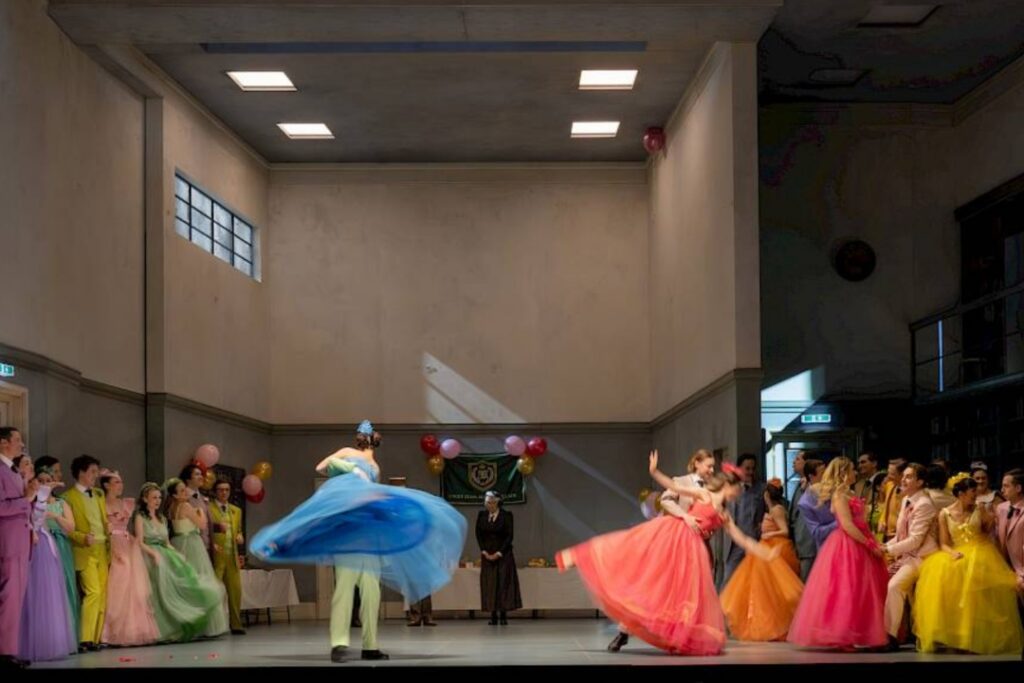
Emmanuelle Haïm and the Art of Baroque Expression
The musical direction of Emmanuelle Haïm, leading her esteemed period ensemble Le Concert d’Astrée, proved to be a cornerstone of this production’s triumph. Haïm’s profound understanding of the Baroque idiom, combined with her innate dramatic sensibility, not only brought Leclair’s score vividly to life but also unveiled its intricate layers of complexity and refined beauty. The ensemble’s virtuosic command of the French Baroque musical language allowed for both exceptional precision and remarkable flexibility, enabling Haïm to shape the performance with an acute sense of dramatic flow and emotional arc.
The music of "Scylla et Glaucus" is characterized by a constant, fascinating interplay between the grandeur and formal elegance of French musical tradition and the rich, effusive expressiveness of Italianate styles. Haïm masterfully navigated this delicate duality, honoring both facets of Leclair’s compositional genius. Her interpretation transformed the opera into a genuine rediscovery, showcasing its melodic inventiveness, its harmonic sophistication, and its potent dramatic power. The orchestra’s playing was consistently luminous, with clear articulation, nuanced dynamics, and a vibrant tonal palette that breathed life into every phrase.
The Zürcher Sing-Akademie played a pivotal role in the opera’s success, embodying the collective voice of the high school community. The chorus performed with unwavering commitment, delivering their lines with clear diction, precise intonation, and a solid, unified sound. While there were occasional moments where their tempo slightly wavered, it was a testament to Haïm’s sensitive leadership that she could so swiftly and effectively guide them back into perfect alignment. Their contribution was essential in creating the immersive atmosphere of the school environment and in underscoring the emotional weight of the dramatic events.
A Terrifying Circe, a Poignant Scylla, a Refined Glaucus: Vocal Triumphs
The demanding role of Circe, which features some of the opera’s most dramatically potent and vocally challenging music, was undertaken by soprano Chiara Skerath. Skerath rose impressively to the occasion, delivering a performance of immense power and conviction. Her soprano, characterized by a bright, metallic upper register, possessed an agile and deeply expressive coloratura that allowed her to navigate Leclair’s intricate vocal lines with dazzling precision. Her interpretation was fully committed, imbuing the sorceress with a palpable sense of psychological torment and dangerous obsession. In the climactic Act Four scene, where Circe, after being spurned by Glaucus, summons demons and the goddess Hecate to procure a deadly poison, Skerath was nothing short of electrifying. Her performance in this emotionally charged sequence was truly outstanding, conveying a terrifying descent into madness and vengeful fury that left the audience spellbound.
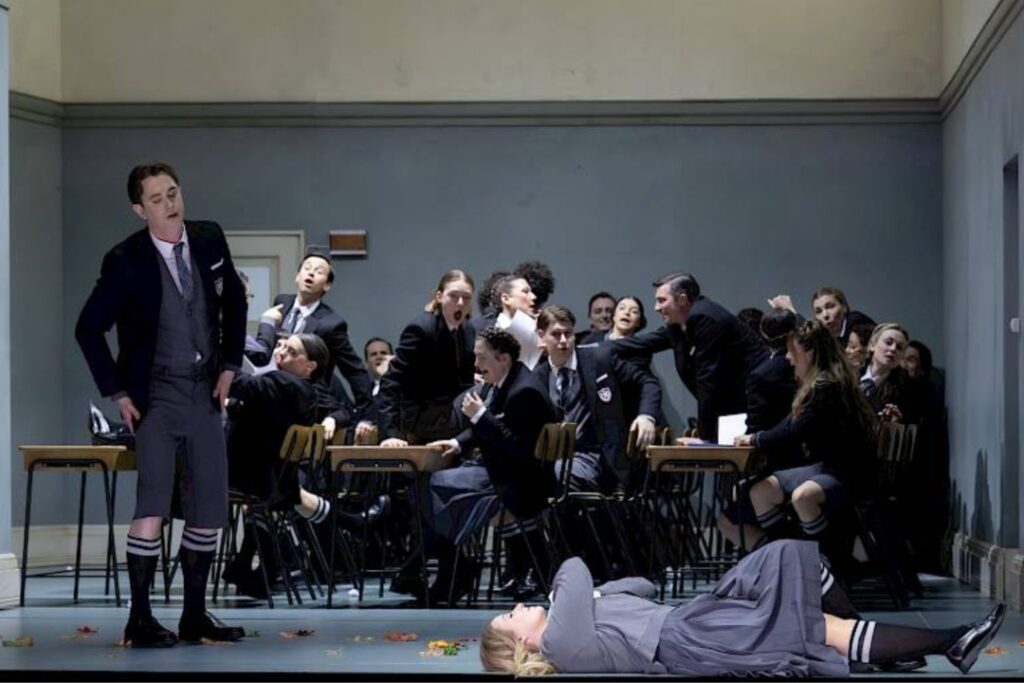
Elsa Benoit, as Scylla, offered a performance of exquisite lyrical beauty. Her soprano, possessing a sweet, pure tone and radiant high notes, beautifully conveyed the character’s vulnerability and emotional complexity. Benoit navigated Scylla’s journey from apprehension and fear of physical intimacy to tentative anticipation and lingering doubts about Glaucus’s fidelity with remarkable nuance. Her delicate vibrato lent a touching fragility to the role, perfectly suiting the character’s youthful innocence and emotional turmoil. Her command of the French Baroque style was impeccable, demonstrating a deep understanding of its stylistic conventions and expressive possibilities.
Tenor Anthony Gregory portrayed Glaucus with a lyrical voice that proved comfortable in the upper register. While perhaps not the archetypal haute-contre, his timbre possessed a pleasing warmth and lyricism that came close to the ideal. His technique was admirable, marked by a seamless legato and clean, precise coloratura passages. He effectively captured Glaucus’s earnest devotion and his unwavering commitment to Scylla.
The supporting cast also made significant contributions to the production’s success. Gwendoline Blondeel charmed as Temire, Scylla’s confidante, her soprano bright and smooth, complemented by a lively and somewhat tomboyish stage presence that brought a welcome spark to her scenes. Jehanne Amzal, as Dorine, Circe’s confidante, lent her warm and rounded soprano to the role, providing a steady presence amidst the opera’s dramatic turmoil.
The opera concludes with a striking and ambiguous final scene. Following Scylla’s tragic demise, Circe is apprehended by the police, her reign of terror brought to an end. Glaucus, left alone and seemingly devastated, picks up the glass of poison, contemplating his own fate. The lights abruptly extinguish, plunging the stage into darkness before his ultimate destiny can be revealed. This final dramatic stroke, a calculated coup de théâtre, leaves the audience to ponder the lingering consequences of love, betrayal, and the enduring power of myth. The Zurich Barock Festival’s presentation of "Scylla et Glaucus" stands as a significant achievement, not only in bringing a neglected masterpiece to light but also in offering a compelling and insightful modern interpretation that speaks to the enduring relevance of its themes.