Indra Aziz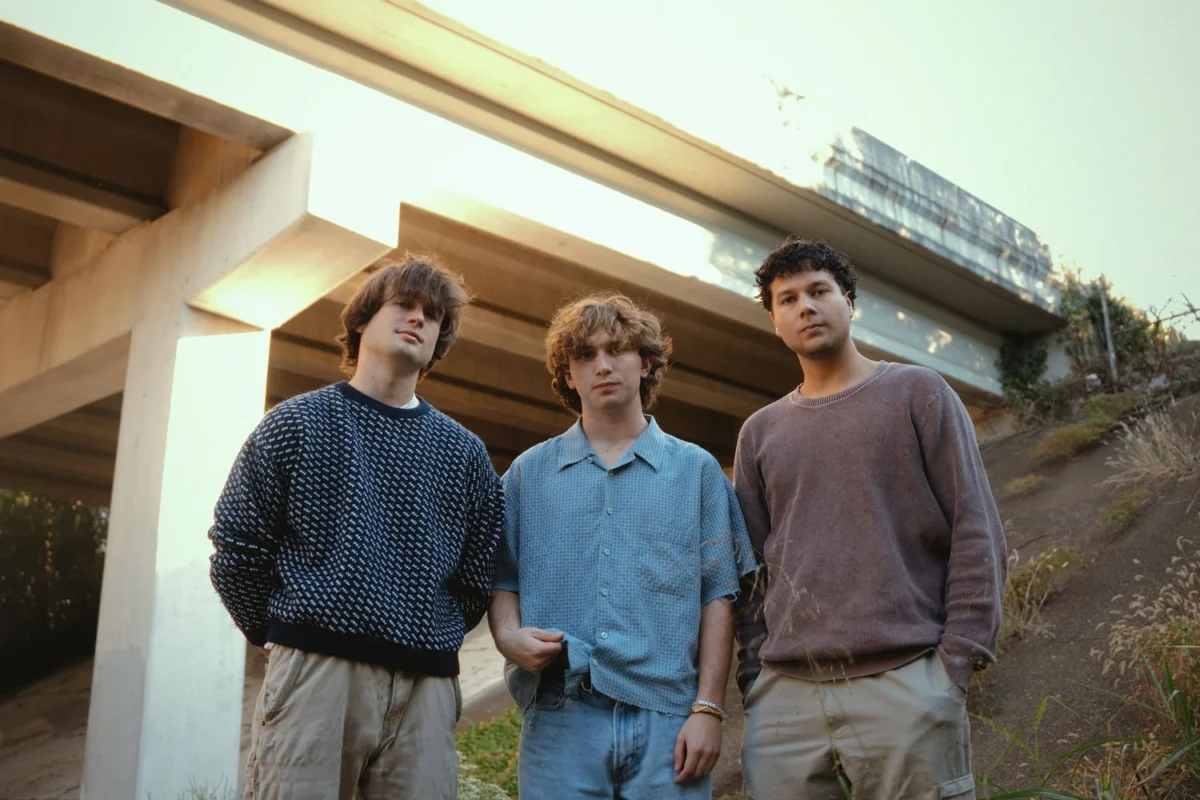
Nashville, TN – The burgeoning alternative music scene in Nashville has a potent new contender in Edgehill, a dynamic trio that has steadily been building momentum. Comprised of vocalist and guitarist Chris Kelly, lead guitarist and vocalist Jake Zimmerman, and drummer Aidan Cunningham, Edgehill has emerged over the past year as a force to be reckoned with, consistently delivering a sound that masterfully blends rich, enthralling attic rock with the soulful echoes of 1960s R&B. Tracks such as "Doubletake," "Lookaround," "I Can Be Your Dog," and "Love To Go" have become anthems for their growing fanbase, showcasing a musicality that is both deeply nostalgic and refreshingly contemporary. Beyond their studio output, the band has also cultivated a formidable reputation as a live act, renowned for performances imbued with an instinctive theatricality, compelling showmanship, and profound musical intuition.
Their much-anticipated debut album, "Ode To The Greyhouse," has now officially been released, marking a significant milestone in their artistic journey. The trio recently shared insights into the creation of this project during a midday gathering over lunch and mimosas at Jams Central Park in New York City. This visit coincided with a significant promotional trip that included an electrifying album release show at Brooklyn’s esteemed Baby’s All Right and a well-received, fan-focused session at Rough Trade the following afternoon. These events underscored the band’s expanding reach and their commitment to engaging directly with their audience in key music hubs.
The Sonic Architect: Chris Kelly’s Vocal Prowess
At the forefront of Edgehill’s sonic landscape is vocalist Chris Kelly, whose vocal capabilities are as multifaceted as they are captivating. Kelly possesses a remarkable multi-octave range, capable of shifting from moments of raw, frenetic intensity to nuanced introspection with seemingly effortless grace. This expressive duality is a hallmark of his performances, whether in the polished environment of studio recordings, the unpredictable energy of live shows, or the carefully curated visual content the band produces. "I can’t really sing without being expressive," Kelly stated in a recent interview. "It’s about the way I WANT the note to come out. It’s like accessing this thing that already exists, but is a little outside my control. I’m just trying to get the best of it." This inherent drive to imbue each note with emotional weight contributes significantly to the band’s distinctive sound and their ability to forge a deep connection with listeners.
The Dance of Performance: Balancing Expression and Precision
The inherent expressiveness of Kelly’s stage presence, while a powerful artistic tool, also presents unique challenges for his bandmates. When questioned about whether Kelly’s dynamic performances ever disrupt the musical flow for drummer Aidan Cunningham and lead guitarist Jake Zimmerman during live sets, the trio responded with laughter, recalling a specific instance from their Baby’s All Right show. "There are parts of the set that I’m following his body movements, his breath," explained Zimmerman, who also serves as the group’s astute technical and operations lead. "Part of Chris’s job is to be expressive and do whatever he’s feeling, which makes it hard for me to follow along. So, yes, definitely! I don’t want to be a rigid band, so that means some nights it goes well, and some nights it falls apart." This acknowledgment highlights a conscious decision by the band to embrace a degree of improvisation and spontaneity in their live shows, prioritizing authentic artistic expression over rote replication.
Cunningham, known for his remarkably efficient and impactful drumming, elaborated on this dynamic. "Chris’s vocals are always amazing, but my favorite thing is listening to when he changes a melody, or improvises," he shared. "Night to night, that varies, but that also influences how I’m playing or feeling the music. I’m almost an audience member hearing it, but, since I AM up there, whatever I feel is what I can do." This interplay between Kelly’s spontaneous vocalizations and the rhythm section’s adaptive response creates a living, breathing musical experience that can differ significantly from one performance to the next. This approach, while potentially leading to occasional "falls apart" moments, also contributes to the raw energy and genuine connection that defines Edgehill’s live performances.
"Ode To The Greyhouse": A Chronicle of Creative Synthesis
The culmination of Edgehill’s intensive creative process and a demanding touring schedule – which included opening slots for prominent artists such as Winyah, KALEO, and Dogpark throughout 2025, in addition to their own headline shows – is their debut album, "Ode To The Greyhouse." This nine-track project was meticulously crafted in a period of self-imposed isolation, a direct consequence of the band members’ sharply distinct musical tastes and their collective drive to synthesize these influences into a cohesive whole. Throughout the writing and recording process, the trio infused their work with moments of humor, transforming it into an affectionate homage to the vibrant community of their beloved Nashville indie scene. Kelly articulated this sentiment, stating, "There couldn’t be a better place to be making alternative music." This statement underscores Nashville’s evolving identity as a hub for diverse musical genres beyond its traditional country music roots.
Navigating Setbacks: The Resilience of "Ode To The Greyhouse"
The journey to completing "Ode To The Greyhouse" was not without its significant challenges. The recording and development of the project faced an unexpected hurdle on the very first day of production when personal gear and other essential applications experienced a critical failure. Zimmerman, compelled to act, described the arduous process of recreating their signature sounds. "I spent a painstaking number of hours recreating our original tones on a Line 6 Helix processor," he recalled, with a hint of exasperation. "I created custom impulse responses to try and get as close as I could. We’d never had that much gear available to us, so we were overindulgent. I wish we’d used Aidan’s kit, and his snare, because it has such a specific sound." This technical setback, while undoubtedly frustrating, forced the band to adapt and innovate, ultimately contributing to the unique sonic texture of the album. The reliance on Zimmerman’s technical acumen and creative problem-solving proved crucial in salvaging the recording sessions and ensuring the album’s integrity.
Influences and Live Improvisation: The Jam Band Ethos
Zimmerman and Cunningham share a deep-seated affection for the improvisational spirit inherent in jam band music, citing legendary figures as significant inspirations. Zimmerman identifies the late-great Bob Weir of The Grateful Dead as a guiding light, while Cunningham points to Carter Beauford of the Dave Matthews Band as his drumming north star. This shared appreciation for the fluid, evolving nature of live performance allows them to translate their preferred sonic aesthetic onto the stage, even when faced with studio limitations. "In the studio, there’s so much pressure to play the part as it is, but live, it’s about spontaneity," Cunningham observed. "You can fill space however you want, and it doesn’t have to be the known version." This philosophy underpins Edgehill’s live shows, transforming each performance into a unique, unrepeatable event for the audience.
Defiance and Vulnerability: The Lyrical and Musical Narrative
The album’s lead single, "I Can Be Your Dog," emerged from a place of defiance, a testament to the band’s determination to continue creating freely in the face of external pressures. This track, along with the heightened theatrics and dynamic shifts of "Lookaround," has become a cornerstone of their live set, resonating deeply with their fanbase. Zimmerman characterized the genesis of "I Can Be Your Dog" as a response to perceived external interference: "It became more of a ‘Fuck you, here, I’ll write a pop song,’ kind of thing." The song’s unabashedly defiant hook – "F*** youuuuu, I don’t wanna lay down unaroused/ But, HEY! If you want me to, I can roll around" – encapsulates this spirit of assertive independence.

In contrast to the playful bitterness of "I Can Be Your Dog," the track "17 Hours," penned by Zimmerman, delves into a more profound and unvarnished exploration of regret and personal accountability. The lyrics, "For the most part, all we really did was f***/ You were looking for some comfort, I was pushing my luck," confront difficult truths with stark honesty. Zimmerman reflected on the song’s creation, stating, "I needed to write that song in the moment to get through what I was going through. I didn’t have a choice. It was going to come out of me either way, and I’m glad it came out in music. If I was ever THINKING about how someone would hear that, I’d have never written it or put it out. That’s more of an afterthought of insecurity." This uninhibited approach to songwriting underscores the band’s commitment to authenticity, even when confronting uncomfortable emotions.
Kelly shifts the emotional tone on the sludgy track "lol." Its unwavering musical and lyrical tension throughout its runtime is cited as one of its greatest strengths. Zimmerman described it as "a sense of unfinished, everlasting longing." Kelly further elaborated on the song’s thematic core: "Lack of musical resolve, for me, brings some angst… some RED energy. It is our least dynamic, but our most consistent, and explicit, instrumentally. The lyrics, being about something so intense, are NOT so explicit." This deliberate contrast between the instrumental intensity and lyrical ambiguity invites listeners to engage with the song on a deeper, more interpretive level.
The penultimate track on the album, "Innocent," features a notable contribution from fellow Nashville-based artist Maddie Kerr of the band mercury, who is recognized for her exploration of "modern shoegaze." Kelly’s vocals, delivered within his resonant mid-baritone range, oscillate between clear tones and squawking distortion. Both Cunningham and Zimmerman employ recurrent musical "fake outs," creating an auditory landscape that evokes the disorienting sensation of a car crash – the moments of fear leading up to impact, presented on a loop. The lyrics, "If I need you, will you bleed? ‘Cause I will/ I will/ Bend my knees and let you feed on my will/ My will," convey a potent sense of desperate dependence and emotional vulnerability. Cunningham described the song as a cathartic outlet: "It’s a pretty maximal song, and there’s a lot of anger behind it. Being able to express myself in a heavy, dark way was very therapeutic." Zimmerman highlighted the song’s unique sonic architecture: "It’s the only song with intense reverb and delay on the vocals, the only song with really heavily layered and affected guitar. It was what the song needed." Kelly concluded by explaining its placement: "That’s also why we put it last. You’ve gotten this consistent thing for eight songs. Here’s the ninth, and it’s the one that pushes the boundaries and makes you think, ‘What’s next?’"
The Edgehill Philosophy: Authenticity and Relatability
With an unwavering commitment to honesty and authenticity, it is unsurprising that Edgehill’s audience continues to expand. Kelly articulated this core tenet: "We’re all more vulnerable in writing songs, and exploring the messages and content of them, than we are on a daily basis. It gives you this catalyst, this permission, to give everything and fully talk about how you’re feeling. The outcome of that is something good." This artistic ethos fosters an environment where personal expression is not only accepted but actively encouraged.
The band’s collaborative process further amplifies this vulnerability. Zimmerman explained how he often helps Kelly articulate his thoughts into song: "Chris says amazing things to me in conversation all the time, I just help him finish his thoughts or repeat them back to him in a way that goes into a lyric or chords." Kelly concurred, acknowledging Zimmerman’s role in translating his internal landscape into tangible artistic output: "My thoughts, emotions, and perception of myself are pretty hard to wrangle. Jake does a good job of hearing it and being like, ‘This is what you’re saying.’" This symbiotic relationship ensures that the emotional core of their experiences is effectively translated into their music.
Edgehill’s approach to their music’s reception is equally defined by a dedication to organic interpretation. "I don’t want to get onstage and explain what the songs mean," Zimmerman stated. "The best we can do is try and deliver the emotion and the energy, and let people make of that what they will." This philosophy empowers listeners to forge their own unique connections with the music, fostering a more personal and meaningful engagement. Kelly added, "That gives people, again, the permission to experience it in whatever way they want or feel. People will have a great time, even if you’re narrating everything you’re doing, but we’re creating a space where we’re acting naturally, and the crowd is able to do the same." This mutual allowance for natural expression creates a powerful synergy between the band and their audience.
Ultimately, Edgehill believes that the specificity of their lyrical content does not preclude broader relatability. Zimmerman elaborated: "If you can get the important details right, it doesn’t matter how specific you are, someone else can relate to that. We’re not trying to write something that is ‘relatable,’ we’re trying to capture how we were feeling." Cunningham echoed this sentiment, stating, "You can be as specific as you want, but the root of what you’re saying IS relatable." This perspective suggests that by embracing the authentic nuances of their individual experiences, Edgehill inadvertently taps into universal human emotions, creating music that resonates deeply across a diverse audience.
"Ode To The Greyhouse" is out now.
Words: Noah Wade