Johan Budi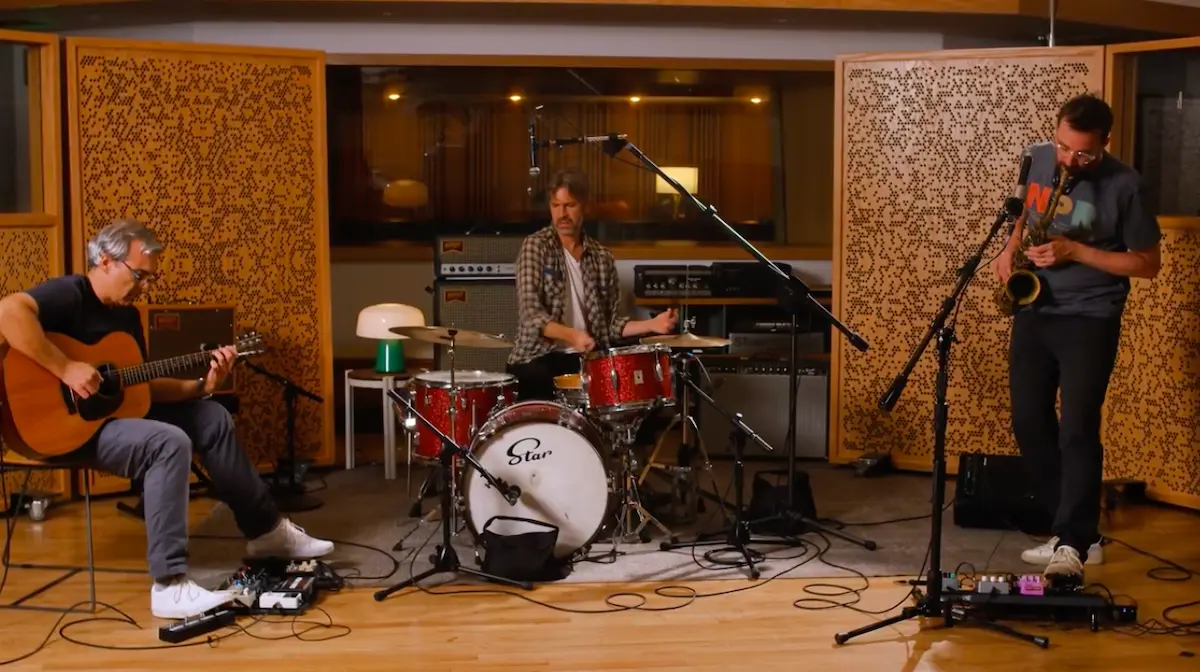
The contemporary jazz landscape continues to diversify through a series of high-profile releases that bridge the gap between traditional improvisation, folk-rooted narratives, and avant-garde experimentation. Three recent projects—Aaron Irwin’s Spark, the Brian Molley Quartet’s Tùs/Origin, and Taupe’s Waxing/Waning—offer a comprehensive look at the state of the genre in 2024 and 2025. These albums represent distinct geographical and stylistic corners of the industry, from the Brooklyn-based Americana-jazz fusion to the historical concept suites of Glasgow and the challenging "math-skronk" of the UK underground. Each recording serves as a testament to the evolving role of woodwind instruments in modern composition, utilizing the alto saxophone, bass clarinet, and tenor saxophone to anchor vastly different sonic explorations.
Innovative Woodwind Composition: Aaron Irwin’s Spark
Brooklyn-based saxophonist and multi-woodwind specialist Aaron Irwin has released Spark via Adhyaropa Records, a project that further solidifies his reputation as a composer capable of blending jazz with the subtle textures of American folk and blues. The album features a lean, highly communicative trio consisting of Irwin on alto saxophone and bass clarinet, Mike Baggetta on guitar, and Bill Campbell on drums. Recorded in Gainesville, Florida, on August 18, 2025, the session captures a long-established chemistry between the three performers, characterized by a patient, atmospheric approach to melody.
The structural hallmark of Spark is its gradual development. Most of the ten original compositions follow a specific trajectory: guitarist Mike Baggetta initiates the pieces with sparse, echoing chords that establish a contemplative mood. As the tracks progress, Irwin and Campbell layer melodic and rhythmic elements, amplifying the central themes toward a controlled finale. This method is particularly evident on the track Fahey, where Baggetta’s mastery of the guitar sets a dramatic tone that allows the trio to transition from an intimate opening to a robust, full-throated performance.
Irwin’s use of the bass clarinet is a focal point of the record’s sonic identity. By utilizing the low register of the instrument to pick out mournful, evocative themes, the music draws comparisons to the expansive, Americana-influenced work of Brad Mehldau, specifically the Highway Rider era. The track Skuli, set in a three-four time signature, exemplifies this melancholy aesthetic. The interplay between the trio suggests a deep level of mutual trust, allowing for subtle shifts in dynamics that feel organic rather than rehearsed. The result is a recording that maintains an inward-looking intimacy while simultaneously achieving an expansive, cinematic sound.
Historical Narrative and Transatlantic Exchange: Brian Molley’s Tùs/Origin
The Brian Molley Quartet has returned with Tùs/Origin, an ambitious concept album that explores the intersection of Scottish heritage and African American history. Released on BGMM Records and recorded at Solas Studios in Glasgow in May 2024, the album centers on the life of Frederick Douglass, the famed abolitionist who toured Scotland extensively in the 1840s and 1850s. The title Tùs—the Scottish Gaelic word for "origin" or "beginning"—sets the stage for a musical journey that traces a 19th-century path from the Outer Hebrides across the Atlantic to the Eastern United States and down to Louisiana.
The quartet, formed in 2012, consists of Brian Molley on tenor saxophone, Tom Gibbs on piano, David Bowden on bass, and Stephen Henderson on drums. Over the past decade, the group has gained international recognition for its ability to integrate diverse cultural influences, including a previous collaboration with Indian folk musicians. On Tùs/Origin, this skill is applied to a complex tapestry of styles, including Baroque elements, traditional hymns, Afro-Caribbean dance rhythms, gospel, and Scottish folk.
The album is structured as a suite, with pieces like Ode to Frederick Douglass and Cianalas (Longing for Home) serving as emotional anchors. The technical execution is polished, presenting contemporary swinging jazz that remains accessible despite its thematic weight. Critics have noted that heritage-based jazz projects can often feel disjointed when attempting to marry the past with modern improvisation; however, Molley’s compositions are credited with wearing their historical research lightly. The production quality of the recording at Solas Studios provides a warm, haunting atmosphere that enhances the narrative arc of the migration story, making it a significant contribution to the "Global Jazz" movement.
The Boundaries of Experimentalism: Taupe’s Waxing/Waning
In stark contrast to the melodic accessibility of Irwin and Molley, the Newcastle-based trio Taupe has released Waxing/Waning on Minority Records. Recorded at Dystopia Studios in Glasgow in 2025, the album represents the "math-skronk" subgenre—a volatile mixture of free improvisation, avant-garde jazz, and high-intensity rock riffs. The trio, comprising Mike Parr-Burman on guitar and electronics, Jamie Stockbridge on alto and baritone saxophones, and Alex Palmer on drums and percussion, has built a reputation through features on BBC 6 Music’s Freak Zone and BBC Radio 3’s Late Junction.
Waxing/Waning is characterized by its uncompromising nature. The compositions are built on "sour sonics," jerky rhythms, and "sludgy, doom-laden riffs." Tracks such as Lemonade Tycoon and Anti-Bird-Spike-Bird-Nest utilize stop-start saxophone squeals and menacing electronic layers to create a soundscape that resembles the soundtrack to a dystopian film. Unlike the gentle unfolding of the Aaron Irwin Trio, Taupe’s music relies on shock, discovery, and the deliberate subversion of traditional jazz structures.
The album has sparked discussion within the jazz community regarding the limits of experimentation. While the history of jazz is rooted in the defiance of convention—paralleling the radical shifts seen in 20th-century classical music—Taupe pushes this to an extreme. The album is described as anarchic and brave, prioritizing the act of boundary-pushing over traditional listener engagement. For those following the "math-jazz" scene, Waxing/Waning is a definitive statement of intent, though its impenetrable nature ensures it remains a niche, albeit significant, entry in the 2025 release calendar.
Comparative Analysis and Technical Specifications
The three albums offer a study in contrast regarding production and regional influences. Aaron Irwin’s Spark (Adhyaropa Records AR00167) clocks in at 49:41, emphasizing the clarity of the acoustic instruments in a Florida studio setting. Brian Molley’s Tùs/Origin (BGMM Records BGMM006) is a more concise 36:50, focusing on the narrative flow of its nine tracks. Taupe’s Waxing/Waning (Minority Records MIN75) runs 43:18, utilizing the industrial acoustics of Dystopia Studios to complement its aggressive electronic-acoustic fusion.
| Feature | Aaron Irwin Trio: Spark | Brian Molley Quartet: Tùs/Origin | Taupe: Waxing/Waning |
|---|---|---|---|
| Primary Label | Adhyaropa Records | BGMM Records | Minority Records |
| Recording Date | August 18, 2025 | May 2024 | 2025 |
| Location | Gainesville, Florida | Glasgow, Scotland | Glasgow, Scotland |
| Core Style | Americana/Folk-Jazz | Historical Narrative/Crossover | Avant-garde/Math-skronk |
| Key Instrument | Bass Clarinet / Alto Sax | Tenor Saxophone | Baritone Sax / Electronics |
Broader Impact on the Jazz Industry
The simultaneous relevance of these three disparate albums highlights a broader trend in the music industry: the fragmentation of jazz into specialized micro-genres that nonetheless maintain a high standard of technical proficiency. Irwin’s work suggests a continuing interest in "chamber jazz" that appeals to listeners of folk and classical music. Molley’s project demonstrates how jazz can serve as a medium for historical education and cultural diplomacy, particularly in the context of the Scottish-American relationship. Meanwhile, Taupe represents the "fringe" of the genre, ensuring that jazz remains a site of radical artistic protest and sonic innovation.
Furthermore, the prominence of Glasgow as a recording hub for two of these three international projects—Molley and Taupe—underscores the city’s growing importance in the European jazz circuit. While Brooklyn remains a traditional powerhouse for the genre, the high-quality output from Solas and Dystopia Studios indicates a shift toward a more decentralized, global production model.
In conclusion, while the Aaron Irwin Trio provides a "magical window" into intimate musical friendship and the Brian Molley Quartet offers a "superbly recorded" historical journey, Taupe provides the necessary "challenge" that keeps the genre from becoming stagnant. Together, these releases reflect a healthy, albeit polarized, ecosystem where melody, history, and anarchy coexist within the framework of modern jazz. The diversity of these offerings ensures that whether a listener seeks the "fleeting and magical" or the "brave and bizarre," the current woodwind-led jazz scene provides ample territory for exploration.