
 Mia Khoirunisa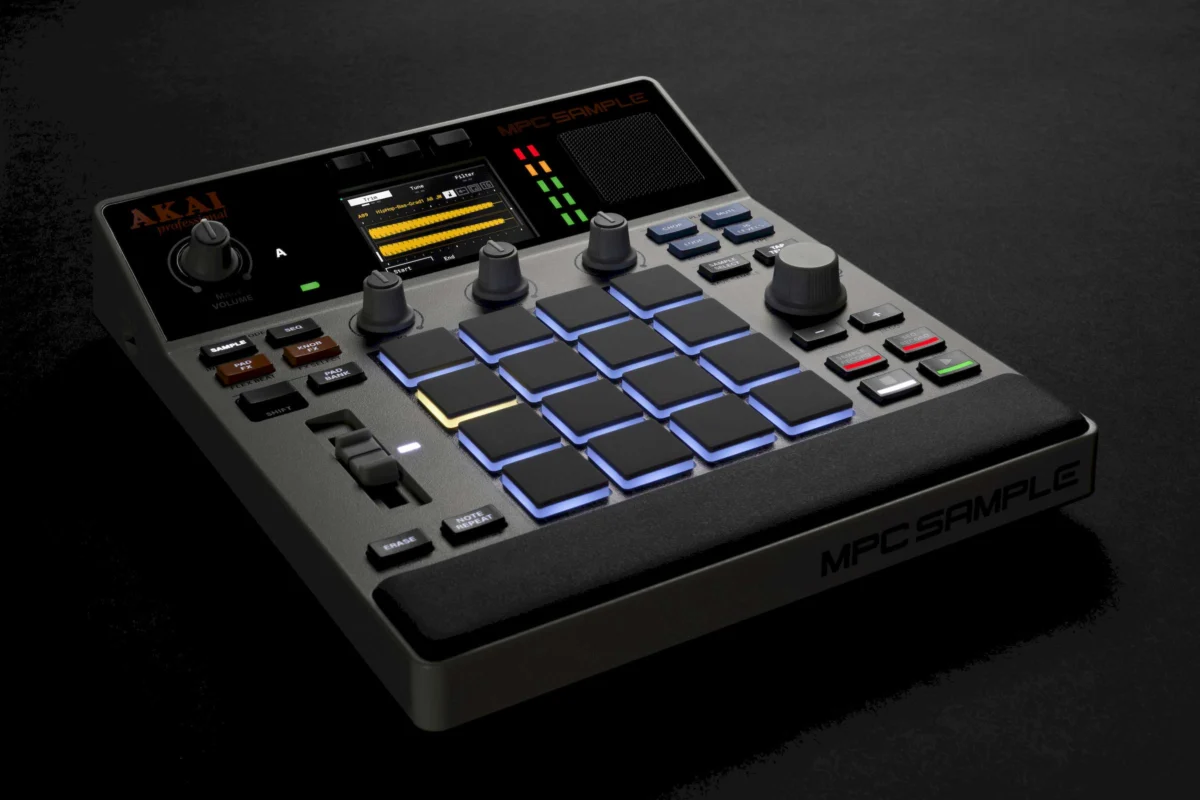
Akai Professional has rapidly deployed significant firmware updates for its ultra-portable standalone sampler and sequencer, the MPC Sample, demonstrating a commitment to enhancing user experience and expanding the device’s capabilities just weeks after its initial release. Firmware version 1.3.0, released concurrently with version 1.2.0 and its subsequent patch 1.2.1, introduces a suite of valuable additions and refinements designed to streamline the creative process for musicians and producers. These updates arrive at a crucial juncture, solidifying the MPC Sample’s position in the market as a potent and accessible tool for beatmaking and sampling on the go.
The rapid iterative development cycle, with two major and one minor firmware release within approximately three weeks of the product’s launch, underscores Akai’s proactive approach to addressing user needs and evolving the platform. This pace of development is particularly noteworthy for a device positioned as an entry-level, streamlined MPC experience. While the MPC Sample is intentionally designed for simplicity, eschewing the extensive feature sets of its larger siblings, these firmware updates demonstrate Akai’s dedication to refining its core functionalities and expanding its utility without compromising its core ethos.
Evolution of the MPC Sample: A Timeline of Updates
The initial launch of the Akai MPC Sample brought the renowned MPC workflow into a compact, affordable package, priced at $399. This move was designed to democratize access to the iconic MPC lineage, making it a compelling option for producers seeking a dedicated hardware sampler that could integrate seamlessly into various creative setups. The subsequent firmware releases have built upon this foundation, iteratively improving the user experience.
Initial Release (Approx. Late May/Early June 2024): The MPC Sample launched with its foundational operating system, establishing its core sampling, sequencing, and pad-based performance capabilities.
Firmware Version 1.2.0 (Released Shortly After Launch): This initial update laid the groundwork for further enhancements. While specific details were not widely publicized prior to the 1.3 release, it is understood that 1.2.0 addressed foundational stability and introduced initial improvements based on early user feedback.
Firmware Version 1.2.1 (Minor Patch): This patch likely served to refine any immediate issues or bugs identified in version 1.2.0, ensuring a more stable platform for subsequent feature additions.
Firmware Version 1.3.0 (Current Major Update): This release represents the most significant enhancement to date, introducing a range of new features and workflow improvements.
Key Enhancements in Firmware Version 1.3.0
The latest firmware update, version 1.3.0, introduces several key features that significantly expand the MPC Sample’s utility:
- Normalization of Samples: A fundamental feature for any sampler, normalization automatically adjusts the volume of an audio sample to its maximum level without introducing clipping. This ensures that samples are consistently loud and clear, providing a more uniform starting point for creative manipulation and mixing. This addition is crucial for producers who prioritize efficient sample preparation and consistent audio quality.
- SD Card Formatting: The ability to format SD cards directly from the MPC Sample simplifies the workflow for users. This eliminates the need for an external computer to prepare storage media, allowing for a more self-contained and streamlined sampling process. This is particularly beneficial for producers working in mobile or live environments where immediate access to a computer might be limited.
- Enhanced MPC Swing: The update refines the implementation of MPC Swing, a signature feature of Akai’s MPC line that introduces a subtle, humanizing rhythmic variation to sequenced patterns. Improved swing algorithms contribute to more organic and groove-oriented productions, further enhancing the device’s ability to capture the classic MPC feel.
- New MPC Note Scale Presets: The inclusion of new note scale presets provides musicians with a wider array of harmonic and melodic options. These presets allow users to quickly set the device to play within specific musical scales, facilitating improvisation and ensuring that generated melodies and basslines are harmonically coherent. This feature is invaluable for producers who may not have extensive music theory knowledge or for those looking to rapidly explore different musical ideas.
- Additional Updates: While the official release notes are available for download, it is common for such updates to include under-the-hood optimizations, performance enhancements, and bug fixes that contribute to a more robust and reliable user experience.
The Impact of Firmware 1.2.0 and 1.2.1
While firmware 1.3.0 brings the most prominent new features, the preceding updates, versions 1.2.0 and 1.2.1, were critical in establishing a stable platform for these enhancements. These earlier releases likely focused on:
- Core Stability Improvements: Addressing any initial software bugs or performance issues that emerged post-launch.
- Workflow Refinements: Minor adjustments to existing features or menu navigation to improve usability.
- Foundation for New Features: Laying the necessary groundwork within the operating system to accommodate the additions made in version 1.3.0.
The rapid deployment of these updates suggests Akai Professional actively monitors user feedback and is committed to an iterative development process. This approach is vital in the competitive landscape of music production hardware, where user expectations for ongoing support and feature expansion are high.
Market Context and Competitive Landscape
The Akai MPC Sample enters a market segment that values portability, affordability, and the core functionality of sampling and sequencing. Its $399 price point positions it as an accessible entry into the world of dedicated hardware samplers. While competitors like Ableton’s Push 3 offer extensive customization through custom firmwares and RNBO support, and devices like the Deluge provide a deeply integrated and complex creative environment, the MPC Sample carves out its niche by offering a familiar MPC workflow in a highly portable form factor.
The ability to connect mobile devices via USB-C, as demonstrated by some early reviewers, further expands the MPC Sample’s potential, allowing users to leverage mobile applications as a form of "plug-in" or sound source. This hybrid approach, combining dedicated hardware with the flexibility of mobile computing, is a growing trend in music production. The integration of external controllers, such as Novation’s LaunchControl XL, also highlights the device’s capacity for expanded control and personalized workflows, suggesting that even with its streamlined design, the MPC Sample can be adapted to more complex production environments.
Availability and User Acquisition
The demand for the Akai MPC Sample appears to be strong, with availability varying by region. In the United States, preorders were indicating delivery estimates as far out as August, suggesting robust initial sales or supply chain considerations. European markets, however, appeared to have more immediate availability, with retailers like Thomann showing stock within one to two weeks. This disparity in availability can influence purchasing decisions and highlights the global reach and varied distribution networks of music hardware manufacturers.
The Significance of Continuous Development
Akai Professional’s rapid firmware development for the MPC Sample offers several implications for users and the broader music production community:
- Enhanced Value Proposition: Each firmware update increases the value of the MPC Sample without an increase in price. This iterative improvement model means that users are acquiring a device that continues to evolve and gain new capabilities over time.
- User-Centric Design: The focus on features like sample normalization and SD card formatting directly addresses common user pain points and workflow inefficiencies, indicating a responsive design philosophy.
- Democratization of Sampling: By continuously refining and expanding the capabilities of an affordable, portable device, Akai is making advanced sampling and sequencing techniques more accessible to a wider range of aspiring producers.
- Competitive Differentiation: The speed and quality of these updates can serve as a significant differentiator in a crowded market, encouraging user loyalty and positive word-of-mouth.
Expert Perspectives and User Demonstrations
Early reviews and demonstrations from content creators have provided valuable insights into the MPC Sample’s capabilities and the impact of its firmware updates. For instance, reviewer Sanjay C has showcased innovative ways to utilize the device, including connecting mobile devices via USB-C to harness the power of mobile apps as sound sources. His demonstrations of sample chopping, music creation, and integration with external controllers like the Novation LaunchControl XL highlight the device’s potential beyond its basic functionality. These practical examples offer tangible evidence of how the MPC Sample, particularly with its updated firmware, can be integrated into diverse creative workflows.
Video demonstrations, such as those provided by Akai Professional themselves, offer a direct look at the new features. A walkthrough of the 1.3 update clearly illustrates the added functionalities, while the general overview provides a comprehensive look at the MPC Sample’s core features. These resources are invaluable for both prospective buyers and existing users seeking to maximize their experience with the device.
The continued support and rapid development of the Akai MPC Sample’s firmware are indicative of a strong commitment from Akai Professional. The addition of features like sample normalization and improved swing, alongside other refinements, solidifies the device’s appeal as a powerful, portable, and ever-evolving tool for music creation. As the device matures through further firmware iterations, its potential to empower a new generation of beatmakers and producers is set to grow.