Nayara Elvina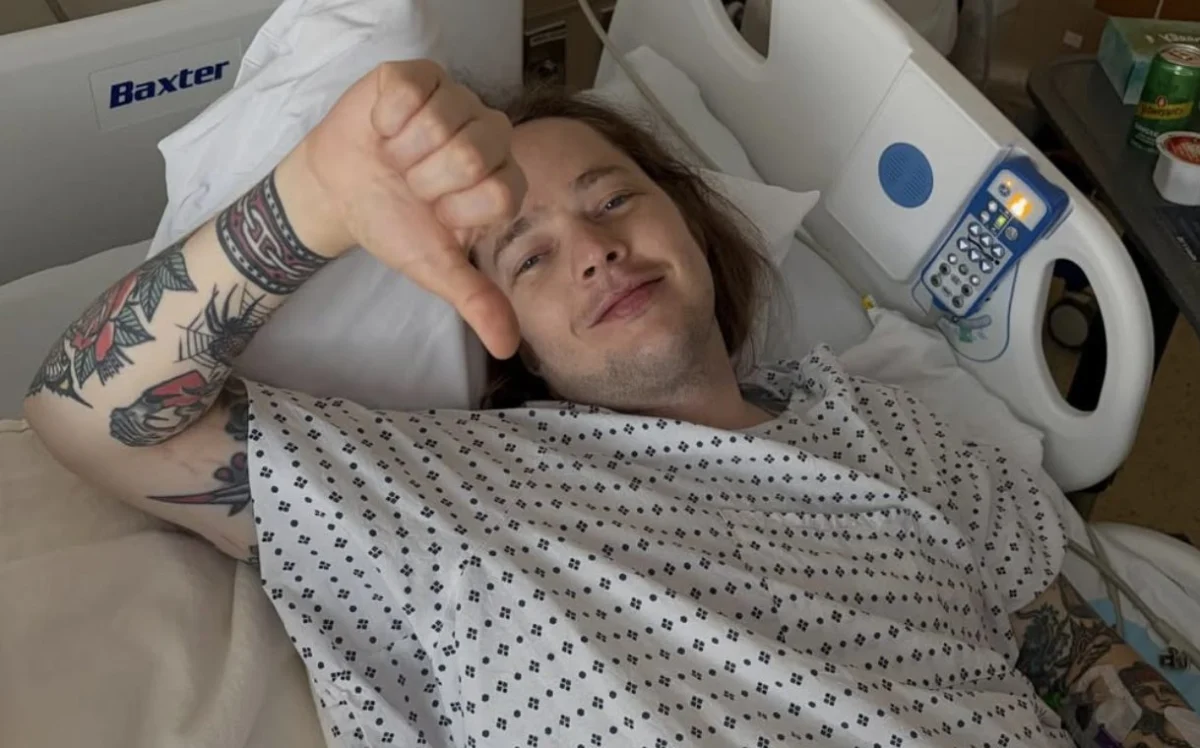
Grammy Award-winning bluegrass musician Billy Strings has officially announced the postponement of several upcoming tour dates following a significant medical emergency. The incident, which occurred during a two-night residency at the John Paul Jones Arena in Charlottesville, Virginia, resulted in the artist sustaining multiple fractures to his leg. The injury took place backstage on Saturday night, forcing an abrupt conclusion to the performance and leaving thousands of fans in attendance searching for answers as the scheduled encore was cancelled without immediate explanation.
The artist, whose real name is William Lee Apostol, confirmed the severity of the situation via social media, detailing a harrowing accident involving a skateboard that occurred in the moments between his main set and the planned encore. According to Statements released by Strings, the injury required immediate surgical intervention at the University of Virginia (UVA) Hospital. As a result of the surgery and the subsequent recovery period mandated by medical professionals, several late-April tour stops have been rescheduled for later in the year.
Chronology of the Charlottesville Incident
The events leading to the tour’s disruption began during the second night of a highly anticipated run in Charlottesville. Billy Strings, known for his high-energy performances and virtuosic flatpicking, had just completed a rigorous set for a capacity crowd of "Billy Goats"—the colloquial term for his dedicated fanbase. Witnesses noted that the energy in the John Paul Jones Arena was at a seasonal high before the house lights remained dimmed longer than usual for the encore break.
Behind the scenes, Strings, an avid skateboarder who frequently incorporates the hobby into his touring lifestyle, attempted a "back 180" maneuver. The artist described himself as being "all zazzed up" from the adrenaline of the performance. While the trick is one he has reportedly performed many times, a mechanical error or awkward landing led to a catastrophic failure. Strings reported hearing an audible "snap" over the ambient noise of the cheering crowd, likening the sound to a "2×4" breaking.
The severity of the injury was immediately apparent to the backstage crew. Emergency medical services were summoned to the arena, a development that was quickly picked up by fans monitoring local frequencies. A 911 dispatch call, which subsequently circulated on platforms such as Reddit, confirmed that an "artist with a broken leg" required extraction from the venue. This audio clip provided the first concrete evidence to the public that the cancellation of the encore was due to a physical injury rather than technical difficulties or other logistical issues.
Medical Diagnosis and Surgical Intervention
Following the accident, Strings was transported to the UVA Health System, a Level I trauma center in Charlottesville. Diagnostic imaging, later shared by the artist, revealed a dual fracture of the lower leg. The X-rays appeared to show displaced fractures of both the tibia and the fibula, the two primary bones of the lower leg. Such injuries typically occur under high-impact stress or significant rotational force, both of which are common in skateboarding accidents.
The medical team at UVA performed surgery to stabilize the fractures. This process often involves internal fixation, where titanium plates, screws, or intramedullary nails are used to realign the bone segments and ensure proper healing. Strings praised the medical staff, describing them as "absolute angels on Earth" and noting that while the post-operative period involved extreme pain management—including the use of ketamine for sedation and pain relief—the surgery was deemed a success.
Medical experts suggest that the recovery timeline for a combined tibia-fibula fracture is extensive. While the initial surgical healing takes several weeks, the return to full weight-bearing status and the stamina required for a three-hour musical performance can take months. The decision to postpone the immediate tour dates reflects the necessity of elevation and immobilization during the critical first phase of bone union.
The "Dave Grohl Throne" and Industry Solidarity
In the wake of the injury, the music community rallied around Strings. One of the most notable interactions involved Dave Grohl, the frontman of the Foo Fighters. Grohl famously broke his leg during a performance in Sweden in 2015 but continued the tour by performing from a custom-built "throne" adorned with guitar necks and lights.
Strings revealed that Grohl reached out personally to offer the use of the throne, suggesting that Strings could "Dave Grohl it" and finish his scheduled dates while seated. While Strings expressed deep gratitude for the gesture and initially intended to carry on with the tour, he ultimately decided against it. After consulting with his wife, bandmates, and medical team, he concluded that the physical toll of the injury and the effects of post-operative medication would prevent him from delivering the caliber of show his audience expects.
"I really don’t want to let anybody down," Strings stated in a formal address to his fans. "But after some long talks with these doctors… I should probably let this thing heal. I don’t believe that I could give you guys the show you deserve coming right out of this surgery."
Impact on Tour Schedule and Logistics
The injury has necessitated immediate changes to the artist’s spring itinerary. The most significant adjustments affect the following performances:
- Charleston, West Virginia: The show originally scheduled for April 22nd at the Charleston Coliseum has been moved to Tuesday, August 4th.
- Fishers, Indiana: The three-night run at the Fishers Event Center, originally slated for April 24-26th, will be rescheduled. While initial reports suggested a move to late summer, fans are advised to hold onto their tickets as all original passes will be honored for the new dates.
The rescheduling of these dates represents a significant logistical undertaking. Touring at the level of Billy Strings involves hundreds of personnel, including lighting technicians, sound engineers, and venue staff. Postponements also impact local economies, particularly in mid-sized markets like Charleston and Fishers, where concert tourism provides a notable boost to the hospitality and service sectors.
Industry analysts note that while tour insurance often covers "non-appearance" due to illness or injury, the financial implications of rescheduling can still be complex. However, given Strings’ reputation for relentless touring and his strong relationship with his fanbase, the long-term impact on his career is expected to be minimal, provided he completes a full recovery.
Contextualizing the Artist: From Bluegrass Prodigy to Modern Icon
Billy Strings has emerged as one of the most influential figures in contemporary acoustic music. Born in Michigan, he was raised in a tradition of "old-time" bluegrass, learning from his father and local pickers. However, his music has always bridged the gap between traditional Appalachian sounds and the high-octane energy of heavy metal and psychedelic rock.
His rise to fame was not without its hurdles. Strings has spoken openly about the challenges of being accepted into the traditional bluegrass scene, noting that his tattoos, long hair, and experimental approach to the genre initially met with some resistance. He famously recounted being moved to tears by the feeling of exclusion early in his career, stating that his only desire was "to pick."
Today, he is a cornerstone of the genre, credited with bringing bluegrass to a younger, more diverse audience. His ability to sell out arenas—a feat rarely achieved by bluegrass artists—is a testament to his cross-genre appeal. The skateboarding accident, while unfortunate, fits into the broader persona of an artist who lives an active, high-energy lifestyle that mirrors the intensity of his music.
The Risks of the Road: A Brief Analysis
The incident involving Billy Strings highlights the inherent risks faced by touring musicians. Beyond the physical strain of performing, the "down-time" on tour often involves recreational activities that carry risk. From Steven Tyler’s falls on stage to Dave Grohl’s stage dive gone wrong, the history of live music is punctuated by physical setbacks.
For a performer like Strings, whose stage presence is defined by movement and physical engagement with his instrument, a leg injury is particularly debilitating. Unlike a studio musician, a touring headliner must maintain a level of physical fitness to endure the rigors of travel and the demands of a multi-hour show. The decision to prioritize healing over immediate performance is increasingly seen as the professional standard in an industry that has historically pushed artists to perform through significant pain.
Future Outlook and Recovery
As of late April, Billy Strings remains in the early stages of rehabilitation. The focus for the coming weeks will be on managing inflammation and beginning the slow process of physical therapy. Fans have flooded social media with well-wishes, emphasizing a collective desire for the artist to take the time necessary for a full recovery rather than rushing back to the stage.
Strings has promised to make up for the missed dates during the summer leg of his tour. "I’m really sorry and I promise I will make it up to you," he concluded in his statement. "See you this summer."
The music industry will be watching closely as one of its brightest stars navigates this setback. If his history of overcoming adversity is any indication, the "Billy Goats" can expect a triumphant return when Strings eventually steps back into the spotlight—perhaps with a bit more caution regarding his skateboard, but with no less fire in his fingertips.