Nayara Elvina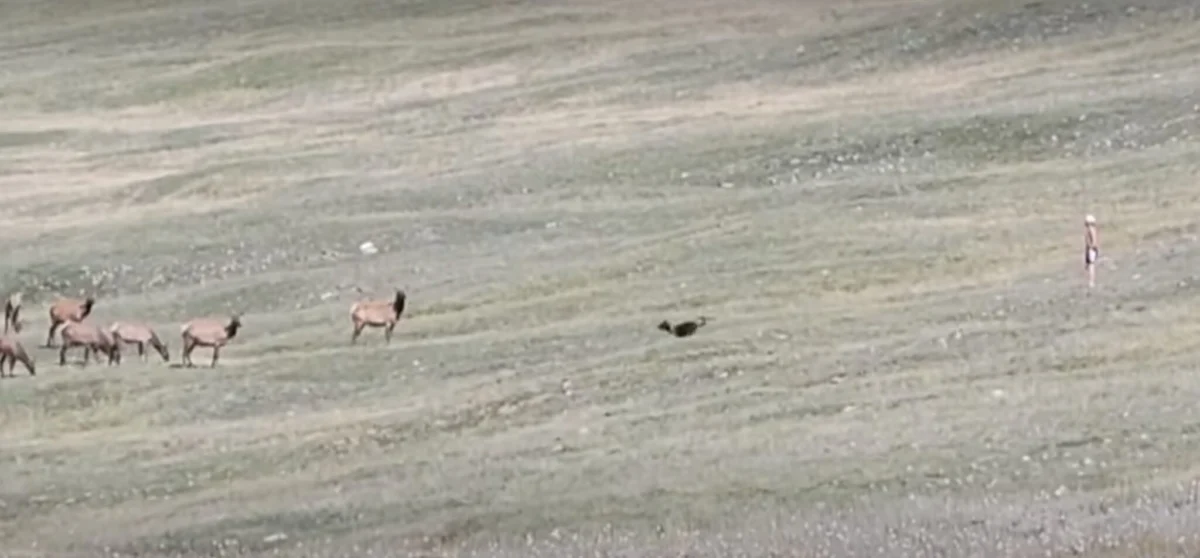
A recent incident at Rocky Mountain National Park (RMNP) involving a visitor playing fetch with a dog in the middle of a grazing elk herd has ignited a debate regarding visitor education, wildlife safety, and the enforcement of federal land regulations. Footage captured on the park’s alpine tundra and shared via social media platforms shows an unidentified individual repeatedly throwing a ball for a domestic dog into a cluster of elk. This behavior represents a multi-layered violation of National Park Service (NPS) policies and highlights a growing trend of "wildlife harassment" that experts warn could lead to fatal encounters for both pets and native fauna.
Overview of the Incident and Violations
The event took place on the high-altitude tundra of Rocky Mountain National Park, a region characterized by its fragile ecosystem and significant populations of North American elk (Cervus canadensis). According to eyewitness accounts and video evidence, the visitor disregarded established park boundaries and leash laws, allowing his dog to run off-leash through protected meadow areas. The individual reportedly used the dog to interact with the elk by throwing a ball directly into the herd, forcing the dog to retrieve the object from among the large ungulates.
Observers noted that the individual performed this action multiple times, despite the visible presence of the elk and the inherent risks of a physical confrontation. This incident is being categorized by conservationists as a textbook example of "wildlife harassment," defined under federal law as any act that disrupts the natural behavioral patterns of a wild animal, including feeding, sheltering, or breeding.
The Biological and Ecological Context of Colorado’s Elk
To understand the gravity of the incident, it is necessary to consider the scale of the elk population in the region. Colorado is home to approximately 280,000 elk, the largest concentrated population of the species in the world. Rocky Mountain National Park serves as a critical sanctuary for these animals, particularly during the summer months when they migrate to higher elevations to graze on the nutrient-rich grasses of the alpine tundra.
Elk are massive animals; an adult bull can weigh up to 700 pounds and stand five feet tall at the shoulder, while cows typically weigh between 500 and 600 pounds. Despite their appearance as docile grazers, elk are wild animals with a strong defensive instinct. When threatened, particularly by a predator-like animal such as a dog, elk can become highly aggressive. They are known to use their front hooves to strike or "stomp" perceived threats, a defensive maneuver that can easily prove fatal for a domestic dog.
Furthermore, the incident occurred on the alpine tundra, one of the most sensitive environments in the National Park System. Tundra plants are adapted to extreme cold and short growing seasons; some species take decades to recover from being trampled. By allowing a dog to run off-leash in this area, the visitor caused direct physical damage to protected flora, violating the park’s primary mission of preservation.
National Park Service Regulations Regarding Pets
The National Park Service maintains strict regulations regarding domestic animals to ensure the safety of visitors, the protection of wildlife, and the preservation of the natural landscape. At Rocky Mountain National Park, these rules are explicitly stated in the Superintendent’s Compendium and on the park’s official website.
Current regulations state that pets are prohibited from all park trails, tundra, and meadows. They are permitted only in "developed areas," which include established roads, campgrounds, parking lots, and picnic areas. Even in these designated zones, pets must be kept on a leash no longer than six feet at all times.
The rationale behind these restrictions is multifaceted:
- Wildlife Protection: The scent and presence of dogs can cause significant stress to wildlife. Elk and other mammals perceive dogs as predators (wolves or coyotes), which can cause them to abandon their young or expend critical energy reserves fleeing.
- Disease Transmission: Domestic dogs can carry diseases or parasites that are transmissible to wild populations, and conversely, they can contract diseases from wildlife, such as plague or rabies.
- Visitor Safety: Off-leash dogs can provoke wildlife into charging, which often puts the owner and other nearby tourists in the line of fire.
- Ecosystem Integrity: Dog waste can introduce non-native nutrients and bacteria into the soil and water, while the physical act of running through meadows destroys rare vegetation.
Chronology of Increasing Human-Wildlife Conflicts
The incident at Rocky Mountain National Park is not an isolated event but part of a documented increase in human-wildlife conflicts across the United States. As national park attendance has surged over the last decade—RMNP consistently ranks as one of the top five most-visited parks in the country—the frequency of "touron" (a portmanteau of "tourist" and "moron") behavior has risen.
In recent years, the NPS has reported numerous instances of visitors attempting to "pet" bison in Yellowstone, taking selfies with bears in the Smoky Mountains, and, as seen in this case, using pets to interact with megafauna.
Recent Timeline of Noteworthy Incidents:
- 2021-2022: A spike in social media-driven stunts led to multiple injuries in Yellowstone National Park, where visitors approached bison within 25 yards, resulting in several goring incidents.
- 2023: Rocky Mountain National Park officials issued warnings after several visitors were caught approaching elk during the "rut" (mating season), a period when bulls are exceptionally aggressive.
- Current Incident: The footage of the dog playing fetch in the elk herd has prompted a renewed call for stricter enforcement and potential permanent bans for visitors who flagrantly violate safety protocols.
Legal Implications and Potential Penalties
The individual filmed in the footage faces potential legal action under several federal statutes. The National Park Service has the authority to issue citations for:
- Failure to Leash a Pet: This carries a standard fine and potential appearance in federal court.
- Entering a Prohibited Area: Accessing the tundra with a pet is a direct violation of park closures.
- Harassment of Wildlife: Under 36 CFR § 2.2(a)(2), the "feeding, touching, teasing, frightening or intentional disturbing of wildlife nesting, breeding or other activities" is strictly prohibited.
Fines for these offenses can range from $100 to over $5,000, and in severe cases, can result in up to six months of imprisonment. Additionally, the NPS has the right to ban individuals from all National Park System lands for life if their actions are deemed sufficiently hazardous to the park’s mission.
Official Responses and Expert Analysis
While the National Park Service typically does not comment on ongoing investigations regarding specific individuals, park rangers have frequently addressed the broader issue of pet safety. "The rules are not there to be a nuisance to pet owners," one former ranger noted in a general safety briefing. "They are there because we have seen dogs killed by elk and deer. A dog’s instinct is to chase, and an elk’s instinct is to defend. That is a recipe for tragedy."
Wildlife biologists argue that the "habituation" of wildlife—where animals become too comfortable around humans—is a death sentence for the animals. When elk lose their natural fear of humans and dogs, they are more likely to wander into campgrounds or onto highways, leading to dangerous "nuisance" encounters that often end with the animal being euthanized by wildlife managers to protect public safety.
The person who recorded the video expressed a sentiment shared by many conservationists: "Felt sorry for the dog and the elk. The guy was a total [nuisance] harassing the elk using his dog. The guy repeatedly did it over and over." This reaction underscores the ethical breach committed when a pet owner uses an animal, which relies on them for protection, as a tool for a dangerous and illegal activity.
Broader Impact on National Park Management
This incident serves as a critical case study for the National Park Service as it navigates the balance between public access and resource protection. The "Disneyfication" of nature—where visitors treat wild spaces like controlled theme parks—presents a significant management challenge.
To combat this, RMNP has implemented a timed-entry permit system to control the volume of visitors, but managing individual behavior remains difficult. Some advocates are calling for increased "boots on the ground" presence and more aggressive prosecution of wildlife harassment cases to serve as a deterrent.
The long-term implications of such behavior are significant. If human-wildlife conflicts continue to rise due to pet-related incidents, the NPS may be forced to implement even stricter bans on domestic animals within park boundaries, potentially excluding responsible pet owners from visiting developed areas of the park.
In conclusion, the act of playing fetch with a dog in a herd of elk is more than a simple lapse in judgment; it is a violation of federal law that endangers the domestic animal, the wild animals, and the ecological integrity of Rocky Mountain National Park. As the NPS continues to investigate the incident, it remains a stark reminder that the "great outdoors" requires a level of respect and situational awareness that some visitors have yet to master. Proper stewardship of public lands depends on the adherence to rules designed to keep the "wild" in wildlife.




![Sijya announces Leather and Brass [Retrofitted] EP, shares Do I Know [Rachika Nayar Edit]: Listen](https://empire-music.net/wp-content/uploads/2026/09/sijya-announces-leather-and-brass-retrofitted-ep-shares-do-i-know-rachika-nayar-edit-listen.webp)