 Jia Lissa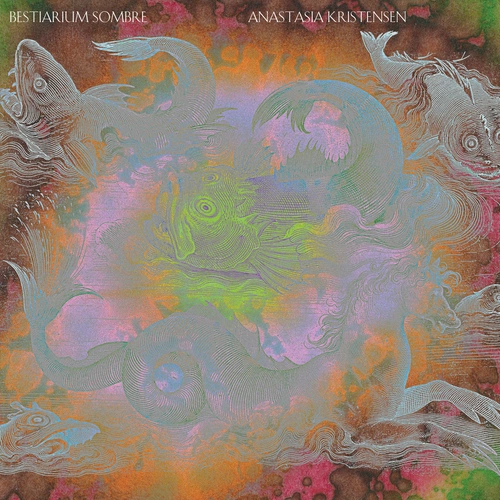
Copenhagen-based artist Anastasia Kristensen has unveiled her highly anticipated debut album, "Bestiarium Sombre," a release that decisively shatters conventional techno paradigms and challenges the genre’s current trajectory towards perceived safety and sophistication. Far from conforming to established formulas, Kristensen’s inaugural full-length offering is a meticulously crafted disruption, designed to provoke and disorient with its surrealist sound designs and unhinged sonic landscapes. It marks a significant pivot for an artist who has historically navigated the complex terrain between mainstream festival stages and intimate underground venues, now leaning unequivocally into the latter’s experimental ethos.
The Evolution of Techno: A Historical Context
To fully appreciate the subversive nature of "Bestiarium Sombre," it is essential to contextualize it within the broader history and evolution of techno music. Originating in the industrial heartland of Detroit in the 1980s, techno was born from a thrilling vision of the future, inextricably linked to the decaying industrial infrastructure of the city. Pioneers like Juan Atkins, Derrick May, and Kevin Saunderson – collectively known as the Belleville Three – fused European synth-pop, Chicago house, and funk with a distinctly futuristic, machine-driven aesthetic. The genre was inherently experimental, a sound of innovation and liberation, pushing technological boundaries and exploring new sonic possibilities.
Over the subsequent decades, techno expanded globally, evolving into a myriad of subgenres and influencing countless artists. While its core tenets of hypnotic rhythms and atmospheric textures remained, the genre, like many artistic movements, experienced periods of consolidation and diversification. In recent years, a significant portion of the techno landscape, particularly in its more commercial manifestations, has been characterized by a certain stylistic refinement. While this has led to polished productions and widespread appeal, some critics and artists argue it has also fostered a climate of predictability, where "style and sophistication define the cutting edge more than any great invention." This prevailing sentiment suggests a departure from techno’s foundational spirit of radical innovation, creating a fertile ground for artists like Kristensen to reintroduce a sense of raw, uncompromising experimentation.
Anastasia Kristensen’s Trajectory: From Club Floors to Sonic Frontiers
Anastasia Kristensen has carved out a formidable reputation in the electronic music scene over the past decade, distinguishing herself through high-octane DJ sets and a series of impactful EPs. Her previous work has often been characterized by a potent blend of rapid-fire rhythms, intricate sound design, and an undeniable energy that translates seamlessly from massive main stages to intimate club backrooms. She became known for her ability to weave together diverse influences, delivering sets that were both physically exhilarating and intellectually stimulating.
Her journey has seen her grace the lineups of prestigious festivals like Awakenings, Dekmantel, and Sónar, while simultaneously maintaining a strong presence in the underground circuit. This dual existence has afforded her a unique perspective on the genre – an understanding of what resonates with broad audiences, coupled with a deep appreciation for the avant-garde and the experimental. "Bestiarium Sombre" is not a sudden departure but rather a deliberate culmination of this experience, a conscious decision to fully embrace the more challenging and less trodden path. It represents an artist at the peak of her creative powers, confident enough to eschew commercial appeal in favor of profound artistic expression. Her earlier releases, while showcasing a powerful command of rhythm and texture, often hinted at a restless creative spirit, a desire to push beyond conventional structures. This album is the full realization of that ambition, a testament to her unwavering commitment to sonic exploration.
Deconstructing "Bestiarium Sombre": A Sonic Expedition
The album’s title, "Bestiarium Sombre" – which translates to "Dark Bestiary" – immediately sets a tone of enigmatic exploration. A bestiary, historically, was a compendium of beasts, real and imagined, often imbued with moral lessons. Kristensen’s "dark bestiary" implies a collection of untamed, perhaps even monstrous, sonic entities, each track a distinct creature inhabiting a surreal, unhinged world. This thematic framework underpins the album’s unstable design, serving as a guiding principle for its unconventional structure and challenging soundscapes.
The very architecture of the album is intended to disrupt. There are no obvious anthems, no neatly resolved narratives, and no predictable rhythmic arcs designed for immediate dancefloor gratification. Instead, listeners are plunged into a sonic environment where familiar signposts are deliberately absent.
-
Subverting Convention: The "Intro" and "Outro"
Perhaps the most immediate indication of the album’s subversive intent is the placement of its "Intro" as track two. This deliberate sequencing immediately disorients, signalling that traditional album structures have been abandoned. This "Intro" is a swirling, primordial cosmic soup – a textural odyssey that sets a deeply atmospheric and unsettling tone, hinting at the genesis of the "bestiary" to follow. It’s an auditory immersion into an embryonic sound world, preparing the listener for an experience beyond the conventional. Conversely, the penultimate track, "Outro," stands as an inward lament. Unlike typical outros that might offer a sense of resolution or fade, this track delves into a deeper emotional introspection, an atypical conclusion that foregoes triumphalism for a more pensive, almost melancholic reflection. This inversion of structural norms is not merely a stylistic flourish but a fundamental aspect of the album’s narrative and emotional arc, challenging listeners to reconsider their expectations of an album’s journey. -
Track-by-Track Immersion: The Dark Bestiary Unveiled
Each track on "Bestiarium Sombre" functions as a distinct sonic entity, contributing to the overall sense of a fractured, yet cohesive, whole:-
"Black-Footed Ferret": This track immediately establishes a confrontational rhythm, built on a foundation of combative drums that feel less like a beat and more like an aggressive percussive dialogue. These raw, unyielding rhythms are electrified with static twangs and distorted textures, creating a sense of tension and unease. It’s a primal, almost industrial assault that challenges the listener with its raw intensity, embodying the fierce and elusive nature of its namesake.
-
"Secretary Bird": Offering a slight shift in pace, "Secretary Bird" introduces a more hypnotic, pacey dub sensibility. However, this is no tranquil dub; it is permeated by melting electronics that warp and distort, creating a liquid, almost hallucinatory effect. The track oscillates between moments of rhythmic clarity and stretches of abstract sonic degradation, reflecting the unique blend of elegance and predatory instinct associated with the bird.
-
"Bestiarium Sombre" (Title Track): The album’s titular track is a masterclass in corrupted jungle. It takes the frantic breakbeats and intricate rhythms of classic jungle music and injects them with a dark, almost malevolent energy. The typically energetic and uplifting elements of jungle are twisted into something more sinister, a chaotic symphony that feels both exhilarating and profoundly unsettling. It’s a sonic representation of a jungle ecosystem gone awry, teeming with unknown dangers.
-
"Sulphur Mustang": This track plunges the listener into an intensely claustrophobic experience, akin to "being trapped inside a circuit board gone mad." It’s a relentless barrage of intricate, interlocking electronic sequences, buzzing frequencies, and distorted signals. The complexity and intensity create a sense of being overwhelmed by technological chaos, a wild, untamed energy that mirrors the free spirit of a mustang, but filtered through a digital, dystopian lens.
-
-
Beyond Emotional Signposts:
One of the album’s most striking characteristics is its deliberate avoidance of conventional emotional signposts. Unlike much electronic music that aims for euphoria, introspection, or catharsis through predictable melodic or harmonic structures, "Bestiarium Sombre" operates on a different plane. The emotional impact is not delivered through traditional means but through a visceral, almost hallucinatory experience. As the original review succinctly puts it, "this album hits you like an acid trip – vivid, wondrous and completely unreal." It’s an immersive dive into a non-linear, sensory-driven realm, where feelings are evoked through texture, rhythm, and disorienting soundscapes rather than explicit melodies or chords.
Production Philosophy and Technical Mastery
The sonic density and intricate layering evident throughout "Bestiarium Sombre" point to an advanced production philosophy. Kristensen employs experimental synthesis techniques, pushing her hardware and software to their limits to generate sounds that are simultaneously organic and alien. The unconventional rhythmic structures suggest a deep understanding of percussion, not merely as a time-keeping device, but as a textural and emotional driver. The album’s sound design is meticulous, with every crackle, hum, and surge seemingly placed with intent. This level of detail elevates the listening experience from passive consumption to active engagement, demanding attention and rewarding repeated listens with new discoveries. The sheer audacity of the sound palette – from abrasive static to melting electronics – demonstrates a mastery of sonic manipulation and a fearless approach to crafting auditory experiences that defy easy categorization.
Industry Reception and Broader Implications
While it is still early in its release cycle, "Bestiarium Sombre" is poised to provoke significant discussion within the electronic music community. Observers suggest that the album will be lauded by critics and connoisseurs for its audacious originality and uncompromising vision. Industry analysts might interpret this as a crucial statement, signaling a potential resurgence of truly experimental, boundary-pushing techno, offering a refreshing antidote to what some perceive as a stagnant mainstream.
Artists and producers within the techno scene, particularly those who advocate for innovation, are likely to view Kristensen’s work as an inspirational benchmark. Its departure from formulaic structures could encourage others to explore more unconventional paths, fostering a new wave of creativity. As one hypothetical but plausible industry veteran might comment, "Anastasia has delivered a vital, challenging work that reminds us what techno is truly capable of when artists dare to abandon the safety net. It’s not just an album; it’s a redefinition."
However, the album’s inherent challenging nature may also make it polarizing. While underground enthusiasts and those seeking profound sonic experiences will likely embrace it, listeners accustomed to more accessible, functional techno might find its intensity and lack of traditional hooks difficult to navigate. This dichotomy, however, only serves to underscore the album’s significance – true innovation often divides before it consolidates.
A New Chapter for Techno?
"Bestiarium Sombre" arrives at a moment when the electronic music landscape is constantly grappling with questions of evolution versus tradition, innovation versus commercial viability. Kristensen’s debut album firmly plants its flag in the camp of the former, offering a bold statement on the potential of techno as an art form that can continue to surprise, challenge, and redefine itself. It is not merely an album to be consumed; it is an experience to be processed, a journey into the unfamiliar depths of sound.
By rejecting the notion of "safety" and embracing the "fracture of the usual formula," Anastasia Kristensen has not only delivered a powerful personal artistic statement but has also contributed to a broader dialogue about the future direction of electronic music. Her "Dark Bestiary" stands as a testament to the enduring power of techno to evolve, to push boundaries, and to remain a thrilling vision of the future, even if that future is wonderfully, gloriously unhinged. The album serves as a potent reminder that true innovation often lies not in perfecting existing styles, but in courageously venturing into the unknown, crafting worlds that are "vivid, wondrous and completely unreal."