Aveline Kirana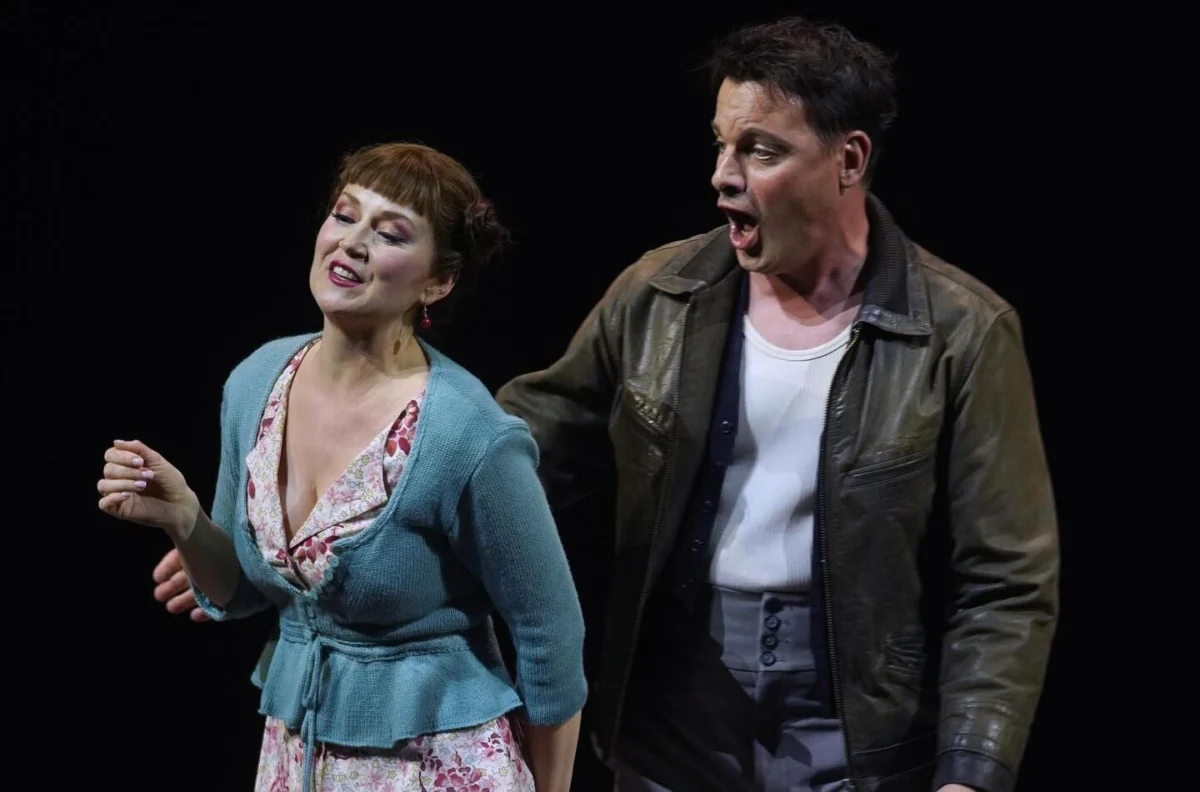
(Credit: Javier de Real)
The weight of national myth can, at times, overshadow the pure experience of music. Bedřich Smetana’s The Bartered Bride is a prime example of an opera carrying such a significant cultural burden. Its premiere in Prague in 1866, at a time when the Czech nation lacked its own sovereign state, elevated the work beyond mere entertainment. Sung in the Czech language for the first time, it became a profound declaration, a bold self-presentation to the world. The opera’s inherent exuberance, its depictions of peasant cunning, and its irrepressible vitality served as a powerful assertion of a people’s right to exist and to define their own cultural identity. This deeply ingrained national significance has consistently shaped its reception and interpretation across international stages.
When The Bartered Bride finally graced the Parisian stage in 1928, French critics, much like their predecessors and contemporaries, focused intently on its role as a symbol of Czech national identity. This Parisian debut followed a series of triumphant tours that had already introduced the opera to major cultural capitals worldwide. Prior to its arrival in France, the opera had garnered acclaim in Vienna, Chicago, London, and New York. These international successes were often bolstered by the presence of celebrated Czech sopranos in the pivotal role of Mařenka, notably Emmy Destinn (known also as Ema Destinnová) and Jarmila Novotná, a distinguished artist who graced the Metropolitan Opera’s stage for an extended period from 1940 to 1956. Their performances not only showcased their considerable vocal talents but also amplified the opera’s nationalistic undertones for international audiences.
Madrid’s engagement with Smetana’s masterpiece has been notably sparse, with only two prior stagings before the current 2026 production. The first encounter occurred in March 1924, when the Teatro Real hosted a production orchestrated by Teresa Storras. This event held particular cultural significance, arriving as it did as a potent symbol of a newly independent Czechoslovakia. Its presence on the Madrid stage was as much a deliberate political gesture, aimed at strengthening nascent diplomatic and cultural ties between the two nations, as it was an artistic presentation. The second performance took place in 1973 at the Teatro de la Zarzuela, this time rendered in Spanish. This staging occurred during the twilight years of the Franco regime, a period when Spain was cautiously beginning to re-engage with the international community after decades of relative isolation. A substantial half-century gap in performances separated these two significant dates, underscoring the rarity of the opera’s appearance in the Spanish capital. Now, precisely a century after its initial triumph in Madrid, The Bartered Bride has returned to the Teatro Real, once again presented in its original Czech language, marking a significant cultural moment.
The opera’s narrative, at its core, presents a deceptively simple village tale. It revolves around matchmakers, young lovers whose union is thwarted by parental decree, and a clever young man who ultimately outwits the established order. The central conflict arises from Mařenka’s deep affection for Jeník, a love opposed by her parents who are determined to marry her off to the wealthier Vašek. In a pivotal moment, Jeník, desperate to secure his beloved’s hand, signs away his claim to Mařenka for three hundred florins. However, this agreement includes a secret stipulation designed to subvert the intended outcome, ultimately leading to a resolution that, while comedic, carries unexpected emotional depth. As the intricacies of the plot unravel, the initial comedy of errors gradually reveals itself as a profoundly human story, exploring themes of love, deception, and the resilience of the human spirit.
Smetana’s musical composition for The Bartered Bride is often characterized by its crystalline clarity and its masterful ability to embed profound sentiment within a framework of apparent lightness. His stylistic approach is frequently compared to that of Wolfgang Amadeus Mozart, sharing a similar transparency of texture and a sophisticated capacity to conceal serious underlying themes within a seemingly effervescent musical surface. The score is permeated by vibrant dance rhythms, with iconic Czech dances such as the polka and the furiant integrated not merely as decorative elements but as integral components of the dramatic narrative, driving the action and reflecting the characters’ emotions. This integration of folk elements with sophisticated musical structure is a hallmark of Smetana’s genius and a key reason for the opera’s enduring appeal.
A Visionary Production and Evocative Musical Direction
The current production, helmed by the acclaimed director Laurent Pelly, offers a distinctive interpretation that, in this instance, achieves remarkable precision and impact. Pelly’s signature approach, often characterized by bold conceptual choices, eschews conventional scenic realism. The vast, largely empty stage, punctuated by objects suspended from above, and the near-total absence of overtly realistic décor, are not indicative of minimalism but rather represent a deliberate artistic strategy. Pelly consciously moves away from the idealized, postcard-like imagery of a cheerful Czech village. Instead, he crafts an environment that allows the story of the bartered bride to resonate as both a joyous celebration and a profound ordeal. The meticulously designed costumes and makeup are crucial to this vision, simultaneously evoking a rural twentieth-century aesthetic and embracing a boldly stylized, almost avant-garde spirit. This duality creates a visual language that is both familiar and strikingly original.
Within this carefully constructed theatrical space, the character of Mařenka is portrayed not as an ethereal figure lost in folk gaiety but as a woman navigating the complexities of her inner world and making her own determined choices. Her portrayal is imbued with anxiety, unwavering dignity, a stubborn faith, and a resilient hope. Lighting designer Urs Schönenbaum plays a critical role in shaping the atmosphere, employing great subtlety to conjure a palpable sense of intimacy and, at times, chilling desolation with minimal visual cues. The dramatic impact of the third act, which erupts into a vibrant explosion of color and warmth with the arrival of the circus, is significantly amplified by this carefully modulated build-up. The stark cinematic contrast between the earlier acts, characterized by a cooler, more restrained temperature, and the final act’s effusive energy, lands with exceptional force precisely because of the preceding atmospheric restraint.
A standout revelation of the evening was the performance of Svetlana Aksenova in the demanding role of Mařenka. Her portrayal transcended mere fine singing and the possession of a beautiful soprano voice; it was an immediate and profound penetration into the emotional core of the audience. Aksenova’s voice possesses a rare inner warmth, and her vibrato is employed with such precision that it serves the musical and dramatic meaning rather than detracting from it. Her deep theatrical honesty ensures that not a single phrase is delivered without purpose or intention. Such a performance would undoubtedly have elicited a standing ovation from a figure like Konstantin Stanislavski, the renowned theatre director and acting theorist. The opera’s great aria in the third act – a piece added by Smetana roughly twenty years after the opera’s premiere and widely regarded as the work’s crowning jewel – was delivered with an intensity that suggested every preceding moment had been building towards this singular climax. Aksenova’s commitment was absolute, devoid of any gesture aimed solely at superficial crowd-pleasing.
In the role of Jeník, Pavel Černoch delivered a vocal performance characterized by its confidence, evenness, and brilliance. While his technical prowess was beyond reproach, there were moments where a sharper play of intonation and the roguish wit essential to making Jeník a truly irresistible schemer might have been more pronounced. Nevertheless, his professionalism as a singer was consistently evident and commendable.
Additional Cast Highlights and Orchestral Brilliance
GÜnther Groissböck’s portrayal of the marriage broker Kecal was tremendously convincing and imbued with a significant comedic flair. However, his lower register, where the true, irresistible power of this bass voice resides, occasionally called for greater weight and projection, which would have further solidified his commanding presence.
A genuine highlight of the evening was Mikeldi Atxalandabaso’s interpretation of Vašek. The vocal device of stuttering, often employed by singers, presents a significant pitfall, easily descending into caricature and parody at the expense of genuine musicality. Atxalandabaso navigated this challenge with exceptional skill, finding the precise balance that rendered his Vašek both funny and touching, his performance fluid and technically flawless. This apparent ease belied a profound vocal culture and an entirely natural theatrical instinct.
The Teatro Real Chorus, under the astute direction of José Luis Basso, demonstrated its characteristic organic quality, excelling not only in its vocal contributions but also in its engaging dance sequences. The chorus earned the most enthusiastic and entirely deserved applause of the evening, underscoring their vital role in the production’s success.
At the podium, conductor Gustavo Gimeno maintained a masterful control over the score, consistently preventing it from devolving into a mere folkloric tableau. The orchestra responded with the richness and cohesion of a fully realized symphonic organism, exhibiting considerable weight, dynamic contrast, and a genuine dramatic breath that at times even touched upon the tragic. The overture was approached at an almost dizzying tempo, an impulse that sustained throughout the performance. The lyrical episodes of the opera’s second half, particularly the expressive string passages, sang with a warmth that Smetana clearly intended and which can so easily be lost in a relentless pursuit of sheer energy. Gimeno demonstrated a profound understanding of the music’s inner workings, presenting it to a twenty-first-century audience as a psychologically nuanced and richly textured canvas, rather than a simple illustration for a dance comedy.
The return of The Bartered Bride to Madrid after a century-long absence has illuminated a deeper complexity beneath its seemingly simple folk costumes and village gaiety. This production has served as a potent reminder that beneath the surface of traditional narratives often lie intricate human dramas and potent social commentaries. The opera’s exploration of love, societal constraints, and individual agency, presented through Smetana’s vibrant music, draws parallels with the rich tradition of Spanish zarzuela, particularly in its ability to blend popular entertainment with profound emotional resonance. The success and thematic depth of this production undoubtedly build anticipation for the Teatro Real’s upcoming 2026-27 season, which features Blood Wedding, a new opera based on Federico García Lorca’s seminal play, composed by a contemporary Spanish composer. This programming choice suggests a continued commitment by the Teatro Real to exploring works that engage with national identity, dramatic intensity, and the enduring power of storytelling through opera. The opera’s enduring relevance, as demonstrated by this Madrid revival, underscores its status not merely as a national treasure but as a universally accessible masterpiece.


![Sijya announces Leather and Brass [Retrofitted] EP, shares Do I Know [Rachika Nayar Edit]: Listen](https://empire-music.net/wp-content/uploads/2026/09/sijya-announces-leather-and-brass-retrofitted-ep-shares-do-i-know-rachika-nayar-edit-listen.webp)