 Lana Akmaluna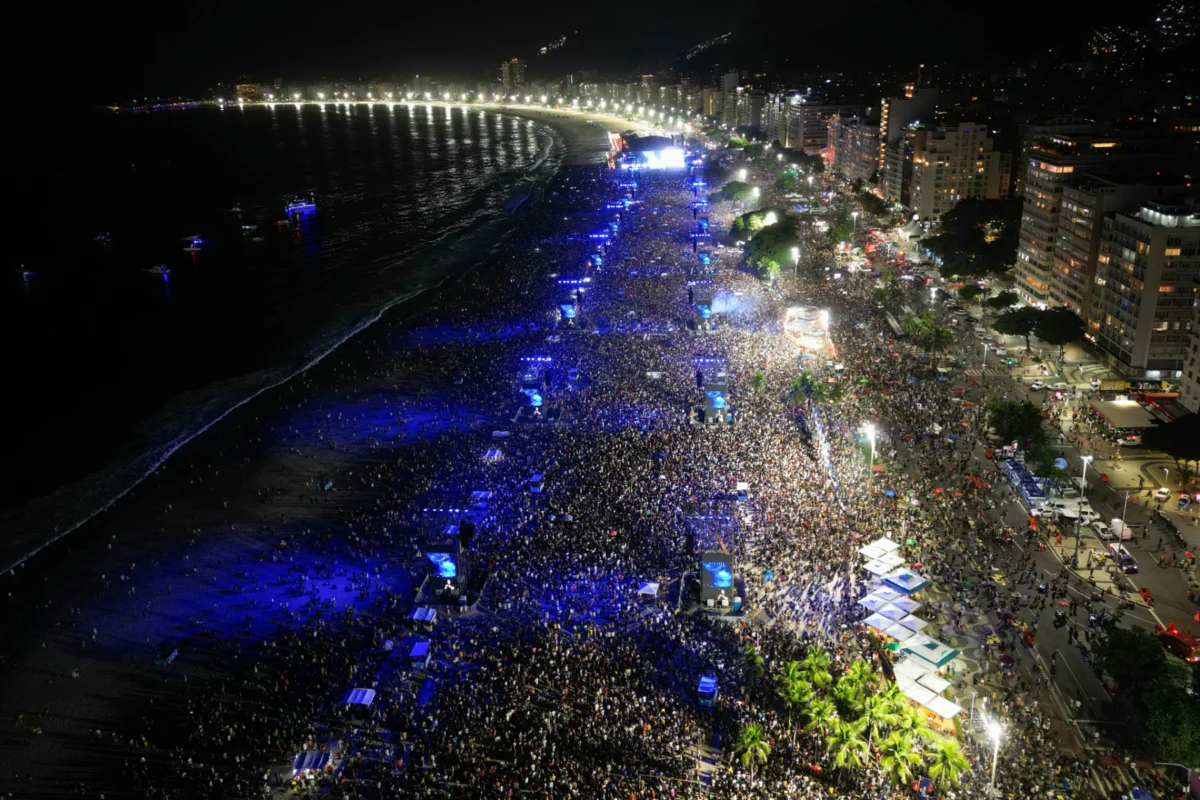
The coastal landscape of Rio de Janeiro underwent a massive cultural and demographic shift on Saturday, May 2, 2026, as hundreds of thousands of fans descended upon Copacabana Beach for a free concert headlined by global superstar Shakira. The event, which served as the third installment of the city’s ambitious "Todo Mundo no Rio" (Everyone in Rio) project, effectively turned the four-kilometer stretch of sand into the most populated concert venue on the planet for a single evening. By late afternoon, the neighborhood’s usual tourist traffic was replaced by a dense sea of supporters known collectively as the "wolfpack," a nod to the singer’s 2009 hit "She Wolf" and her enduring persona as a "Loba." Outside the historic Copacabana Palace, where the Colombian singer was in residence, a tireless vigil of fans remained for over 48 hours, illustrating the profound cultural gravity the artist continues to hold in the South American market.
The "Todo Mundo no Rio" initiative has quickly established itself as a cornerstone of Brazil’s tourism and entertainment strategy. Following the record-breaking success of Madonna’s performance in 2024, which drew an estimated 1.6 million people, and Lady Gaga’s equally massive showing in 2025, Shakira’s 2026 appearance was designed to solidify Rio de Janeiro’s reputation as the "world capital of free mega-concerts." The project is a public-private partnership involving the Rio de Janeiro State Government, the City Hall, and major corporate sponsors, aimed at boosting the local economy during the traditional "shoulder season" of tourism that follows the Carnival and Easter holidays.
A Cultural Takeover: The Birth of Lobacabana
As the sun rose over the Atlantic on Saturday morning, the atmosphere in Copacabana was already electric. Fans had begun staking out positions near the massive stage—a structure spanning over 800 square meters—as early as Thursday evening. The aesthetic of the crowd was a colorful tapestry of Shakira’s three-decade career. Many attendees donned elaborate costumes, with a particular emphasis on the singer’s most iconic visual eras.
Among the crowd was 41-year-old Yagan Rebeca, a Brazilian fan whose attire paid homage to Shakira’s 2020 Super Bowl LIV halftime performance. Sporting a hand-sewn crimson outfit and a custom she-wolf headpiece, Rebeca spoke to the personal significance of the event. Having followed the singer since the age of 16, Rebeca noted that the music had served as a source of resilience during recent health struggles. Her presence, and the effort invested in her costume, mirrored the sentiment of thousands who viewed the free concert not merely as entertainment, but as a pilgrimage.
The international draw of the event was equally evident. Mati Bish, a professional Shakira impersonator, traveled from Chile specifically for the Rio performance. Dressed in a replica of the golden fringe outfit from the "Hips Don’t Lie" music video, Bish highlighted the singer’s pan-Latin appeal. For many Spanish-speaking fans, the concert represented a rare opportunity to see the artist in a massive, open-access setting that transcended national borders. The presence of fans from Argentina, Colombia, Uruguay, and Chile effectively turned Copacabana into a hub of Latin American unity.
Even the local pet population was swept up in the fervor. A Golden Retriever named Nala became a viral sensation on the boardwalk, dressed by her owner, Jessica Lima, in a coin-beaded gypsy scarf reminiscent of Shakira’s belly-dancing roots. The lighthearted "Lobacabana" atmosphere extended across all demographics, reinforcing the inclusive, community-driven nature of the "Todo Mundo no Rio" project.
Economic Impact and Urban Logistics
While the cultural impact of the concert was visible on the sand, the economic impact was measurable in the city’s ledgers. According to preliminary data from HotéisRIO (the union of hotels and traditional accommodations), hotel occupancy in Copacabana and the adjacent Leme neighborhood reached 98% in the days leading up to the show. The city-wide occupancy rate hovered around 85%, a significant increase from the 60% typically seen during the first week of May.
The influx of visitors provided a massive boost to the informal economy. Street vendors, many of whom had invested heavily in Shakira-themed merchandise, reported record sales. Paula Cristina and her son, Igor Rodrigues, who operate a stall along the Avenida Atlântica, noted that the continuity of the "Todo Mundo no Rio" project has provided a much-needed financial lifeline for local workers. Cristina observed that while different artists attract different demographics—noting that a future Justin Bieber concert might draw an even younger, higher-spending crowd—the sheer volume of people brought by Shakira ensured a profitable weekend.

To manage the logistics of an event of this scale, the Rio de Janeiro Military Police (PMERJ) and the Municipal Guard deployed a specialized security apparatus. Over 3,000 officers were stationed throughout the neighborhood, supported by a network of facial recognition cameras and drone surveillance. The Rio Metro (MetrôRio) operated on an extended schedule, with trains running 24 hours a day to facilitate the movement of over a million commuters. Additionally, the city implemented a strict "zero-waste" protocol, with Comlurb (the municipal cleaning company) deploying 1,500 workers to clear the beach of debris immediately following the performance.
The Performance: A Career-Spanning Celebration
Shakira’s setlist was a meticulously curated journey through her evolution from a rock-en-español prodigy to a global pop icon. Opening with the high-energy "Puntería" from her latest album, she immediately established a rapport with the Brazilian audience, frequently speaking in fluent Portuguese—a skill she acquired early in her career during her frequent tours of Brazil in the late 1990s.
The concert featured several high-production segments, including a mid-show acoustic set where she performed "Antología" and "Inevitável," songs that hold deep nostalgic value for her Brazilian fanbase. The technical execution of the show was world-class, featuring 15 LED screens, pyrotechnics synchronized to the beat of "Whenever, Wherever," and a sound system designed to reach fans nearly two kilometers away from the main stage.
The climax of the evening occurred during the encore, when Shakira performed "Waka Waka (This Time for Africa)." Given Brazil’s deep-rooted football culture, the anthem resonated powerfully, with the crowd’s rhythmic jumping reportedly registering on local seismic sensors. The singer closed the night with a message of gratitude to the city, emphasizing that Rio has remained a constant pillar of support throughout her professional journey.
Broader Implications for the Music Industry
The success of Shakira’s Copacabana concert has broader implications for the global music industry and the "mega-event" model. As traditional touring costs continue to rise and ticket prices often exclude lower-income populations, the free, sponsor-backed model used in Rio offers an alternative path for artist-fan engagement. By partnering with the city, Shakira was able to reach a demographic that might never afford a stadium tour ticket, while simultaneously generating massive global PR and streaming spikes.
For the city of Rio de Janeiro, the "Todo Mundo no Rio" project is a strategic tool for urban renewal and international branding. By hosting Madonna, Lady Gaga, and now Shakira in successive years, the city is positioning itself as a rival to major festival hubs like Indio, California (Coachella) or Glastonbury, UK. The difference, however, lies in the accessibility. Rio’s model democratizes the "superstar" experience, integrating it into the public space of the beach.
City officials have already confirmed that the project will continue through 2027 and 2028. Rumors are already circulating regarding future headliners, with names like Justin Bieber, Beyoncé, and BTS being mentioned by local authorities as potential targets. The goal is to ensure that Rio remains the premier destination for live music in the Southern Hemisphere.
Conclusion and Future Outlook
As the "wolfpack" dispersed into the early hours of Sunday morning, the consensus among fans, vendors, and officials was one of triumph. Shakira’s performance was more than just a concert; it was a demonstration of the power of live music to transform a city’s economy and spirit. For the fans who held vigils at the hotel and the vendors who sold out of merchandise, the event represented a moment of collective joy and financial opportunity.
The "Shakira effect" in Rio de Janeiro will likely be felt for months to come. Tourism officials expect a "halo effect" on bookings for the remainder of the year, as the global media coverage of the sun-drenched, packed beach serves as a powerful advertisement for the city’s safety and vibrancy. As the "Todo Mundo no Rio" project looks toward its fourth year, the bar has been set exceptionally high. Shakira did not just perform at Copacabana; she claimed it, leaving an indelible mark on the history of one of the world’s most famous beaches.