Lana Akmaluna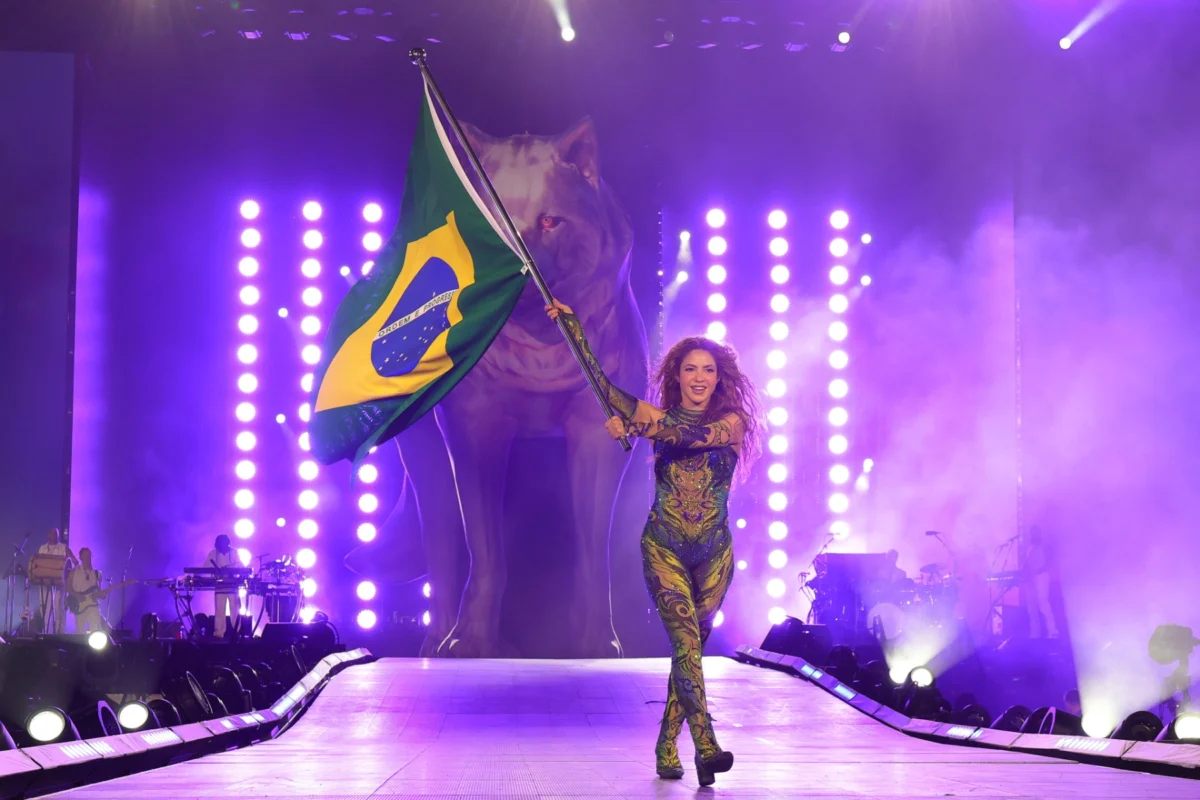
The Colombian superstar Shakira delivered a performance of unprecedented scale on Saturday, May 2, 2026, drawing an estimated two million spectators to the iconic sands of Copacabana Beach in Rio de Janeiro. This free concert, part of the "Todo Mundo no Rio" (Everyone in Rio) cultural initiative, stands as the largest single-day event of the artist’s storied career and represents a definitive moment in the cultural integration of Brazil with its Spanish-speaking neighbors. By blending high-concept technology, traditional Latin rhythms, and collaborations with the vanguard of Brazilian music, Shakira transformed the four-kilometer stretch of coastline into a unified celebration of Pan-Latin identity.
The event served as a monumental milestone for the "Las Mujeres Ya No Lloran World Tour," which originally commenced its Brazilian leg in February 2025 at the Nilton Santos Stadium. However, the Copacabana show was designed as a singular gift to the city, mirroring the scale of historic performances by the Rolling Stones and Madonna on the same stage. For the local government and the "Todo Mundo no Rio" project organizers, the concert was a strategic effort to bolster international tourism and demonstrate Rio de Janeiro’s capacity for hosting massive, safe, and technologically advanced cultural gatherings.
A Night of High-Tech Spectacle and Cultural Symbolism
The evening’s festivities began with a display of modern choreography that extended beyond the stage. Before Shakira’s arrival, a fleet of hundreds of synchronized drones illuminated the night sky over the Atlantic Ocean. The drones initially coalesced into the geometric silhouette of a wolf’s head—a nod to the singer’s "She-Wolf" (Loba) persona—before shifting to form the message "Te Amo Brasil" in the national colors. This technological prelude set a high-energy tone for a crowd that had begun gathering more than 24 hours in advance.
At 11:05 p.m., following a delay of approximately one hour, Shakira emerged onto the stage. In a deliberate gesture of appreciation for her host nation, she wore a striking green and yellow ensemble, the colors of the Brazilian flag. She opened the set with "La Fuerte," an energetic track that immediately mobilized the two-million-strong audience. The performance was not merely a concert but a multi-sensory experience, featuring pyrotechnics, flamethrowers, and elaborate video projections that broadcast the singer’s every move to those standing miles back from the main stage.
The setlist was a carefully curated journey through Shakira’s three-decade career, balancing her early pop-rock roots with her more recent dominance in the reggaetón and urban pop spheres. Early highlights included "Girl Like Me," "Las de La Intuición," and the 1990s classic "Estoy Aquí." During the show’s first segment, Shakira paused to address the audience in fluent Portuguese, reflecting on her first visit to Brazil at the age of 18. She described her career as a "magical journey" and expressed deep gratitude for the country that first embraced her music outside of the Hispanic market.
The Deep-Rooted Connection Between Shakira and Brazil
Shakira’s relationship with Brazil is unique among global Latin stars. In the mid-1990s, Brazil served as the launchpad for her international career; the success of her album Pies Descalzos in the country prompted her to record several of her hits in Portuguese. This linguistic and cultural immersion has allowed her to maintain a rapport with Brazilian fans that feels domestic rather than foreign. Throughout the Copacabana show, this intimacy was on full display as she navigated complex dialogue with the crowd without the need for a translator.
The middle portion of the concert highlighted Shakira’s versatility as a musician. Switching from high-octane dance routines to instrumental mastery, she performed "Empire" and "Inevitable" while playing a white acoustic guitar. The production value reached a peak during "Te Felicito," where she utilized a pink welding mask and a handheld flamethrower, creating a futuristic aesthetic that contrasted with the natural beach setting. This was followed by a series of female empowerment anthems, including "TQG" and "Don’t Bother," the latter featuring a solo on a glitter-coated Fender electric guitar.
In a shift toward the personal, the singer performed "Acróstico," a ballad dedicated to her children, Milan and Sasha. The performance included pre-recorded vocal contributions from her sons, accompanied by intimate family visuals on the massive LED screens. This segment provided a brief emotional reprieve before the show transitioned back into its high-energy "ultra-pop" phase with hits like "Copa Vacía," "La Bicicleta," and the world-renowned "Hips Don’t Lie."
Brazilian Royalty and the Spirit of Collaboration
One of the most significant aspects of the "Todo Mundo no Rio" performance was the inclusion of Brazilian musical icons, bridging the gap between Spanish-language pop and the rich traditions of MPB (Música Popular Brasileira), Samba, and Axé. The appearance of "Brazilian royalty" on stage underscored the event’s theme of continental unity.

The collaborative segment began with a surprise appearance by Anitta, the current global face of Brazilian funk and pop. The duo performed "Choka Choka," a high-energy collaboration that sent the crowd into a frenzy. This was followed by a rendition of "Can’t Remember to Forget You," with Anitta handling the parts originally recorded by Rihanna.
The tone shifted toward the legendary when Caetano Veloso, one of the founders of the Tropicalismo movement, joined Shakira for a duet of "Leãozinho." Shakira revealed to the audience that she often sings this classic Brazilian lullaby to her own children. The emotional weight of the moment was followed by the entrance of Maria Bethânia, one of Brazil’s most revered vocalists. Accompanied by the thunderous percussion of the Unidos da Tijuca drum section (Bateria), Bethânia and Shakira performed "O que é, o que é," the iconic samba composed by Gonzaguinha. The inclusion of a traditional Samba school brought an authentic Rio carnival atmosphere to the global stage.
The collaborative sequence concluded with Ivete Sangalo, the "Queen of Axé," joining Shakira for a high-velocity version of Jorge Ben Jor’s "País Tropical." By this point, the entire four-kilometer stretch of Copacabana was a sea of synchronized movement, fulfilling the project’s goal of creating a "borderless" musical experience.
Logistics, Economic Impact, and Security
Hosting two million people on a public beach requires a massive logistical undertaking. The Rio de Janeiro municipal government and state authorities deployed over 5,000 police officers to monitor the perimeter and the crowd. Additionally, dozens of medical stations and hundreds of mobile toilets were installed along the Atlantic Avenue.
Economic analysts suggest that the concert generated significant revenue for the city’s hospitality and service sectors. Hotel occupancy in Copacabana and the neighboring districts of Ipanema and Leme reached 98% in the days surrounding the event. Flights into Galeão International Airport and Santos Dumont Airport saw a 30% increase in passenger traffic, with many travelers arriving from neighboring South American countries such as Argentina, Chile, and Uruguay.
The "Todo Mundo no Rio" project was funded through a combination of public investment and private sponsorships, aiming to revitalize Rio’s image as the cultural capital of South America. The success of the Shakira concert is expected to pave the way for future large-scale, free public events featuring international A-list talent.
Broader Implications for Latin American Identity
The Copacabana concert transcends the boundaries of a typical music tour. For decades, Brazil’s status as a Portuguese-speaking giant has often left it culturally isolated from the Spanish-speaking nations of South and Central America. Shakira’s performance acted as a bridge, proving that music can bypass linguistic barriers to create a shared regional identity.
By performing "Pies Descalzos" and "Ojos Así"—songs that defined her early career—alongside modern hits like "Soltera," Shakira demonstrated the evolution of Latin music from a niche regional genre to a dominant global force. The imagery of the night, specifically the black-and-white clips of her early career shown during "Donde Estás, Corazón?", reminded the audience of her long-standing commitment to the Brazilian public.
The concert concluded at approximately 1:05 a.m. on Sunday with a back-to-back performance of "Suerte" (Whenever, Wherever) and the 2010 World Cup anthem "Waka Waka (This Time For Africa)." As thousands of pounds of confetti were launched into the ocean breeze, the message was clear: Shakira remains a singular force capable of uniting a continent. The event will likely be studied by urban planners and event promoters for years to come as a gold standard for large-scale public cultural engagement. In the words of the singer as she departed the stage: "In Copacabana, we danced as one."