Lana Akmaluna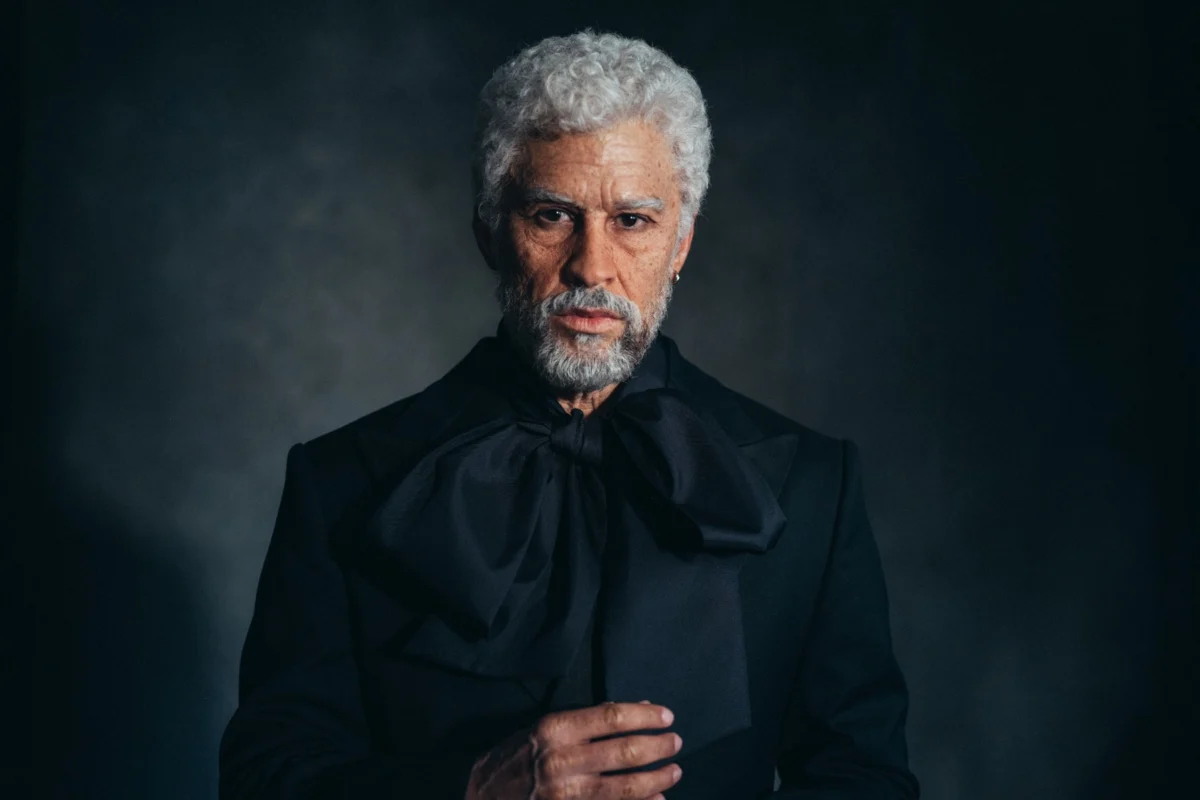
The 2026 Met Gala, held on May 4 at the Metropolitan Museum of Art in New York City, witnessed a profound intersection of performance art and high fashion as Benito Antonio Martínez Ocasio, known globally as Bad Bunny, arrived not merely in a costume, but as a living conceptual installation. Navigating the iconic green-carpeted steps of the Great Hall, the Puerto Rican superstar appeared transformed into an elderly version of himself, complete with thinning gray hair, intricate facial wrinkles, and a steadying cane. This metamorphosis served as a direct response to the Costume Institute’s spring exhibition, "The Aging Body," curated by Andrew Bolton, which explored the physiological and cultural narratives of the human form over time.

Bad Bunny’s participation in the gala, which operated under the broader theme of "Costume Art," underscored his evolution from a reggaeton sensation to a multidisciplinary artist capable of challenging the traditional boundaries of celebrity presentation. In an industry often preoccupied with the preservation of youth, the artist’s decision to embrace the aesthetics of senescence was widely regarded by attendees and fashion critics as a bold subversion of expectations.
The Conceptual Framework and Artistic Execution
The execution of the "Aged Benito" persona required a sophisticated blend of cinematic prosthetics and meticulous sartorial choices. To achieve the hyper-realistic effect of an octogenarian, Bad Bunny collaborated with Mike Marino, the celebrated prosthetic makeup artist and founder of Prosthetic Renaissance. Marino, whose previous work includes transformative designs for films such as The Batman and Coming 2 America, utilized medical-grade silicone appliances to alter the artist’s facial structure, adding liver spots, crow’s feet, and the sagging skin textures associated with advanced age.

During a livestream interview with Vogue host La La Anthony, the artist maintained his character with a sense of humor, joking that the look had taken him "exactly 53 years" to prepare. "It’s getting a part of my life, trying to do something different," Bad Bunny remarked. "This day of the Met is a perfect day to explore and be creative and express yourself in a different way."
Beyond the makeup, the ensemble was a masterclass in historical fashion references and modern collaborative design. Bad Bunny wore a custom-made, all-black tuxedo suit that he personally co-designed in an unexpected partnership with the global retail giant Zara. The collaboration signaled a shift in the Met Gala’s landscape, where mass-market retailers are increasingly finding a foothold through high-concept, one-of-a-kind pieces. The suit featured a dramatic, oversized bow at the rear, a direct homage to Charles James’s 1947 "Bustle" gown—a seminal piece in the Costume Institute’s permanent collection. To complete the look, he wore a vintage 1995 Cartier watch, anchoring the concept of time through both his physical appearance and his accessories.

Contextualizing "The Aging Body" Theme
The choice of "The Aging Body" as the 2026 exhibition theme reflects a broader cultural dialogue led by Andrew Bolton, the Wendy Yu Curator in Charge of the Costume Institute. In recent years, the Met Gala has moved toward themes that provoke philosophical inquiry rather than just aesthetic appreciation. By focusing on how clothing interacts with the decaying or changing physique, the exhibition sought to highlight the dignity and narrative power of the elderly.
Bad Bunny’s interpretation was particularly resonant given his status as a symbol of contemporary youth culture. By projecting himself decades into the future, he forced a confrontation between the ephemeral nature of pop stardom and the inevitability of time. This thematic depth is consistent with his history at the Met Gala; in previous years, he has utilized his platform to challenge gender norms through the use of skirts, corsets, and floral motifs, consistently aligning himself with the avant-garde.

Record-Breaking Musical Dominance
The artist’s appearance at the Met Gala occurred during a period of unprecedented commercial success. Just days prior to the event, his single "DtMF" (an abbreviation for Debí Tirar Más Fotos) officially broke the record for the most weeks spent at No. 1 on the Billboard Hot Latin Songs chart. As of May 2026, the track has logged 57 weeks at the summit, surpassing the previous 56-week record held by Luis Fonsi and Daddy Yankee’s "Despacito" (featuring Justin Bieber).
This achievement is a testament to Bad Bunny’s sustained relevance in an increasingly fragmented music market. Since its debut in 1986, the Hot Latin Songs chart has been the definitive metric for Latin music success in the United States. Surpassing "Despacito"—a song that was a global phenomenon and a crossover juggernaut—positions Bad Bunny as arguably the most influential Latin artist in the history of the Billboard charts. Data indicates that his dominance is driven not only by massive streaming numbers across platforms like Spotify and Apple Music but also by a loyal fan base that spans multiple demographics and geographic regions.

The "Debí Tirar Más Fotos" World Tour
The Met Gala serves as a brief interlude in what has been a grueling global touring schedule. Bad Bunny is currently in the midst of his "Debí Tirar Más Fotos World Tour," a massive stadium undertaking that has already seen record-breaking ticket sales in North and South America. The European leg of the tour is scheduled to commence on May 22 in Barcelona, Spain, at the Estadi Olímpic Lluís Companys.
The tour itinerary includes major stops in London, Paris, Berlin, and Madrid, before concluding on July 22 in Brussels, Belgium. Industry analysts suggest that the tour is on track to become one of the highest-grossing concert series of the decade, potentially rivaling the figures of his own previous "World’s Hottest Tour." The production is noted for its high-concept stage design, which mirrors the surrealist and cinematic themes found in his recent music videos and public appearances.

Broader Implications for Fashion and Celebrity
Bad Bunny’s 2026 Met Gala appearance is likely to have lasting implications for how male celebrities approach the event. Historically, many male attendees have opted for traditional black-tie attire, often drawing criticism for a lack of adherence to the gala’s creative themes. However, by embracing full-body prosthetic transformation and historical sartorial references, Bad Bunny has set a new standard for commitment to the "Costume Art" ethos.
Furthermore, the collaboration with Zara highlights a significant moment in the democratization of high-fashion narratives. While the Met Gala remains the pinnacle of exclusivity, the involvement of a brand like Zara—albeit through a custom, non-commercial piece—suggests a bridge between the high-art world of the museum and the accessible world of global fashion retail.

From a sociological perspective, the artist’s decision to "perform" old age addresses the "invisible" status often afforded to the elderly in Western society. By making the aging body the center of the world’s most photographed red carpet, Bad Bunny utilized his celebrity capital to validate a stage of life that is frequently marginalized in the media.
Conclusion
As the 2026 Met Gala concluded, the conversation remained centered on Bad Bunny’s ability to manipulate his own image for artistic ends. Whether through his record-breaking chart performance or his conceptual red-carpet appearances, the artist continues to demonstrate a unique capacity for cultural disruption. His transformation into an aged version of himself was more than a sartorial choice; it was a meditation on the passage of time, the weight of legacy, and the evolving definition of what it means to be a global icon in the 21st century.

With his European tour on the horizon and "DtMF" continuing to rewrite the history books, Benito Antonio Martínez Ocasio remains a singular force in the global zeitgeist, proving that even as he explores the concept of aging, his influence remains perennial.