Nayara Elvina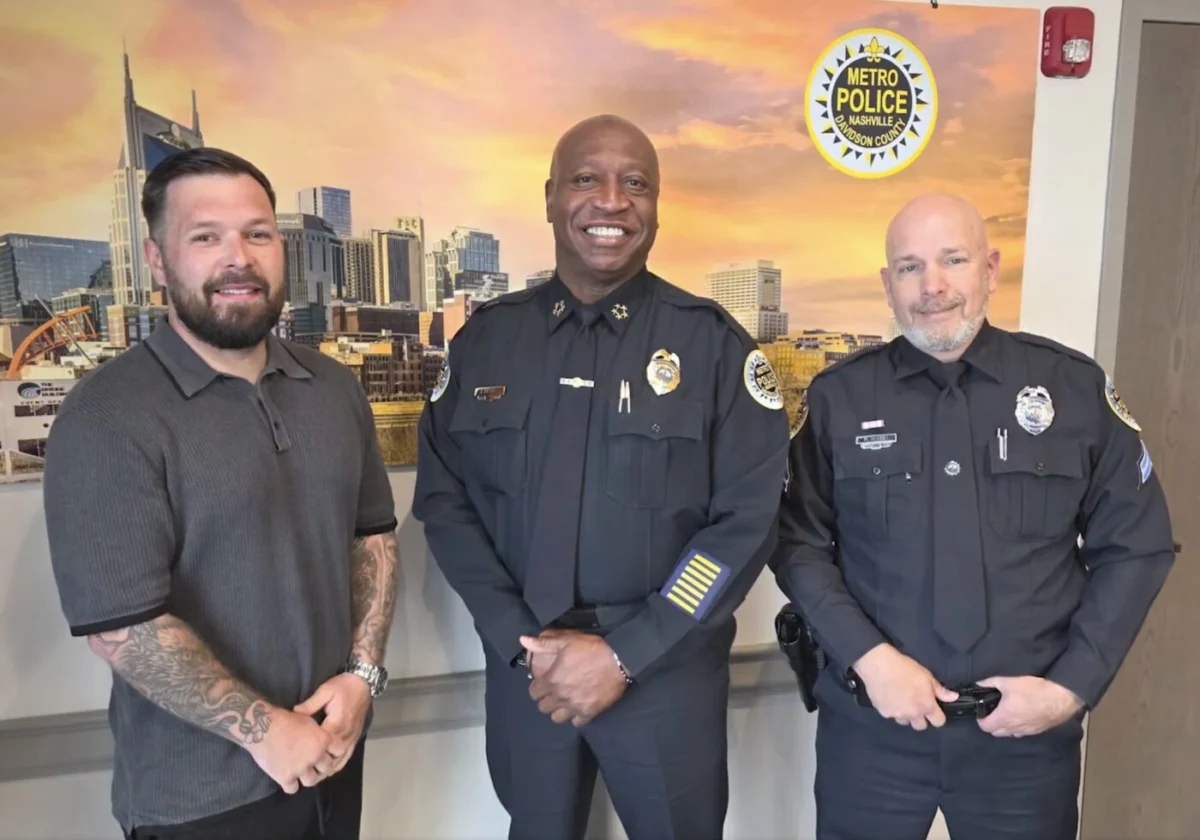
The fabric of international law enforcement cooperation was woven into a life-saving reality on the streets of Nashville during the overnight hours of May 8, 2024. What began as a routine attempt to ensure pedestrian safety on a hazardous interstate ramp rapidly devolved into a life-threatening struggle for a Metro Nashville Police Department (MNPD) officer. The incident, which saw a suspect gain partial control of a law enforcement firearm, was ultimately resolved through the intervention of an off-duty police sergeant from the United Kingdom who had arrived in the United States only hours prior for a scheduled vacation. The event has since drawn international attention to the inherent dangers of roadside police work and the shared bonds between global law enforcement agencies.
The Genesis of the Confrontation
The incident commenced when MNPD Officer Peter Kinsey, while patrolling the West End area, observed a male individual, later identified as 43-year-old Joseph Rainey, walking along an exit ramp leading toward Interstate 440. Under Tennessee law and standard safety protocols, pedestrian traffic is strictly prohibited on interstate highways and their associated ramps due to the high risk of high-speed vehicular accidents. Officer Kinsey initially attempted to address the situation through verbal commands, instructing Rainey that he could not continue his path toward the busy interstate.
According to official department statements, Rainey disregarded these instructions and continued his progression toward the highway. Recognizing the immediate danger to both the pedestrian and oncoming motorists, Officer Kinsey parked his patrol vehicle and pursued Rainey on foot. The situation escalated almost immediately upon physical contact. Rainey reportedly became combative, resisting Kinsey’s attempts to detain him or redirect him away from the traffic lanes. The verbal non-compliance shifted into a physical altercation on the shoulder of the I-440 ramp, a location characterized by limited space and the constant presence of passing vehicles.
Escalation and the Discharge of a Firearm
As the struggle intensified, both the officer and the suspect ended up on the ground. During this close-quarters combat, the situation reached a critical threshold. MNPD investigators confirmed that Rainey managed to reach for Officer Kinsey’s duty weapon. In a sequence of events described by Kinsey as the most traumatic of his career, Rainey was able to insert a finger into the officer’s holster. Despite the retention levels designed into modern law enforcement holsters to prevent unauthorized weapon removal, the suspect managed to manipulate the trigger mechanism while the firearm was still holstered.
A single round was discharged from the weapon. While the bullet did not strike either individual, the discharge of a firearm during a physical struggle represents one of the most dangerous scenarios a law enforcement officer can face. The sound of the gunshot and the realization that the suspect was actively attempting to utilize the officer’s own weapon against him placed Officer Kinsey in a fight for his life. At this juncture, backup units were in transit but had not yet reached the scene.
An Unexpected Intervention from the United Kingdom
At the exact moment the struggle reached its peak, Sergeant Taylor Johanson of the Kent Police Department in the United Kingdom was traveling past the scene. Sergeant Johanson had landed in Nashville just eight hours prior, following a long-haul flight from England. He was in the city to visit family and enjoy a week of relaxation. Despite being in a foreign jurisdiction, off-duty, and suffering from the physiological effects of jet lag and international travel, Johanson’s professional instincts superseded his status as a tourist.
Observing a fellow officer in a desperate struggle with a suspect who appeared to have the upper hand, Johanson directed his vehicle to the side of the road and ran toward the fight. He later recounted that it took a moment to process the scene, but once he realized the officer was being "assaulted quite badly," he did not hesitate. Johanson physically engaged Rainey, tackling him and successfully pulling him off Officer Kinsey.
This intervention provided Kinsey with the necessary window of opportunity to regain his footing and tactical advantage. With the suspect momentarily separated, Kinsey was able to deploy his department-issued Taser. The combined efforts of the Nashville patrolman and the British sergeant allowed them to effectively subdue Rainey and maintain control until MNPD backup units arrived to secure the scene and take the suspect into custody.
Statistical Context: The Perils of Roadside Encounters
The incident on the I-440 ramp highlights a broader trend in American law enforcement safety. According to data from the Federal Bureau of Investigation’s Law Enforcement Officers Killed and Assaulted (LEOKA) program, roadside interactions—including traffic stops and pedestrian contacts—consistently rank among the most dangerous activities for officers. In 2023, thousands of officers were assaulted during "handling persons with mental illness" calls or "disturbing the peace" calls, categories under which pedestrian interventions often fall.
Furthermore, the "holster struggle" is a specific point of concern for police training academies. Weapon retention training is a mandatory component of police certification, yet as this incident demonstrates, no holster is 100% foolproof against a determined assailant in a ground-fighting scenario. The discharge of the weapon while holstered is a rare but documented phenomenon that usually occurs when a suspect’s finger enters the trigger guard of a striker-fired pistol during a grab attempt.
Comparative Policing: US vs. UK Perspectives
The collaboration between Kinsey and Johanson also provides a unique look at the differences between American and British policing. Sergeant Johanson serves with the Kent Police, a force responsible for a large area in Southeast England. Unlike the majority of American officers, most UK police officers do not routinely carry firearms; instead, they rely heavily on "Officer Safety Training" (OST), which emphasizes communication, de-escalation, and manual restraint techniques.
Johanson’s ability to transition from the unarmed policing environment of the UK to a high-stakes, firearm-involved struggle in the US speaks to the universal nature of police training in physical intervention. For Officer Kinsey, the sound of a British accent in the heat of a life-threatening struggle was both surprising and profoundly relieving. Kinsey noted that when Johanson first spoke, the realization that help had arrived from such an unexpected source was a turning point in his psychological state during the encounter.
Legal Proceedings and Charges
Following the incident, both Officer Kinsey and Joseph Rainey were transported to a local medical facility for evaluation. Fortunately, neither sustained life-threatening injuries during the fight or the accidental firearm discharge. Upon his medical clearance, Rainey was transported to the Davidson County jail.
Rainey faces a litany of charges stemming from the May 8 encounter, including:
- Aggravated Assault on a Police Officer: A Class C felony in Tennessee, carrying significant prison time.
- Resisting Arrest: A misdemeanor related to his physical struggle against lawful detention.
- Unlawful Pedestrian on the Interstate: The initial violation that led to the contact.
Rainey is currently being held on a $77,000 bond. Additionally, authorities have indicated that Rainey is facing outstanding charges from another county, suggesting a prior criminal history that may have contributed to his desperation to avoid contact with law enforcement. The judicial process will now determine the long-term consequences for his actions on the I-440 ramp.
Official Recognition at MNPD Headquarters
The Metro Nashville Police Department moved quickly to honor Sergeant Johanson’s bravery. Before his return to the United Kingdom, Johanson was invited to MNPD Headquarters for a formal ceremony. Chief of Police John Drake and Officer Kinsey personally expressed their gratitude to the Sergeant for his selfless actions.
During the ceremony, Chief Drake presented Johanson with several tokens of appreciation, including department patches and challenge coins—symbolic items in the law enforcement community that signify respect and brotherhood. Officer Kinsey, speaking at the event, was visibly moved, describing the encounter as a "near-death experience" and emphasizing that Johanson’s arrival was the catalyst that prevented a potential tragedy.
"I know that feeling of waiting, when you can hear the sirens coming and it feels like the longest time," Sergeant Johanson told members of the press. "To be able to speed that up and give him the help that he needed, it means a lot to me."
Broader Implications and Analysis
This event serves as a potent reminder of the "Blue Brotherhood," a term used to describe the informal global network of law enforcement officers who share a common bond of service. The fact that a sergeant from Kent, England, felt a duty to intervene in a Nashville struggle underscores the shared values of the profession that transcend national borders.
From a tactical analysis standpoint, the MNPD will likely use this incident as a case study for future training. It reinforces several critical points:
- The Unpredictability of Routine Calls: A simple pedestrian violation can escalate into a lethal force encounter in seconds.
- The Importance of Backup: While Johanson acted as a "Good Samaritan," his professional training was the deciding factor. The incident highlights the vulnerability of officers operating alone.
- Weapon Retention Technology: The incident may prompt further review of holster safety and the physical training required to protect one’s sidearm during a ground struggle.
The story of Officer Kinsey and Sergeant Johanson is one of extraordinary timing and instinctive courage. In an era where law enforcement faces increasing scrutiny and operational challenges, the image of two officers from opposite sides of the Atlantic standing together in Nashville provides a narrative of unity and resilience. As Sergeant Johanson returns to his duties in Kent, he leaves behind a grateful department and a fellow officer who credits a British vacationer with saving his life.