Indra Aziz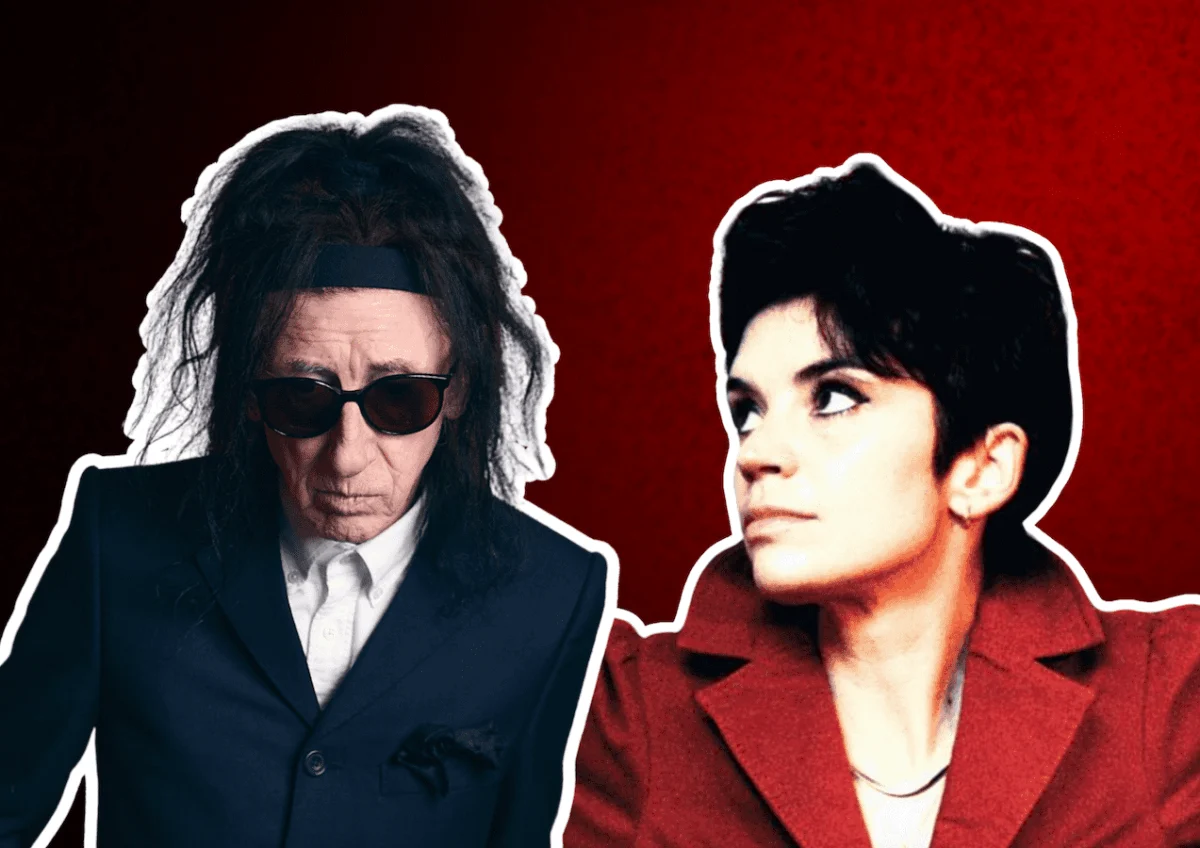
The luminary poet John Cooper Clarke, known for his distinctive, languid Lancashire drawl, has issued a stark warning and a profound marvel regarding the burgeoning capabilities of artificial intelligence. In a recent candid conversation, Clarke, whose career has been defined by his singular worldview and electrifying performances, expressed an almost visceral apprehension about AI’s creative potential, particularly in the realm of poetry. His stark declaration, "I’m shit scared," encapsulates a sentiment that is rapidly gaining traction across creative industries worldwide.
This startling revelation emerged during a discussion with Gabi Garbutt, a rising lyrical alt-pop artist whose own work is celebrated for its surreal imagery and poignant exploration of modern themes. The exchange, facilitated by CLASH magazine, took place following Clarke’s triumphant, sold-out performance at the 11,000-capacity Co-op Live arena and in anticipation of his new poetry collection, "Have It." The conversation delved into the evolving landscape of creative expression, touching upon AI, the symbiotic relationship between poetry and music, and the very definition of artistry in the digital age.
AI’s Creative Prowess: A Personal Encounter
Clarke recounted a personal experiment that underscored his apprehension. Fresh from a family visit to Graceland, the spiritual home of Elvis Presley, he was in his studio when he decided to test the limits of an AI system. His prompt was simple yet direct: "give me a poem about Elvis in the style of John Cooper Clarke." The response, he claims, was not only swift but unnervingly accurate.
"Within three seconds… well, I wish I’d written it," Clarke confessed, his voice betraying a genuine sense of awe and perhaps even a touch of professional unease. The AI’s ability to not only capture the essence of Elvis Presley but to flawlessly emulate Clarke’s unique cadence, thematic preoccupations, and characteristic wordplay left him deeply impressed and, as he admitted, frankly terrified. This demonstration, he posits, is not an isolated incident but a harbinger of a significant shift in how creative content might be generated and perceived.
The implications of this are far-reaching. For decades, John Cooper Clarke has cultivated a reputation for an inimitable perspective, a singular voice that has resonated with audiences through his sharp wit, social commentary, and masterful command of language. The idea that a machine can, with such apparent ease, replicate this distinct artistic fingerprint raises fundamental questions about originality, authorship, and the very human element that has historically defined artistic creation.
The Human Element vs. Algorithmic Precision
Gabi Garbutt, while acknowledging the impressive technical feat, offered a counterpoint rooted in the intrinsic value of human experience. "I highly doubt the AI poem was better than you," she stated, emphasizing the "human desire to connect with somebody else" and the nuanced process of word selection that stems from lived experience. "There’s something about the human desire to connect with somebody else, and the process that helps you choose the words you choose, that’s the magic. I don’t think a machine can really replicate that."
Clarke, however, pushed back, suggesting that these advanced algorithms might possess a capacity for sensation that surpasses human comprehension. "These supposedly-soulless robots experience sensations 50 times more intense than what we call love," he mused, a statement that further amplifies the unsettling nature of his AI encounter. This assertion hints at a future where the perceived emotional depth of AI-generated art could be, in its own way, profoundly compelling, even if its origins are purely computational.
Can Pop Lyrics Be Poetry?
The conversation naturally evolved to explore the often-debated boundary between pop lyrics and poetry. Garbutt, as a musician who prioritizes lyrical content, sought Clarke’s expert opinion. "I feel like poetry and lyrics are such human things? I prioritise my lyrics in my songs – the imagery and intention of the words, but also the sounds and rhythms. I’ve been told there’s poetic sensibility to them. Do you think pop lyrics can be poetry?"
Clarke’s response was characteristically direct: "My answer is always the same. Sure, why not?" He drew a parallel to the work of Paul Anka, a popular singer-songwriter from the mid-20th century, noting that Anka himself admitted his work wasn’t Shakespearean. Clarke champions a pragmatic view: "But it’s horses for courses, isn’t it?" This perspective suggests that artistic merit should be judged within its own context and for its intended audience.
He elaborated on the power of accessible language, noting, "Words that are colloquial and everyday strike straight to the heart, because they’re words people have heard in their own mouths." This underscores a key principle of effective songwriting and poetry: relatability. Clarke’s advice to aspiring creatives is pragmatic: "Nobody likes a clever dick. If you want to be a professional poet, or whatever, remember that. Nobody likes a clever dick. Good stuff often sounds mundane. That’s the knack of it. Unforgettable lines arise from everyday experience. You’ve got to be great to come up with stuff like that. But hide the working." This echoes the sentiment of making complex ideas or emotions appear effortless, a hallmark of masterful artistic expression.
Clarke lauded Chuck Berry as an exemplar of this approach, praising his "vocabulary" and his ability to "make the fucker up" if a word didn’t exist for his intended meaning. This highlights the inventive spirit that drives both poetic and lyrical endeavors, pushing the boundaries of language itself.
Garbutt shared her own approach, citing a line from her forthcoming album: "axolotls, ocelots and other unlikely creatures." She explained her fascination with "vivid, unexpected detail" but stressed the importance of avoiding "cleverness for its own sake," emphasizing the sonic qualities of words as well. Clarke agreed, stating, "Well, You’ve got to be smarter than the average punter I suppose." This acknowledges the subtle intellectual engagement that can elevate lyrics and poetry beyond mere pleasantries.
The Symbiotic Dance: Poetry and Music
The conversation delved into the intricate relationship between music and poetry, particularly when poems are set to music. Clarke revealed that musical collaborations weren’t always his initiative but often pushed him "out of your comfort zone." He cited the genesis of his hit song "I Wanna Be Yours," which was written in the studio, a process that proved "very good business" for him.
The success of Alex Turner, the frontman of Arctic Monkeys, in adapting Clarke’s "I Wanna Be Yours" to a broader audience through music, was also discussed. Clarke expressed no resentment, stating, "I don’t blame him. And he certainly smuggled some poetry into that world." This highlights how music can act as a powerful conduit for poetic expression, reaching listeners who might not otherwise engage with poetry in its pure form.
Garbutt described her own creative process for her track "Deep Sea Creatures," where she and co-producer Matt Arthur used synths to evoke the imagery of marine life. Clarke recognized the power of this sonic translation: "You can’t compete with music. Music is a shorthand for emotion." He acknowledged Garbutt’s musicality, noting that "All that underwater stuff sounds great. A lot of poems can never be songs. You’ve got to put all the furniture in there to make it work." This metaphor of "furniture" suggests the need for sonic and structural elements that complement and elevate the lyrical content when translating poetry into song.
The "Uselessness" and Social Purpose of Poetry
Clarke’s assertion that "The defining nature of poetry is uselessness. It wouldn’t actually matter if nobody wrote another poem ever again" is a provocative statement that challenges conventional notions of art’s utility. However, he quickly qualified this by acknowledging the role of poetry in cultivating empathy and understanding. Garbutt’s example of "Beasley Street," a poem that vividly depicts the lives of ordinary people, serves as a potent counter-argument. Clarke conceded, "You’re right. I think you’re right. There’s a case in point."
He then offered a nuanced interpretation of "Beasley Street," highlighting its blend of gritty realism with "cartoony, off-the-wall shit," a juxtaposition that contributes to its enduring appeal. Garbutt identified this as a key element of creative expression: "the juxtaposition of tones. Something morbid beside something funny, something outlandish beside something everyday." Clarke summarized this as the critical importance of "tension and attention to detail."
The Evolving Mediums of Poetry
The proliferation of poetry on platforms like TikTok was also a point of discussion. Clarke, with a touch of wry humor, stated, "I can’t help but feel responsible. There weren’t none of this shit available when I started out. Respect. That’s all I’m looking for. Just a little respect." This highlights the generational shift in how poetry is consumed and created, with digital platforms democratizing access and distribution.
Despite the digital revolution, Clarke maintained his perspective on poetry as a fundamentally phonetic medium. "For me it’s always been a phonetic medium," he stated. He detailed his career path, emphasizing recitals and live performance as the primary mode of engagement, viewing his work as part of the "entertainment business." He argued that a book of poetry should ideally be read aloud, treating it as a form of music.
He shared an anecdote about the evolution of his poem "Evidently Chickentown," which was originally influenced by a wartime song. He explained how, during a performance in New York, he had to adapt the word "bloody" to "fucking" to convey its intended meaning to an American audience. This illustrates the dynamic nature of language and performance, where context and audience necessitate adaptation. "It’s so obviously better," he reflected on the change, lamenting the perceived oversight.
Inspiration in Repetition and Motion
The conversation touched upon the sources of inspiration for creative work. Garbutt mentioned her interest in cycling and how the "pace of life, the pace at which you move through a city" can spark ideas, likening the rhythm of wheels to massaging words into place. Clarke resonated with this, drawing parallels to his own experience working in the printing industry. "The rhythm of the machines, the rhythm of the presses," he noted, served as a catalyst for his writing. This underscores the idea that repetitive, almost meditative activities can unlock creative pathways.
The concept of metaphor, as articulated by writer Jay Griffiths, was also explored. Clarke offered a pithy, self-referential addition to this discussion: "As the poet John Cooper Clarke said: depression is the mother of the metaphor." This suggests that moments of introspection or struggle can be fertile ground for profound linguistic expression.
The Enduring Obsession of the Artist
As the conversation neared its close, Clarke reiterated his dedication to his craft, admitting, "I wouldn’t want you to think I’m obsessive, but I’m fixated, for sure." This fixation, he implied, is essential for completion. He concluded with a philosophical nod to W.H. Auden’s famous quote: "a poem is never finished, merely abandoned." This sentiment encapsulates the ongoing nature of creative endeavor and the personal decision to deem a work complete, even if it could theoretically be endlessly refined.
The exchange between John Cooper Clarke and Gabi Garbutt offers a compelling snapshot of the contemporary creative landscape. It highlights the anxieties and excitements surrounding AI’s rapid advancement, reaffirms the enduring power of human artistry, and explores the multifaceted connections between poetry, music, and the very act of communication. Clarke’s initial fear of AI, while potent, is tempered by a deep understanding of the human impulse to create and connect, a drive that continues to define the artistic spirit.
Gabi Garbutt’s album "Radical Love" is scheduled for release on June 19th via INH Records, with a launch show on June 18th at Paper Dress Vintage in London. John Cooper Clarke’s new book, "Have It," is set for publication on October 1st.