Mia Khoirunisa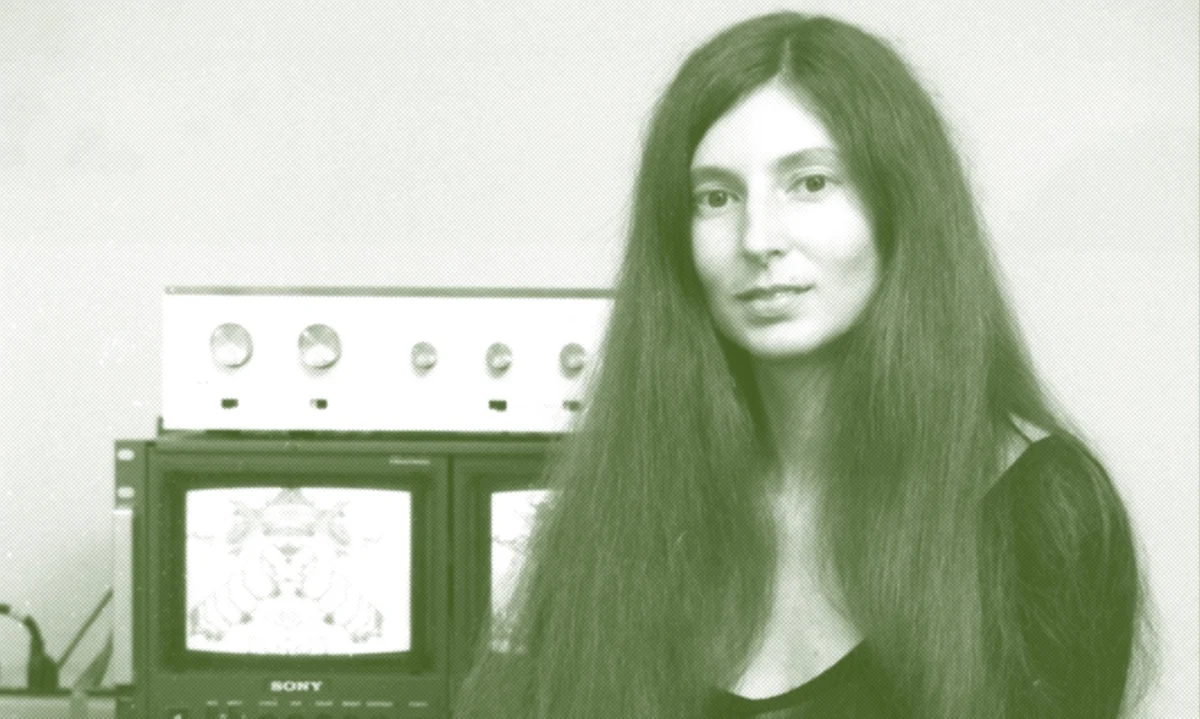
Texas-born composer Maggi Payne has quietly, yet profoundly, carved a distinguished path through the annals of experimental electronic music over several decades. Her association with Mills College, where she served as co-director of the Center for Contemporary Music until 2018, has cemented her reputation within academic and artistic circles. For those yet unfamiliar with her transformative work, a deeper exploration is not only warranted but highly recommended, particularly as a means to appreciate the intricate, ethereal textures she masterfully crafts, often utilizing the iconic Moog modular Series III. This suggestion originates from the esteemed Bob Moog Foundation, an organization dedicated to preserving and celebrating the legacy of electronic music pioneer Bob Moog.
The Bob Moog Foundation, a vital custodian of analog synthesis history, plays a crucial role in nurturing the next generation of sonic innovators. Michelle Moog-Koussa, the Foundation’s Executive Director, embodies this mission. Her presence at events like Superbooth, a premier synthesizer and electronic music trade show, underscores her commitment to fostering connections within the global electronic music community. Moog-Koussa’s dedication extends beyond safeguarding her father’s legacy; she actively champions the expansive potential of music as a force for education and scientific understanding, a message particularly resonant in contemporary times when both disciplines face significant challenges.
A recent highlight shared by an insightful member of the Bob Moog Foundation’s team offers a compelling entry point into Payne’s oeuvre: an excerpt from her 1982 composition, "Crystal." This piece is accompanied by Payne’s own visual artistry, featuring shifting, rainbow-hued crystal photography. As noted by Geeta Dayal in her writings for the LA Phil, these visuals are not mere accompaniments but integral components, comprising "handmade videos of crystals growing under a microscope and data of solar winds provided by one of NASA’s top physicists, the late Fred Scarf." This fusion of scientific data and artistic interpretation exemplifies Payne’s signature approach, one that seamlessly bridges intellectual curiosity with profound sonic imagination. The very act of listening to "Crystal" can ignite a spark of inspiration, prompting listeners to consider the vast possibilities offered by modular synthesizers.
A Multifaceted Career: From Flutist to Electroacoustic Pioneer
Payne’s trajectory from a student at Mills College to a faculty member reflects a consistent dedication to the evolution of sound. Her early background as a flutist provided a foundational understanding of melody and timbre, which she has since expanded into the complex realm of electroacoustic composition. Her prolific output encompasses a wide range of experimental electronic sound art, often anticipating trends that have since become prominent on the international scene. Examining biographical accounts of her career reveals a breadth of work that is both fascinating and prescient, showcasing an artist consistently at the forefront of sonic innovation.
"Crystal" (1982): A Synthesis of Vision and Sound
The 1982 composition "Crystal" stands as a testament to Maggi Payne’s pioneering spirit. The work’s genesis lies in her deep engagement with the visual and the scientific. The accompanying imagery, derived from microscopic observations of crystal growth and solar wind data from NASA, imbues the audio component with a rich layer of meaning. The use of the Moog modular Series III, a sophisticated analog synthesizer known for its expansive sonic palette and complex patching capabilities, allowed Payne to create the distinctive, shimmering textures that define "Crystal." This instrument, itself a landmark in the history of electronic music, provided the perfect vehicle for Payne’s exploration of sonic landscapes that mirrored the intricate formations of crystals and the dynamic forces of space.
The selection of data from Fred Scarf, a renowned physicist specializing in solar wind, highlights Payne’s commitment to interdisciplinary collaboration and her desire to translate scientific phenomena into audible experiences. This approach aligns with a broader movement in experimental music that seeks to engage with scientific concepts, moving beyond purely abstract sonic exploration to incorporate empirical observations and theoretical frameworks. The "handmade videos" further underscore a dedication to craft and a personal touch, a characteristic often found in the most impactful artistic endeavors.
The reissue of "Crystal" in 2017 by Aguirre Records brought this seminal work to a new generation of listeners and underscored its enduring relevance. Reviews from the time, such as those found on The Hum blog, celebrated the reissue, recognizing "Crystal" as a significant contribution to the electroacoustic canon and a prime example of Payne’s distinctive sonic vocabulary.
"System Test (Fire and Ice)" (2001): A Visual and Auditory Exploration
Further illustrating Payne’s expansive artistic vision is her 2001 audiovisual work, "System Test (Fire and Ice)." This 12-minute film, shared in its entirety with The Wire magazine, exemplifies her ability to integrate sound and image into a cohesive and immersive experience. The piece likely explores contrasting elements, as suggested by its title, potentially juxtaposing the elemental forces of fire and ice to create a dynamic and thought-provoking narrative. Such works are crucial for understanding the evolution of multimedia electroacoustic art, where the visual dimension is not an afterthought but an integral partner to the sonic composition. The very nature of sharing such a work with a publication like The Wire, known for its deep engagement with avant-garde and experimental music, speaks to the significant impact and recognition Payne’s work has garnered within these specialized communities.
"Arctic Winds" (2020): A Contemporary Reflection of Cosmic and Terrestrial Forces
More recently, Payne’s 2020 composition, "Arctic Winds," showcases her continued innovation. This work is notable for its unique source material, drawing from location recordings that include the sounds of "dry ice, space transmissions, BART trains, and poor plumbing." This eclectic mix of the natural, the technological, and the mundane creates a sonic tapestry that blurs the lines between the microscopic and the macroscopic. The composition evokes a sense of immersion, where disparate elements coalesce into a unified auditory experience. The comparison of "Arctic Winds" to Charles and Ray Eames’ iconic film Powers of Ten is particularly apt. Powers of Ten famously takes viewers on a journey from the macroscopic scale of the universe down to the subatomic level, demonstrating the interconnectedness of all things. Payne’s work, through its ingenious blending of diverse sonic elements, achieves a similar effect, inviting listeners to perceive the universe through a unique auditory lens, where the cosmic and the terrestrial become indistinguishable.
The Bob Moog Foundation: A Beacon for Electronic Music Heritage
The continued engagement of the Bob Moog Foundation with artists like Maggi Payne is vital for the preservation and evolution of electronic music. The Foundation’s initiatives, such as the Moogseum and Dr. Bob’s Sound School, provide invaluable resources for education, historical preservation, and artistic development. In an era where digital ubiquity can sometimes overshadow the tactile and experimental nature of analog synthesis, the Foundation’s work ensures that the pioneering spirit of Bob Moog and the rich history of electronic music remain accessible and influential. Their support for artists who continue to push the boundaries of sound, drawing inspiration from the very instruments and philosophies that defined early electronic music, is a critical component of the cultural landscape. The Foundation’s call for support is more pertinent than ever, as they continue to champion the intricate relationship between technology, artistry, and scientific inquiry.
The work of Maggi Payne, as exemplified by pieces like "Crystal" and "Arctic Winds," demonstrates a profound understanding of sound as a medium capable of conveying complex scientific ideas and evoking deep emotional responses. Her career, spanning from the formative years of electroacoustic music to its contemporary manifestations, serves as a powerful reminder of the enduring impact of artistic vision and technological exploration. As the Bob Moog Foundation continues to illuminate the path for future generations, the contributions of artists like Maggi Payne stand as foundational pillars, inspiring a deeper appreciation for the boundless possibilities of sound.