Muhammad Ibadurrohman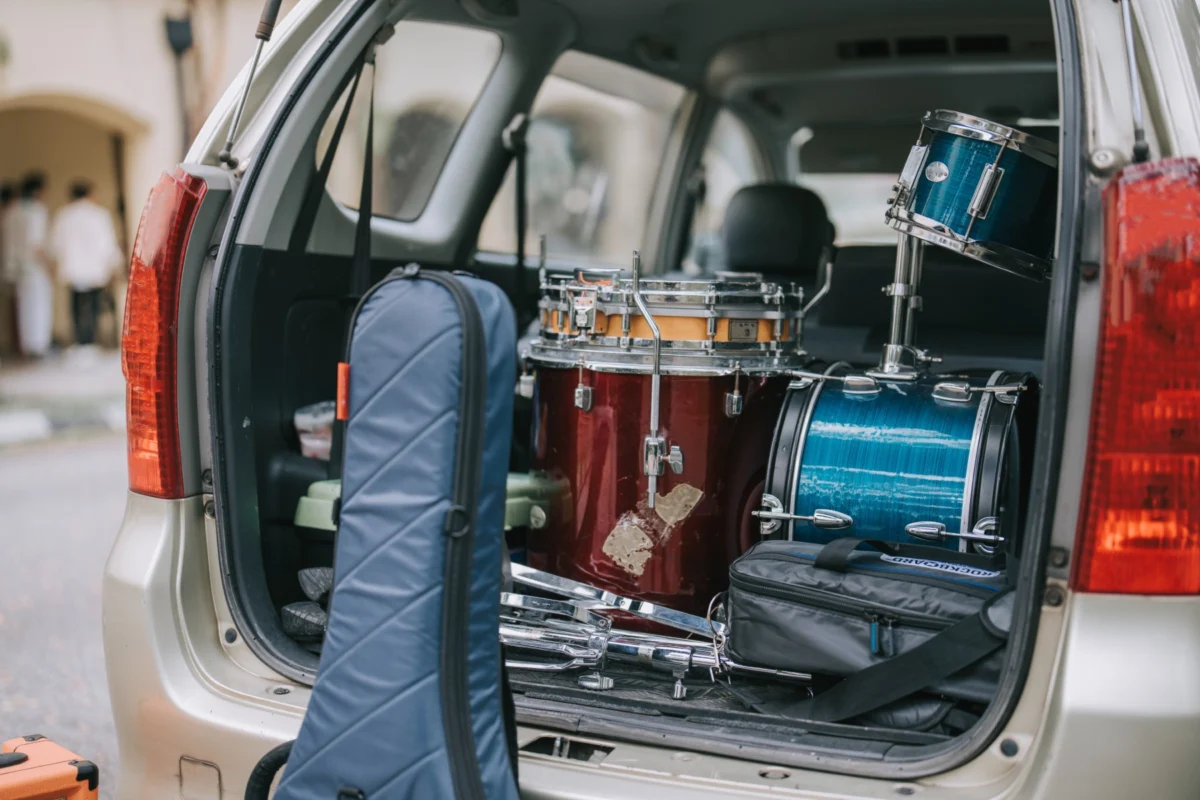
Just when Whitney Smith felt she’d finally gotten a handle on touring costs in the post-COVID landscape, skyrocketing fuel prices threw everything back into disarray, plunging the live music industry into a fresh wave of economic uncertainty. The delicate balance that artists and their teams had painstakingly re-established since the pandemic’s disruption has been upended by a sudden and dramatic surge in transportation expenses, threatening the viability of tours across all scales.
The catalyst for this latest economic shockwave reverberating through the music world is a significant geopolitical development. On February 28, a series of military strikes by the U.S. and Israel against targets in Iran led to a retaliatory measure by the Iranian government: the closure of the Strait of Hormuz. This critical waterway, nestled between the Persian Gulf and the Gulf of Oman, is a maritime chokepoint through which approximately 20% of the world’s total petroleum consumption, and a substantial portion of its liquefied natural gas, passes. Its closure immediately triggered a sharp reaction in global energy markets.
The Geopolitical Spark and Economic Fallout
Prior to the strikes, the global benchmark for oil, Brent crude, had been trading at approximately $70 a barrel. In the immediate aftermath of the Strait of Hormuz closure, data from the U.S. Energy Information Administration (EIA) reveals a dramatic escalation, with Brent crude prices soaring to over $100 a barrel – an increase of more than 40%. This rapid and substantial jump in crude oil prices has directly translated into a roughly 50% increase in fuel costs across the United States. For an industry heavily reliant on transportation, this surge has had immediate and severe consequences.

Whitney Smith, the director of touring for full-service artist management company Alternate Side, articulated the widespread sentiment of disarray. “I feel like we’ve just been starting to get to a place where we’re forecasting what things are going to cost more accurately again,” she lamented. “And then with these rising fuel prices, that’s thrown a lot into uncertain territory again, to put it mildly.” This sentiment underscores the fragility of touring economics, where even minor price fluctuations can significantly impact profitability, let alone an unprecedented spike of this magnitude.
The live music ecosystem relies fundamentally on robust and reliable transportation networks. Tour buses, freight trucks carrying equipment and merchandise, and commercial and private flights are the arteries of this industry. Diesel, the primary fuel for tour buses and heavy-duty trucks, and jet fuel for aircraft, have seen their costs inflate dramatically. While marginal price variations are a normal component of budgeting, the near-unprecedented scale of this increase has forced touring transportation companies to implement hefty surcharges. For artists already grappling with the residual cost escalations from the post-COVID recovery period – including increased labor, equipment, and venue costs – this latest surge in fuel prices represents yet another significant blow to their already tight bottom lines.
The Direct Impact on Tour Logistics and Budgets
The repercussions are felt immediately by the companies providing these essential services. Rich Thomson, founder and CEO of Dreamliner Luxury Coaches, which boasts a formidable fleet of 220 tour buses and 70 trucks, highlighted the cumulative pressure. “Since COVID… the cost of transportation and just touring in general is up a ton,” Thomson stated. He added that the current fuel price surge is “crushing” artists who are already diligently trying to cut costs and find cheaper ways to tour.
Nick Weathers, owner of Egotrips, another key player with 12 tour buses and 35 trucks, confirmed the direct financial hit. His company has been compelled to tack on surcharges ranging from 25 cents to 35 cents per mile. “That can add up on a 15, 20 truck tour,” Weathers explained, quantifying the impact in “thousands of dollars.” For many touring acts, particularly those operating on razor-thin margins, these additional costs can be the deciding factor between realizing a modest profit or suffering a financial loss. Weathers recounted a recent interaction: “I [recently] had someone reach out for a tour bus quote… And I sent the quote back, and the guy just vented… He’s like, ‘If we took this bus, we would make zero money on the tour.’” This anecdote starkly illustrates the immediate and painful reality confronting artists and their management teams.

The timing of this crisis is particularly challenging for artists who were either already mid-tour or had finalized contracts and committed to tours before the conflict erupted. Their budgets, meticulously planned months in advance, were predicated on vastly different fuel price assumptions. “We negotiate our contracts with our bus companies months in advance, and our fuel rate is based on average price, and we budget off that price,” Smith explained. The sheer unpredictability and magnitude of the current spike meant there was no way to plan for it. Consequently, she added, “When something like that jumps up so much unexpectedly, you’re just absorbing that cost.” This absorption of unforeseen expenses directly erodes anticipated profits, leaving artists financially vulnerable.
Beyond Road Travel: Airfare and Freight Disruptions
The impact of rising fuel costs extends beyond ground transportation, significantly affecting air travel. For artists who rely on “fly dates”—traveling by commercial or private plane between engagements—the cost of airfare has also seen a substantial increase since the war broke out. Weekly data from travel website Kayak.com indicates that the price of a domestic plane ticket on commercial flights has risen by 13%, while international tickets have surged by an alarming 55%. This directly translates to higher operational costs for tours incorporating air travel.
With no immediate resolution to the geopolitical conflict in sight, tour managers are adopting proactive strategies to mitigate these rising costs. Peyton Marek, a manager at Challenger Artists (the management division of Mammoth Live), representing bands such as TOLEDO and Post Sex Nachos, noted the shift towards early booking. “If you have a one-off fly date for a college show… booking flights as far in advance as we can is the move,” he stated, attempting to lock in prices before they climb further.
The ripple effect of increased fuel prices also extends to freight shipping, impacting everything from merchandise delivery to stage equipment transport. One less-obvious consequence has been a decrease in the reliability of shipping timelines, particularly for ocean freight. To conserve fuel and mitigate higher costs, cargo ships have been reducing their speeds. Jason Danter, a seasoned production manager who has worked with global superstars like Lady Gaga and Justin Bieber, highlighted how this exacerbates the inherent unreliability of ocean freight, which is generally a cheaper but slower alternative to air freight. He described the frustration when business management opts for ocean shipping to save costs, only to face delays: “‘We can, as long as you’re good when I phone you and say, It’s on the water, it’s going slower, it’s now added another stop which wasn’t scheduled, we won’t make it for the first show,’” Danter illustrates the grim reality. “And then they go, ‘Well, that’s no good.’”

Further complicating global logistics, Justin Carbone, executive VP of live touring at Rock-It Cargo, noted that the conflict in Iran has led cargo ships to reroute, avoiding the Middle East entirely. These longer routes, while sometimes mitigatable with “proper planning,” inevitably add days to shipping times and further increase fuel consumption and associated costs, adding another layer of complexity to tour planning and execution.
Disproportionate Impact on Emerging and Mid-Level Artists
While the fuel price spikes will inevitably affect tours of all magnitudes—from intimate club acts to massive stadium spectacles—there is a broad consensus among industry experts that smaller to mid-level artists will bear the brunt of the economic pressure. Doug Oliver, general manager at Pioneer Coach, succinctly put it: “The artists at the club level, their grosses are just less, and so the margins are tighter, and they’re gonna feel it more.” He contrasted this with larger tours, acknowledging they will also feel the pinch, but asserting that for smaller bands, the impact will be "more real."
Whitney Smith offered a nuanced perspective, expressing slightly more concern for “middle-class acts” than for the very smallest artists. Her reasoning is that mid-level artists typically operate with higher overheads and face greater expectations from their growing fan bases to deliver more elaborate and visually engaging shows. “With lower costs to put a show on… it might be a little bit different for a baby artist than a band that’s trying to continue what they’ve built already, or get to a bigger point, because those people have a lot of built-in expenses and have to put on a bigger show in many ways,” she explained. These acts are often caught between the financial constraints of emerging artists and the production demands of established headliners, making them particularly vulnerable to unforeseen cost escalations.
Artist manager Ari Fouriezos, who works with acts like Caroline Rose, Julia Jacklin, and Cassandra Jenkins at Friendly Announcer, voiced a significant concern about the long-term health of the industry: the potential for higher fuel prices to further discourage new acts from touring. “I worry for the future generation of indie bands that are coming up right now,” she stated. Fouriezos observed that these bands have felt increasingly alienated from touring for years due to accessibility issues. “I think stuff like this is just adding fuel to the fire,” she concluded, highlighting the potential for a chilling effect on artist development and fan engagement at the grassroots level.

Creative Strategies for Survival and Sustainability
Faced with a relentless onslaught of post-COVID cost increases and now exacerbated by soaring fuel prices, many tours are being forced to innovate and adopt creative strategies to remain financially viable. Multiple artist managers interviewed by Billboard revealed a growing reliance on enhanced fan experiences. Where appropriate, they are leaning into offering VIP ticket packages, which include exclusive perks such as meet-and-greets, sound check parties, and limited-edition merchandise items. This strategy aims to maximize revenue per fan, offering added value that justifies a higher price point and helps offset rising operational costs.
Fouriezos also noted a trend towards artists becoming “more hyper-local” in their touring approach. Instead of embarking on costly cross-country tours, many are focusing on performing in their immediate geographic locations or strategically planning shorter, regional runs. This minimizes travel expenses and allows for more efficient use of resources.
With her artist Caroline Rose, Fouriezos outlined a specific and innovative strategy for an upcoming summer tour: booking multiple nights in the same city, and in some instances, even two shows in the same night at the same venue. This approach drastically reduces travel costs between dates. Furthermore, for several stops on the tour, they have opted to rent venues directly, giving them greater control over ticketing. In this scenario, they are betting on Rose’s ability to sell out these shows, which, Fouriezos projects, would yield “slightly more” profit than the traditional promoter-driven route. This direct-to-fan model eliminates the added fees typically levied by major ticketing companies like Ticketmaster or AXS. This benefit has been actively promoted to Rose’s followers on social media, emphasizing that fans are supporting the artist directly and potentially saving on ticket fees. Fouriezos believes this resonates with audiences: “Everyone is more price sensitive right now, but more willing to spend their hard-earned money if they are confident it’s supporting their favorite artists” versus a large corporation.
Beyond revenue generation, significant efforts are also being made to cut production costs. Rich Thomson of Dreamliner Luxury Coaches mentioned that some clients have recently paused tour confirmations as they meticulously scrutinize every line item for potential savings. “Conversations are just going to get tougher and more about, ‘Where can we cut? Let me see every line item,’” he observed. This intense focus on cost-cutting predates the current fuel crisis, stemming from the general increase in transportation costs, but the present situation has undeniably amplified its urgency.

The Delicate Balance of Passing Costs to Fans
A more direct, albeit contentious, method of addressing rising costs is to pass them on to fans. However, for tours already underway, raising ticket prices mid-run is generally not feasible due to contractual obligations. “A lot of their contracts are priced in, and they can’t raise the price of concert tickets,” explained Doug Oliver. For tours still in the planning stages that could adjust prices, it presents a tricky balancing act in an economic climate where consumers are already facing increased costs for virtually everything, from groceries to their own fuel tanks.
Peyton Marek underscored the broader financial burden on concertgoers: “Not only are fans having to pay for tickets, but oftentimes it’s the parking as well, and drinks, and maybe it’s merch and dinner before, or if [it’s] an older demographic, you’re having to pay for a babysitter.” These ancillary costs accumulate quickly, making fans increasingly sensitive to any further increases in ticket prices.
Merchandise, often a crucial revenue stream for artists, is another area where price adjustments could theoretically be made. However, Whitney Smith cautions against this. “Theoretically, we could raise prices on merch, but again, fans are pretty price sensitive when the cost of living increases,” she noted. The concern is that raising merch prices too aggressively could negatively impact both merch sales and potentially even future ticket sales, making it a strategy that requires extreme caution and careful consideration.
Outlook and Potential Paradigm Shifts

The consensus among industry experts is grim: even if the Strait of Hormuz were to reopen tomorrow, fuel prices are likely to remain elevated for at least the remainder of the year. This means the touring industry is bracing for several more months, if not longer, of inflated operational costs and continued financial strain.
Despite the immediate challenges, Ari Fouriezos sees a potential silver lining in this arduous situation. She believes that the intense economic pressure will force artists and their teams to embrace even greater creativity and ingenuity. This could, in turn, lead to the development of new paradigms for a touring market that has grown increasingly challenging for artists over the past several years. “I hope that other people will be inspired to think outside the box… and question the norms and be like, ‘How can we do things a little bit differently?’” she mused. Fouriezos acknowledges the difficulty of this path: “And it’s not easy. It’s actually really, really hard to do things like that.”
Indeed, the current crisis may serve as a critical inflection point, accelerating innovation in tour planning, fan engagement, and revenue diversification. It may compel the industry to re-evaluate traditional models, fostering a more resilient and sustainable ecosystem for artists and their invaluable connection with live audiences, even amidst global instability. The road ahead for live music touring remains fraught with economic challenges, but it also presents an opportunity for transformative change.



![Sijya announces Leather and Brass [Retrofitted] EP, shares Do I Know [Rachika Nayar Edit]: Listen](https://empire-music.net/wp-content/uploads/2026/09/sijya-announces-leather-and-brass-retrofitted-ep-shares-do-i-know-rachika-nayar-edit-listen.webp)