Johan Budi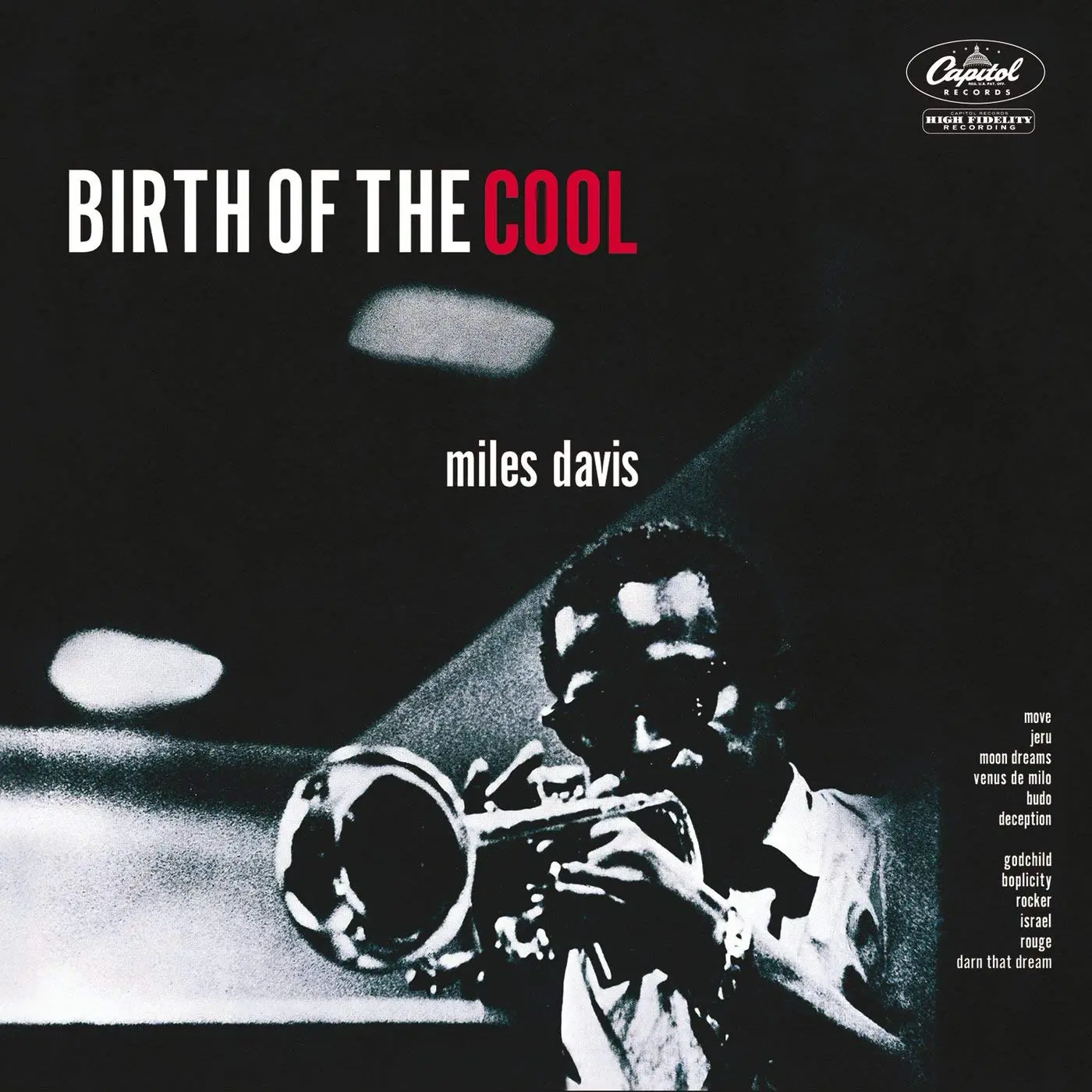
The mid-1960s represented a pivotal moment for the preservation of jazz history, as major labels began to recognize the enduring value of recordings that had transitioned from contemporary experiments to foundational pillars of the genre. In May 1966, the reissue of Miles Davis’s Birth of the Cool by Capitol Records marked a significant archival event. This collection, which compiled three distinct sessions recorded between 1949 and 1950, provided a definitive look at a period of intense creative fermentation. While the 1966 repackaging was praised for its aesthetic presentation and expanded liner notes, it also sparked a discourse among critics and historians regarding the completeness of the Davis discography and the technical evolution of the trumpeter himself.
The significance of these recordings lies in their departure from the dominant bebop paradigm of the late 1940s. While bebop emphasized rapid tempos, virtuosic soloing, and a stripped-back "unison" approach to themes, the Davis Nonet sought a more balanced relationship between the soloist and the ensemble. By integrating instruments rarely seen in small jazz groups—specifically the French horn and the tuba—Davis and his collaborators created a "chamber jazz" sound that prioritized texture, color, and sophisticated harmonic movement.
The Genesis of the Nonet and the 1948 Royal Roost Engagement
The historical trajectory of Birth of the Cool began well before the musicians entered the studio. The conceptual framework for the group was born in the basement apartment of arranger Gil Evans, which served as a salon for forward-thinking musicians. The goal was to achieve a sound similar to the Claude Thornhill Orchestra but within the constraints of a smaller, more mobile ensemble.
In September 1948, the Davis Nonet secured a two-week engagement at the Royal Roost Club in New York City. This residency is often cited by historians as the crucible in which the "cool" sound was forged. During this period, several performances were broadcast over local radio networks, providing a rare glimpse into the live energy of the group. These broadcasts featured a lineup including Davis, trombonist Mike Zwerin, Junior Collins, Bill Barber, Lee Konitz, Gerry Mulligan, John Lewis, Al McKibbon, and Max Roach.
The repertoire during these live sets included early versions of "Move," "Why Do I Love You," "Godchild," "S’il Vous Plait," "Moon Dreams," and "Hallucinations." For decades, these fragments remained in the hands of private collectors on acetate discs. The 1966 reissue renewed interest in these "priceless fragments" of the bop era, highlighting a desire among the jazz community for a more comprehensive release of all extant Davis materials from this formative period.
A Chronological Breakdown of the Birth of the Cool Sessions
The studio recordings that comprise the Birth of the Cool LP were captured across three separate sessions, each reflecting slight shifts in personnel but maintaining a consistent aesthetic vision.
Session One: January 21, 1949
The first session produced "Move," "Jeru," "Budo," and "Godchild." The lineup featured Miles Davis (trumpet), Kai Winding (trombone), Junior Collins (French horn), Bill Barber (tuba), Lee Konitz (alto sax), Gerry Mulligan (baritone sax), Al Haig (piano), Joe Schulman (bass), and Max Roach (drums). This session established the group’s signature sound, characterized by the light, vibrato-less tone of Konitz and the grounding presence of Barber’s tuba.
Session Two: April 22, 1949
The second session saw the introduction of J.J. Johnson on trombone and Kenny Clarke on drums, with John Lewis taking over the piano chair. This date produced "Venus De Milo," "Boplicity," "Israel," and "Rouge." "Boplicity," arranged by Gil Evans (though credited to "Cleo Henry," a pseudonym for Davis’s mother), is frequently cited as the quintessential example of the group’s harmonic sophistication.
Session Three: March 9, 1950
The final session included Gunther Schuller on French horn and Al McKibbon on bass. The tracks recorded were "Moon Dreams," "Deception," "Rocker," and "Darn That Dream." The latter featured a vocal by Kenny Hagood, which became a point of contention in the 1966 reissue.
Archival Omissions and the "Darn That Dream" Controversy
When Capitol Records repackaged the sessions in 1966, they marketed the release as a definitive collection. However, jazz scholars and contemporary critics noted a significant omission: the twelfth track, "Darn That Dream." Despite Capitol’s claims in the liner notes that the track had never been issued on a long-playing record, evidence suggested otherwise.
The vocal performance by Kenny Hagood had appeared previously on a compilation titled Bebop Into Cool (Capitol T 20578), curated by Alun Morgan. The failure to include this track in the 1966 reissue was viewed by some as a missed opportunity to present the complete output of the Davis Nonet in a single, unified volume. This oversight underscored the occasionally fragmented nature of major label archives during the mid-20th century, where commercial repackaging sometimes took precedence over historical completeness.
The Architects of the Cool: Evans, Mulligan, and Lewis
While Miles Davis was the leader and primary catalyst, the "cool" sound was a collaborative triumph of arrangement. The 1966 reissue served to highlight the contributions of four primary arrangers: Gil Evans, John Lewis, Gerry Mulligan, and Johnny Carisi.
Gil Evans provided the atmospheric, impressionistic textures that would later define his and Davis’s legendary 1950s collaborations, such as Miles Ahead and Sketches of Spain. John Lewis, who would go on to lead the Modern Jazz Quartet, brought a sense of formal structure and classical restraint to the arrangements. Gerry Mulligan was perhaps the most prolific contributor to the book, organizing much of the unit and providing arrangements like "Rocker" and "Jeru." Critics in 1966 noted that while Mulligan occasionally dominated the spotlight, his organizational role was essential to the group’s existence.
Johnny Carisi, though contributing only one piece to the sessions, left an indelible mark with "Israel." A blues in a minor key, "Israel" showcased Carisi’s inventive mind and original approach to the medium. The 1966 reappraisal of these tracks often included a plea for Carisi to return to the forefront of jazz composition, citing his work on "Springsville" for the Miles Ahead album as further proof of his genius.
Technical Analysis of Davis’s Performance
One of the most striking aspects of the Birth of the Cool sessions is the visible growth in Miles Davis’s own playing. In the years immediately preceding these recordings, Davis had been a member of Charlie Parker’s quintet. While his work with Parker was historically significant, Davis often struggled with the technical demands of Parker’s blistering tempos and the shadow cast by the trumpeter’s predecessor, Dizzy Gillespie.
In the 1949–1950 sessions, Davis emerged as a musician who had found his own voice. Freed from the requirement to play "faster and higher," he leaned into his strengths: lyricism, middle-register clarity, and a masterful use of space. On tracks like "Budo," Davis synthesizes the rhythmic language of bebop with the melodic sensibilities of the emerging cool style. His solos exhibit a confidence and a "uniquely focused" quality that had been less consistent in his earlier work.
Broader Impact and the Legacy of the Cool
The long-term implications of the Birth of the Cool sessions cannot be overstated. These recordings effectively birthed the "West Coast Jazz" movement, influencing musicians like Chet Baker, Shorty Rogers, and Stan Getz. The emphasis on arrangement and the use of "legit" orchestral instruments paved the way for the Third Stream movement, which sought to bridge the gap between jazz and classical music.
Furthermore, the relationship established between Miles Davis and Gil Evans during these sessions became one of the most fruitful partnerships in the history of American music. It proved that jazz could be "dressed up" and treated adventurously without losing the essential element of improvisatory freedom.
The 1966 reissue, despite its minor archival flaws, reaffirmed the status of these recordings as "incontestable masterpieces." By making this music available to a new generation of listeners in the 1960s—a decade defined by the avant-garde and the rise of fusion—Capitol Records ensured that the foundational principles of the Davis Nonet would remain part of the active jazz conversation.
The sessions remain a testament to the idea that innovation in jazz does not always require more volume or more notes; sometimes, it requires a cooling of the temperature and a more thoughtful arrangement of the silence between them. As the 1966 review concluded, no serious collection of modern music could be considered complete without these recordings, which continue to stand as a bridge between the frantic energy of the early 1940s and the sophisticated modal explorations that would follow in the late 1950s.