Aveline Kirana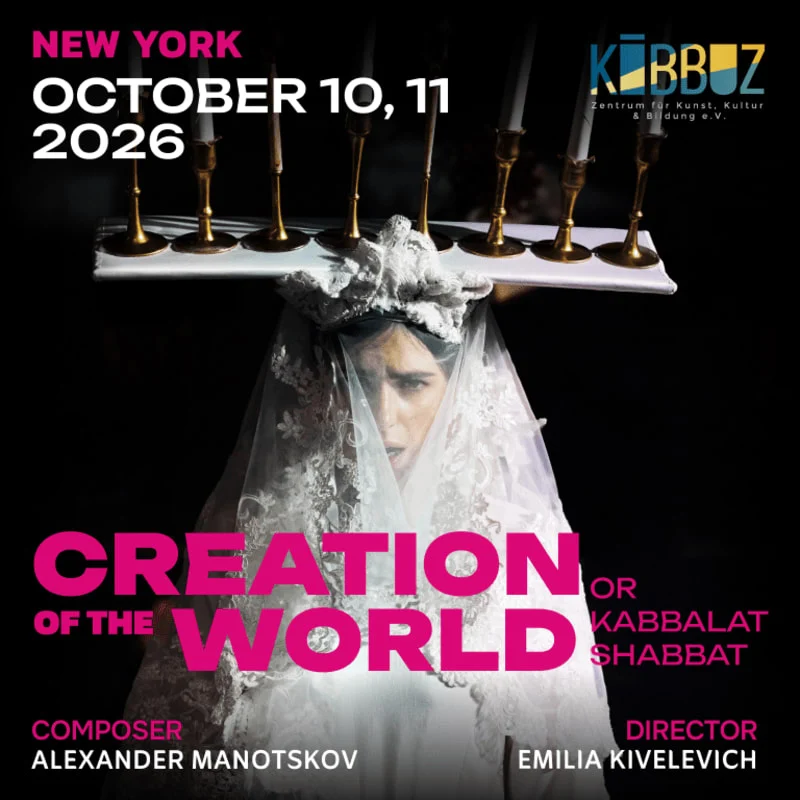
A Conceptual Framework: The Genesis of the Work
At its core, the opera explores the biblical narrative of the six days of Creation, culminating in the sanctification of the seventh day, or Kabbalat Shabbat—the welcoming of the Sabbath. By grounding the libretto in ancient, foundational texts, Manotskov seeks to bridge the gap between primordial creation myths and modern existential inquiry.
The structure of the work is cyclical, mirroring the liturgical rhythm of the Sabbath. In Jewish tradition, Kabbalat Shabbat is a service that marks the transition from the mundane labor of the week to the spiritual sanctity of the day of rest. By translating this theological concept into a theatrical medium, Manotskov invites the audience to experience a transformation of time and space within the confines of the performance venue.
Chronology of Production and European Reception
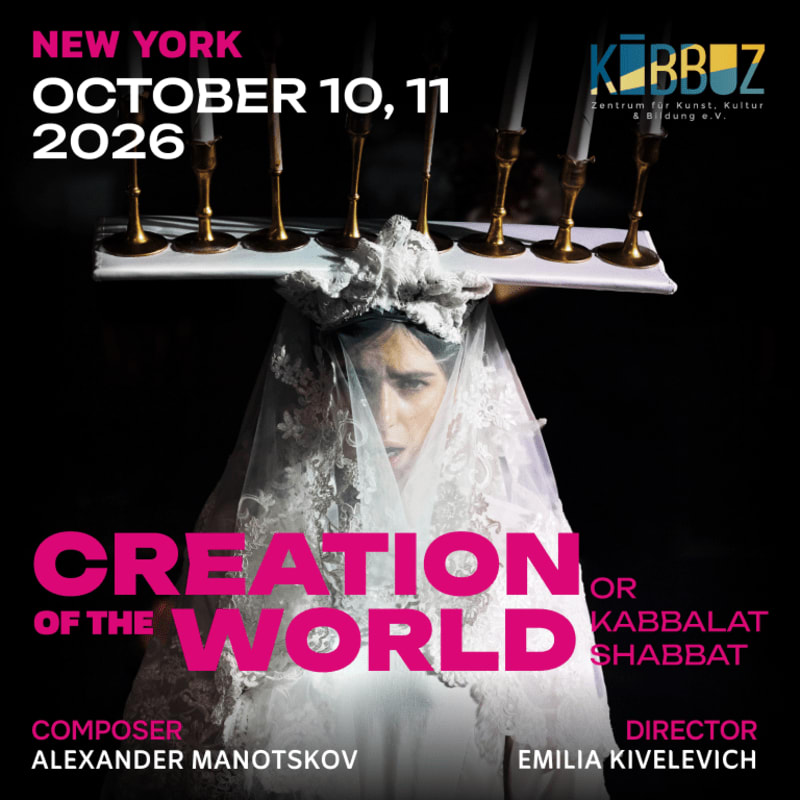
The journey of Creation of the World, or Kabbalat Shabbat from its inception to its upcoming Brooklyn premiere is characterized by a deliberate, international expansion. Before securing its U.S. debut, the production underwent a rigorous development process across Western Europe.
- Developmental Phase (2022-2023): Manotskov finalized the score, focusing on the integration of Hebrew prosody with contemporary orchestral and vocal textures.
- European Tour (2024-2025): The production, helmed by director Emiliia Kivelevich, successfully completed five distinct stagings across Germany and the Netherlands. These performances served as a testing ground for the opera’s minimalist yet expansive aesthetic, earning praise for their ability to convey complex theological concepts without relying on conventional set pieces.
- Logistical Preparation (2025-2026): Following the European tour, the production team began the process of adapting the work for the specific acoustic and spatial constraints of The 1986 Studio. This involved recalibrating the staging to ensure that the intimacy of the chamber-style performance would translate effectively to a Brooklyn audience.
The decision to stage the work in Hebrew, despite the primary language of the performance venues in Europe and now the U.S., speaks to the composer’s commitment to the linguistic integrity of the source material. By maintaining the original language, the production retains the sonic qualities of the ancient prayers, which are essential to the work’s meditative atmosphere.
Artistic Philosophy and the Role of Emigrant Art
In an official statement regarding the upcoming premiere, Alexander Manotskov emphasized the necessity of artistic accessibility. "This work is designed to be open to everyone," Manotskov noted. "Its universality reflects the text’s essence and our aspiration to unite audiences."
Manotskov’s perspective is deeply informed by his own experiences as an artist operating within international spheres. He frames his work within the long tradition of "emigrant art," citing historical figures such as Igor Stravinsky and Wassily Kandinsky. Both Stravinsky, the seminal composer, and Kandinsky, the pioneer of abstract art, underwent profound shifts in their creative output due to their experiences as expatriates. For Manotskov, the act of displacement is not a hindrance but a catalyst for creative evolution.
"Emigrant art often finds its greatest strength when transcending national boundaries," Manotskov observed. "The opera’s musical language is deeply connected to the American academic tradition, making this project a significant cultural dialogue." This alignment with the American academic tradition suggests that while the subject matter is ancient and theological, the harmonic and structural approach is designed to resonate with contemporary musicology as practiced in the United States.
The Cultural Significance of The 1986 Studio
The choice of venue for the U.S. premiere is intentional. The 1986 Studio in Brooklyn has established itself as a hub for experimental performance, making it an appropriate setting for a work that defies traditional operatic classification. By avoiding grand, traditional opera houses, the production emphasizes the work’s minimalist roots and its focus on the human voice and the spoken word.
The Brooklyn arts scene has long served as a laboratory for cross-disciplinary performance, and the arrival of Creation of the World reinforces the borough’s status as a destination for international experimental work. This premiere acts as a bridge between the historical depth of the European classical tradition and the forward-thinking, often unconventional performance practices found in New York’s independent theater spaces.
Musical Analysis and Structural Implications
The score of Creation of the World, or Kabbalat Shabbat is notable for its refusal to lean into the bombast often associated with biblical epics. Instead, Manotskov employs a sparse, rhythmic style that mimics the repetitive nature of prayer. The vocal lines are crafted to highlight the cadence of the Hebrew language, creating a soundscape that is at once alien to non-speakers and deeply familiar to those acquainted with liturgical chants.
From a musicological standpoint, the work challenges the standard "aria-recitative" structure of 19th-century opera. It opts instead for a fluid, continuous flow that mirrors the six days of creation, where one movement bleeds into the next, building momentum until the seventh-day resolution. The orchestration—while the exact instrumentation varies by production—typically relies on chamber-sized ensembles to maintain clarity and focus on the vocal delivery.
Broader Impact on the Contemporary Operatic Canon
The U.S. premiere of this opera arrives at a time when contemporary opera is seeing a resurgence of interest in spiritual and philosophical themes. Works that explore the intersection of religion and modernity have found success in major houses, but Manotskov’s work is distinct in its refusal to adopt a narrative-heavy, linear plot. By focusing on the Kabbalat Shabbat as a thematic pillar, he moves the genre closer to "theatre of the sacred," a style that prioritizes reflection over drama.
Industry analysts suggest that the success of such works depends heavily on the audience’s willingness to engage with non-Western structural forms. As the American operatic landscape continues to diversify, the inclusion of works like Manotskov’s is essential for expanding the definitions of what the genre can accomplish.
Furthermore, the production highlights the ongoing importance of independent, cross-border artistic collaborations. As global political tensions rise, the ability of art to "transcend national boundaries," as Manotskov suggests, remains a critical function of the creative sector. By bringing a work that has already been vetted by European audiences to a Brooklyn stage, the organizers are facilitating a form of cultural diplomacy that operates outside of traditional political channels.
Anticipation and Future Projections
As the October 2026 dates approach, interest from the academic and professional music communities is expected to grow. The production is not merely a concert; it is a statement on the relevance of ancient texts in a secular, technologically driven age.
If the Brooklyn engagement proves successful, it may pave the way for a broader tour of the United States. Observers in the field of contemporary performance art will likely be watching to see how the American audience—accustomed to a different pace of theatrical performance—reacts to the meditative, ritualistic nature of Manotskov’s composition.
The production of Creation of the World, or Kabbalat Shabbat serves as a reminder that the operatic form is far from static. Through the visionary direction of Emiliia Kivelevich and the distinct compositional voice of Alexander Manotskov, the work stands as a testament to the endurance of the human creative spirit. Whether as an exploration of faith, a study in linguistic musicology, or an experiment in modern stagecraft, the opera represents a significant addition to the 2026 cultural calendar, offering a profound, if challenging, experience for those in attendance.
In summary, the premiere is more than just a debut; it is a manifestation of the "cultural dialogue" that Manotskov identifies as the lifeblood of contemporary art. By placing the ancient narrative of creation within the context of the modern American metropolis, the production team invites a conversation that spans centuries, continents, and the fundamental questions of existence itself. As the countdown to October 2026 begins, the focus remains on how these two nights in Brooklyn will influence the trajectory of modern opera in the years to come.