Johan Budi
The contemporary jazz landscape in 2024 and 2025 continues to be defined by a rigorous exploration of historical foundations juxtaposed with avant-garde experimentation. Recent releases from bassist Shawn Lovato, pianist Denman Maroney, and bassist Olle Lannér Risenfors demonstrate a broad spectrum of improvisational philosophies, ranging from the aggressive, cross-genre textures of the New York scene to the mathematically complex temporal harmonies of European-based veterans and the emerging collective interplay of the Scandinavian youth movement. These three recordings—Biotic, Umwelt, and You Never Quite Know What You Will Get—collectively map the current trajectory of the genre as it balances technical mastery with expressive freedom.
The Structural Dynamics of Shawn Lovato’s Biotic
In the realm of modern jazz, the chordless tenor trio remains one of the most demanding configurations for any ensemble. By removing a harmonic instrument like the piano or guitar, the format places an immense responsibility on the bassist and drummer to provide both a rhythmic foundation and a harmonic roadmap, while the saxophonist must navigate a vast, open sonic space. Shawn Lovato’s latest release, Biotic, issued on Endectomorph Music (EMM-40), tackles this challenge by bridging the gap between the melodic traditionalism of Sonny Rollins and the expressionistic, free-form energy of Albert Ayler.
Lovato, a New York-based bassist and composer, has spent the last decade developing a signature style that incorporates elements of punk, metal, and hip-hop into a jazz framework. This evolution is evident when comparing Biotic to his 2017 debut Cycles of Animation (Skirl Records). While his previous work leaned heavily into aggressive, genre-bending energies, his 2022 chamber-suite Microcosms (ears&eyes Records) signaled a growing interest in 20th-century classical tonalities. Biotic represents a synthesis of these two paths.
The trio features tenor saxophonist Ingrid Laubrock, a prominent figure in the New York avant-garde scene and a frequent collaborator with Lovato in her ensemble Grammy Season. Completing the group is drummer Henry Mermer, a rising talent who has studied under jazz icons Andrew Cyrille and Reggie Workman. The synergy between these three musicians is centered on a shared vocabulary of angular lines and rhythmic precision.
Track Analysis and Technical Execution
The album opens with "Spling," a track characterized by pointillistic strokes and irregular, jerky motions that force the musicians into a highly percussive mode of interaction. This is followed by "Frequent Flyer," a piece that offers a more traditional post-bop structure, allowing Laubrock to showcase her technical proficiency within a more conventional harmonic framework.
A significant departure occurs during "One Step From Anything Easy," a brief but intense free-improvisation piece. Here, Lovato utilizes his "razor-sharp" arco (bowed) bass technique to engage in a high-tension duet with Laubrock’s tenor. The album’s centerpiece, "Patience And Hydration," involves a complex grid of interlocking rhythmic cells, requiring a high degree of mathematical focus from all three players.
Industry analysts suggest that Lovato’s work reflects a broader trend in the New York jazz scene where composers are increasingly looking toward the "Downtown" aesthetic of the 1980s and 90s, blending high-concept composition with the raw energy of underground rock and electronic music.
Denman Maroney and the Theoretical Framework of Umwelt
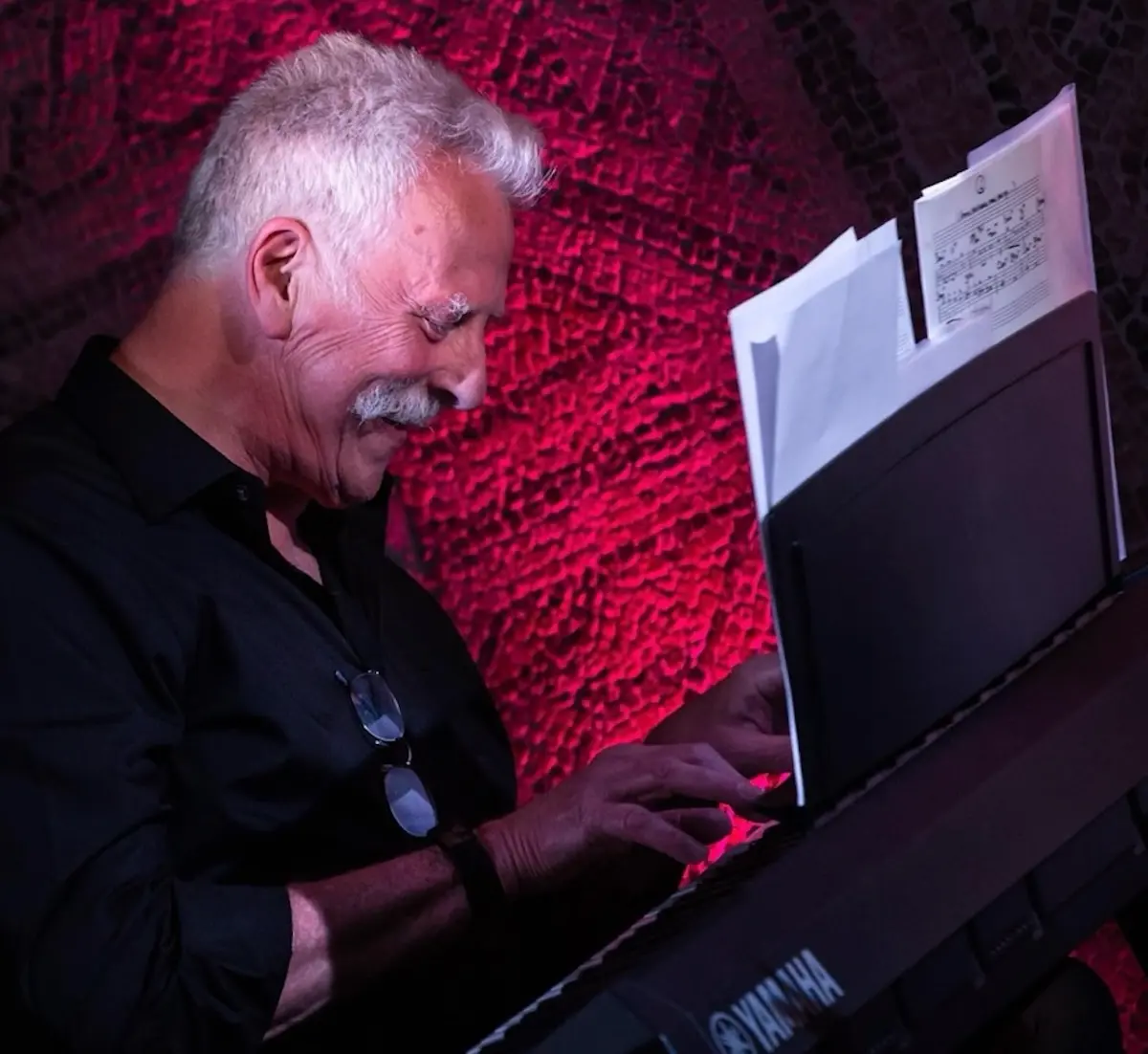
While Lovato represents the current New York vanguard, 76-year-old pianist and theorist Denman Maroney continues to push the boundaries of what is possible within the piano trio and quintet formats. Maroney, who relocated from New York to the south of France in 2020, has long been recognized for his development of the "hyper-piano"—a technique involving the manipulation of piano strings with various objects to produce otherworldly textures—and his system of "temporal harmony."
Maroney’s latest release, Umwelt (Neuma Records 243), is the third recording from his European-based quintet. This ensemble marks a slight shift from his 2024 release, The Air-Conditioned Nightmare, as vocalist Emilie Lesbros is replaced by saxophonist Guillaume Orti. The resulting twin-horn frontline, featuring Orti on alto and soprano and Robin Fincker on tenor and clarinet, evokes the historic early ensembles of Cecil Taylor.
The Application of Temporal Harmony
The core of Maroney’s contribution to modern music is his ability to compose and improvise in multiple tempos simultaneously. This "temporal harmony" is not merely a rhythmic gimmick but a structural philosophy that allows for a unique collision of influences, including the works of Duke Ellington, Conlon Nancarrow, Thelonious Monk, and Karlheinz Stockhausen.
Recorded in June 2025 at Studio La Buissonne in France—a venue frequently used by ECM Records artists—Umwelt features a mix of through-composed pieces and radical improvisations. The track "Andale" is the only piece on the album to feature Maroney’s hyper-piano extensively, while other tracks like "Iteratio" and "Isotrope" focus on the dense, layered compositions that have become his hallmark.
The title track, "Umwelt," utilizes spare, "All Blues"-style horn voicings to create a gently loping atmosphere, contrasting with "Sea Set Wheat," a piece that originally appeared on his 2020 album Martingale. In this new quintet version, the structure of the piece is allowed to dramatically disintegrate, leaning into the aesthetics of early free jazz. The release of Umwelt underscores the continued relevance of veteran improvisers who have transitioned to the European circuit, benefiting from the region’s robust support for experimental arts.
Scandinavian Innovation: The Olle Lannér Risenfors Quartet
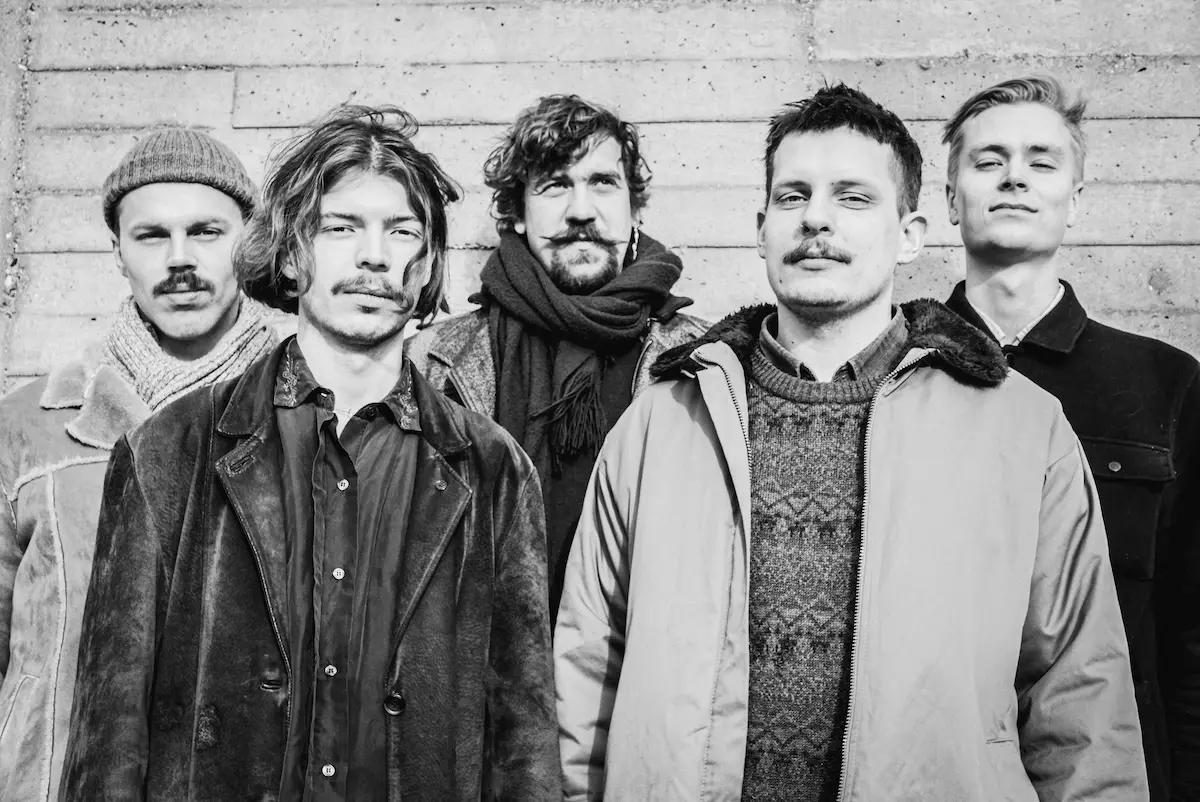
In contrast to the established careers of Lovato and Maroney, the Olle Lannér Risenfors Quartet represents the next generation of European jazz. Based in Stockholm, this young ensemble has garnered attention for its departure from the traditional "Scandinavian sound"—often associated with the airy, spacious aesthetics of ECM Records—in favor of the more aggressive, interactive style of Keith Jarrett’s American quartet of the 1970s.
Bassist and composer Olle Lannér Risenfors has quickly become a central figure in the Swedish jazz scene, receiving prestigious grants from the Royal Swedish Academy of Music and the Swedish Arts Grants Committee. His debut as a leader, You Never Quite Know What You Will Get (Varva Records & Music VRAM23), was recorded live at Stockholm’s Rönnells Antikvariat, a venue known for its intimate atmosphere and appreciative audiences.
Collective Interplay and Live Recording
The quartet, consisting of Risenfors, tenor saxophonist Marius Zeeberg, pianist David Stener, and drummer Nils Agnas, was formed during Risenfors’ studies in Stockholm with the specific goal of fostering deep collective listening. The live recording captures an ensemble that prioritizes spontaneous interaction over rigid arrangements. According to the album’s liner notes, only the setlist was decided in advance, leaving the internal dynamics of each piece to be determined in the moment.
The track "Dikotomi" highlights this approach, beginning with an unaccompanied tenor solo by Zeeberg that transitions into a fluid piano solo by Stener. "Do Not Listen" showcases a more "bruising" side of the group, with Risenfors and Zeeberg engaging in a dialogue reminiscent of the partnership between Charlie Haden and Dewey Redman.
Risenfors’ rise coincides with a period of significant activity in the Swedish jazz pipeline. With several releases scheduled for 2026, including collaborations with vocalist Selma Pinton and a pan-Scandinavian piano trio, Risenfors is positioned as a key architect of the region’s evolving improvisational identity.
A Comparative Analysis of Label Strategies and Market Implications
The release of these three albums also highlights the critical role of independent labels in sustaining the avant-garde jazz ecosystem. Endectomorph Music, Neuma Records, and Varva Records & Music each represent different approaches to the production and distribution of challenging music.
- Endectomorph Music: By focusing on the New York "braid" of styles—jazz, contemporary classical, and underground rock—Endectomorph provides a platform for artists like Lovato who do not fit neatly into traditional jazz categories.
- Neuma Records: Managed by composer and producer Philip Blackburn, Neuma has become a champion for veteran theorists like Denman Maroney. The label’s commitment to high-fidelity recordings and scholarly documentation ensures that complex systems like "temporal harmony" are preserved and accessible to new audiences.
- Varva Records & Music: As a Swedish independent label, Varva is instrumental in documenting the live energy of the Stockholm scene. Their focus on the "here and now" of improvisational performance provides a necessary counterpoint to the more studio-centric productions of larger labels.
Broader Impact on the Jazz Industry
Data from jazz festivals and independent streaming platforms suggest a growing appetite for "challenging" music that defies easy categorization. The success of artists like Ingrid Laubrock (featured on Lovato’s Biotic) in topping critics’ polls indicates that the boundary between "avant-garde" and "mainstream" jazz is becoming increasingly porous.
Furthermore, the geographical shifts noted in these releases—Lovato in New York, Maroney in France, and Risenfors in Sweden—illustrate the globalized nature of the genre. The exchange of ideas between the U.S. and Europe is no longer a one-way street; rather, it is a continuous loop of influence where technical innovations in one region are rapidly adopted and adapted in another.
The chronological progression of these artists also provides a snapshot of a career in jazz. Risenfors represents the "emerging" stage, focused on collective identity and live energy; Lovato represents the "mid-career" stage, refining a specific compositional voice and exploring genre-blending; and Maroney represents the "master" stage, where decades of theoretical development culminate in a highly specialized sound world.
In conclusion, Biotic, Umwelt, and You Never Quite Know What You Will Get serve as essential markers for the state of jazz in the mid-2020s. They affirm that despite the economic challenges facing the recording industry, the creative impulse to bend, break, and rewrite the "rulebook" of improvisation remains as potent as ever. Whether through the muscular trios of New York, the temporal experiments of France, or the collective spirit of Sweden, these recordings ensure that the jazz tradition remains a living, evolving entity.