Lana Akmaluna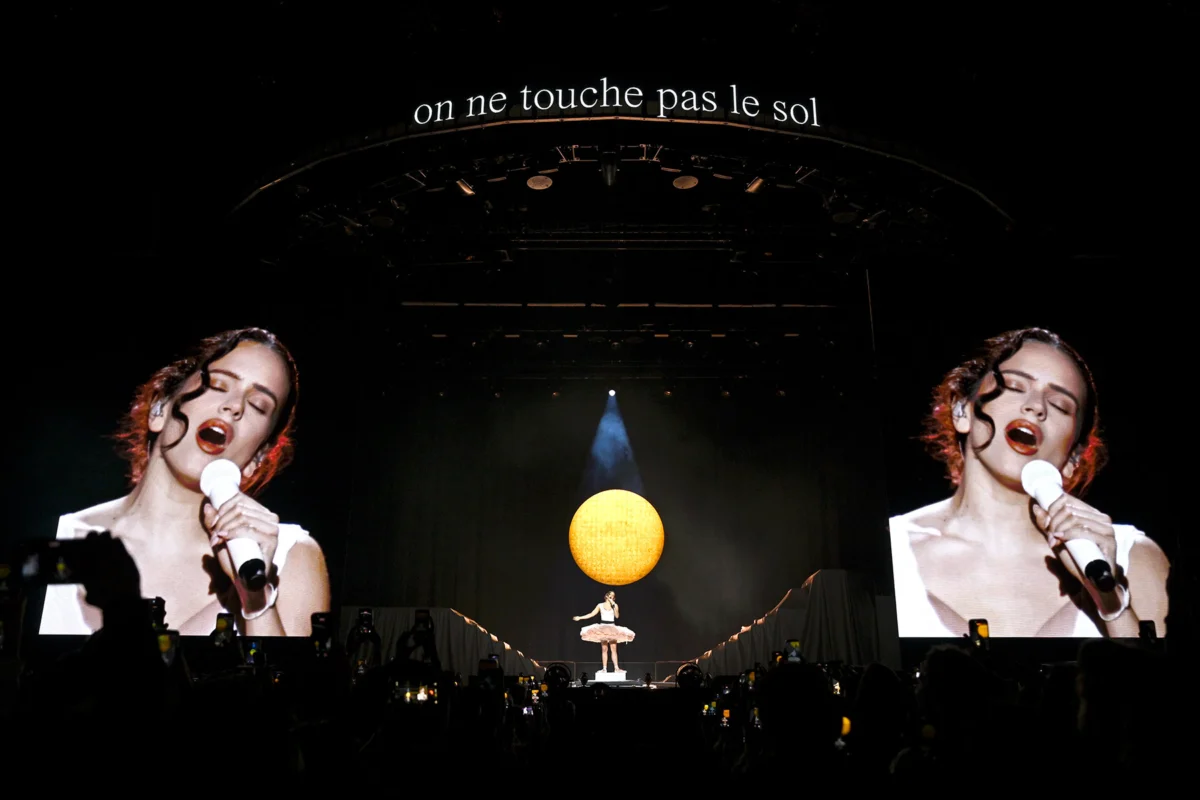
The international music landscape shifted on the evening of March 16, 2026, as the Spanish singer-songwriter Rosalía launched her highly anticipated Lux Tour at the LDLC Arena in Lyon, France. Marking her first major touring cycle since the conclusion of the Motomami era, the performance served as a definitive statement of her artistic evolution and global commercial dominance. Before a capacity crowd of 13,700 spectators, the 33-year-old Barcelona native delivered a meticulously structured, 105-minute production that merged classical high art with avant-garde electronic experimentation. The tour, which encompasses 57 dates across multiple continents, represents the largest and most technically complex production of Rosalía’s career to date, signaling a new chapter for an artist who has become a central figure in the modernization of Latin music and global pop.
The Evolution of the Lux Concept
The Lux Tour is the culmination of nearly four years of creative development. Following the massive success of her 2022 album Motomami, which earned widespread critical acclaim and multiple Grammy Awards, Rosalía retreated from the public eye to focus on the composition and production of her latest project, Lux. While Motomami was characterized by its jagged, experimental minimalism and genre-bending exploration of reggaeton, flamenco, and jazz, Lux appears to lean into a more symphonic and ethereal aesthetic, without abandoning the industrial and electronic textures that have become her trademark.
In Lyon, the artist addressed the audience in fluent French, expressing that the opening night was a culmination of long-held dreams. The shift from the raw, urban energy of her previous work to the "Lux" era suggests a deliberate move toward "grand opera" sensibilities. This is evidenced by her choice of collaborators, most notably the French dance collective (La) Horde, known for their high-concept choreography that blends contemporary movement with social commentary. The inclusion of a 22-piece classical orchestra on stage further underscored the ambition of the project, moving away from the sparse, digital backdrops of her previous tours toward a rich, organic soundscape.
Chronology of the Opening Night
The performance at the LDLC Arena was organized into four distinct acts and a central intermezzo, a structure more commonly associated with theatrical plays or operatic cycles than standard pop concerts.
Act I: The Classical Reveal
The show began with a visual tribute to the impressionist era, specifically the works of Edgar Degas. Rosalía appeared on stage in a silhouette reminiscent of a 19th-century ballerina, though filtered through a futuristic lens. This segment focused on the more melodic and orchestral tracks of the Lux album. The 22-piece orchestra provided a lush foundation as she performed five opening tracks, showcasing a vocal range and control that have deepened since her early flamenco-fusion days.
Act II: The Techno Meltdown
The transition into the second act saw a radical shift in tone. The classical arrangements were suddenly deconstructed by aggressive industrial synthesizers and heavy bass. This "techno-fueled meltdown" served as a bridge between her experimental past and her current direction. (La) Horde’s choreography became more frantic and athletic, mirroring the chaotic energy of a nightclub. This segment featured reimagined versions of hits from Motomami, proving that the artist is capable of reinventing her own catalog to fit a new thematic framework.
Act III: The Confessional Intermezzo
Midway through the set, the production scaled back to its most intimate level. Rosalía occupied the stage alone for a series of ballads, assuming the persona of a "confessional penitent." This segment allowed her to connect directly with the 13,700 fans, many of whom had traveled from across Europe for the premiere. The focus here was on lyrical vulnerability and the raw power of her voice, stripped of the orchestral and electronic layers that dominated the earlier acts.
Act IV: The Angelic Finale
The final act saw the artist transformed once more, this time appearing as a "winged angel" for a high-concept finale. The setlist concluded with a 24th song, a devastating solo encore that left the audience in a state of stunned silence before the final standing ovation. The progression from the grounded reality of the ballerina to the celestial imagery of the finale provided a clear narrative arc of ascension and transformation.
Production Data and Technical Logistics
The scale of the Lux Tour reflects Rosalía’s status as a top-tier global headliner. According to industry data, the LDLC Arena in Lyon was selected for its state-of-the-art acoustics and its ability to house the massive stage design required for the 2026 production.
- Attendance: 13,700 (Sold out)
- Personnel: 22-piece orchestra, 12 principal dancers from (La) Horde, and a technical crew of over 150.
- Duration: 1 hour and 45 minutes.
- Setlist: 24 songs, including 10 new tracks from the Lux era and 14 career-spanning hits.
- Global Reach: 57 dates across Europe, North America, Latin America, and Asia.
The logistical coordination required to move a 22-piece orchestra and the intricate stage machinery across four continents is a testament to the backing of Live Nation, the tour’s primary promoter. Analysts suggest that the Lux Tour is projected to be one of the highest-grossing tours by a Spanish artist in history, potentially rivaling the mid-2020s tours of major English-speaking pop icons.
Official Responses and Industry Impact
While official reviews from major European outlets were still being filed in the hours following the show, the initial social media response and industry chatter have been overwhelmingly positive. Critics have noted that Rosalía is successfully navigating the "post-superstar" phase of her career, where she no longer needs to chase trends but can instead dictate the artistic direction of the industry.
Representatives for Live Nation stated that the Lyon opener was a "flawless execution of a complex vision," noting that the artist’s decision to open in a secondary European market like Lyon rather than a traditional hub like London or Paris was a strategic move to build momentum. The fluent French spoken by Rosalía during the show was also praised as a savvy move for international relations, further solidifying her bond with the Francophone market.
Music industry analysts point out that the Lux Tour arrives at a time when the demand for high-concept, immersive live experiences is at an all-time high. By blending the high-brow elements of a classical orchestra and (La) Horde’s choreography with the populist appeal of her hit singles, Rosalía is effectively bridging the gap between the traditional concert format and the world of performance art.
Broader Implications and Future Outlook
The success of the Lux Tour opener suggests that the four-year wait for new material has only increased Rosalía’s market value. The tour is expected to set new standards for production design in the Latin music sector. Furthermore, the emphasis on a "four-act" structure indicates a growing trend among elite artists to treat world tours as cohesive narrative experiences rather than mere collections of songs.
As the tour moves toward its upcoming dates in Spain and North America, the focus will remain on the artist’s ability to maintain the high technical standards set in Lyon. The 57-date itinerary is a grueling schedule for any performer, particularly one whose show requires such intense physical and vocal exertion. However, if the opening night is any indication, Rosalía has entered a period of creative and professional maturity that places her among the most significant artists of the decade.
The Lux Tour is not merely a promotional vehicle for an album; it is a high-stakes cultural event that redefines what is possible for a solo performer in the mid-2020s. By integrating diverse influences—from the paintings of Degas to the dark energy of techno—Rosalía continues to challenge the boundaries of pop music, ensuring that her impact will be felt long after the final encore of the tour’s 57th night.