Nana Wu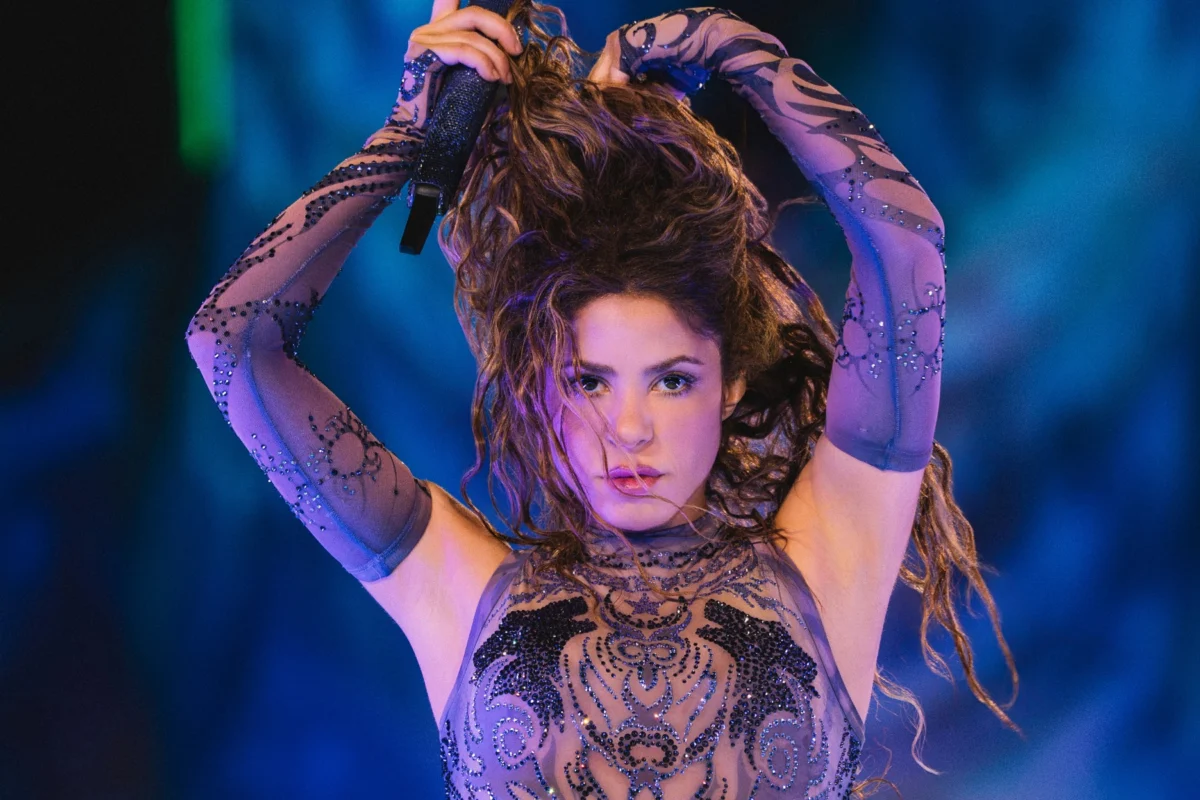
When a teenage Shakira first picked up her guitar in the vibrant coastal city of Barranquilla, Colombia, pouring her poetic musings into intimate rock songs like "Estoy Aquí" and "Inevitable," she was experimenting with a sound largely unconventional in Colombia’s tropical-dominated music scene. It was a bold artistic choice that, at the time, made it unimaginable that her name would one day stand shoulder-to-shoulder with revered music legends such as Billy Idol, Lauryn Hill, and the Wu-Tang Clan. Yet, over 30 years after her breakthrough album Pies Descalzos introduced her unique blend of rock and Latin rhythms to the world, the Colombian superstar now finds herself precisely in that esteemed company, nominated for the 2026 Rock & Roll Hall of Fame. The announcement, made last month, placed her among 17 diverse nominees vying for induction into one of music’s most prestigious institutions.
The news was met with a mixture of disbelief and profound gratitude by the artist herself. "I thought someone was joking with me. I had to double-check, and then I just felt really grateful," Shakira revealed to Billboard Español upon hearing of her nomination. "It’s not something you expect. I’m so over the moon with my fans who’ve been supporting me for 30 years already, and they continue to accompany me and to make things like these that sound almost impossible happen." Her reaction underscores the monumental nature of this recognition, not only for her personally but also for the broader landscape of Latin music and its expanding influence on global culture.
A Trailblazer Breaking Barriers
The "Hips Don’t Lie" hitmaker, whose single famously soared to No. 1 on the Billboard Hot 100, is no stranger to shattering records and dismantling barriers across cultures, genres, and languages. Her nomination carries profound historical weight: she is the first Colombian artist ever to be nominated for this honor. Furthermore, she stands on the precipice of becoming the first Latina woman inducted into the Rock Hall’s hallowed circle, a distinction that would mark a significant milestone for representation within the institution. "It’s pretty crazy, honestly," she remarked, reflecting on the magnitude of the potential honor. "I grew up in Barranquilla and I dreamt about things like these, but I never thought that they could come true."
This sentiment encapsulates the journey of an artist who emerged from a distinct musical environment to achieve global superstardom while retaining her core identity. Shakira’s career trajectory is a testament to her unyielding artistic vision and relentless pursuit of innovation. From her earliest introspective power ballads like "Antología" to her reggaetón-powered global anthems such as "Chantaje," her musical evolution has been dynamic. However, a consistent thread throughout her extensive discography is the enduring spirit of a rockera at heart. "I started out as a rock kid, playing guitar, harmonica, and crazy about bands like Nirvana, Metallica, and Led Zeppelin, being just a huge rock fan and writing rock songs in my little room in Barranquilla, where I was growing up," she fondly recalled. This early immersion in rock music laid the foundation for her distinctive sound, which would later fuse with traditional Latin American rhythms and pop sensibilities.
The Rock & Roll Hall of Fame: A Shifting Landscape
The Rock & Roll Hall of Fame, established in 1983 and inducting its first class in 1986, aims to recognize artists who have profoundly transformed the musical and cultural landscape. Shakira’s journey epitomizes this ethos. Her career, spanning over three decades, has consistently pushed boundaries and redefined musical categories. She debuted at just 13 with Magia in 1991, though it was her 1995 album, Pies Descalzos, that garnered significant international attention. This was followed by Dónde Están Los Ladrones in 1998, both albums cementing her stardom. These works not only introduced Spanish-language audiences to her poetic, often rock-leaning songwriting but also spread internationally, critically acclaimed for their depth and authenticity, all without compromising her Colombian roots.
Historically, the Rock Hall has faced criticism for its perceived narrow definition of "rock and roll" and a notable underrepresentation of women and artists from diverse genres and backgrounds. The inaugural Hall of Fame induction in 1986, for instance, was an all-male affair. This trend regrettably persisted in subsequent years, including 1992 and as recently as 2016. However, in recent years, the institution has made concerted efforts toward greater inclusivity, particularly for women artists and those who transcend traditional genre classifications. This year’s all-star roster of nominees, which includes powerhouse women like Mariah Carey, Sade, and P!nk, alongside other legends such as Iron Maiden, Oasis, Phil Collins, and Joy Division/New Order, reflects this evolving perspective. Shakira’s inclusion in this diverse class of nominees champions a wide spectrum of musical styles and cultural identities, underscoring the Hall’s commitment to reflecting the broader impact of popular music.
From Barranquilla to Global Domination: A Chronology of Impact
Shakira’s global crossover moment arrived spectacularly in 2001 with Laundry Service, her fifth studio album and her first predominantly in English. This pivotal release catapulted her to international superstardom, showcasing her unique blend of pop-rock, Latin folk, and Andean rhythms. The album was a massive commercial success, reaching No. 3 on the Billboard 200 and producing smash hits like "Whenever, Wherever," which peaked at No. 6 on the Billboard Hot 100. Laundry Service sold over 13 million copies worldwide, establishing Shakira as a formidable global force.

In the years that followed, her artistry translated into countless chart successes and critical accolades. Her dual albums, Fijación Oral, Vol. 1 (Spanish) and Oral Fixation, Vol. 2 (English), both released in 2005, continued her chart dominance, reaching No. 4 and No. 5 on the Billboard 200, respectively. These albums further showcased her lyrical prowess and ability to navigate multiple languages and musical styles seamlessly. Her self-titled 2014 album peaked at No. 2, marking her highest position on the Billboard 200 to date. On Billboard’s Top Latin Albums chart, Shakira boasts an impressive seven No. 1s, from Fijación Oral, Vol. 1, which reigned for 17 weeks, to her most recent triumph, Las Mujeres Ya No Lloran (2024).
The lead single from Las Mujeres Ya No Lloran, "Bzrp Music Sessions, Vol. 53" with Argentine producer Bizarrap, became a cultural phenomenon. Released in January 2023, the track broke an astounding 14 Guinness World Records, including becoming the most streamed Latin track on Spotify in 24 hours and the fastest Latin track to reach 100 million views on YouTube. Critically, it also became the first Spanish-language song by a female artist to hit the top 10 of the Billboard Hot 100, peaking at No. 9, a testament to its widespread appeal and Shakira’s enduring relevance.
Beyond commercial success, Shakira’s songwriting process has always been deeply personal. "Every time I write, I do it because it’s therapeutic, it’s cathartic to me – it’s my own way to process my feelings, my thoughts, to elaborate life and whatever is happening in my mind," she explained. "I wrote songs, I never really did it thinking or hoping that big things would happen. It was just my way of coping with reality and expressing myself." This authentic approach to her craft has resonated deeply with millions globally, making her music a soundtrack to countless lives.
The Power of Fusion: Redefining Genre Boundaries
Shakira’s ability to orchestrate genre fusion has remained virtually unmatched throughout her career. From the tango-infused rhythms of "Objection (Tango)" to the mariachi-meets-pop flare of "Ciega, Sordomuda," all the way to her powerful rock-driven tracks such as "Don’t Bother" and "Empire," she consistently pushed musical boundaries long before it became an industry norm. Her willingness to experiment with diverse sounds and cultural elements has been a hallmark of her artistry.
"That mindset sort of stayed with me. I wasn’t afraid to try things," she revealed about her approach to genre experimentation. "Even though the musical scene in Colombia was quite different, it was more about tropical music than rock and roll. I [started] producing when I was 17 years old. I wrote and produced my first rock album Pies Descalzos and Donde Están Los Ladrones along with Luis Fernando Ochoa… In Fijación Oral, I started out playing with other genres and experimenting with those different sounds. My career became a lot about fusion, about making elements from different worlds coexist in the same song." This philosophy of "fusion" has not only defined her sound but also contributed significantly to breaking down perceived barriers between Latin music and global popular music, demonstrating that authenticity and experimentation can lead to universal appeal.
Ongoing Legacy and Future Inspirations
Shakira’s nomination comes at a particularly vibrant moment in her career. She is currently in the final stretch of her historic Las Mujeres Ya No Lloran World Tour, which commenced on February 11, 2025, and is set to conclude with a grand finale in Spain. This tour has already made history, setting a Guinness World Record as the highest-grossing tour of all time by a Hispanic artist. According to figures reported to Billboard Boxscore, the tour has earned an astounding $421.6 million from the sale of 3.3 million tickets across 86 shows. This remarkable achievement underscores her enduring appeal and her status as a global touring powerhouse, demonstrating that her impact continues to grow decades into her career.
The Rock & Roll Hall of Fame’s Class of 2026 inductees will be officially revealed in April, with the induction ceremony scheduled for the fall. The anticipation surrounding Shakira’s potential induction is palpable, particularly within the Latin music community and among her dedicated global fanbase. Her entry would not only honor her individual contributions but also signify a broader acceptance and recognition of the diverse sounds and artists that have shaped popular music worldwide.
For Shakira, the nomination itself is a powerful affirmation of her artistic journey and her unwavering connection to her rock roots. "Rock was always there, and I’ve been making rock songs [on] every album," she affirmed, emphasizing the core genre’s presence throughout her discography. "So to me, just being nominated to the Rock & Roll Hall of Fame is a huge motivation. It’s a huge honor, but also I think it’s gonna inspire me even more for the next years." This perspective highlights that even for an artist who has achieved so much, recognition from such an esteemed institution serves not as a capstone, but as renewed impetus for future creative endeavors. Her potential induction would not only be a personal triumph but a landmark moment for Latin music, for women in rock, and for the evolving narrative of what truly defines "rock and roll" in the 21st century. It would solidify her place not just as a pop icon, but as a foundational artist whose genre-bending vision expanded the very definition of popular music.