Nayara Elvina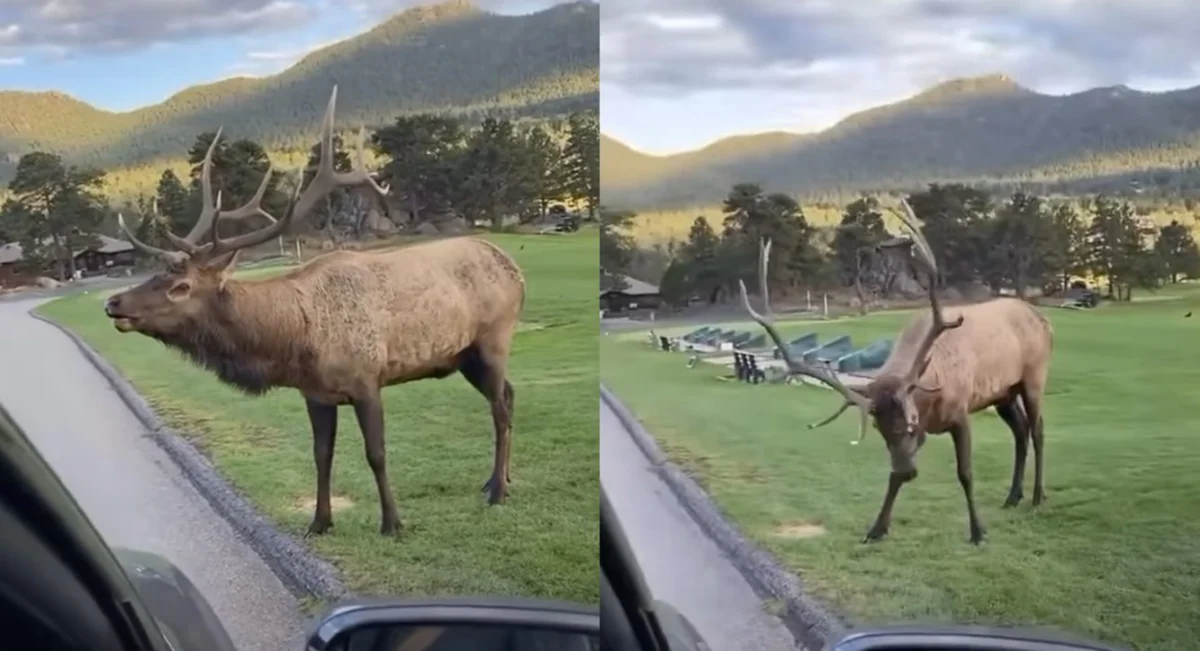
The town of Estes Park, Colorado, situated at the doorstep of Rocky Mountain National Park, serves as a primary gateway for millions of tourists seeking to experience the rugged beauty of the American West. However, a recent resurgence of a viral video documenting a close encounter between a bull elk and a vehicle has reignited a national conversation regarding the safety protocols and ethical responsibilities of visitors in wildlife-rich corridors. The footage, which originally surfaced several years ago and was recently amplified by the social media platform Tourons of National Parks, depicts a family in a vehicle engaging in high-risk behavior during the elk rutting season, highlighting a growing trend of human-wildlife conflict driven by the desire for close-range observation.
The Incident in Estes Park: A Detailed Breakdown
The video captures a tense interaction between a male bull elk and a passenger vehicle on a public roadway in Estes Park. The driver, identified in the recording as "Jack," positioned the vehicle within a few feet of a large bull elk characterized by a significant antler spread. As the passengers observed the animal with their windows rolled down, the elk exhibited clear signs of agitation, likely exacerbated by the vehicle’s proximity and the heightened aggression typical of the autumnal mating season.
As the elk became startled, it transitioned from a defensive posture to an offensive one, initiating a bluff charge toward the front right quadrant of the vehicle. The incident prompted a frantic verbal exchange between the driver and a female passenger. The passenger repeatedly urged the driver to retreat, shouting, "Back up, Jack! Back up!" while the driver appeared momentarily paralyzed by the situation, questioning where he should move. The elk ultimately halted its charge inches from the vehicle’s bodywork before emitting a loud bugle—a vocalization used by bulls to assert dominance and communicate with rivals or potential mates.
While no physical damage to the vehicle or injury to the occupants was reported, the incident serves as a stark illustration of the volatility of wild animals and the narrow margin for error when human observers disregard established safety perimeters.
Biological Context: The Dynamics of the Elk Rut
To understand the severity of the encounter, it is necessary to examine the biological state of elk during the time the video was filmed. Estes Park is widely recognized as the "Elk Capital of the World," a title supported by the fact that Colorado hosts the largest concentrated population of elk globally, estimated at over 280,000 individuals.
The incident occurred during the "rut," or the elk mating season, which typically spans from mid-September to mid-October. During this period, bull elk undergo significant physiological changes. Testosterone levels in males can increase by as much as 1,000 percent, leading to heightened territoriality and aggression. Bulls spend this time gathering "harems" of female elk (cows) and defending them against rival males.
In this hormonal state, bull elk view almost any large moving object—including vehicles, cyclists, and pedestrians—as a potential threat or a rival. A bull elk can weigh between 700 and 1,000 pounds and possesses the strength to cause significant structural damage to automobiles or inflict fatal injuries on humans. The "bugle" heard at the end of the video is more than a scenic sound; it is a high-pitched scream followed by low-pitched grunts that signals a bull’s physical prowess and readiness to fight.
Statistical Overview: Wildlife Tourism and Population Density in Colorado
The popularity of Estes Park as a tourism hub is inextricably linked to its elk population. Colorado Parks and Wildlife (CPW) and the National Park Service (NPS) manage these populations to maintain ecological balance, but the sheer volume of animals often brings them into direct contact with the town’s infrastructure.
According to data from the Colorado Tourism Office, wildlife viewing is one of the top drivers for travel to the state, contributing billions of dollars to the local economy. In Rocky Mountain National Park alone, annual visitation has frequently surpassed 4 million people in recent years. This high density of tourists, combined with a resident elk population that has become "habituated" to human presence, creates a dangerous paradox. Habituation occurs when animals lose their natural fear of humans due to repeated non-threatening encounters. While a habituated elk may appear "tame," it remains a wild animal with unpredictable instincts.
Records from the National Park Service indicate that elk-related incidents, including vehicle damage and minor injuries to tourists, occur annually in Estes Park. Most of these incidents are attributed to "wildlife harassment," defined as any human action that causes an animal to change its natural behavior.
Regulatory Framework and Safety Guidelines
The National Park Service and Colorado Parks and Wildlife maintain strict guidelines designed to protect both wildlife and the public. These regulations are not merely suggestions but are enforceable by law under federal and state statutes.
The primary directive for elk and other "non-dangerous" wildlife (such as deer and bighorn sheep) is the 25-yard rule. Visitors are required to maintain a minimum distance of 75 feet at all times. For "predatory" or more volatile wildlife, such as bears and wolves, the minimum distance increases to 100 yards (300 feet).
In the Estes Park video, the vehicle was estimated to be less than five yards from the bull elk. By stopping the car and remaining in such close proximity, the driver violated the spirit, and potentially the letter, of wildlife protection laws. Official responses from the NPS regarding similar incidents emphasize that a vehicle does not provide an absolute barrier of safety. Elk antlers can easily puncture tires, shatter glass, or dent metal panels, and the stress caused to the animal can lead to exhaustion or displacement from its natural habitat.
The Role of Social Media in Human-Wildlife Conflict
The re-emergence of this video on accounts like Tourons of National Parks underscores a modern challenge in wildlife management: the "social media effect." The term "touron"—a portmanteau of "tourist" and "moron"—has gained traction online to describe visitors who engage in risky or disrespectful behavior in natural settings for the sake of photography or videography.
Experts in human-wildlife interaction suggest that the desire for viral content often overrides basic survival instincts and ethical considerations. When users see videos of others getting close to wildlife without immediate negative consequences, it creates a false sense of security. This leads to a cycle of "proximity creep," where each subsequent visitor attempts to get closer than the last to capture a more "engaging" shot.
The "Back up, Jack" video, while viewed by many as a humorous domestic bicker, is used by park rangers and conservationists as a teaching tool. It demonstrates the speed at which a peaceful observation can turn into a life-threatening confrontation. The passenger’s realization of the danger—expressed through her urgent demands for the driver to move—reflects the sudden shift in perception that occurs when a wild animal asserts its dominance.
Broader Implications for Conservation and Public Safety
The mismanagement of human-wildlife boundaries has long-term implications for conservation. When animals become overly habituated or involved in frequent conflicts with humans, wildlife officials may be forced to take lethal action. In many jurisdictions, an animal that is deemed a "nuisance" or a public safety threat due to repeated aggressive encounters is euthanized. Therefore, the failure of tourists like "Jack" to maintain distance doesn’t just risk human safety; it actively endangers the lives of the animals they claim to admire.
Furthermore, the economic impact of these encounters is significant. Vehicle repairs, medical treatments for injuries, and the administrative costs of park rangers responding to wildlife jams (traffic congestion caused by wildlife sightings) place a burden on public resources.
To combat this, the National Park Service has launched several educational campaigns, such as "Keep Wildlife Wild" and "Give Wildlife Room." These initiatives focus on teaching visitors how to use zoom lenses for photography and how to recognize signs of animal distress, such as pinned-back ears, raised hair (hackles), or pawing at the ground.
Conclusion: The Necessity of Distance
The Estes Park incident serves as a definitive case study in the complexities of modern wildlife tourism. While the encounter ended without physical injury, it highlighted the critical importance of the 25-yard rule and the volatile nature of the elk rut. As tourism numbers continue to rise in Colorado’s wilderness areas, the responsibility falls on the individual visitor to prioritize the safety of the ecosystem over the convenience of a close-up photograph.
The phrase "Back up, Jack" has become a colloquial shorthand for the broader necessity of respect in the wild. It serves as a reminder that in the "Elk Capital of the World," humans are merely guests in a landscape governed by the ancient rhythms of the natural world. Maintaining a respectful distance is not only a regulatory requirement but a fundamental component of ethical outdoor engagement, ensuring that Colorado’s majestic elk populations can continue to thrive without the interference of human negligence.