Muhammad Ibadurrohman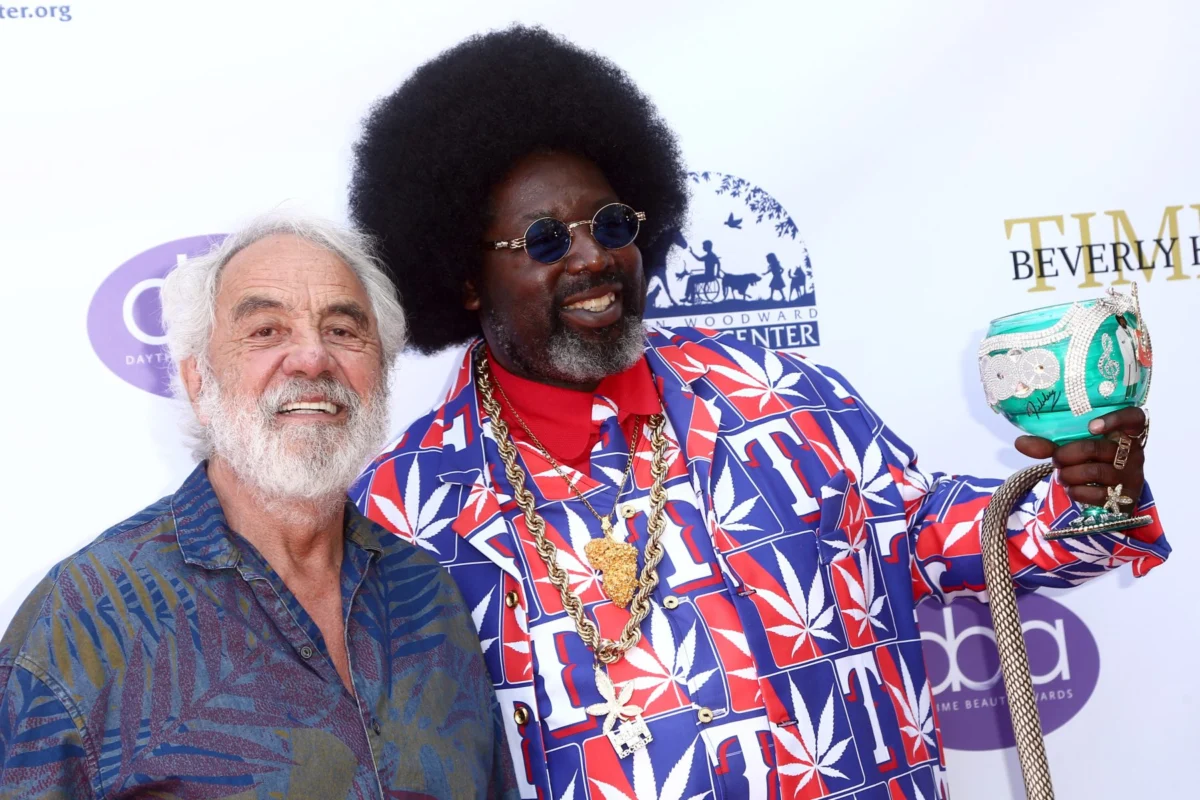
A federal jury on Wednesday, March 18, delivered a decisive verdict in favor of recording artist Afroman, whose legal name is Joseph Foreman, clearing him of any wrongdoing in a high-profile defamation and invasion of privacy lawsuit. The lawsuit was brought by seven Ohio police officers who alleged that Foreman defamed them through music videos and social media posts that satirized a 2022 raid on his home. The verdict, reached after only a few hours of deliberation, marked a significant victory for the rapper and a notable affirmation of First Amendment protections in the digital age.
Background to the Controversial Raid
The genesis of this unusual legal battle dates back to August 2022, when officers from the Adams County Sheriff’s Department conducted a raid on Joseph Foreman’s residence in Winchester, Ohio. The operation, executed with a search warrant based on suspicions of drug trafficking and kidnapping, involved officers entering Foreman’s property with guns drawn, smashing down his door, and seizing various items, including $5,031 in cash. However, despite the forceful entry and extensive search, no evidence of wrongdoing was uncovered, no charges were ever filed against Foreman, and the confiscated money was eventually returned to him. This lack of legal consequence for Foreman, contrasted with the aggressive nature of the raid, became a central point of contention and the catalyst for the subsequent events.
For Foreman, the raid was not merely an inconvenience but a profound violation of his privacy and peace. He subsequently recounted feeling terrorized and disrespected by the law enforcement action, which he believed was unjustified. The incident quickly gained public attention, particularly after Foreman decided to channel his frustration and experience into his art, a move that would ultimately lead to the civil lawsuit.

The Genesis of the Controversial Content
In the aftermath of the raid, Joseph Foreman utilized surveillance camera footage from his home to create a series of music videos and social media posts. These artistic and often satirical works openly mocked the officers involved in the raid, transforming a traumatic personal experience into public commentary. Among the most widely circulated pieces was a video for his song "Lemon Pound Cake," where he humorously depicted an officer seemingly eyeing a cake on his kitchen counter during the search. Another instance involved social media posts featuring images of Officer Lisa Phillips, accompanied by statements that were interpreted as graphic and suggestive regarding her anatomy and sexuality. Other officers were also targeted with similar satirical content, with one referred to as "Officer Poundcake" and another, Randolph L. Walters, Jr., becoming the subject of a video where Afroman repeatedly claimed to have had sex with Walters’ wife.
Foreman’s intention, as he later testified, was not solely to defame but to exercise his constitutional right to free speech and to process his experience creatively. He saw it as a means to turn a negative event into a productive outlet, using humor and music to critique what he perceived as an abuse of authority. This creative response quickly resonated with his fanbase and a broader audience, leading to the videos going viral and drawing significant attention to the Adams County Sheriff’s Department’s actions.
The Officers’ Lawsuit: Claims of Defamation and Distress
In 2023, Officer Lisa Phillips, along with six other members of the Adams County Sheriff’s Department—Shawn D. Cooley, Justin Cooley, Michael D. Estep, Shawn S. Grooms, Brian Newland, and Randolph L. Walters, Jr.—filed a civil lawsuit against Joseph Foreman. The officers alleged that Foreman’s music videos and social media posts constituted defamation and invasion of privacy. Their complaint asserted that they had suffered severe "emotional distress" and had been "subjected to threats, including death threats," as a direct result of Foreman’s widely disseminated content. They argued that the posts contained false statements of fact and presented them in a negative, misleading light, causing damage to their reputations and personal well-being.

The lawsuit sought to hold Foreman accountable for the perceived harm, claiming that his actions went beyond protected speech and crossed into actionable libel and slander. The officers’ legal team contended that the content was not merely satire but intentionally fabricated falsehoods designed to malign public servants, thereby exceeding the bounds of the First Amendment. This legal challenge immediately sparked a national debate about the limits of free speech, particularly when it involves criticism of law enforcement, and the delicate balance between artistic expression and personal reputation. The potential damages sought by the officers were substantial, with reports indicating Foreman could have faced an award of up to $3.9 million if the verdict had gone against him.
The Three-Day Trial: A Spectacle of Free Speech
The trial, held in Adams County, quickly became a captivating spectacle, drawing significant media attention and generating widespread discussion on social media. Over three days, the courtroom witnessed a series of outlandish and dramatic moments that underscored the unique nature of the case.
Afroman’s Defense: A Flamboyant Assertion of Rights
Joseph Foreman, known for his eccentric stage persona, brought a similar energy to the witness stand. Dressed in a flamboyant American flag suit, he mounted a colorful and impassioned defense. He steadfastly maintained that his actions were protected by the First Amendment, asserting his constitutional right to mock and criticize public officials, especially in response to what he considered an unwarranted and aggressive raid. "All of this is their fault, and they have the audacity to sue me," Foreman declared, framing the lawsuit as an attempt by the officers to silence legitimate criticism.
He further elaborated on his artistic philosophy, telling jurors, "I got freedom of speech. After they run around my house with guns and kick down my door, I got the right to kick a can in my back yard, use my freedom of speech, and turn my bad times into a good time, yes I do. And I think I’m a sport for doing so, because I don’t go to their house, kick down their doors [and] then try to play the victim and sue them." His testimony emphasized the cathartic and expressive nature of his art, arguing that it was a legitimate response to a perceived injustice.

In another striking moment, Foreman explained why he had invited a local TV news crew to accompany him when he went to retrieve his seized money from the sheriff’s station. He clarified that it was not for publicity, but out of genuine fear for his safety. "I didn’t wanna get beat up or Epstein’d at the sheriff’s station after I seen them running around my house with AR15s," he stated, referencing the widely circulated conspiracy theories surrounding the death of Jeffrey Epstein. "That’s why I brought the news and my attorney." This comment highlighted his deep distrust and fear of the authorities following the raid.
Officers’ Testimony: Emotional Reactions to Public Scrutiny
The Adams County deputies also took the stand, recounting the emotional distress and public humiliation they allegedly endured due to Foreman’s content. Officer Shawn Cooley, who was dubbed "Officer Poundcake" in one of Afroman’s videos for seemingly looking at a cake during the raid, watched the music video in the courtroom. Officer Lisa Phillips became visibly emotional, weeping as a lengthy video played, in which Foreman had labeled her "Licc’em Low Lisa" and made crude, sexually suggestive remarks, implying she was a lesbian.
Officer Randolph L. Walters, Jr., testified about a video where Afroman repeatedly claimed to have had sex with Walters’ wife, stating that listeners had understood the statement as factual, causing him "tremendous pain." During a heated cross-examination, Foreman’s lawyer, David Osborne, challenged Walters directly: "But we all know that’s not true, right?" When Walters responded that he didn’t know, Osborne pressed further, "You don’t know if your wife’s cheating on you or not?" The exchange became tense, with Walters glaring back and asking, "You wanna go there?" Osborne, aiming to underscore that the statement’s factual veracity was questionable—a key element in a defamation claim—replied, "No, I just wanna ask that question since you said we don’t know."
Closing Arguments: A Clash Over Free Speech
The closing statements on Wednesday encapsulated the core legal and philosophical conflict of the trial. Robert Klingler, the attorney representing the officers, argued that Foreman had "perpetuated lies intentionally" about public servants who had "risked their lives for this county for years." He contended that Foreman’s invocation of the First Amendment was "legally wrong," asserting, "Mr. Foreman doesn’t get to wrap himself in the American flag and say you can’t touch me, I can say what I want, no matter how untrue it is, no matter how much pain it causes people, because I have freedom of speech. He can’t do that."
In a powerful rebuttal, David Osborne, Foreman’s lawyer, argued precisely that his client could, in fact, do that. His closing statement invoked legendary figures of protest and satire, citing NWA’s iconic "F—k Tha Police" and the boundary-pushing comedy acts of Richard Pryor. Osborne posited that powerful public officials cannot use the courts to "silence" criticism merely because it causes them discomfort or "hurt their feelings." "I’m sorry they feel the way they do, but there’s a certain amount that you have to take as a public official, it’s part of the duties of the job," Osborne stated. He warned against the "chilling effect" such a lawsuit could have: "What chilling effect does that have on the world we live in? You don’t like what a public official does and you make a joke, and you’re dragged into court?"

The Verdict and Immediate Aftermath
After just a few hours of deliberation, the jury returned a verdict that sided entirely with Joseph Foreman. Judge Jonathan Hein announced the decision, stating, "In all circumstances, the jury finds in favor of the defendant," addressing the rapper, the plaintiffs, and their legal teams. Foreman, upon hearing the verdict, briefly bowed his head in acknowledgment but otherwise displayed little outward emotion, maintaining a composed demeanor.
This outcome represents a significant personal and financial victory for Foreman. Had the jury found him liable, he would have faced a staggering $3.9 million in damages, a sum that could have had severe repercussions for his career and personal finances. Following the verdict, attorneys for both sides did not immediately respond to requests for comment, leaving the immediate implications of the decision to be processed by the legal community and the public.
Legal Context and Broader Implications
The verdict in favor of Afroman carries substantial legal weight, particularly regarding the interpretation and application of the First Amendment concerning public officials. The case highlights the high bar for defamation claims, especially when the subject is a public figure or a government official. For such claims to succeed, the plaintiff must typically prove not only that the statements were false and caused harm but also that they were made with "actual malice"—meaning the speaker knew the statements were false or acted with reckless disregard for their truth or falsity. In cases involving satire or hyperbole, proving actual malice becomes even more challenging.

The American Civil Liberties Union (ACLU) had previously weighed in on the lawsuit in 2023, unequivocally defending Foreman’s actions and labeling the lawsuit "nothing short of absurd." The ACLU’s stance underscored the importance of protecting artistic and critical speech against government overreach, even when that speech is provocative or offensive to those in power. This verdict reinforces the principle that citizens, including artists, have a robust right to criticize and even mock government officials without fear of legal retribution, provided their speech does not cross the very high threshold for defamation.
This case could set a precedent, or at least serve as a strong reminder, for similar situations where public officials attempt to use the legal system to suppress criticism, particularly creative or satirical forms of expression. It reaffirms the constitutional protection afforded to speech that challenges authority, fostering an environment where accountability can be demanded through public discourse, even if that discourse is delivered through a comedic or musical lens.
Future Outlook
The Afroman verdict will undoubtedly be analyzed by legal scholars, free speech advocates, and law enforcement agencies across the country. It underscores the judiciary’s commitment to upholding fundamental constitutional rights, even when those rights are exercised in ways that some find offensive or disrespectful. In an increasingly digital world where content can go viral instantly, the case also serves as a critical reminder of the interplay between online expression, artistic freedom, and the traditional tenets of defamation law. As public discourse continues to evolve, this ruling provides valuable insight into the enduring power of the First Amendment in safeguarding critical commentary against those in positions of power.