Nayara Elvina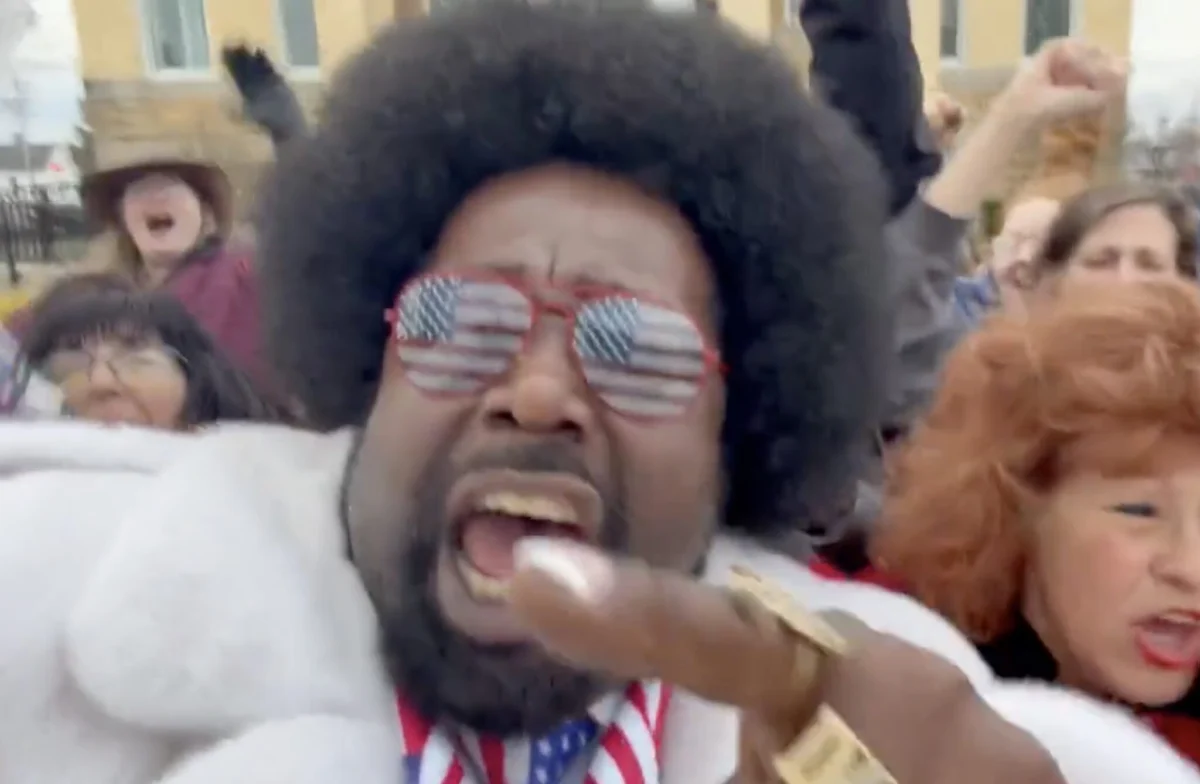
In a significant ruling for First Amendment protections and the rights of citizens to criticize law enforcement, a jury in Adams County, Ohio, has found the rapper Afroman not liable for defamation. The verdict, delivered following a three-day trial, concludes a high-profile legal battle initiated by seven members of the Adams County Sheriff’s Department. The plaintiffs alleged that the rapper, whose legal name is Joseph Edgar Foreman, caused them emotional distress and reputational harm by using security footage of a 2022 raid on his home in a series of satirical music videos and social media posts.
The case has drawn national attention for its intersection of celebrity, police accountability, and the boundaries of free speech. After approximately six hours of deliberation on the final day of the trial, the jury returned a unanimous decision in favor of the defendant, effectively affirming the right of public officials’ critics to use humor and visual evidence in their dissent.
The Genesis of the Conflict: The 2022 Home Raid
The legal dispute originated on August 21, 2022, when deputies from the Adams County Sheriff’s Department executed a search warrant at Foreman’s residence in Winchester, Ohio. According to court documents and police records, the warrant was obtained based on an anonymous tip suggesting that the rapper was involved in drug trafficking and kidnapping.
The raid was an intensive operation. Deputies arrived in tactical gear, breached the entrance of the home, and conducted a thorough search of the premises. However, the operation yielded no evidence of the alleged crimes. No drugs were seized, no kidnapping victims were located, and no criminal charges were ever filed against Foreman in connection with the raid.
In the immediate aftermath, Foreman expressed public outrage over the incident. He alleged that the deputies caused more than $20,000 in property damage, including a smashed front door and a damaged security gate. Furthermore, Foreman accused the department of financial impropriety. While the sheriff’s office officially recorded the seizure of $5,292 in cash during the search, Foreman claimed that when the money was eventually returned to him, it was $400 short. An internal investigation by the department later attributed the discrepancy to a clerical miscount by a deputy, but the incident fueled Foreman’s narrative of police overreach and incompetence.
Creative Retaliation and the "Lemon Pound Cake" Phenomenon
Rather than pursuing a traditional civil rights lawsuit as his primary means of response, Foreman utilized his platform as a Grammy-nominated artist to lampoon the officers involved. He integrated his home’s security camera footage into several music videos, most notably for the songs "Will You Help Me Repair My Door" and "Lemon Pound Cake."
The latter song became a viral sensation, specifically targeting a moment captured on camera where an officer appeared to pause and admire a lemon pound cake sitting on Foreman’s kitchen counter during the search. The lyrics mocked the futility of the raid: "The Adams County Sheriff kicked down my door / Then I heard the glass break / They found no kidnapping victims / Just some lemon pound cake."
Foreman’s social media campaign extended beyond music videos. He sold merchandise featuring the officers’ likenesses and posted captions that questioned the professional conduct and personal integrity of the individuals involved. These actions prompted seven deputies—including Bobby Inman, Nicholas Rogers, and Lisa Phillips—to file a civil lawsuit in March 2023.
The Legal Arguments: Defamation vs. Free Speech
The plaintiffs’ complaint sought damages for invasion of privacy and defamation. They argued that Foreman’s use of their images for commercial gain violated their right of publicity and that his characterization of them as "thieves" and "corrupt" caused them "humiliation, ridicule, mental distress, embarrassment, and loss of reputation."
The legal threshold for defamation involving public officials is notably high in the United States. Under the precedent established in the 1964 Supreme Court case New York Times Co. v. Sullivan, a public official must prove "actual malice"—meaning the defendant made the statement with knowledge that it was false or with reckless disregard for the truth.
Early in the proceedings, the court dismissed the plaintiffs’ claims regarding the invasion of privacy. The judge ruled that because the officers were acting in their official capacity as government agents during the execution of a search warrant, they did not have a reasonable expectation of privacy. This left the defamation and "false light" claims to be settled by a jury trial.
Highlights from the Three-Day Trial
The trial in Adams County was marked by emotional testimony and the repeated screening of the very music videos that sparked the litigation. The courtroom became an unusual venue for a hip-hop screening as the "Lemon Pound Cake" video was played as evidence.
Officer Lisa Phillips, one of the plaintiffs, broke down in tears while on the stand. Her testimony centered on the personal toll of Foreman’s social media posts, which included vulgar songs and comments questioning her professional ethics and personal life. Phillips testified that the online harassment following the videos made her fear for her safety and deeply affected her mental well-being.
Another plaintiff, retired deputy Shawn Cooley, testified about the "Lemon Pound Cake" nickname that has followed him since the video’s release. Cooley recounted an incident where law enforcement officers in a neighboring jurisdiction recognized him from the video and mocked him using the moniker. "You can go anywhere. And if people recognize you, they start that stuff," Cooley told the court, describing the experience as professional sabotage.
For his part, Foreman remained defiant throughout the proceedings. Appearing in court in a suit patterned with the American flag, he testified that his actions were a direct response to the violation of his home. He argued that the deputies were responsible for the situation by initiating a raid based on unsubstantiated claims. "My whole thing is they never should have raided me in the first place," Foreman told the jury. "If they never would have showed up, there would be no songs about them."
When asked during cross-examination why he brought a news crew with him to the sheriff’s station during a subsequent visit, Foreman stated he did so for his own protection, expressing a fear of being "beat up or Epsteined"—a reference to the suspicious death of Jeffrey Epstein in federal custody.
The Verdict and Its Implications
The jury’s decision to clear Foreman of liability suggests that the jurors viewed his content as protected parody and political commentary rather than actionable defamation. By ruling in favor of the rapper, the jury reinforced the legal standard that public officials must endure a high degree of public scrutiny and even mockery, particularly when their actions involve the exercise of police power.
Legal analysts suggest that the lawsuit may have inadvertently triggered what is known as the "Streisand Effect," a phenomenon where an attempt to hide or remove a piece of information has the unintended consequence of publicizing that information more widely. Before the lawsuit, Foreman’s "Lemon Pound Cake" videos had a niche audience; however, the legal battle ensured that the footage and the rapper’s criticisms reached a global audience through news coverage and viral social media clips.
Reaction from the Parties
Following the verdict, Foreman celebrated the outcome as a victory for constitutional rights. "I didn’t win, America won," he stated outside the courthouse. "America still has freedom of speech. It’s still for the people, by the people. America won."
Representatives for the deputies have not yet indicated whether they intend to appeal the decision. In a brief statement, counsel for the plaintiffs expressed disappointment, maintaining that the emotional distress suffered by the officers was a direct result of Foreman’s "malicious" intent to profit from their likenesses.
Broader Impact on Law Enforcement and the First Amendment
The Afroman case serves as a contemporary benchmark for how the First Amendment applies to the digital age. As security cameras and smartphone recordings of police interactions become more ubiquitous, the courts are increasingly tasked with defining the limits of how that footage can be used.
This case underscores several key legal and social takeaways:
- The Public Nature of Policing: The dismissal of the privacy claims reaffirms that officers on duty are public figures whose actions are subject to public record.
- Parody as Protection: The use of music and satire provides a layer of protection against defamation claims, as these formats are often understood by the "reasonable observer" as expression rather than literal statements of fact.
- Accountability for Warrants: The underlying frustration in the case—a raid based on a false tip—highlights ongoing national debates regarding the criteria for "no-knock" or high-intensity search warrants.
While the Adams County Sheriff’s Department may have sought to protect the reputations of its deputies, the legal system ultimately prioritized the right of a citizen to respond to the state’s use of force with the tools of his trade: lyrics, rhythm, and a sharp sense of irony. For now, the "Lemon Pound Cake" remains a symbol of a rare legal intersection where a hip-hop artist successfully defended his right to turn a police raid into a platinum-selling critique.