Nayara Elvina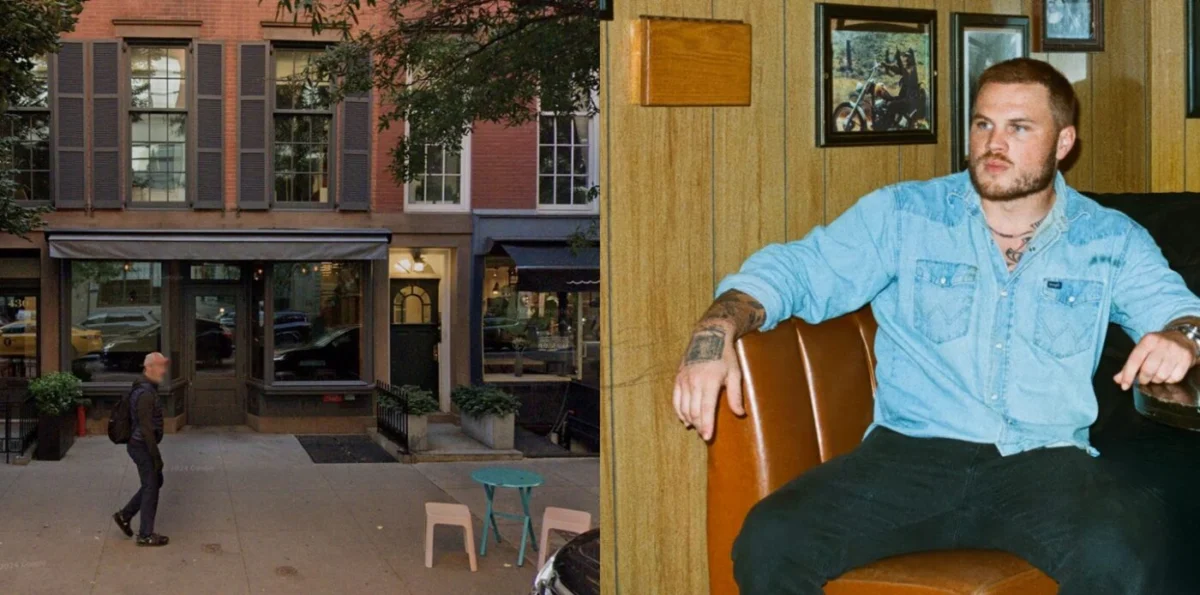
The Grammy Award-winning singer-songwriter Zach Bryan has officially expanded his real estate portfolio into one of New York City’s most historic neighborhoods, sparking significant public interest regarding his professional and personal intentions in the region. Recent public records and real estate reports confirm that the artist has purchased a landmark townhouse in the West Village for $13 million. The acquisition, located at 430 Hudson Street, follows a series of high-profile financial investments by the artist, including the reported $12.1 million purchase of Jack Kerouac’s original "On the Road" scroll. These consecutive multi-million dollar expenditures signal a significant shift in Bryan’s lifestyle and business infrastructure, transitioning from his roots in rural Oklahoma to a high-profile presence in the nation’s cultural and financial capital.
The property at 430 Hudson Street is a 179-year-old red brick structure, originally constructed in 1847. Standing seven stories tall and measuring 22 feet in width, the townhouse encompasses approximately 6,543 square feet of living space. The residence features a modern interior layout that includes four bedrooms, three full bathrooms, and two powder rooms. Despite its mid-19th-century origins, the home has undergone extensive renovations to integrate contemporary luxury amenities, such as a rooftop deck offering panoramic views of the Manhattan skyline, while meticulously preserving the historic aesthetic that defines the West Village’s architectural character.
A Strategic Location and Personal Connection
The decision to establish a permanent residence in the West Village appears to be influenced by both professional requirements and personal ties. Bryan’s wife, Samantha Leonard, is an alumna of New York University (NYU), an institution with a sprawling campus deeply integrated into the Greenwich Village and West Village areas. The proximity of the new residence to Leonard’s former academic hub suggests a desire for a familiar urban environment. Furthermore, the West Village has long served as a sanctuary for artists, writers, and musicians, offering a blend of privacy and cultural density that aligns with Bryan’s public persona as a modern-day troubadour.
The acquisition of 430 Hudson Street is particularly noteworthy due to the building’s mixed-use configuration. Unlike many private townhouses in the area, this property includes a prominent commercial space on the ground floor. This specific unit has a storied history in the New York City culinary scene, having previously housed Piora, a restaurant that once held a prestigious Michelin star. Following the closure of Piora, the space was occupied by The Leroy House, a popular neighborhood bar and restaurant that ceased operations in 2024. The presence of this fully equipped commercial infrastructure led to immediate speculation regarding Bryan’s potential entry into the hospitality industry.
The Chronology of Investment and Speculation
The timeline of Bryan’s recent acquisitions suggests a rapid consolidation of assets and a strategic move toward long-term brand building.
In early March 2026, reports surfaced that Bryan had acquired the original manuscript of Jack Kerouac’s "On the Road" for $12.1 million. The artifact, a 120-foot long scroll of teletype paper, is considered one of the most significant pieces of 20th-century American literary history. Bryan has frequently cited the Beat Generation and the themes of nomadic Americana as major influences on his songwriting. By securing this manuscript, Bryan positioned himself as a custodian of the very literary tradition that informs his musical narrative.
On March 17, 2026, The New York Post confirmed the closing of the $13 million townhouse deal. Shortly after the news broke, residents and fans noted activity within the ground-floor commercial space. Reports from the local outlet "ReadFeedMe" highlighted that the windows of the former Leroy House were being decorated with various items associated with Bryan’s career. Observed memorabilia included framed Billboard magazine articles, tour posters, and platinum-certified albums.
The presence of these items ignited rumors across social media platforms that Bryan was preparing to open a "dive bar" or a themed entertainment venue in the heart of the West Village. This theory gained traction due to the existing trend of country music stars—such as Blake Shelton, Luke Combs, and Morgan Wallen—opening namesake bars in Nashville’s "Broadway" district. The prospect of a Zach Bryan-branded establishment in New York City represented a potential expansion of this business model to a northern urban market.
Evidence Challenging the Bar Theory
While the visual evidence of memorabilia initially supported the theory of a public-facing bar, several factors prompted skepticism among industry analysts and long-time followers of the artist. Bryan has historically maintained a complicated relationship with the commercial trappings of the music industry. He has frequently voiced disdain for the traditional award show circuit and the commodification of his art. The idea that he would decorate a public bar with his own Spotify plaques and Billboard features struck many as inconsistent with his established brand of humility and "outlaw" independence.
Furthermore, logistical and security concerns weighed against the bar theory. The commercial space is physically attached to the residence where Bryan and his family presumably intend to live. Operating a high-traffic public bar directly beneath a private residence presents significant privacy risks and security challenges for a high-profile celebrity. In a neighborhood like the West Village, where residents value discretion, the noise and crowd control issues associated with a celebrity-owned bar would likely invite scrutiny from local community boards.
The most definitive evidence against the bar theory was the presence of items unrelated to Bryan’s own discography. Observers noted a Spotify plaque commemorating one billion streams for the song "Riptide" by Vance Joy, as well as a Vance Joy tour poster. This suggested that the space was being utilized by a multi-artist entity rather than a single-artist retail venture.
Official Clarification: A New Hub for Management
Following days of speculation, representatives for Zach Bryan’s team provided clarification to Whiskey Riff, confirming that the commercial space at 430 Hudson Street will not function as a bar or restaurant. Instead, the location has been designated as the New York City headquarters for Bryan’s management team.
This development explains the specific choice of decor. In a corporate management setting, the display of platinum records, industry accolades, and press coverage serves as a standard portfolio of professional achievement. The inclusion of Vance Joy’s awards is also clarified by this update, as both artists share professional management ties. By centralizing his management operations in the West Village, Bryan is effectively creating a private creative and administrative "war room" just steps away from his primary residence.
This move mirrors a broader trend among top-tier independent artists who seek to maintain greater control over their business affairs. By owning the physical space where his management operates, Bryan reduces reliance on third-party agencies and integrates his personal and professional life within a controlled environment.
Economic and Cultural Implications
The $13 million investment in the West Village reflects the massive commercial success Zach Bryan has achieved over the past three years. With billions of streams and record-breaking tour revenues, Bryan has entered a financial echelon that allows for significant capital expenditures in premium real estate markets.
From a real estate perspective, the purchase reinforces the resilience of the West Village market. Townhouses in this area remain among the most coveted assets in Manhattan, frequently attracting high-net-worth individuals from the entertainment and tech sectors. The 22-foot width of the property at 430 Hudson Street is particularly valuable, as many Manhattan townhouses are narrower, limiting their layout flexibility and resale value.
Culturally, Bryan’s move signifies the continued "Mainstream-ification" of country music. While the genre was once geographically tethered to the American South and Midwest, its current stars are increasingly global figures with interests in major urban centers. Bryan’s presence in the West Village places him in the same neighborhood where Bob Dylan once revolutionized folk music and where the "On the Road" ethos of Jack Kerouac was celebrated.
Conclusion
While the rumors of a Zach Bryan dive bar in Manhattan provided a brief moment of excitement for fans, the reality of a management office at 430 Hudson Street points toward a more calculated and long-term professional strategy. By securing a historic residence and a dedicated corporate space in one of the world’s most influential neighborhoods, Bryan is solidifying his status as a permanent fixture in the American cultural landscape. The transition from the Oklahoma plains to a seven-story West Village townhouse marks a new chapter for the artist—one defined by the stewardship of literary history and the professionalization of his independent musical empire.