Muhammad Ibadurrohman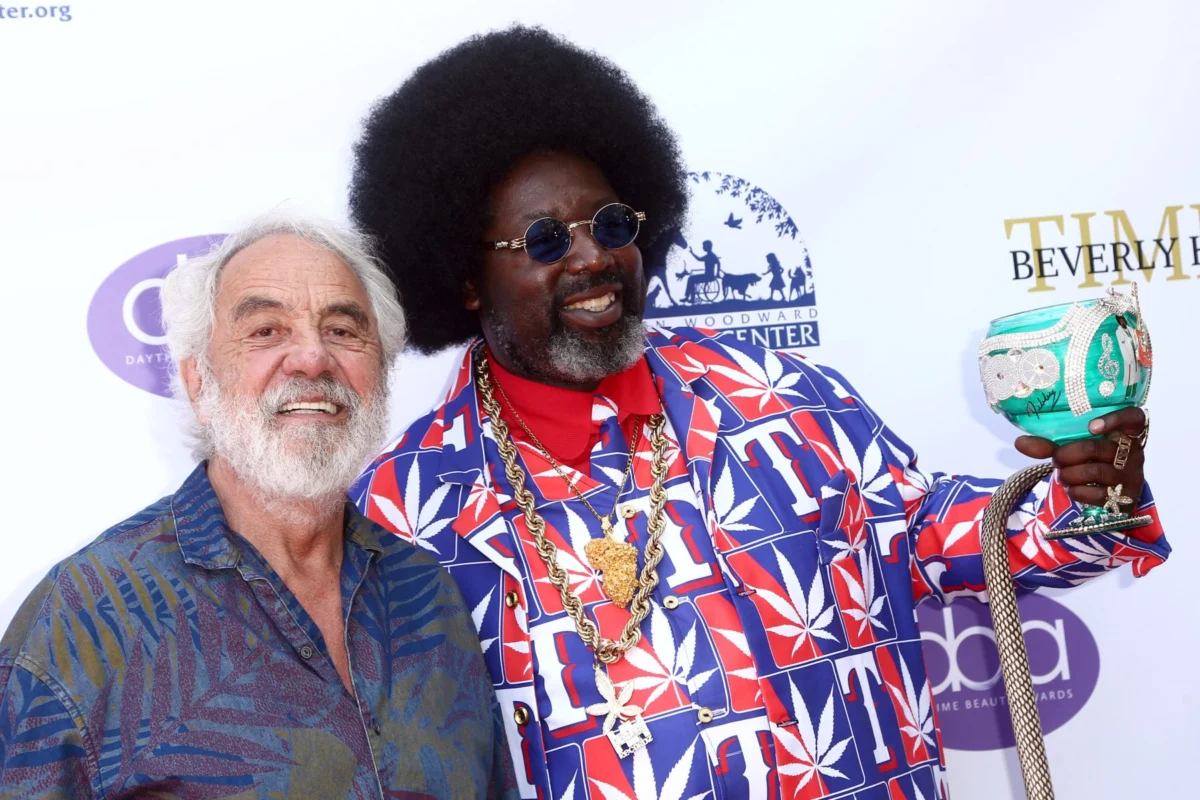
Recording artist Afroman, born Joseph Foreman, has achieved a significant legal triumph, securing a unanimous jury verdict in his favor against a group of Ohio sheriff’s deputies who had accused him of defamation and invasion of privacy. The rapper declared the outcome a monumental win not just for fellow artists, but for all Americans, underscoring the vital importance of free speech in holding power accountable. The verdict, delivered after a three-day trial that captured national attention, rejected an unusual lawsuit filed by seven Adams County Sheriff’s Department deputies, who claimed Afroman’s satirical music videos and social media posts, which mocked a 2022 raid on his home, caused them emotional distress and led to threats.
The judgment, rendered on Wednesday, March 19, 2024, by a jury in Ohio, unequivocally sided with Foreman, dismissing all claims of liability for defamation and invasion of privacy. Speaking out the morning after the verdict on CBS Mornings, Foreman articulated the broader implications of his victory. "It’s not only for artists, it’s for Americans," Afroman stated on Thursday, March 20. "We have freedom of speech. They did me wrong and sued me because I was talking about it. It’s ‘For the people, by the people,’ so when the people can’t use their freedom of speech — bring up the problem, address the problem — then the problem never gets solved." His impassioned statement resonated with civil liberties advocates and artists alike, marking the case as a crucial precedent for artistic expression and public accountability.
Genesis of the Conflict: The 2022 Raid
The origins of the contentious legal battle trace back to an incident on August 21, 2022, when officers from the Adams County Sheriff’s Department executed a search warrant at Afroman’s residence in Winchester, Ohio. The raid, reportedly initiated in connection with an investigation into alleged drug activity, involved officers smashing down the rapper’s door with guns drawn. During the search, officers seized $5,031 in cash from the property. However, despite the forceful entry and seizure, no wrongdoing was ever uncovered, no charges were filed against Foreman, and the confiscated money was subsequently returned to him.
The incident quickly garnered public attention, largely due to Afroman’s decision to document the aftermath and integrate footage from the raid into his creative works. In the wake of the search, Foreman, known for his humorous and often satirical musical style, produced several music videos and social media posts that directly parodied the officers involved. These satirical pieces, including a video for a song titled "Lemon Pound Cake," vividly depicted moments from the raid, with Afroman specifically ridiculing one deputy for allegedly eyeing a cake on his counter during the search. Another notable track, "Will You Help Me Repair My Door," directly addressed the damage inflicted on his property. These artistic responses served not only as a form of personal catharsis for Foreman but also as a public commentary on the perceived overreach of law enforcement.
The Contentious Videos and Social Media Engagement
Afroman’s creative response to the raid was swift and widespread. Utilizing actual surveillance footage from his home, which captured the deputies’ actions during the search, he crafted music videos that juxtaposed the serious nature of a police raid with his signature comedic and often critical lens. The video for "Lemon Pound Cake," for instance, went viral, drawing millions of views across platforms like YouTube and TikTok. In it, Afroman humorously highlights various aspects of the raid, including officers’ movements and interactions within his home, specifically calling out an officer’s glance at a lemon pound cake, transforming a mundane detail into a symbol of perceived impropriety or unprofessionalism.
The decision to use his art as a form of protest and documentation propelled the incident into the national discourse. His songs and social media posts were not merely entertainment; they became a potent form of social commentary, sparking discussions about police conduct, privacy rights, and the accountability of public officials. The viral nature of these videos meant that the faces and actions of the deputies involved became widely recognizable, leading to significant public scrutiny and, according to the officers, unwanted attention and distress.
The Defamation Lawsuit: Claims and Legal Battle
In 2023, nearly a year after the raid and the subsequent release of Afroman’s videos, seven Adams County Sheriff’s Department officers — Shawn D. Cooley, Justin Cooley, Lisa Phillips, Michael D. Estep, Shawn S. Grooms, Brian Newland, and Randolph L. Walters, Jr. — collectively filed a civil lawsuit against Joseph Foreman. Their lawsuit alleged defamation, invasion of privacy, and intentional infliction of emotional distress. The officers claimed that Afroman’s videos and posts had unfairly targeted them, leading to severe "emotional distress," and that they had been "subjected to threats, including death threats," as a direct consequence of the rapper’s public mockery. They sought a staggering $3.9 million in damages, arguing that their professional reputations had been tarnished and their personal safety compromised.
The lawsuit was widely characterized as "unusual" by legal experts, primarily because it involved public officials attempting to use defamation law against artistic commentary on their official actions. In the United States, defamation claims brought by public figures, especially law enforcement officers, face a significantly higher legal bar due to established First Amendment protections. Under the landmark 1964 Supreme Court case New York Times v. Sullivan, public officials suing for defamation must prove not only that the statements made were false and damaging but also that they were made with "actual malice" — meaning the speaker knew the statements were false or acted with reckless disregard for their truth or falsity. This high standard is designed to protect robust public debate and criticism of government actions.
First Amendment Defense and Jury Deliberation
Afroman’s legal defense centered squarely on his First Amendment right to freedom of speech. During the trial, Foreman testified passionately, asserting that his creative works were a legitimate form of protest and commentary on an unwarranted intrusion into his private life. He argued that the officers’ actions—smashing down his door, seizing his money without cause, and ultimately filing no charges—were the root cause of the entire situation. "All of this is their fault, and they have the audacity to sue me," Afroman declared from the witness stand, powerfully articulating his position that he was merely reacting to their conduct.
His defense team underscored that Afroman’s videos, while satirical and critical, constituted protected speech. They argued that the videos contained no false statements of fact that would meet the "actual malice" standard required for public officials to prove defamation. Instead, the videos presented an artistic interpretation and commentary on events that actually occurred. The trial was not without its dramatic moments, with Afroman reportedly delivering a colorful defense in a flamboyant American flag suit, captivating social media observers and highlighting the clash between artistic freedom and official authority.

After just hours of deliberation on Wednesday, March 19, the jury returned a verdict that completely vindicated Afroman. Judge Jonathan Hein announced the jury’s findings, stating, "In all circumstances, the jury finds in favor of the defendant," clearing Foreman of all liability for defamation or invasion of privacy. The swiftness of the jury’s decision suggested a strong consensus on the merits of Afroman’s First Amendment defense, signaling a clear rejection of the officers’ claims.
Broader Implications for Free Speech and Artistic Expression
The verdict in Afroman’s case carries significant implications for free speech, artistic expression, and the accountability of public officials in the digital age. It serves as a powerful affirmation that artists have a protected right to use their platforms for social commentary, even when that commentary is critical, satirical, or unflattering to law enforcement and other government entities.
This decision helps to mitigate what many observers feared could become a "chilling effect" on free expression. Had the officers prevailed, it could have set a dangerous precedent, potentially discouraging other artists, journalists, or ordinary citizens from publicly critiquing or documenting police actions for fear of costly legal retaliation. The outcome reinforces the principle that public officials, by virtue of their roles, operate under a different standard of public scrutiny than private citizens and must tolerate a greater degree of criticism and commentary.
Legal Precedents and Public Officials
The Afroman verdict aligns with decades of established legal precedent concerning free speech and defamation, particularly regarding public figures. The New York Times v. Sullivan ruling established that public officials cannot recover damages for defamatory falsehoods relating to their official conduct unless they prove that the statement was made with "actual malice." This standard protects a wide range of speech, ensuring that vigorous debate about public issues and government actions is not stifled by fear of litigation.
In this case, Afroman’s videos were clearly satirical and based on a real event—the raid on his home. The legal system recognized the distinction between factual misrepresentation with malicious intent and artistic or satirical commentary. The jury’s decision underscores the judiciary’s role in safeguarding the public’s right to criticize government actions, a cornerstone of democratic society. It implies that while officers may experience discomfort or even receive threats from third parties (which are themselves illegal), such reactions do not automatically render an artist’s original critical commentary defamatory, especially if it does not contain knowingly false statements of fact about the officers’ conduct.
Reactions from Legal Experts and Advocacy Groups
The verdict was met with widespread approval from civil liberties organizations and legal experts. Attorneys specializing in First Amendment law lauded the decision as a crucial victory for artistic freedom and police accountability. Many expressed relief that the court did not allow defamation laws to be weaponized against critical commentary on public officials. They emphasized that this ruling reaffirms the high bar required for public figures to prove defamation, preventing frivolous lawsuits from stifling legitimate criticism.
While the officers and their legal team have not yet issued a public statement regarding a potential appeal, it is common for parties to consider all legal avenues after a high-stakes trial. However, given the unanimous jury decision and the strong First Amendment protections at play, an appeal would likely face significant challenges.
Afroman’s Career and Activism
Joseph Foreman, known globally as Afroman, rose to prominence with his 2000 hit single "Because I Got High," a comedic narrative about the perils of marijuana use. His music has consistently featured a blend of humor, social commentary, and observational storytelling. This legal battle, however, elevates his profile beyond entertainment to that of a vocal advocate for civil liberties. The incident and subsequent trial have transformed Afroman into an accidental activist, demonstrating how artists can leverage their creative power to challenge authority and defend fundamental rights.
His willingness to stand firm against a formidable legal challenge from law enforcement has resonated deeply with many, particularly those who have experienced similar encounters with police or who advocate for greater transparency and accountability within police departments. The case serves as a poignant reminder of the power of individual expression in shaping public discourse and upholding democratic values.
The Road Ahead: Lasting Impact
The Afroman verdict is more than just a win for one musician; it is a significant moment in the ongoing national conversation about free speech, police accountability, and the role of art in social critique. It sends a clear message that while law enforcement carries out essential public duties, their actions are not immune to public scrutiny, commentary, or even satire.
As technology continues to evolve, enabling citizens to instantly document and share interactions with authorities, the line between protected speech and actionable defamation will undoubtedly continue to be tested. This case provides a valuable precedent, reinforcing the robust protections afforded by the First Amendment and encouraging a vibrant, if sometimes uncomfortable, public dialogue about the institutions that govern us. For Afroman, the courtroom drama has concluded, but the legacy of his stand for freedom of speech will undoubtedly endure, resonating far beyond the confines of Adams County, Ohio.