Aveline Kirana
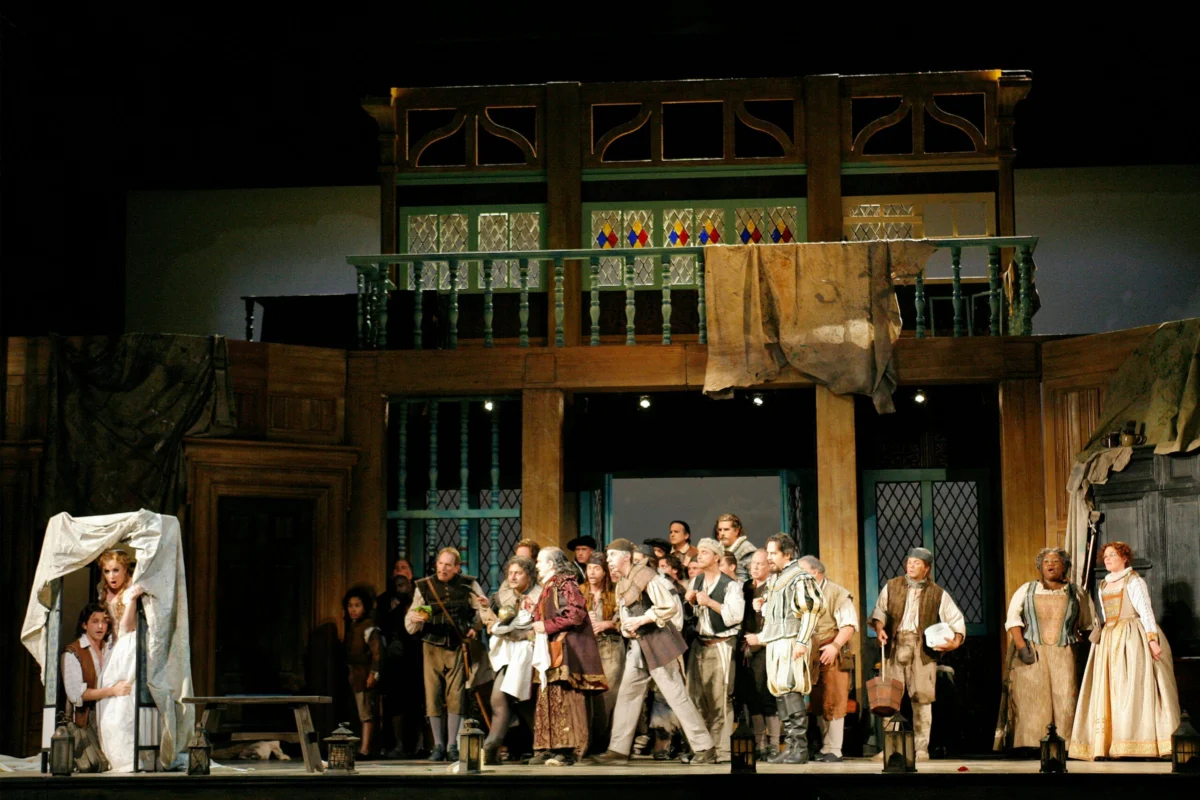
The Halle Opera House is set to illuminate the stage with Franz Schreker’s seldom-performed opera, "Das Spielwerk und die Prinzessin," commencing on April 11, 2026, with subsequent performances scheduled to run through May 24. This significant revival marks a rare opportunity for audiences to experience a work that, despite its initial ambitious premiere, has largely remained outside the standard operatic repertoire. The production, helmed by conductor Fabrice Bollon and directed by Nele Lindemann, will feature the esteemed Halle State Orchestra. The principal roles will be brought to life by a talented cast, with Thomas Weinhappel portraying Master Florian, Franziska Krötenheerdt as The Princess, Chulhyun Kim as A Wandering Lad, and Ki-Hyun Park embodying Wolf.
The opera’s narrative delves into the complexities of leadership and societal unrest. It chronicles the downfall of a princess whose extravagant and perhaps negligent rule alienates her populace. The ensuing crisis is averted through the intervention of a peripatetic journeyman. His melodic flute playing, combined with the potent influence of a mysterious musical instrument meticulously crafted by Master Florian, proves instrumental in pacifying the increasingly agitated crowd, restoring a semblance of order to the kingdom. This thematic exploration of power, art, and social harmony resonates with enduring relevance.
This particular staging by the Halle Opera House is notable for presenting the first version of Schreker’s opera, which premiered concurrently in two vastly different yet equally prestigious venues on March 15, 1913: Frankfurt and the Vienna Court Opera. The Frankfurt premiere, according to historical accounts, garnered a respectable level of success, suggesting an initial positive reception for Schreker’s innovative musical language. However, the Viennese opening proved to be a far more tumultuous affair, reportedly descending into physical altercations. This stark contrast in reception highlights the divisive nature of Schreker’s work and the challenges it posed to audiences and critics of the era. Recognizing the opera’s complex reception and perhaps seeking to refine its impact, Schreker later undertook an extensive revision of the work, eventually releasing a second, significantly altered version under the more concise title, "Das Spielwerk." The Halle Opera House’s decision to present the original, longer version offers a unique window into the opera’s initial conception and the composer’s early dramatic and musical intentions, providing valuable insight for scholars and opera enthusiasts alike.
The Operatic Landscape of Early 20th Century Vienna and Frankfurt
The early 20th century was a period of immense artistic ferment in Europe, particularly in the realm of opera. Composers like Richard Strauss, Arnold Schoenberg, and Franz Schreker were pushing the boundaries of musical expression, challenging traditional harmonic structures and dramatic conventions. Schreker, in particular, was known for his lush, chromatic orchestrations and his fascination with psychological dramas, often tinged with symbolism and a decadent aesthetic.
The simultaneous premiere of "Das Spielwerk und die Prinzessin" in 1913 in Frankfurt and Vienna speaks to the composer’s rising prominence at the time. Frankfurt, a city with a strong tradition of operatic innovation, offered a receptive platform. Vienna, the imperial capital, represented the pinnacle of European musical culture, and a premiere at the prestigious Court Opera (now the Vienna State Opera) was a significant endorsement. The contrasting reactions at these two venues – success in Frankfurt versus chaos in Vienna – underscore the opera’s challenging nature. It was a work that demanded much from its audience, both intellectually and emotionally, and it was clearly a departure from the more conventional operatic fare of the time. The controversy surrounding the Viennese premiere may have contributed to the opera’s subsequent relative obscurity, as composers and opera houses often shied away from works that courted such strong public dissent.
Franz Schreker: A Composer of Unfulfilled Promise?
Franz Schreker (1878-1934) was a highly influential composer and conductor in the first decades of the 20th century. His works, including "Der ferne Klang" (1912), "Die Gezeichneten" (1918), and "Der Schatzgräber" (1920), were celebrated for their innovative harmonic language, rich orchestral textures, and psychologically charged libretti. He held prominent positions, including dean of the Berlin Hochschule für Musik and chief conductor of the Berlin State Opera. However, his career was tragically curtailed by the rise of the Nazi regime. As a composer of "degenerate art," his works were banned, and his career effectively ended. This political persecution, coupled with the evolving musical landscape after World War I, contributed to his decline in popularity. The revival of "Das Spielwerk und die Prinzessin" offers an opportunity to re-evaluate Schreker’s oeuvre and understand his significant contributions to the operatic tradition.
The Halle Opera House: A Tradition of Revivals
The Halle Opera House, also known as the Opernhaus Halle, has established a reputation for staging less frequently performed operas, providing a vital platform for works that might otherwise be overlooked. This commitment to artistic exploration and the preservation of operatic heritage makes their decision to revive "Das Spielwerk und die Prinzessin" particularly fitting. By unearthing and presenting such a rarely heard piece, the Halle Opera House not only enriches its own programming but also contributes to the broader understanding and appreciation of operatic history. Such productions are crucial for ensuring that the full spectrum of operatic achievement remains accessible to contemporary audiences and performers.

The Production Team and Cast
The collaborative efforts of conductor Fabrice Bollon and director Nele Lindemann are central to this revival. Bollon, known for his insightful interpretations of 20th-century repertoire, is expected to bring a nuanced understanding to Schreker’s complex score. Lindemann’s directorial vision will be crucial in translating the opera’s symbolic and psychological themes to the stage. The Halle State Orchestra, a cornerstone of the regional musical scene, will undoubtedly provide a high-quality musical foundation.
The casting of Thomas Weinhappel as Master Florian, Franziska Krötenheerdt as The Princess, Chulhyun Kim as A Wandering Lad, and Ki-Hyun Park as Wolf suggests a carefully curated ensemble. Weinhappel, a seasoned baritone, is well-suited to portray the craftsman figure of Master Florian. Krötenheerdt, a soprano, faces the challenge of embodying the complex character of the Princess, whose journey from decadent ruler to potentially redeemed figure is central to the opera’s arc. Kim and Park, as the Wandering Lad and Wolf, will likely play pivotal roles in the opera’s dramatic unfolding and its thematic resolutions. The success of the production will hinge on the chemistry and individual performances of these artists, as they navigate Schreker’s demanding vocal and dramatic lines.
Thematic Resonance and Societal Commentary
"Das Spielwerk und die Prinzessin" offers a compelling allegory for the cyclical nature of power, the responsibility of leadership, and the redemptive potential of art. The Princess’s "decadent rule" can be interpreted as a critique of unchecked privilege and the detachment of the ruling class from the needs of their people. The ensuing "crisis" and "enraged crowd" are timeless representations of social unrest stemming from inequality and neglect.
The arrival of the "wandering journeyman" and the magical "musical instrument" offer a resolution that is not rooted in force or political maneuvering, but in the power of art and craftsmanship. Master Florian’s creation, a tangible product of skill and ingenuity, becomes a conduit for emotional reconciliation. The opera suggests that beauty, harmony, and genuine human connection, often facilitated by artistic expression, can be powerful tools for healing societal rifts. This theme resonates particularly strongly in contemporary times, where divisions and discontent are prevalent. The opera’s exploration of how art can pacify and unite can be seen as a timely message.
Chronology of "Das Spielwerk und die Prinzessin"
- March 15, 1913: "Das Spielwerk und die Prinzessin" premieres simultaneously in Frankfurt and at the Vienna Court Opera. The Frankfurt premiere is met with moderate success, while the Viennese premiere is marred by controversy and physical altercations.
- Post-1913: Franz Schreker undertakes significant revisions of the opera, leading to the creation of a second version titled "Das Spielwerk."
- Mid-20th Century onwards: Both versions of the opera see limited stagings, remaining a rarity in the international operatic repertoire.
- April 11, 2026: The Halle Opera House begins its limited run of the first version of "Das Spielwerk und die Prinzessin," marking a significant revival of the work.
- May 24, 2026: The final performance of the Halle Opera House production.
Broader Impact and Implications
The revival of "Das Spielwerk und die Prinzessin" at the Halle Opera House has several significant implications for the operatic world. Firstly, it provides a crucial opportunity to reassess Franz Schreker’s place in operatic history. Works like this, with their inherent challenges and initial controversial receptions, often fall into obscurity despite their artistic merit. By bringing this opera back to the stage, Halle Opera House contributes to a more complete understanding of the early 20th-century operatic landscape and the daring innovations of composers like Schreker.
Secondly, the production serves as a testament to the value of preserving and exploring lesser-known operatic works. The operatic canon is rich and diverse, and productions that delve into its less-traveled corners are vital for maintaining its vitality and relevance. The success of this revival could potentially encourage other opera houses to consider staging "Das Spielwerk und die Prinzessin" or other works by Schreker, thereby expanding the performance history of his oeuvre.
Finally, the opera’s thematic content, dealing with leadership, social unrest, and the power of art, offers a contemporary resonance that could engage audiences on multiple levels. In an era grappling with political polarization and social challenges, an opera that explores the potential of art to bridge divides and restore harmony might find a particularly receptive audience. The Halle Opera House’s commitment to this ambitious and historically significant project underscores its role as a vital cultural institution dedicated to the evolution and appreciation of opera.