Reynand Wu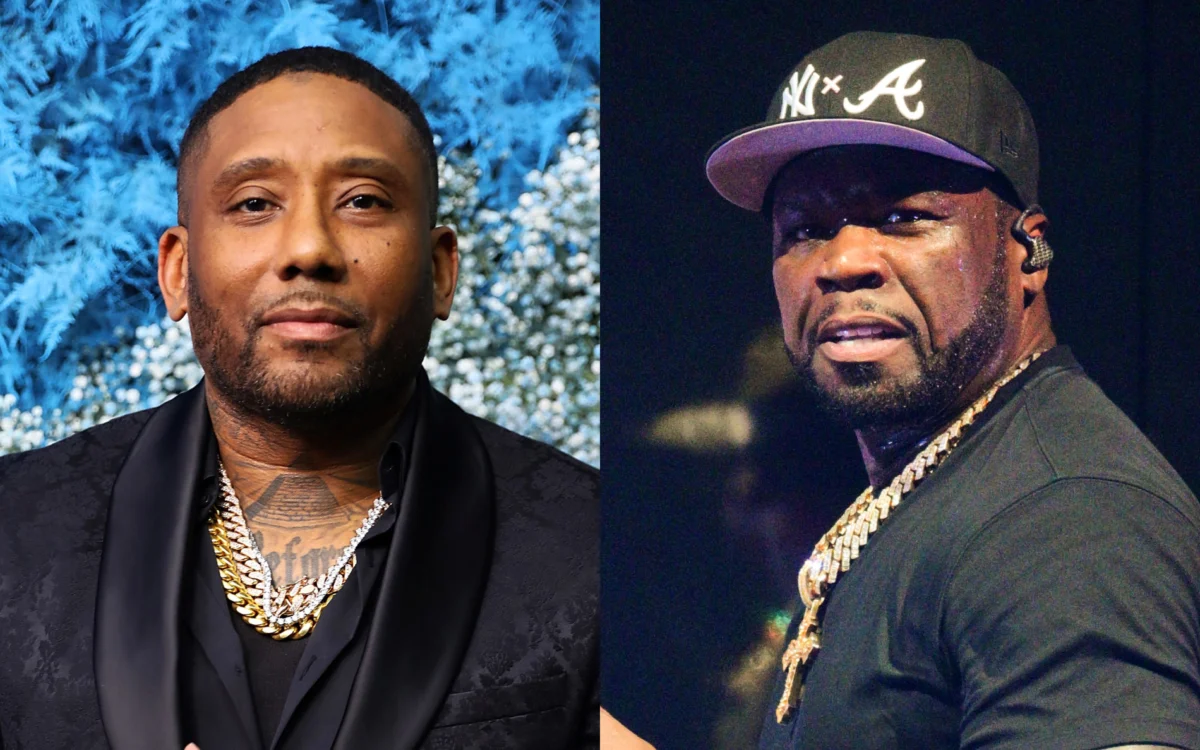
As if navigating an ongoing high-profile dispute with Atlanta’s T.I. wasn’t consuming enough of his attention, multi-hyphenate mogul 50 Cent has found himself embroiled in yet another lyrical confrontation, this time with Brooklyn rapper Maino. The escalating feud recently reached a critical juncture with Maino’s release of a pointed diss track titled “Bleed Like Us,” a direct musical retort to the G-Unit general’s recent offering, “No More Tricks, No More Tries,” which featured Max B. This latest exchange underscores the enduring tradition of lyrical warfare in hip-hop, leveraging both musical artistry and digital platforms to intensify rivalries.
The Genesis of the Latest Exchange: "Bleed Like Us" Unleashed
On Wednesday, March 11, the streets of hip-hop reverberated with Maino’s declaration of war, packaged in the form of "Bleed Like Us." The track immediately drew attention not only for its audacious target but also for its clever homage to a seminal East Coast classic: The Notorious B.I.G.’s "Nggas Bleed" from his iconic 1997 album, Life After Death*. By borrowing from Biggie’s narrative style and thematic gravitas, Maino positioned his diss within a lineage of revered lyrical combat, signaling the seriousness of his intent.
The lyrical content of "Bleed Like Us" is unsparing and direct, meticulously dissecting 50 Cent’s public persona and past narratives. Maino wastes no time in revisiting long-standing allegations against his adversary, including accusations of domestic violence, a subject that has periodically resurfaced in discussions surrounding 50 Cent’s personal history. Furthermore, Maino directly challenges one of the most foundational myths of 50 Cent’s rise to fame: the claim of surviving nine gunshot wounds. He provocatively suggests that 50 Cent is "capping" – a slang term for exaggerating or lying – about the severity and circumstances of this near-fatal incident, aiming to undermine the very credibility that cemented 50’s "gangsta" image.
Perhaps the most potent and historically charged accusation Maino levels is the insinuation that 50 Cent cooperates with law enforcement against his rivals, a cardinal sin within street-oriented hip-hop culture often referred to as "snitching." Maino raps, "Be careful when you come at me, ngga, you couldn’t humble me / Why the ones you beef with end up in fed custody? / 50 ways to catch a killer, is that your energy? / Only Black men, no white men, is your enemy?"* These lines are designed to sow doubt among 50 Cent’s fanbase and to paint him as a hypocrite, particularly given his own past legal entanglements and public image as an uncompromising figure. The "50 ways to catch a killer" line is a thinly veiled jab, playing on 50 Cent’s name while suggesting a pattern of rivals facing legal troubles.
Beyond direct accusations, Maino demonstrates his lyrical dexterity by flipping some of 50 Cent’s most recognizable catchphrases and song titles into biting criticisms. He adapts lines from 50 Cent’s 2002 hit "Wanksta," a track originally aimed at fake gangsters, turning the accusation back on its originator: *"Only white kids in the ‘burbs thought you was gangsta / We f*ked with you ‘cause of your story, thought you was like us / Just to find out this whole time you was the wanksta." This repurposing serves to dismantle 50 Cent’s street authenticity, implying his image was crafted for a specific, non-street demographic. The track concludes with a chilling rhetorical question, "Getting rich wasn’t enough, still want to die?" a stark warning that hints at dire consequences should the feud continue to escalate.
50 Cent’s Provocation: "No More Tricks, No More Tries"
Maino’s "Bleed Like Us" was a direct response to 50 Cent’s track "No More Tricks, No More Tries," a remix of a Max B song that first surfaced late last year. Upon its initial release, the hip-hop community largely speculated that 50 Cent’s verses were aimed at T.I., given the well-publicized and increasingly heated war of words between the two rap titans, particularly concerning a proposed Verzuz battle that devolved into personal attacks. T.I. had, in previous exchanges, challenged 50 Cent’s street credibility and parenting, fueling the assumption that "No More Tricks, No More Tries" was his musical comeback.
However, 50 Cent, ever the master of strategic misdirection and narrative control, quickly clarified his true targets. In the accompanying music video for "No More Tricks, No More Tries," he made it explicitly clear that his lyrical ire was directed not at T.I. but squarely at Maino, Jim Jones, and Fabolous. These three artists collectively host the popular "Let’s Rap About It" podcast with Dave East, a platform that had recently become a focal point for their collective criticism of 50 Cent.
The video itself, an AI-generated production, visually underscored 50 Cent’s intentions. It featured animated depictions of the trio, juxtaposed with Fif barking a defiant "Fuck you!" The visual narrative went further, directly mocking Maino’s distinctive facial scar, which resulted from a prison attack that left his right cheek permanently disfigured. By recreating this deeply personal and painful incident, 50 Cent aimed for maximum psychological impact, crossing a line often considered taboo even in the aggressive world of rap beef.
50 Cent solidified his clarification on Instagram, posting the video with the caption, "Y’all thought I was talking about the Cosby’s. I’ll deal with Bill later. I am the algorithm!" The "Cosby’s" reference was a sarcastic nod to T.I. and the Harris family, whom 50 Cent had previously ridiculed online. His declaration, "I am the algorithm," speaks volumes about his understanding and manipulation of digital media, asserting his dominance not just in music but in controlling online narratives and engagement, thereby amplifying the reach and impact of his provocations. This statement cemented his reputation as a calculated provocateur who masterfully uses social media to drive his feuds.
A Deeper Dive into the Feud’s Roots
The seeds of this latest clash between 50 Cent and the trio of Jim Jones, Maino, and Fabolous were sown late last year, reigniting an underlying tension that had simmered for some time. The catalyst was a specific discussion on the "Let’s Rap About It" podcast, where the hosts critically evaluated 50 Cent’s then-unreleased documentary series focusing on Sean "Diddy" Combs. At the time, Diddy was facing a barrage of serious allegations, and 50 Cent had publicly announced his plans for a documentary that would delve into these accusations, positioning himself as a truth-teller.
The Diddy Documentary Controversy
During their podcast segment, Jim Jones, speaking for the group, articulated their reservations about 50 Cent’s documentary venture. Jones argued that 50 Cent’s approach seemed less like genuine investigative journalism and more akin to a personal vendetta. He stated, "You don’t want nobody doing a documentary trying to make your whole character look weak. That’s petty behavior… It’s really not a documentary; it’s more like a mockumentary." This characterization was a direct challenge to 50 Cent’s journalistic integrity and motives, suggesting his project was driven by malice rather than a pursuit of truth. For Jones, Maino, and Fabolous, who operate within the same New York hip-hop ecosystem as Diddy, criticizing a peer’s project, particularly one that seemed to capitalize on another’s downfall, was a significant statement of loyalty and an implicit critique of 50 Cent’s methods. The implication was that 50 Cent was exploiting Diddy’s legal troubles for personal gain and to settle old scores, rather than contributing to an objective public discourse.
The Podcast Studio Rental Dispute
50 Cent, known for his swift and often financially driven retaliations, wasted no time in responding to the podcast hosts’ criticisms. Rather than directly addressing their points about his Diddy documentary, he shifted the narrative to a more mundane yet equally damaging accusation: financial instability. He took to Instagram, claiming that Maino, Jim Jones, and Fabolous were "squatters" and owed a substantial sum of $250,000 for the rental space where they filmed their podcast. This move was a classic 50 Cent tactic: undermine an opponent’s credibility and public image by exposing perceived financial vulnerabilities. "These guys are squatters, they owe 250,000k for the space they are filming their podcast," he sneered on Instagram. "These bums are trying to win best dressed award and can’t pay their bills." This public shaming aimed to portray the trio as financially irresponsible and hypocritical, particularly given their public platform.
The dispute escalated dramatically when 50 Cent subsequently claimed to have purchased the very building in question. This move transformed a mere verbal sparring match into a tangible, high-stakes battle over property and livelihood. By becoming their landlord, 50 Cent gained a significant leverage point, threatening to terminate their tenancy agreement. He further intensified his public humiliation campaign by posting security footage purportedly showing Jim Jones attempting to gain unauthorized entry into the building by kicking down doors. This visual evidence, shared widely on social media, served to paint Jones in a negative light, portraying him as desperate and disrespectful of property, thereby bolstering 50 Cent’s narrative of his opponents’ perceived lack of professionalism and financial standing. The implications of this power play were clear: 50 Cent was not just engaging in a rap beef; he was deploying his considerable business acumen and financial resources to directly impact his rivals’ professional operations.
The Historical Landscape of Hip-Hop Beef
Rap beef, or lyrical warfare, is an intrinsic and often celebrated component of hip-hop culture, tracing its roots back to the competitive nature of early DJ battles and MC cyphers. Historically, these feuds have served multiple purposes: to establish dominance, assert authenticity, generate publicity, and, at times, to push artistic boundaries. Iconic rivalries such as the East Coast vs. West Coast feud (Tupac Shakur vs. The Notorious B.I.G.), Nas vs. Jay-Z, and 50 Cent vs. Ja Rule have not only shaped the careers of the artists involved but have also significantly influenced the genre’s narrative and commercial trajectory.
These disputes typically unfold through diss tracks, where artists use intricate wordplay, personal attacks, and veiled threats to undermine their opponents. The effectiveness of a diss track is often measured by its lyrical potency, its ability to expose perceived weaknesses, and its resonance with the fanbase. In the digital age, however, the landscape of rap beef has expanded beyond just music. Social media platforms like Instagram and X (formerly Twitter) have become immediate battlegrounds, allowing artists to engage in real-time exchanges, share provocative content (like 50 Cent’s AI video or property documents), and directly interact with fans who eagerly follow every twist and turn. This immediacy often accelerates the pace and intensity of feuds, making them more dynamic and unpredictable. The Maino-50 Cent beef exemplifies this modern approach, blending traditional diss tracks with aggressive social media tactics and even real-world financial maneuvers.
Profiles of the Principals: Maino and 50 Cent
Understanding the protagonists provides crucial context to the current conflict. Both artists hail from New York City, a breeding ground for lyrical prowess and fierce competition, yet their career trajectories and public personas diverge significantly.
Curtis "50 Cent" Jackson
Born Curtis James Jackson III, 50 Cent emerged from Queens, New York, with a compelling rags-to-riches narrative rooted in street credibility and resilience. His survival of nine gunshot wounds became a cornerstone of his legend, fueling his breakthrough album Get Rich or Die Tryin’ (2003). Renowned for his aggressive lyrical style and confrontational approach, 50 Cent quickly established himself as a dominant force in hip-hop, often leveraging public feuds to maintain relevance and amplify his brand. His most notable beefs, particularly with Ja Rule and later Rick Ross, demonstrated his strategic use of controversy to boost record sales and maintain public attention. Beyond music, 50 Cent has parlayed his fame into a formidable business empire, encompassing film, television production (e.g., the Power franchise), spirits, and various investments. This entrepreneurial success underpins his ability to deploy financial tactics, such as the alleged purchase of the podcast building, as weapons in his ongoing conflicts. He is a calculated provocateur, whose every move in a feud is often seen as a chess move in a larger game of industry dominance.
Jermaine "Maino" Coleman
Jermaine Coleman, better known as Maino, is a Brooklyn-born rapper whose career is deeply entrenched in the gritty realism and authenticity of New York City street rap. After serving a lengthy prison sentence, Maino burst onto the scene in the late 2000s, gaining widespread recognition with his 2008 hit single "Hi Hater." His music often reflects his life experiences, characterized by a raw, unfiltered delivery and an unwavering commitment to his Brooklyn roots. While perhaps not possessing the same global commercial footprint as 50 Cent, Maino commands respect within the industry, particularly among East Coast hip-hop aficionados, for his lyrical integrity and street credibility. His involvement with the "Let’s Rap About It" podcast, alongside Jim Jones and Fabolous, has provided him with a new platform to engage with the culture, discuss industry dynamics, and express his opinions, which ultimately became the flashpoint for this current dispute with 50 Cent. Maino’s decision to release a diss track signifies his willingness to stand his ground against a formidable opponent, upholding the competitive spirit of hip-hop.
The Broader Implications and Industry Reactions
The ongoing feud between Maino and 50 Cent, marked by diss tracks, social media warfare, and real-estate maneuvers, carries significant implications for the artists involved and the broader hip-hop landscape.
Impact on Careers and Public Perception
For Maino, engaging in a high-profile lyrical battle with a figure as prominent as 50 Cent can significantly elevate his visibility and potentially introduce his music to a wider audience. In hip-hop, a well-executed diss track can revitalize a career, reassert an artist’s lyrical prowess, and solidify their position as a formidable voice. However, the risk lies in whether his accusations resonate with fans or if 50 Cent’s counter-narrative proves more compelling. For 50 Cent, known for thriving on controversy, this beef serves as another opportunity to reinforce his image as an indomitable force, both creatively and financially. It allows him to demonstrate his continued relevance and his willingness to use all tools at his disposal – musical, financial, and digital – to assert dominance. While some might view his tactics as overly aggressive or petty, they often contribute to his carefully cultivated persona as an unapologetic, ruthless businessman.
Fan Engagement and the Business of Beef
The digital age has transformed rap beef into a spectator sport, with fans actively participating in the discourse across social media platforms. Every tweet, Instagram post, and diss track is dissected, debated, and shared, generating immense online traffic and engagement. This heightened interaction translates into increased streams, views, and overall buzz for the artists involved, underscoring the commercial viability of conflict in entertainment. The Maino-50 Cent saga exemplifies how these disputes, while ostensibly personal, also function as powerful marketing tools, driving narratives that captivate audiences and keep artists in the cultural spotlight. The "Let’s Rap About It" podcast, now at the center of the controversy, also benefits from this increased attention, potentially attracting new listeners eager to follow the real-time developments of the feud.
The Future of the Feud and the Role of Podcasting
As of now, the ball appears to be in 50 Cent’s court for a direct musical response to "Bleed Like Us." The question remains whether he will choose to engage further on wax or continue his strategic attacks through social media and financial means. Given his history, a multi-pronged approach is likely. This conflict also highlights the evolving role of podcasts as new battlegrounds in hip-hop. What once primarily played out on records or radio interviews now finds fertile ground in the long-form discussions and immediate reactions offered by podcasting. This provides artists with a direct, unfiltered channel to address issues and escalate feuds, bypassing traditional media gatekeepers.
In conclusion, the Maino-50 Cent beef is more than just a clash of two artists; it is a microcosm of modern hip-hop rivalries, characterized by a blend of traditional lyrical combat, sophisticated digital strategy, and real-world power plays. It demonstrates how historical grievances, financial leverage, and social media algorithms intersect to create compelling, high-stakes narratives that continue to define and energize the genre. The outcome remains uncertain, but the spectacle ensures that the eyes and ears of the hip-hop world will remain fixed on this unfolding drama.